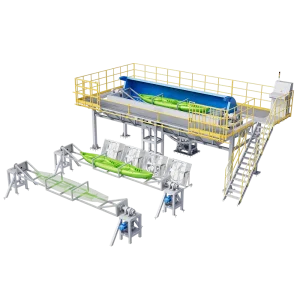
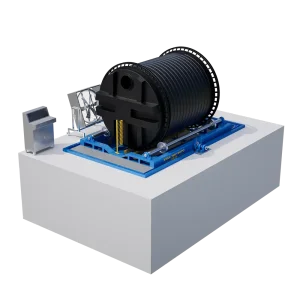
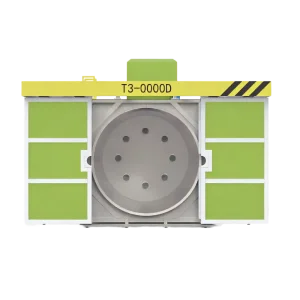
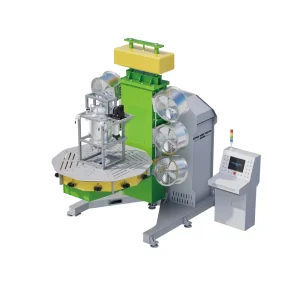
Explore our primary enterprise-grade rotational molding machinery, custom-engineered for maximum energy efficiency, structural durability, and high-volume production throughput across global industrial manufacturing sectors.
Rotational molding (Rotomolding) has evolved from a niche plastics fabrication process into a vital global industry sector valued at over $5.8 Billion USD. Unlike high-pressure injection molding or extrusion blow molding, rotational molding operates under zero-pressure thermal consolidation principles. This yields low internal stress, stress-free hollow parts, seamless uniform wall distributions, and unmatched economic viability for large-scale, complex geometric structures.
As enterprise demand accelerates across municipal water infrastructure, chemical storage, logistics, marine craft, and agricultural automation, manufacturers are under pressure to optimize Thermal Efficiency, Cycle Time Ratios (CTR), and Kilowatt-hour Per Kilogram (kWh/kg) polymer throughput. Modern rotomolding machinery companies must deliver integrated systems that combine structural rigidity, intelligent PLC micro-adjustments, rapid heating-cooling transitions, and modular footprint scalability.
Selecting the appropriate machinery configuration depends on product geometric envelope, resin viscosity, production volume requirements, and facility layout constraints. Below is a structural engineering evaluation of the primary rotomolding machine classifications manufactured by leading industry suppliers.
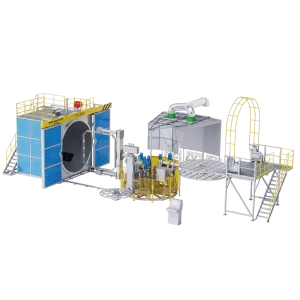
Engineered for high-volume, repetitive industrial manufacturing. Featuring 3 to 4 independent structural arms traversing in a fixed circular indexed path between Heating, Pre-Cooling, Final Cooling, and Unloading stations. Carousel machines maximize uptime through simultaneous station execution.
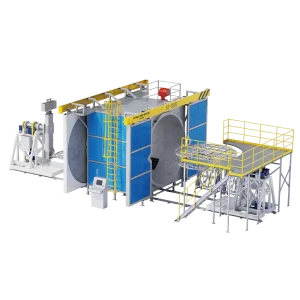
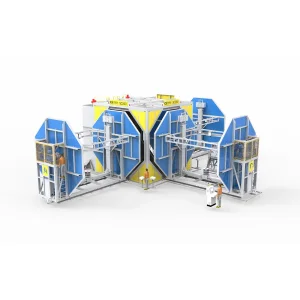
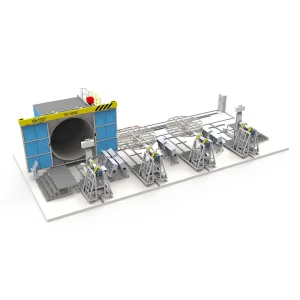
Provides maximum production flexibility for plants running varying mold sizes and material resin formulations simultaneously. The central oven station accepts shuttle carts entering linearly or in a square vector, allowing independent heating timing for disparate tool sets.
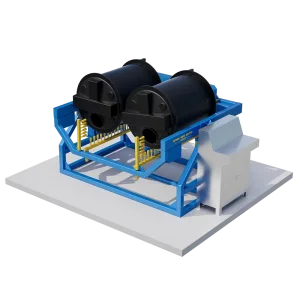
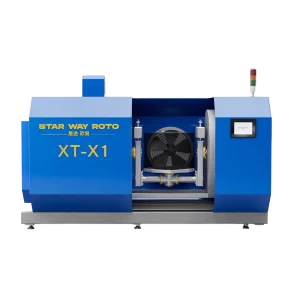
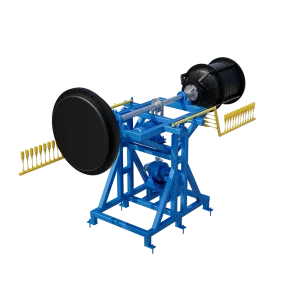
Specially designed for long, narrow, or cylindrical hollow structures. The machine rocks the mold along its longitudinal axis while performing 360-degree rotation along the transverse axis. Available in enclosed insulated oven chambers or targeted open-flame burner systems.
| Machine Category | Heating System | Max Part Volume (L) | Cycle Automation | Energy Index (kWh/kg) |
|---|---|---|---|---|
| Carousel (Fixed/Independent Arm) | Hot Air Recirculation / Gas Burner | 20,000 L | Fully Automated PLC System | 0.35 - 0.45 kWh/kg |
| Shuttle (Linear / Square) | Direct Gas Flame / Electric Oven | 35,000 L | Semi-Automated / Programmable | 0.40 - 0.52 kWh/kg |
| Rock & Roll (Oven Type) | Enclosed Forced Convection Oven | 15,000 L | Programmable Rock/Roll Servo | 0.38 - 0.48 kWh/kg |
| Open Flame Swing Machine | Targeted Linear Gas Jets | 10,000 L | Manual / PLC Hybrid | 0.50 - 0.65 kWh/kg |
In recent years, Western industrial buyers have shifted procurement strategies toward specialized Chinese manufacturing clusters, particularly in Ningbo, Zhejiang Province. Ningbo StarWay Roto Co., Ltd. exemplifies this transition, leveraging over 23 years of continuous domain expertise, integrated R&D ecosystems, and strict adherence to International CE and ISO 9001 standards.
By leveraging concentrated localized supply chains for structural steel, precision CNC Machined Cast Aluminum Molds, and high-efficiency gas burners, Chinese manufacturers reduce initial machinery capital expenditures without compromising mechanical duty cycles or structural safety margins.
Leading factories maintain full vertical integration—designing the rotomolding machine frame, engineering the internal arm gear systems, casting aluminum tools, programming Siemens PLC touch-screen automation, and testing auxiliary pulverizers under a single roof.
Tier-1 Chinese factories build equipment compliant with European Safety Directives (CE certified burner control, interlocked oven doors, dual pneumatic brake locks, emergency pneumatic relief systems), ensuring seamless installation across Europe, North America, and Australia.
Rotational molding is utilized across widely varying environmental conditions. Thermal control during the heating phase dictates resin sintering, bubble removal (densification), and polymer degradation thresholds. The chart below details key resin choices and end-use industrial applications:
Resin: LLDPE / HDPE (UV-8 to UV-20 Stabilized)
Wall Thickness: 6mm - 18mm
Key Requirement: Stress-crack resistance (ESCR) and seamless multi-layer construction (anti-bacterial foam core layers).
Resin: Food-grade LLDPE with PU Foam Injection
Wall Thickness: 3.5mm - 5mm outer shells
Key Requirement: Impact resistance at sub-zero temperatures, aesthetic surface finishing, tight gasket seating.
Resin: Metallocene PE / Cross-linked PE (XLPE)
Wall Thickness: 4mm - 8mm
Key Requirement: Tensile strength, puncture resistance, resistance to prolonged salt-water exposure and solar radiation.
As global industrial sustainability mandates tighten, rotational molding is undergoing a technological revolution driven by two major advancements:
Traditional natural gas and diesel burners are increasingly replaced by high-efficiency electric infrared heating arrays and zero-emission heating modules. Electric heating delivers ±1.5°C thermal precision, eliminates direct exhaust emissions within the manufacturing hall, and lowers insurance premiums for global plants.
Real-time wireless telemetry inside rotating molds tracks the exact internal air temperature curve. Artificial intelligence algorithms automatically adjust arm rotation speed, burner firing rate, and cooling fan intensity to achieve perfect powder sintering, reducing cycle times by up to 18%.
When evaluating rotomolding equipment suppliers, enterprise buyers must look beyond the initial purchase quotation. Factor in long-term operational expense (OpEx) variables to ensure optimal ROI:
Verify burner brand compatibility (e.g., Riello, Weishaupt) and evaluate chamber insulation thickness (minimum 150mm ceramic fiber density) to minimize gas consumption.
Ensure straight and offset arms are fabricated from stress-relieved structural alloy steel capable of bearing heavy mold assemblies under high rotational torque without deflection.
Demand open-architecture control systems (Siemens, Schneider, or Omron) with multi-language touch screens, recipe storage (100+ molds), and remote diagnostic capability via IoT gateways.
Answers to common engineering and procurement queries submitted by global plant managers and machinery buyers:
Explore additional specialized rotational molding systems, custom lab test equipment, and high-efficiency assembly lines designed for global industrial deployment.