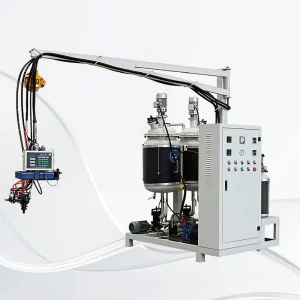
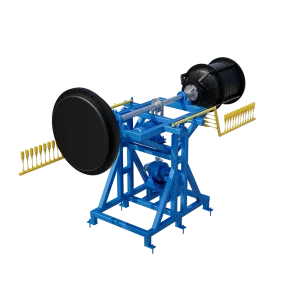
Explore our engineering-validated rotational moulds, CNC-machined aluminum tooling, and automated production machinery configured for global export.
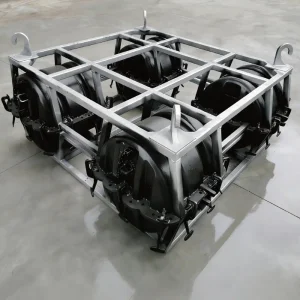
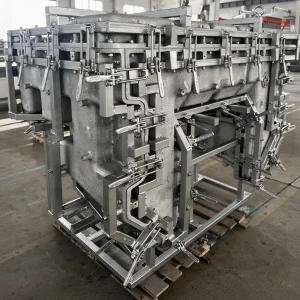
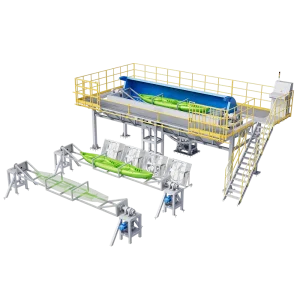
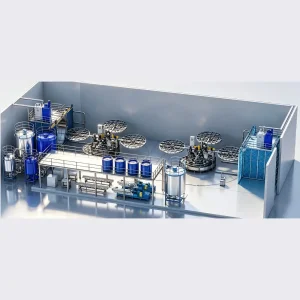
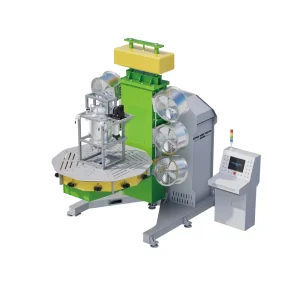
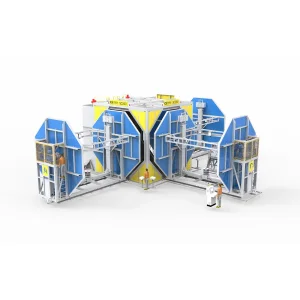
An in-depth evaluation of global supply chains, manufacturing technology shifts, and quotation dynamics for industrial procurement officers.
The global market for rotational molding (rotomolding) tooling has experienced a fundamental shift driven by advancements in CAD/CAM design integration, 5-axis CNC machining capabilities, automated thermal modeling, and stringent environmental policies. As industrial buyers seek lightweight, highly durable, seamless, and complex hollow plastic components—ranging from massive chemical storage vessels and agricultural spray tanks to high-end marine hulls and medical enclosures—the demand for precision rotomolding moulds has reached unprecedented heights.
Selecting the right rotomolding mould exporter and evaluating competitive quotes requires a multi-dimensional understanding of metallurgy, heat transfer kinetics, mechanical parting line design, and post-machining surface treatment. China has emerged as the premier global hub for custom rotomolding mould manufacturing, leveraging integrated raw material supply chains, advanced foundry facilities, and cost-effective precision engineering.
Achieving optimal Total Cost of Ownership (TCO) in rotational molding tooling requires balancing initial capital expenditure (CapEx) with cycle time efficiency (OpEx). Precision CNC-machined A356 aluminum moulds reduce oven dwell times by up to 18% compared to fabricated steel options, yielding millions in operational savings across high-volume production cycles.
Understanding the mechanical properties, thermal conductivity metrics, and production lifespans of core tooling materials.
Rotational molding tooling relies heavily on material selection to achieve uniform wall thickness, optimal resin powder flow, and predictable cycle times. The two primary categories dominating international export markets are Cast Aluminum Moulds (A356/AC4C) and Fabricated Steel Sheet Metal Moulds (C45/Q235).
| Performance Parameter | CNC Machined / Cast Aluminum (A356-T6) | Fabricated Sheet Steel Moulds | Direct Sourcing Impact & Recommendation |
|---|---|---|---|
| Thermal Conductivity | ~160 W/m·K (High efficiency) | ~45 to 50 W/m·K (Moderate efficiency) | Aluminum shortens heating/cooling cycles by 15-25%. |
| Geometric Complexity | Exceptional (Complex curves, undercut slides, threads) | Moderate (Best for uniform boxes, large simple tanks) | Cast/CNC aluminum is superior for organic ergonomics and fine detail. |
| Dimensional Tolerance | ±0.05 mm to ±0.2 mm | ±0.5 mm to ±1.5 mm | Precision assemblies require aluminum tooling accuracy. |
| Tooling Weight & Thermal Mass | Lower mass density (2.7 g/cm³) | Higher mass density (7.85 g/cm³) | Lighter aluminum tools reduce arm strain on carousel/shuttle machines. |
| Tooling Durability & Repairability | High yield strength, easily weld-repaired | Prone to thermal warping over 50k cycles | Aluminum offers longer operational lifespans under continuous thermal cycling. |
| Initial CapEx Investment | Moderate to High (Pattern + Casting costs) | Lower (Sheet cutting & manual fabrication) | Steel is ideal for prototype runs or massive low-detail containers. |
Engineered via wood/resin patterns, ceramic shell casting, or vacuum-assisted sand casting, followed by 5-axis CNC refining. Delivers flawless surface finish, integrated cooling fins, and intricate parting line locks.
Constructed by laser-cutting heavy carbon or stainless steel plates, roll-forming, and TIG welding. Best suited for ultra-large industrial storage tanks, septic systems, and agricultural hoppers.
Carved directly from solid forged aluminum blocks (6061-T6 or 7075). Offers zero porosity, extreme edge precision, and perfect parting line fitment for tight-tolerance technical products.
How top-tier rotomolding exporters eliminate defects like shrinkage, pinholes, warping, and uneven wall thickness during the design stage.
Polyethylene resins (LLDPE, HDPE, XLPE) shrink significantly during the cooling phase, typically ranging from 1.5% to 3.0% depending on polymer density, melt flow index (MFI), and cooling rate. Expert export engineers utilize non-linear scaling algorithms within SolidWorks and NX CAD environments to build customized shrinkage maps across distinct product geometry zones.
Because rotomolding relies on gravity-assisted powder rotation without injection pressure, appropriate draft angles are vital for clean demolding without distorting the plastic part. Standard recommendations enforced by leading exporters include:
Improper venting is the primary root cause of internal backpressure, wall blowouts, pinholes, and uneven resin accumulation. Advanced rotomolding moulds designed for international buyers feature PTFE-lined or silicone-sheathed breathers calibrated to heat transfer rates. Vent tube sizing follows strictly calculated cross-sectional ratios based on the cubic volume of the mold internal cavity.
Tailored tooling designs engineered to satisfy rigid compliance and structural standards across diverse sectors.
Heavy-duty moulds for pesticide sprayers, liquid fertilizer tanks, septic systems, and feeder troughs. Engineered with thick wall allowances, stress-relieved internal radii, and chemical-resistant seal channels.
Tooling solutions for double-walled kayaks, boat hulls, marina docks, and navigational buoys. Integrated with polyurethane foam-injection port features and stainless steel insert-molding pins.
Mould designs for insulated ice boxes, heavy-duty pallets, spill containment decks, and refuse carts. Optimized with dual-color layering features and high-impact structural perimeter ribbing.
Deconstructing cost factors, quotation line items, and risk mitigation when sourcing tooling overseas.
Evaluating a rotomolding mould quote from Chinese suppliers requires looking beyond the initial sticker price. Procurement specialists must analyze the itemized cost breakdown to ensure engineering integrity, alloy transparency, and comprehensive after-sales backing.
To receive an accurate, binding quotation within 24–48 hours, international buyers should provide their exporter with the following baseline technical specifications:
A standard high-precision cast aluminum mould quotation typically allocates: 35% Material & Foundry Casting, 30% 5-Axis CNC Milling & CAM Programming, 20% Fitting, Bench Polishing & Assembly, 10% First-Article Sample Testing & CMM Inspection, and 5% Export Packaging & Documentation.
Ensuring seamless integration with North American, European, and Asia-Pacific manufacturing standards.
Exporters adhere to certified quality management protocols. Every export-grade rotomolding machine and mold frame complies with European CE safety standards, including pneumatic safety locks and thermal insulation guards.
Coordinate Measuring Machines (CMM) and 3D laser scanners inspect mold cavities post-machining. Dimensional reports verify critical mounting locations, wall thickness contours, and parting line tightness before air freight.
Strict non-disclosure agreements (NDAs) protect client IP. Comprehensive export services include complete mold tryout videos, resin melt flow logs, CMM inspection sheets, and direct technical dispatch support.
How AI thermal modeling, IoT sensor integration, and additive manufacturing are revolutionizing the rotational molding ecosystem.
The rotational molding sector is undergoing a digital transformation. Smart factories require tooling systems that communicate directly with central machine PLCs, providing real-time data on mold temperature profiles, internal pressure spikes, and resin transformation points.
Direct technical answers to critical questions asked by industrial buyers, tooling engineers, and OEM project leaders.
Browse our machinery, eco-friendly electric heating equipment, and high-durability steel moulds available for global shipping.