Engineered for high thermal efficiency, extreme-cold resilience, and continuous heavy-duty operational stability.
An in-depth evaluation of market shifts, import substitution demands, and technical adaptation in the Eurasian Economic Union (EAEU).
The industrial landscape across the Russian Federation is undergoing a structural transformation. Driven by the rapid expansion of domestic manufacturing, urban infrastructure development, and localized agricultural modernization, the demand for high-capacity polymer processing equipment—specifically Rotational Molding Machinery and specialized Auxiliary Systems—has reached unprecedented levels. Modern Eurasian industrial enterprises in central manufacturing hubs such as Tatarstan, Moscow Oblast, Sverdlovsk, and the Volga Federal District are aggressively upgrading their technical infrastructure to build resilient, automated production facilities.
In response to international trade realignments, Russian plastic converters and tank manufacturers have turned away from traditional Western European machinery vendors in favor of top-tier, technologically advanced global exporters. Key criteria driving selection now center around operational durability, energy efficiency, immediate spare parts availability, and total compliance with GOST-R standards and Eurasian Customs Union (EAC) regulations.
Standard off-the-shelf auxiliary equipment operating in Siberian or Far-East Russian facilities frequently suffers from pneumatic freeze-ups, hydraulic fluid viscosity degradation, and electronic sensor drift. Leading exporters design customized cold-climate adaptation packages incorporating self-heating pneumatic manifolds, synthetic low-viscosity lubricants, and insulated PLC enclosures equipped with internal climate control micro-heaters.
How next-generation auxiliary machines redefine operational efficiency, material recovery, and smart factory automation.
Modern auxiliary machines incorporate Siemens and Schneider PLC architectures featuring OPC-UA protocols. Real-time temperature, motor load, and throughput data are continuously synchronized to central SCADA systems for predictive maintenance and zero-downtime operation.
Achieving optimal melt-flow indices (MFI) for LLDPE, HDPE, and polypropylene requires precise particle size distribution. Ultra-efficient pulverizers and turbo-mill grinders reduce energy consumption by up to 28% while generating uniform 35-mesh powders.
Eliminate batch inconsistency with automated multi-component gravimetric feeders. Precision dosing guarantees tight color tolerance and uniform distribution of UV stabilizers, anti-static additives, and flame retardants.
Customized auxiliary integration serving critical Russian infrastructure, municipal, and industrial manufacturing sectors.
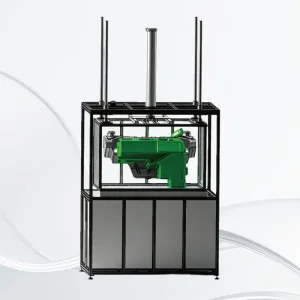
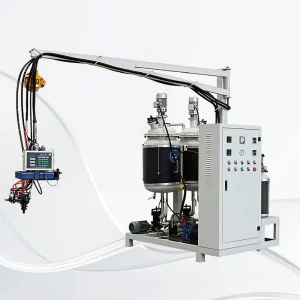
In Russia’s oil, gas, and agricultural sectors, subterranean and above-ground storage tanks must withstand massive thermal fluctuations and chemical stresses. Auxiliary equipment, including Automatic High-Pressure PU Foaming Machines, provides critical thermal insulation layers to double-walled containers. Furthermore, high-volume pneumatic watertight testers ensure 100% leak-proof compliance before field installation in remote Arctic sites.
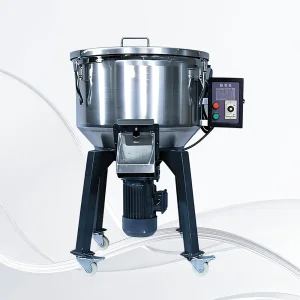
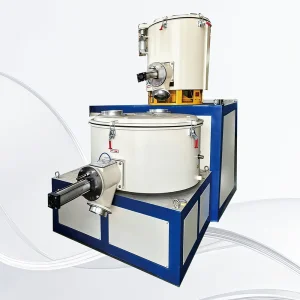
Leading Russian OEMs manufacturing combine harvesters, tractors, and heavy construction equipment rely on rotomolded plastic fuel tanks and hydraulic reservoirs. Achieving stress-crack-free products requires precise resin compounding and high-speed intensive mixing. Automated auxiliary powder feeders and turbo mixers supply homogenized raw materials directly to shuttle rotomolding machines, reducing cycle times and eliminating voids.
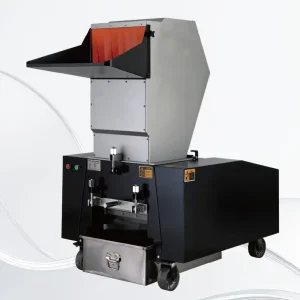
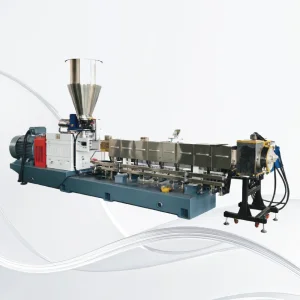
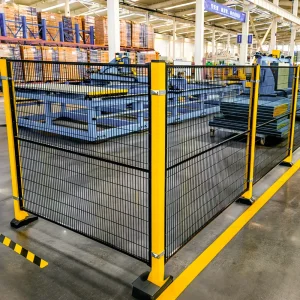
Municipal infrastructure programs across Russian urban centers require thousands of rotomolded septic tanks, drainage wells, and road safety barriers. High-capacity granulators and heavy-duty pulverizing mills allow manufacturers to process up to 30% recycled regrind material back into production without sacrificing structural impact strength, significantly reducing raw material overhead.
Strategic vision for sustainable polymer recovery, digital twin technology, and ultra-low emission auxiliary processing.
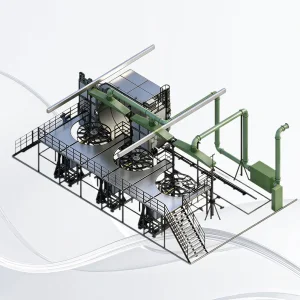
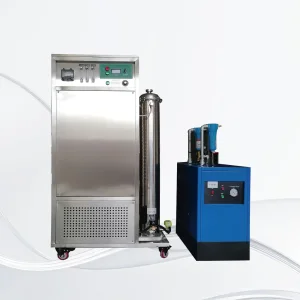
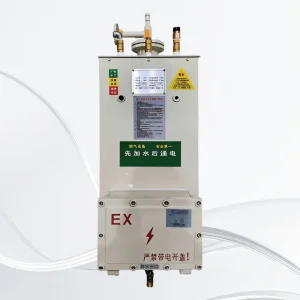
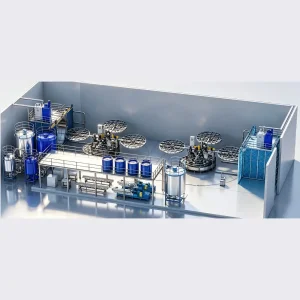
Explore our comprehensive lineup of auxiliary systems designed for rotational molding, compounding, and post-processing.
Addressing buyer intent, compliance standards, and maintenance requirements for Eurasian industrial buyers.