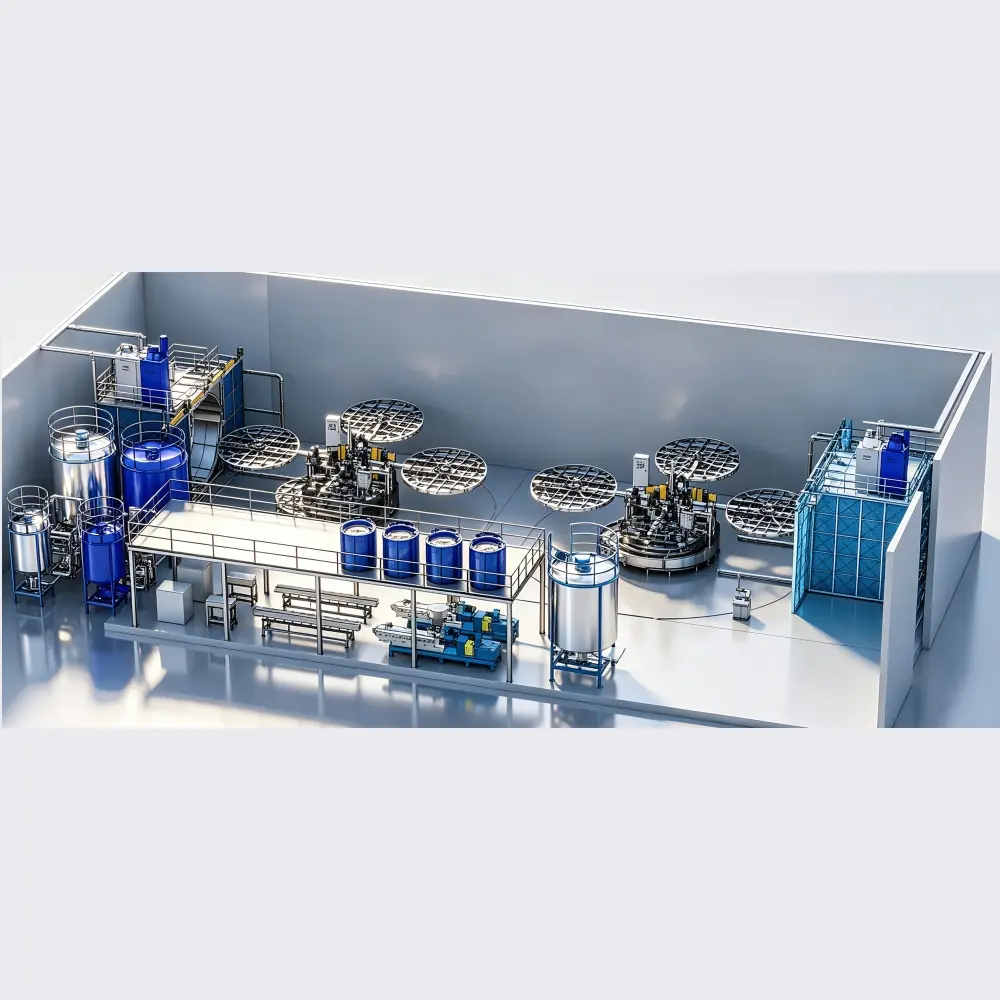
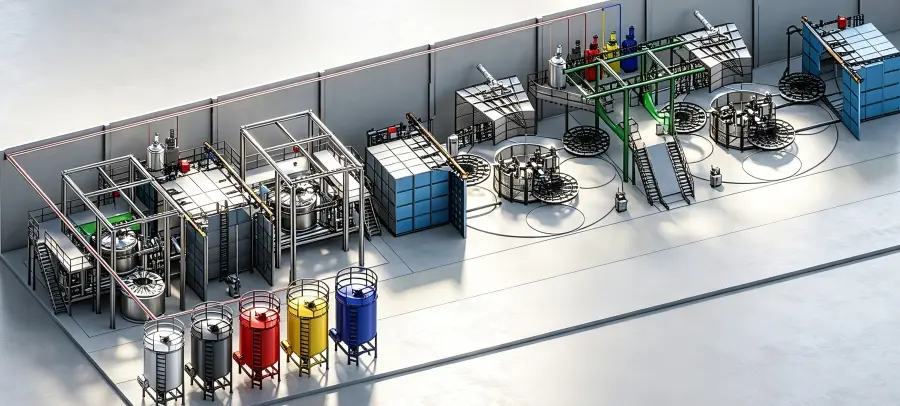
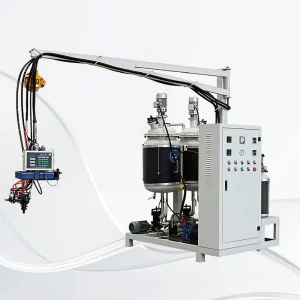
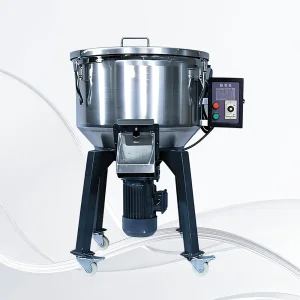
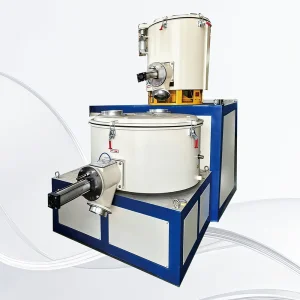
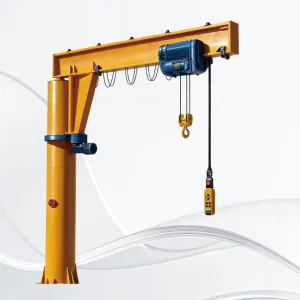
The Automatic Feeding & Weighing System is a highly efficient and intelligent solution designed for material handling in rotomolding production. It integrates sensor detection, automatic control, and mechanical transmission to realize automated color mixing, weighing, conveying, and feeding of raw materials. Replacing manual scooping, weighing, handling, loading, and inspection, it significantly reduces labor intensity, improves production efficiency, and ensures accuracy and stability of material supply - playing a key role in optimizing the production process and enhancing overall operational performance.
Widely used for automated powder dosing, multi-color mixing, and centralized feeding in rotomolding plants; it serves as the automated hub linking raw-material storage with the rotomolding process.
II. Core Advantages
Significantly Improved Efficiency
Labor time on loading, weighing, and color-mixing is cut by 57%-66% (e.g., bucket weighing reduced from 90 to 30 seconds); intermediate transfer steps are eliminated, shortening cycle time and boosting equipment utilization; simple installation and commissioning enable fast production launch.
Stable Product Quality
Precise feeding keeps weight deviation controllable, ensuring high product consistency and lower complaint rate; reduced manual contact with powder lowers contamination risk and raises qualification rate.
Dual Cost Savings
Labor cost reduced by 10%-60%, freeing workers for higher-value tasks; reject rate reduced by ~10%, significantly cutting material waste for substantial long-term savings.
Flexible and Expandable
Supports single-color / multi-color dosing systems and both short- and long-distance conveying; can be upgraded as capacity grows without replacing the whole system.
Worry-Free Maintenance
Integrated monolithic design with low failure rate and low maintenance cost.
III. Standard Configuration
01 Intelligent Control & Sensing Unit
Integrates sensor detection, automatic control, and mechanical transmission to precisely manage the entire color-mixing, weighing, conveying, and feeding process, ensuring accurate and stable dosing.
02 Automatic Unpacking & Feeding Unit
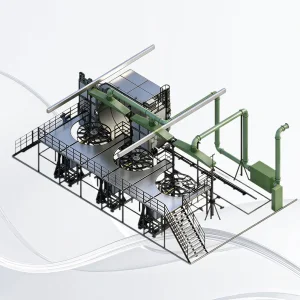
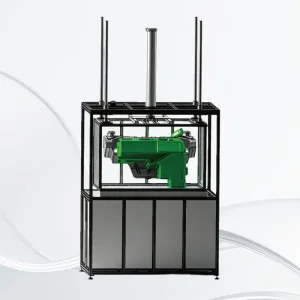
Equipped with automatic unpacking equipment and an unpacking robot, replacing manual unpacking, scooping, and handling to automate powder transfer from unpacking to feeding.
03 Weighing, Color-Mixing & Conveying Unit
Accurate weighing (controllable deviation) combined with automatic color mixing; supports single-color / multi-color recipe management and adapts to both short- and long-distance conveying for diverse production needs.
04 Highly Customized Engineering Delivery
Advanced in four phases - Requirement Survey -> On-site Survey -> Solution Design -> Production & Delivery: covering workshop layout, material flow, equipment positioning, and plant planning, delivering end-to-end optimization from exploration to final acceptance, achieving less labor, higher efficiency, lower reject rate, reduced handling and pollution, and batch traceability.
1. How does the Automatic Feeding & Weighing System improve labor efficiency?
Labor time required for loading, weighing, and color-mixing is reduced by 57% to 66%. For example, bucket weighing time is slashed from 90 seconds to just 30 seconds. Intermediate material transfer steps are completely eliminated, shortening overall cycle time.
2. What is the weighing accuracy range of the system?
The weighing accuracy deviation depends on the model capacity: +/-80 g for the 20 kg model, +/-100 g for the 50 kg model, and +/-200 g for the 100 kg model. Precise feeding keeps weight deviation highly controllable.
3. Can the system support multi-color raw material mixing?
Yes, the Weighing, Color-Mixing & Conveying Unit supports single-color and multi-color recipe management, adapting to both short- and long-distance conveying for diverse production demands.
4. What storage silo capacities are available as optional upgrades?
We offer a variety of optional storage silo capacities including 1 T, 2 T, 3 T, 5 T, and 10 T to meet different factory storage and feeding requirements.
5. How does this system contribute to overall cost savings?
The system lowers labor costs by 10% to 60% while reducing product reject rates by approximately 10%. By minimizing manual contact and powder loss, material waste is significantly reduced for long-term operational savings.
6. What process is followed for customized engineering delivery?
Our engineering delivery follows four comprehensive phases: Requirement Survey -> On-site Survey -> Solution Design -> Production & Delivery. This covers workshop layout, material flow, equipment positioning, and complete plant planning.