
Essential inline units engineered for maximum thermal efficiency, micro-dosing accuracy, and seamless integration into Central European production lines.
Analyzing the strategic re-industrialization of the Western Balkans, nearshoring dynamics, and technical equipment specifications required for local operational success.
Over the past decade, the Republic of Serbia has positioned itself as the preeminent manufacturing powerhouse of the Western Balkans. Fueled by strategic geographic positioning along Pan-European Corridor X, direct access to the European Union single market via the Stabilization and Association Agreement (SAA), CEFTA trade frameworks, and a highly skilled engineering workforce, Serbia has attracted multi-billion-euro foreign direct investments (FDI). Key industrial clusters across Vojvodina (Novi Sad, Subotica, Zrenjanin), the Belgrade Metropolitan Area, Kragujevac, and Niš have experienced exponential expansion in automotive component manufacturing, heavy plastic molding, agricultural liquid container production, and sustainable packaging solutions.
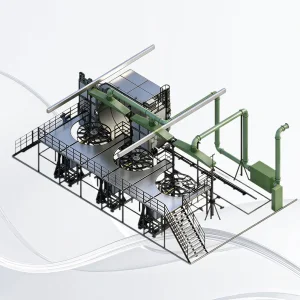
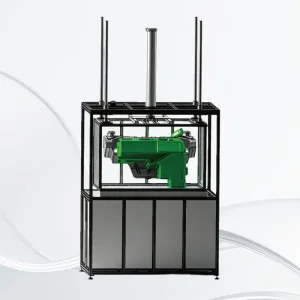
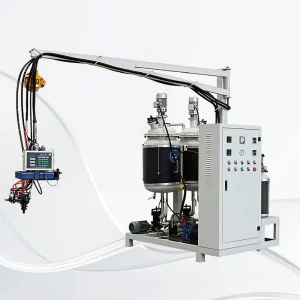
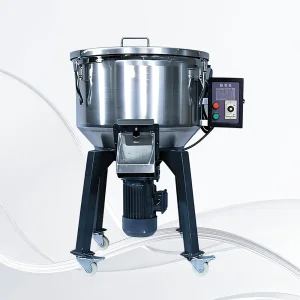
However, modern manufacturing competitiveness in Serbia no longer relies solely on primary processing units such as rotomolding machines, injection molding presses, or extrusion lines. The critical determinant of overall equipment effectiveness (OEE), product dimensional stability, scrap rate reduction, and energy efficiency lies in the performance of auxiliary machinery. Auxiliary systems—encompassing high-speed polymer pulverizers, automated gravimetric feeding and weighing setups, heavy-duty granulators/crushers, precise PU foaming machinery, industrial gasifiers, photo-oxygen VOC purification units, and watertight testing chambers—form the technical backbone of modern smart factories.
In high-throughput environments like the Stellantis supply chain in Kragujevac or packaging facilities in Šabac, auxiliary machinery failure causes up to 68% of unscheduled line downtime. Investing in heavy-duty, IoT-connected auxiliary equipment directly mitigates thermal variation, material segregation, and micro-void defects during rotational molding and extrusion cycles.
As Serbian manufacturers adapt to stricter EU Environmental directives and carbon border adjustment mechanisms (CBAM), the adoption of zero-emission photo-oxygen treatment units, closed-loop water chillers, and energy-efficient LDPE single-screw pelletizing lines has transitioned from an option to an operational imperative. Enterprise procurement teams across Serbia require machinery providers who understand both the rugged demands of local factory floors and the stringent technical compliance demanded by Western European OEMs.
Customizing auxiliary machinery configurations to solve specific manufacturing challenges in key Serbian industrial hubs.
Concentrated in Kragujevac, Niš, and Inđija. Requires high-precision auxiliary units for interior trims, ducting, fuel tanks, and acoustic barriers.
Vital across the agricultural heartland of Vojvodina for large-scale liquid fertilizer storage, septic tanks, and irrigation piping.
Supporting Serbian National Waste Management Directives by enabling in-house post-industrial plastic reclamation and regrind blending.
Why partnering with leading Chinese auxiliary machine manufacturers provides Serbian buyers with unmatched technical parity and Total Cost of Ownership (TCO) superiority.
In an era marked by European energy cost fluctuations and volatile equipment lead times from traditional Western European legacy vendors, Serbian plant owners face immense pressure to optimize capital expenditure (CAPEX) without sacrificing precision or reliability. Chinese auxiliary machine manufacturing centers—specifically located in key industrial nodes like Ningbo and Zhejiang—offer a compelling value proposition grounded in vertical supply chain integration, rapid engineering iteration, and stringent quality control.
By controlling the entire production process from raw structural steel laser cutting to machining precision mixer shafts and assembling IP65-rated PLC electrical panels in-house, lead times are compressed by up to 60%. Serbian plants receive custom-built machinery in weeks rather than months.
Our auxiliary machinery integrates tier-1 international components—including Siemens PLCs, Schneider contactors, Omron temperature modules, SKF bearings, and SMC pneumatic systems—ensuring local technical support and off-the-shelf spare parts availability throughout Serbia.
Furthermore, direct maritime logistics routes connecting major Chinese ports with the Port of Piraeus (Greece) and subsequent rail freight via the Belgrade-Skopje corridor ensure seamless, cost-effective door-to-door delivery. This logistics synergy, paired with preferential customs clearance mechanisms, guarantees that Serbian enterprises receive factory-tested auxiliary solutions at a fraction of the cost of legacy European brands.
Navigating the transition toward IoT-enabled predictive diagnostics, energy recovery systems, and automated material handling in Balkan plants.
The modern Serbian factory floor is rapidly evolving into a connected ecosystem where data drives operational efficiency. Modern auxiliary machines must no longer function as isolated islands; they must actively communicate with central MES (Manufacturing Execution Systems) and SCADA networks via OPC-UA and Modbus TCP/IP protocols.
Embedded vibration monitoring, thermal imaging sensors, and motor load telemetry alert maintenance teams in Novi Sad or Belgrade prior to bearing or cutter blade fatigue, eliminating catastrophic unscheduled downtime.
Variable frequency drives (VFDs) dynamically scale motor torque based on instantaneous material density in crushers and mixers, reducing electricity usage per kilogram processed by up to 32%.
Automated gravimetric loss-in-weight feeders continuously recalibrate resin-to-pigment ratios, ensuring strict color and density compliance for critical automotive exterior plastic parts.
By implementing these technological advancements, Serbian manufacturers build long-term operational resilience, allowing them to meet strict European supply chain sustainability benchmarks while increasing overall factory gross profit margins.
Ensuring full regulatory compliance, machine safety standards, and robust technical field support for Serbian industrial facilities.
Navigating machinery import and factory integration in Serbia requires strict adherence to both national safety standards and harmonized European Union directives. All auxiliary machines manufactured for Serbian export undergo rigorous factory acceptance testing (FAT) and are fully certified under the following European frameworks:
To guarantee uninterrupted operational uptime, our technical service network offers Serbian buyers comprehensive lifecycle support. This includes remote AR (Augmented Reality) video diagnostic assistance, rapid dispatch of replacement wearable components, and on-site commissioning by experienced field engineers trained to train local Serbian operators in Serbian or English.
Direct technical and commercial answers tailored for Serbian procurement directors, plant engineers, and factory owners.
Standard auxiliary machines (such as standard granulators, vertical mixers, and leak testers) are manufactured and factory-tested within 15 to 25 business days. Transit time via ocean shipping to the Port of Piraeus followed by bonded rail or truck transport to Belgrade/Novi Sad custom stations generally takes 22 to 28 days. Total door-to-door fulfillment ranges between 5 to 7 weeks.
Yes. All auxiliary units are built around non-proprietary, internationally standard industrial components (Siemens, Schneider, Omron, SKF, SMC). Common wearable items such as heater bands, thermocouple sensors, mixer blades, and filter cartridges can be sourced locally in Serbia or shipped express within 48 hours from our European spare parts storage node.
Absolutely. Our automatic gravimetric feeding and weighing setups feature flexible PLC controls with standard industrial communication protocols (Modbus TCP/IP, Ethernet/IP, and Profinet). They seamlessly interface with rotomolding machines, extruders, and injection molding equipment from any major international manufacturer.
Photo-oxygen VOC purification units utilize high-intensity UV-C radiation and titanium dioxide catalytic oxidation to neutralize organic vapors and odors produced during polyurethane foaming, resin melting, or paint processes. They assist Serbian plants in complying with national environmental protection laws and EU clean air emissions standards.
Every machine shipment includes a full technical documentation package in English (Serbian translated user manuals available upon request). This includes CE Declaration of Conformity certificates, electrical schematics, hydraulic/pneumatic circuit diagrams, exploded parts diagrams, and step-by-step installation guides.
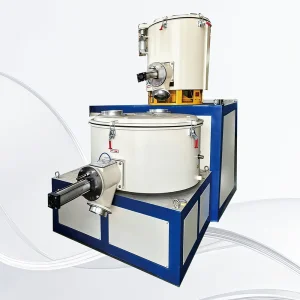
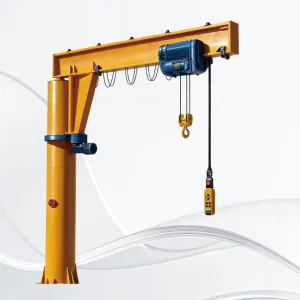
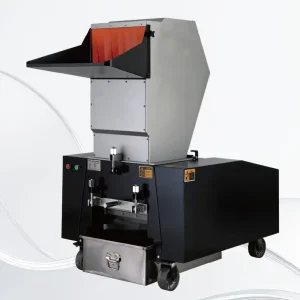
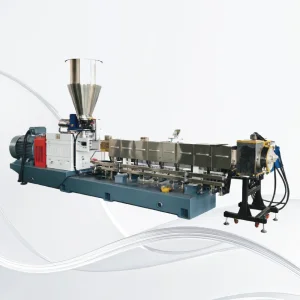
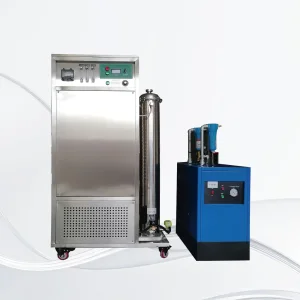
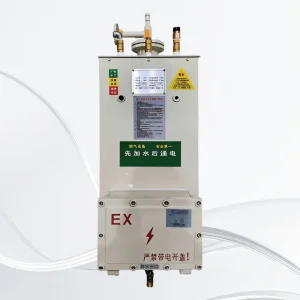
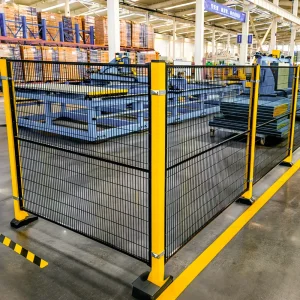
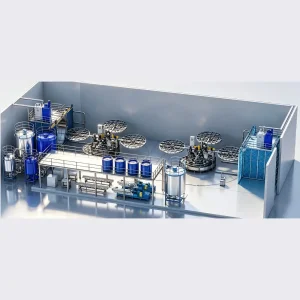
Explore our extended lineup of heavy-duty mixers, granulators, cranes, recycling systems, and safety perimeter setups engineered for Serbian industrial enterprise buyers.
Consult directly with our senior application engineers to receive custom equipment layouts, ROI calculations, and factory-direct price quotations within 24 hours.
Send Inquiry Now