
Engineered for seamless integration into high-altitude polymer manufacturing, rotomolding lines, and automated assembly in Greater Mexico City.
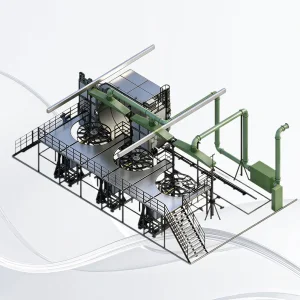
Advanced UV photo-catalytic oxidation systems for total VOC decomposition and stringent environmental compliance in Valley of Mexico factories.
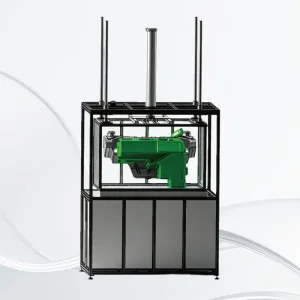
High-precision hydrostatic and pneumatic leak testing stations designed for hollow rotomolded containers and automotive fluid reservoirs.
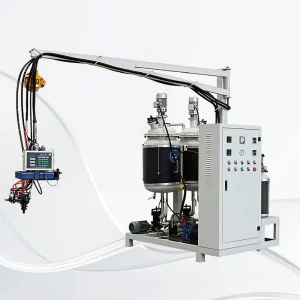
Precision temperature-controlled polyurethane metering and injection systems tailored for insulated container manufacturing in Mexico City.
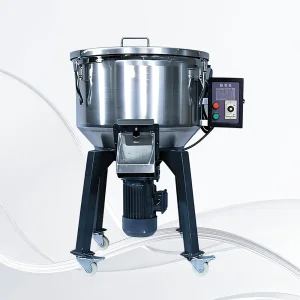
Rapid homogenizing mixing vessels engineered for polyethylene color compounding, dry-blending, and additive distribution.
The global manufacturing landscape is undergoing a monumental structural transformation. Driven by supply chain regionalization, the North American Free Trade realignment (USMCA / T-MEC), and a strategic imperative to shorten lead times, Greater Mexico City (comprising the Federal District, Estado de México, Toluca, Cuautitlán Izcalli, and the broader Valley of Mexico) has re-emerged as the premier manufacturing powerhouse of Latin America.
Historically recognized for heavy assembly and light consumer goods, Mexico City’s industrial corridors—such as Vallejo, Tlalnepantla, Naucalpan, and Parque Industrial Toluca 2000—are rapidly upgrading toward high-value polymer conversion, rotational molding, automotive component extrusion, medical-grade container synthesis, and complex chemical storage fabrication. As multinational corporations set up hyper-automated production lines in Mexico, the demand for high-reliability, energy-efficient auxiliary machinery has escalated exponentially.
While primary processing units—such as rotomolding carousels, twin-screw extruders, and blow molding presses—form the centerpiece of modern factory floors, factory throughput is fundamentally bounded by the operational efficiency of auxiliary machinery. Pulverizers, gravimetric blenders, high-capacity chillers, micro-dosing feeders, photo-oxygen VOC treaters, and automated pneumatic loaders dictate energy efficiency, scrap reduction, resin homogeneity, and overall uptime.
Operating industrial machinery in Mexico City presents localized engineering challenges that standard off-the-shelf equipment fails to resolve:
To achieve complete process synchronization within polymer, rotomolding, and automated industrial facilities, a cohesive ecosystem of auxiliary devices must work in harmony with primary machinery. Below is an architectural breakdown of the core auxiliary technologies designed for Mexico City industrial plants:
Turbo-disc pulverizers specifically designed for LLDPE, HDPE, and PP resin micronization. Features temperature-controlled mill chambers, automated gap adjustment, and integrated mesh screening for precise powder flowability required in rotomolding.
Loss-in-weight gravimetric feeders capable of micro-dosing pigments, UV stabilizers, and anti-static additives with non-linear calibration algorithms accurate to within ±0.15% margin of error.
Dual-circuit process water chillers and Mold Temperature Controllers (TCUs) equipped with altitude-compensated condenser coils, scroll compressors, and eco-friendly R410a/R32 refrigerants.
High-intensity UV photo-catalytic oxygen scrubbers designed to oxidize long-chain hydrocarbons, smoke particulates, and volatile organic compounds from rotational heating ovens.
Computer-controlled polyurethane (PU) high-pressure metering units designed for structural insulation, double-walled tank filling, and automotive bumper dampening.
Differential pneumatic leak testers, ultrasonic wall-thickness gauges, and hydrostatic pressure testing rigs configured for stringent quality control of industrial tanks.
| Auxiliary Category | Standard Sea-Level Specification | Mexico City Altitude-Optimized Spec (2,240m) | Primary Application Area |
|---|---|---|---|
| Chillers & Heat Exchangers | Air-cooled, standard airflow condenser fans | +25% oversized condenser surface, variable static pressure blowers | Mould rapid cooling, hydraulic fluid thermal stabilization |
| Pneumatic Resin Transport | Standard vacuum pump sizing (0.5 bar ΔP) | High-displacement positive displacement blowers (0.7 bar ΔP base) | Raw resin silo transfer to pulverizer/mixer hoppers |
| Photo-Oxygen Scrubbers | Standard dwell time UV chamber (254nm) | Extended residence chamber + dual-wavelength (185nm + 254nm) O3 synthesis | Oven chimney VOC abatement & odor elimination |
| Micro-Pelletizing Units | Standard water-ring die face cutter | Enclosed temperature-compensated water bath with forced air drying | Custom Masterbatch & regrind compounding |
As Mexico City’s manufacturing sector evolves toward Industry 4.0 standards, auxiliary machine architectures are shifting from standalone mechanical units to interconnected, self-optimizing cyber-physical nodes. The 2025–2030 technology roadmap focuses on three crucial dimensions:
Modern auxiliary machines exported to Greater Mexico City are built with embedded industrial IoT gateways supporting standard industrial protocols including OPC-UA, Modbus TCP, and Ethernet/IP. By relaying real-time sensor metrics—such as motor current draw, thermal gradients, vibration spectrums, and pneumatic line pressure—to the central plant Execution System (MES), operators can dynamically adjust machine parameters before quality defects occur.
Standard machinery installed at high altitudes suffers up to 15–20% operational derating if uncalibrated. Our engineering roadmap integrates smart barometric pressure transducers directly into auxiliary PLC controllers. For example:
In response to Mexico’s growing federal emphasis on sustainability and corporate ESG standards, our auxiliary equipment suite prioritizes immediate closed-loop scrap recovery. Direct-in-line heavy-duty crushers and granulators operate adjacent to rotomolding demolding stations, enabling immediate size reduction of trim scrap, flashings, and test parts into uniform, dust-free regrind that can be blended directly back into production cycles.
Navigating global supply chain volatility requires strategic partnerships that fuse world-class manufacturing capacity with localized field agility. China’s advanced machinery manufacturing hubs—specifically within Zhejiang and Jiangsu provinces—represent the global epicenter of auxiliary equipment component density, precision machining, and rapid innovation cycles.
From CNC cutter plate machining for pulverizers to specialized stainless-steel mixing vessel fabrication and electrical cabinet assembly, internal production guarantees strict ISO 9001 quality control and lower manufacturing costs.
Direct ocean freight routes connecting Ningbo and Shanghai ports to Manzanillo and Lázaro Cárdenas in Mexico allow for accelerated transit times of 18–22 days, followed by bonded truck transit straight into Mexico City customs hubs.
Deploying Chinese auxiliary equipment allows Mexico City manufacturers to achieve up to 40–50% capital expenditure savings compared to North American or European equivalents, without sacrificing component quality or durability.
By pairing advanced Chinese manufacturing with dedicated technical service partners across Greater Mexico City, regional processors benefit from the ideal industrial equation: tier-one equipment performance at highly competitive capital entry points.
Procurement executives and plant managers evaluating auxiliary equipment solutions in Greater Mexico City must carefully weigh various operational parameters against total cost of ownership (TCO). Below is a strategic comparative analysis highlighting key market offerings:
| Evaluation Parameter | European Auxiliary OEMs | North American Brands | China Manufacturing Excellence (Our Model) |
|---|---|---|---|
| Capital Expenditure (CAPEX) | Very High (Premium brand markup) | High (Elevated regional labor overhead) | Optimized / Highly Competitive |
| Custom Engineering Flexibility | Rigid / Standardized options | Moderate / Fee-based engineering | Agile / Fully Tailored Altitude Design |
| Lead Time to Mexico City | 16 – 24 Weeks | 12 – 18 Weeks | 6 – 10 Weeks (Including Pacific Transit) |
| Component Universality | Proprietary (High spare parts cost) | Standard Regional Components | Global Top-Tier (Siemens, Schneider, ABB) |
| Energy Efficiency Class | IE4 / High Efficiency | IE3 / Standard Efficiency | IE4 Premium Efficiency Available |
Deploying machinery in Mexico requires total compliance with local safety regulations and rigorous operational standards. Equipment exported to Mexico City undergoes rigorous pre-shipment engineering validation to meet or exceed:
Complete process support machinery engineered to maximize factory throughput, raw material recovery, and structural production integrity.
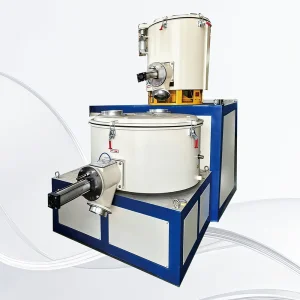
Ultra-fast fluidizing blade mixers designed for intensive color dispersion, PVC dry-blending, and masterbatch preparation.
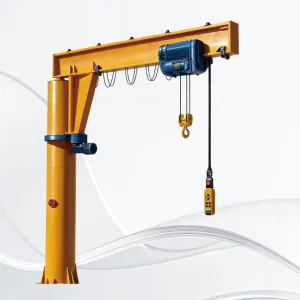
Precision-hoist crane infrastructure for rapid rotomolding mould positioning, arm loading, and heavy machine maintenance in Mexico City facilities.
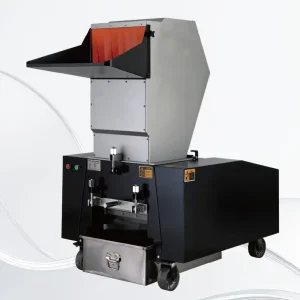
High-torque claw cutter granulators built for rapid size reduction of thick-walled rotomolded scrap, purgings, and oversized parts.
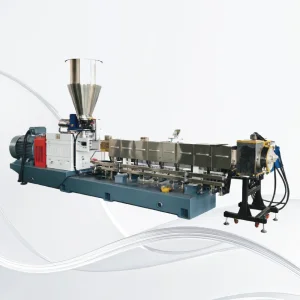
High-output single-screw extrusion recycling lines designed to re-pelletize LDPE/LLDPE scrap into uniform, high-quality production granules.
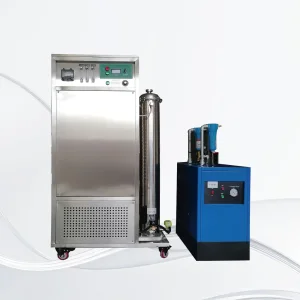
Specialized misting and liquid additive atomization units for precise surface conditioning and electrostatic powder treatment.
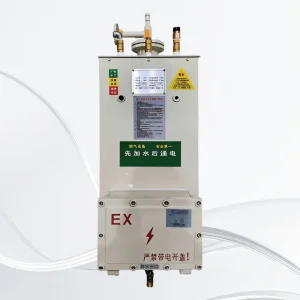
Clean combustion thermal energy gasification units engineered to supply low-cost process heat for high-volume manufacturing operations.
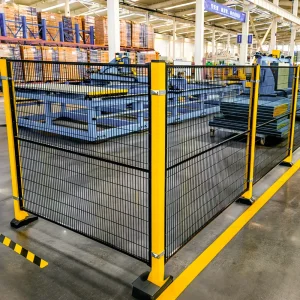
Heavy-duty industrial perimeter safety fencing with interlocked door sensors compliant with international plant protection standards.
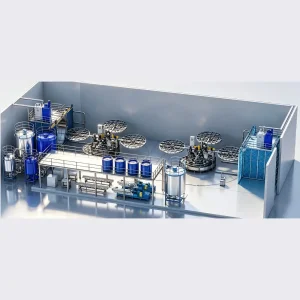
Centralized multi-station pneumatic conveying and precise loss-in-weight batch dosing systems for multi-line factory setups.
Expert answers regarding technical calibration, altitude adjustments, supply chain logistics, and NOM compliance for industrial buyers.
At 2,240 meters above sea level, atmospheric pressure is roughly 77.5 kPa, causing a ~22% reduction in air density. This lowers forced-air cooling capacity, reduces pneumatic transport suction, and alters burner air-to-fuel ratios. All auxiliary machines shipped to Greater Mexico City are engineered with altitude-compensated blowers, oversized heat exchangers, and recalibrated airflow sensors to guarantee sea-level rated performance.
Our auxiliary machine electrical panels are pre-configured to comply with Mexican NOM-001-STPS regulations. They accommodate standard Mexican industrial grid voltages (typically 220V, 440V, or 480V at 60Hz 3-phase). Cabinets feature Siemens or Schneider Electric switchgear, active surge protection, IP54/IP65 ingress sealing, and clear Spanish/English HMI interfaces.
Equipment manufacturing typically takes 3 to 5 weeks depending on machine customisation. Direct ocean shipping from Ningbo or Shanghai to Manzanillo or Lázaro Cárdenas ports takes approximately 18–22 days. Customs clearance and bonded inland trucking to industrial parks in Estado de México or Toluca generally add 5–7 days, making the total lead time roughly 6 to 10 weeks.
Yes. The Secretariat of the Environment of Mexico City (SEDEMA) enforces strict limits on VOCs, organic odors, and combustion byproducts. Our Custom Photo-Oxygen Scrubbers utilize dual-wavelength UV lamps (185nm + 254nm) combined with titanium dioxide (TiO2) catalysts to break down organic hydrocarbons into harmless H2O and CO2, ensuring full compliance with local emission standards.
Our automatic feeding & weighing systems feature fully enclosed stainless steel (SUS304/316) contact surfaces, high-efficiency HEPA dust collection filters, and positive-pressure air purging routines. This prevents ambient dust contamination—crucial in urban industrial corridors like Vallejo—and eliminates cross-color mixing during quick batch changeovers.
We partner with regional field engineering teams across Mexico City, Toluca, and Querétaro to provide on-site commissioning, preventive maintenance, and emergency response. Crucial wearable spare parts (blades, seals, heaters, sensors) are maintained in domestic buffer stock to ensure minimal factory downtime.