
Top-tier turnkey auxiliary solutions designed for immediate deployment across Uzbekistan’s rapidly expanding Free Economic Zones (FEZs).
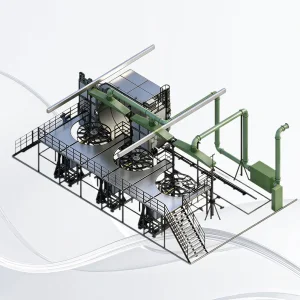
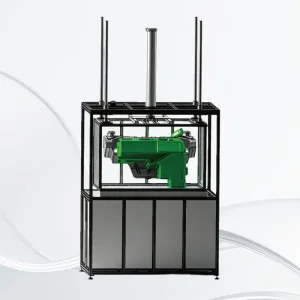
Under the national framework of the "Uzbekistan 2030" Strategy, the Republic of Uzbekistan is experiencing an unprecedented industrial modernization. Driven by wide-ranging economic reforms, privatization initiatives, and heavy foreign direct investment (FDI), the country has shifted rapidly from an agrarian-resource economy into the primary industrial processing and manufacturing power-hub of Central Asia. Regions such as Tashkent Region, Navoi Free Economic Zone (FEZ), Samarkand Industrial Park, Angren, and Chirchiq have become clusters for plastics transformation, automotive components, construction materials, municipal piping infrastructure, and chemical processing.
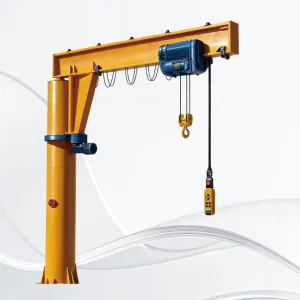
However, modern production lines—whether rotational molding, continuous extrusion, injection molding, or chemical compounding—cannot operate in isolation. Primary conversion machinery demands an integrated, highly reliable matrix of Auxiliary Machines. Auxiliary equipment acts as the vital support organ of the modern factory: controlling material dehumidification, gravimetric dosing, thermal fluid cooling, structural handling, size reduction (granulation/recycling), and VOC/gas emissions treatment.
The demand for international-grade auxiliary machinery in Uzbekistan is expanding at a Compound Annual Growth Rate (CAGR) exceeding 11.4%. Primary growth drivers include strict import-substitution policies on finished plastic items, national mandates for energy efficiency (reducing kWh per kilogram of processed material), and localized production requirements established within Special Economic Zones.
Factory directors and procurement heads in Uzbekistan face distinct operational environments:
When enterprise buyers in Tashkent or Fergana evaluate auxiliary equipment suppliers, the initial Capital Expenditure (CapEx) represents less than 25% of the machine's lifetime cost. Operational Expenditure (OpEx)—specifically electrical consumption, downtime risk, maintenance access, and spare parts availability—dominates the total cost equation.
Historically, Uzbek factory owners sourced auxiliary machinery either from expensive Western European brands or low-cost tier-3 regional traders. Today, modern industrial decision-makers utilize direct manufacturer partnerships offering high-grade Chinese OEM engineering with localized service frameworks.
| Evaluation Metric | Western European Brands | Tier-3 Regional Traders | StarWay Direct Factory Engineering |
|---|---|---|---|
| Initial CapEx Investment | Extremely High (300%-400% Premium) | Low (Initial price focus) | Optimized / Factory-Direct Cost |
| Climate Adaptability (-20°C to +45°C) | Standard Western European Specs | Poor (Frequent thermal trips) | Custom Heavy-Duty Tropicalized |
| PLC Integration & Modbus | Proprietary / Closed Ecosystem | Manual / Non-automated | Open Architecture (Siemens/Schneider) |
| Spare Parts Lead Time in Uz | 6–12 Weeks (Complex Sanctions/Logistics) | Unpredictable / Non-stocked | Fast-Track Central Asia Express Hub |
| GOST-Uz & CE Certification | Standard CE (Requires Re-certification) | Often Missing / Non-compliant | Full GOST-Uz & CE Documentation |
Electric power tariffs in Uzbekistan are continuously moving toward market-driven rates. Replacing traditional non-frequency-regulated auxiliary equipment with variable frequency drives (VFD) and insulated thermal loops yields dramatic payback periods:
Annual Energy Savings (USD) = [P_nominal × (1 - η_vfd) × Operating Hours × Energy Tariff] + Maintenance Downtime Savings
By integrating VFD-driven granulators, smart-chilling loops, and closed-circuit dry air mixers, an industrial facility processing 500 kg/hr of polyethylene reduces plant power demand by up to 28.5 kWh per ton of output.
StarWay Roto and our engineering divisions deliver end-to-end industrial auxiliary solutions. We categorize factory support equipment into five core operational matrices, ensuring every stage of raw material handling, processing, and environmental safety meets rigorous industrial standards:
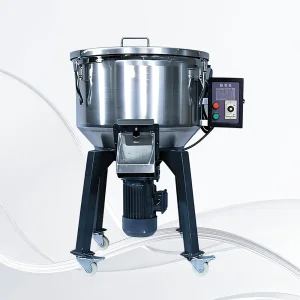
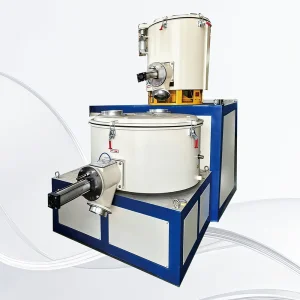
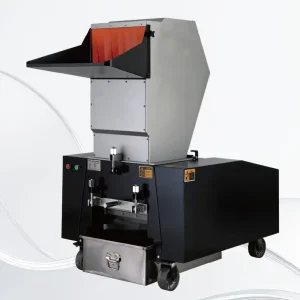
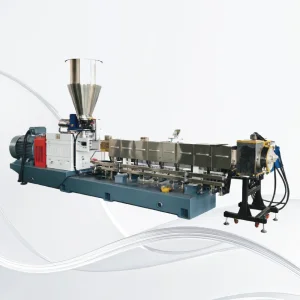
In plastic rotomolding, extrusion, and blow-molding factories across Uzbekistan, regrind quality directly determines product structural integrity. High-speed turbo mixers, LDPE/HDPE single-screw pelletizing lines, and heavy-duty crushers enable factories to reprocess internal scrap seamlessly without thermal degradation or particle size inconsistency.
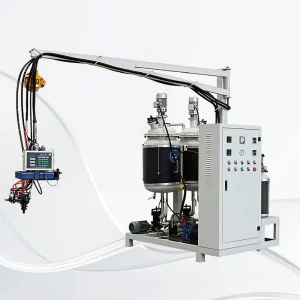
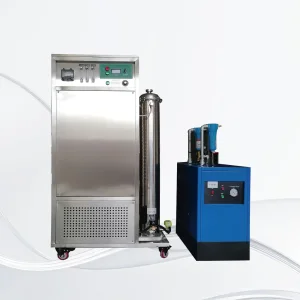
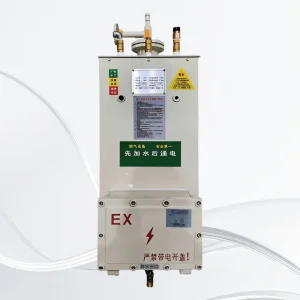
Controlling exothermic heating during resin curing and maintaining rapid mold cooling requires high-performance auxiliary machines. Our Polyurethane (PU) foaming equipment, industrial chilling units, and high-flow gasifiers provide exact thermal regulation for sandwich-panel construction materials, refrigeration units, and insulated tanks.
Manual batching leads to color variation, structural weak points, and resin waste. Automated centralized feeding and weighing systems utilize vacuum receiver networks and loss-in-weight gravimetric feeders to transport micro-pellets and powders directly from outdoor silos to processing machines.
Environmental enforcement by the Ministry of Natural Resources of the Republic of Uzbekistan requires factories to curb volatile organic compounds (VOCs) and chemical odors. Custom Photo-Oxygen UV catalytic purification units and EM atomizer processors break down hydrocarbon chains into harmless H₂O and CO₂ prior to atmospheric discharge.
Procuring industrial capital equipment across borders requires transparent logistics, regulatory compliance, and rapid post-installation technical service. StarWay Roto provides complete turnkey procurement assistance designed for the business climate of Uzbekistan.
Equipment is dispatched directly from our specialized manufacturing hubs via Khorgos / Altynkol rail nodes or block-train lines into Tashkent-Commodity (Code 720000) or direct door-to-door multimodal heavy truck transport via Kazakhstan. Machinery is packed in sea-and-land ruggedized steel frames with vapor-phase corrosion inhibitor (VCI) shrink packaging to prevent moisture during transit.
All export auxiliary units arrive fully documented to streamline Uzbekistan customs clearance (HS Code classification, Certificates of Origin Form E / General, CE Declarations, and GOST-Uz compliance documentation). This allows importers to take full advantage of equipment customs duty exemptions provided under Uzbekistan's FEZ investment frameworks.
Explore our full line of specialized industrial auxiliary equipment engineered for global export and demanding production environments.
Challenge: A major agricultural container manufacturer in Navoi suffered high scrap rates due to inconsistent resin micro-pellet size and thermal oxidation during open-flame molding.
Solution: Installation of an integrated auxiliary package comprising a High-Speed Turbo Mixer, an LDPE Single-Screw Pelletizing Line (Model 160-150), and an Automatic Gravimetric Dosing System.
Result: Material blending uniformity reached 99.4%, regrind reuse increased by 35% without structural degradation, and plant energy costs dropped by 18.2% annually.
Challenge: Meeting new governmental quality guidelines for municipal water transmission pipes required rigorous hydrostatic pressure testing up to 110 bar.
Solution: Commissioning of StarWay’s OEM Watertight Hydrostatic Tester System featuring multi-station pressure control and real-time digital curve recording.
Result: 100% compliance with GOST-Uz standards, allowing the enterprise to secure major municipal infrastructure contracts.
Technical and procurement answers for industrial buyers, engineers, and plant operations in Uzbekistan.
All auxiliary machines are custom-built to match Uzbekistan’s standard industrial power grid: 380V/400V, 3-Phase, 50Hz. Control circuits are isolated via step-down transformers (24VDC/220VAC) with built-in surge protection to handle voltage fluctuations in regional industrial zones.
Standard production time ranges from 20 to 35 days depending on machine complexity. Transit via direct international road freight or express container train via Khorgos takes approximately 12 to 18 days directly to Uzbekistan customs terminals.
Yes. Our auxiliary equipment utilizes open-architecture Siemens or Schneider PLCs with standard Modbus TCP/IP, Profinet, and OPC-UA protocols. They interface seamlessly with primary rotomolding, extrusion, or injection machines.
We provide a complete customs package including Commercial Invoices, Packing Lists with HS Code breakdowns, Certificate of Origin (Form E or Standard), CE Certificates, Technical Passports in Russian, and GOST-Uz compliance support documents.
We back our auxiliary machinery with a comprehensive 12 to 24-month structural and electrical warranty. Fast-wearing spare parts are dispatched via air express, with on-site technical support available across Central Asia.
We support standard international trade payment instruments including Telegraphic Transfer (T/T), Irrevocable Commercial Letters of Credit (L/C at sight), and structured trade financing tailored for enterprise buyers in Uzbekistan.
Contact our senior technical sales team today for custom engineering designs, ROI calculations, and factory-direct price quotations tailored specifically for the Uzbekistan market.
Send Inquiry Now