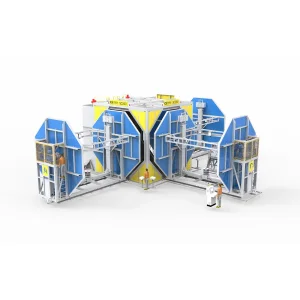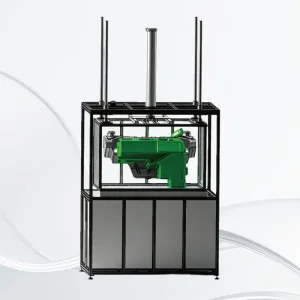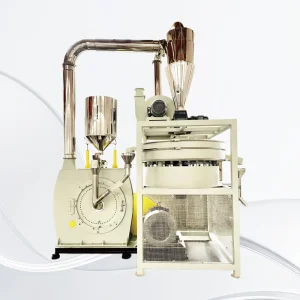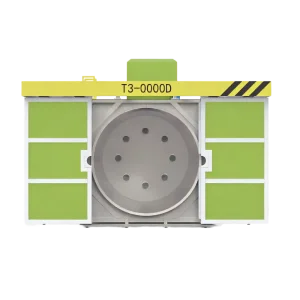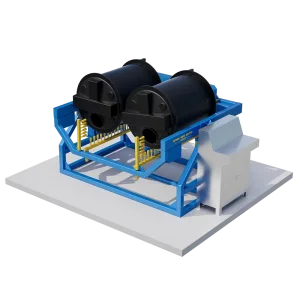
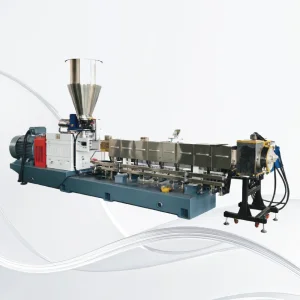
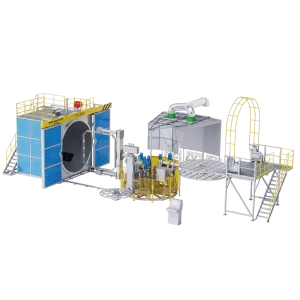
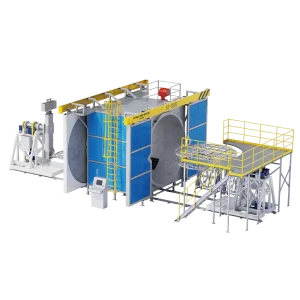
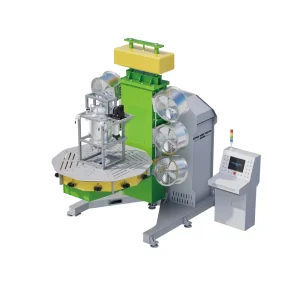
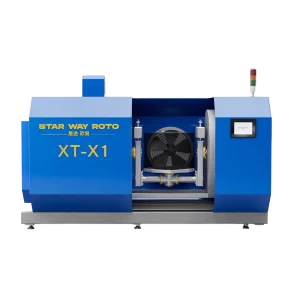
Rotational molding (commonly referred to as rotomolding or roto moulding) represents a pivotal thermoplastic processing discipline dedicated to producing stress-free, seamless, hollow structural components of virtually any scale. Unlike traditional high-pressure injection molding or extrusion blow molding, custom roto moulding operates under atmospheric pressure within biaxially rotating molds. This foundational dynamic fundamentally eliminates residual shear stress, yields uniform wall thickness distribution across complex radii, and enables unprecedented design freedom for industrial polymer applications.
The global market for custom roto moulders factories has undergone a profound paradigm shift driven by stringent material specifications, high performance demands in harsh operational environments, and the imperative for sustainable manufacturing practices. Modern industrial supply chains demand more than off-the-shelf plastic hollow containers; they require custom-engineered assemblies incorporating multi-layer barrier chemistries, structural metal inserts, precise thermal management channels, and lightweight geometric reinforcing ribs.
At the core of an advanced custom roto moulders factory lies a rigorous polymer thermodynamics and kinematic motion platform. Rotational molding involves four distinct heating, sintering, cooling, and demolding stages. Achieving zero-defect execution across large-scale geometries demands high-precision closed-loop control systems.
Independent variable-frequency drives (VFD) govern major (primary) and minor (secondary) rotational axes. By establishing optimal rotation speed ratios (typically ranging from 4:1 to 1:4), polymer powder spreads uniformly over complex mold cavities without bridging or pinhole formation.
Incorporating real-time internal air temperature (IAT) sensors allows direct monitoring of polymer melt phase transformations (Tg, Tm, and crystallization phases). This eliminates guesswork, preventing thermal degradation while guaranteeing complete bubble removal during sintering.
Warpage and structural distortion are mitigated through programmable forced-air and micro-atomized water mist cooling curves. Maintaining precise cooling gradients preserves polymer crystallinity levels (e.g., LLDPE/HDPE density optimization) for maximum impact resistance.
| Rotomolding Machine Architecture | Primary Production Focus | Thermal Efficiency Rating | Best Suited Industrial Applications |
|---|---|---|---|
| Independent Station Carousel | High-Volume Mass Production | 92% (Recirculating Hot Air) | Chemical Tanks, Water Systems, Automotive Liners |
| Shuttle Roto Machine | Flexible Multi-Product Runs | 88% (Enclosed Insulated Chamber) | Custom Enclosures, Medical Shells, Playgrounds |
| U-Arm Rock & Roll System | Ultra-Large Heavy-Duty Hollow Part | 84% (Direct Flame / Hybrid Oven) | Large Septic Tanks, Agricultural Storage, Marine Hulls |
| Direct Electric Heating Oven | Precision Micro-Tolerance & Eco-Clean | 96% (Zero Direct Combustion Emission) | R&D Testing, High-Purity Containers, Aerospace Parts |
In custom rotomolding, the structural integrity and aesthetic fidelity of the final plastic product are fundamentally bound to the quality of the mold tooling. Modern custom roto moulders factories leverage state-of-the-art tooling methodologies:
Advanced 3D CAD modeling paired with finite element analysis (FEA) and mold flow thermal simulation allows our engineers to pre-determine shrinkage factors, parting line dynamics, venting mechanism designs, and clamping force allocations long before physical metal fabrication begins.
Custom rotational molding solutions serve critical roles across diverse global industries. By replacing multi-part metal assemblies with single-piece, stress-free rotomolded plastic components, industrial clients achieve significant weight reduction, chemical resistance, and structural longevity.
Heavy-duty vertical and horizontal chemical tanks engineered with high-density polyethylene (HDPE) and cross-linked polyethylene (XLPE). Features seamless construction resistant to stress cracking and chemical oxidation.
Complex diesel fuel tanks, hydraulic fluid reservoirs, air intake ducts, marine hulls, and agricultural equipment cabins designed with embedded brass threads and leak-proof fitting inserts.
Insulated temperature-controlled shipper boxes, bio-medical waste containers, cleanroom-grade transport drums, and FDA-compliant poly bins utilizing polyurethane foam injection between rotomolded double walls.
Global OEM partnerships require strict adherence to international quality management systems and regional regulatory directives. A world-class custom roto moulders factory maintains an end-to-end Quality Assurance (QA) framework:
The future of custom rotational molding lies in continuous automation, digital twin simulations, and green manufacturing technologies. StarWayRoto is pioneering next-generation machine platforms engineered for sustainable industrial expansion:
Integrating machine-learning algorithms with IR thermal cameras to dynamically adjust gas burner outputs or electric heating elements in real-time, reducing energy consumption by up to 22%.
Optimizing machine airflow and heating cycles to seamlessly process post-consumer recycled (PCR) PE resins and bio-based polyethylene compounds without compromising tensile impact strength.
Deploying articulated robotic arms for automated resin powder charging, core pulling, insert placement, and finished part extraction to maximize plant safety and operational speed.
Rotational molding operates at atmospheric pressure, eliminating residual internal stresses in the polymer. This makes rotomolded parts vastly more stress-crack resistant compared to injection molded parts. Furthermore, tooling costs for rotomolding are typically 60% to 80% lower than injection molding tools, making rotomolding ideal for medium-to-large hollow components and short-to-medium production runs.
Wall thickness uniformity is achieved by calibrating the bi-axial rotation speed ratio, optimizing heat transfer across specific mold zones using thermal shielding or localized air-assist blowers, and employing high-conductivity cast aluminum tooling with engineered wall taper angles.
Linear Low-Density Polyethylene (LLDPE) and High-Density Polyethylene (HDPE) account for roughly 85% of rotomolded products due to their ideal thermal flow and impact toughness. For specialized applications, Polypropylene (PP), Polyamide (Nylon 6 / Nylon 12), Polyvinyl Chloride (PVC), and Cross-linked Polyethylene (XLPE) are utilized.
Yes, threaded brass, stainless steel, or aluminum inserts can be fixed into the mold before powder charging. During heating, the polymer resin encapsulates the knurled exterior of the insert, creating an integrated, high-torque, leak-proof mechanical bond.
Standard prototype tooling and sample validation typically require 30 to 45 days, depending on geometric complexity and tool choice (cast aluminum vs. CNC billet). Production-ready multi-cavity tooling setups can be completed in 45 to 60 days.
Electric heating machines offer zero local combustion emissions, precise zone temperature control (±0.1°C), and lower noise levels, making them ideal for cleanroom or eco-regulated zones. Gas-fired ovens provide rapid thermal recovery and cost advantages in regions with low natural gas prices.