
Engineered for precise thermal distribution, dynamic biaxial balancing, and maximum thermodynamic yield across large-scale industrial product designs.
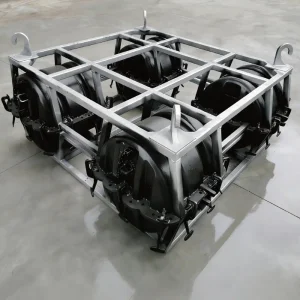
Famous China Steel Mould Suppliers - Quality Factory-Made Moulds for Durable Industrial Solutions Manufacturer, Factories
Request Machinery Specs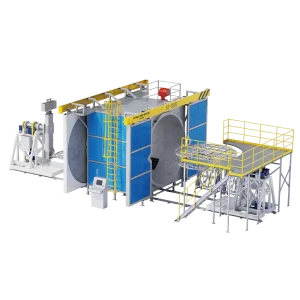
Famous Customizable Shuttle Rotomolding Machine Factory in China - High-Load Arm for Large Product Mass Production by Top Suppliers Manufacturers, Quotes
Request Machinery Specs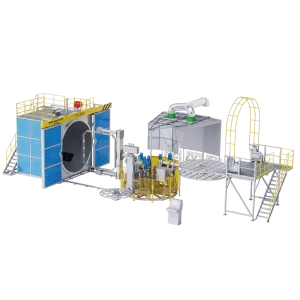
Buy Carousel rotomolding machine Manufacturers, Service
Request Machinery Specs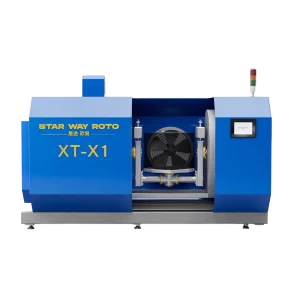
Custom China Lab Machine Suppliers: Advanced Factory Equipment for PE, PP, PA Material Testing with Intelligent Control System Manufacturers, Factory
Request Machinery Specs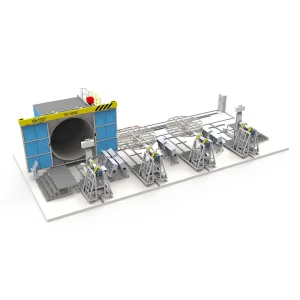
Custom China Suppliers: High-Efficiency Lined Shuttle Machine for Factories with Reduced Floor Area Manufacturers, Exporter
Request Machinery Specs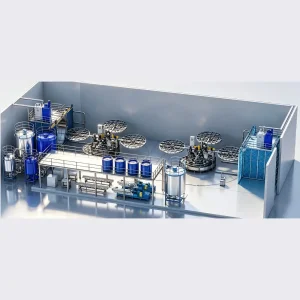
High-Quality Automatic Feeding & Weighing System Exporters, Quotes
Request Machinery Specs
ODM China Lab Machine: Intelligent Temperature Control for PE, PP, PA Materials - Top Suppliers & Factory for R&D Testing Factory, Exporter
Request Machinery Specs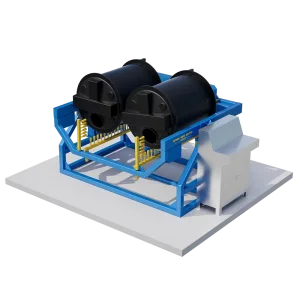
CE Certification China Suppliers Factory U-arm Open Flame Rock and Roll Machine for Large Hollow Products Like Water Tanks and Buckets Pricelist, Product
Request Machinery SpecsA structural shift toward monolithic, stress-free hollow plastics is reshaping modern plant engineering across Europe, North America, and high-growth industrial clusters.
Global manufacturing entities are transitioning away from high-tonnage injection tooling and multi-part extrusion welding in favor of heavy-duty rotational moulding. The economic tipping point lies in tooling amortization: rotational moulds operate at atmospheric pressure, lowering capital entry barriers by 60% to 80% compared to equivalent injection clamp molds for large hollow geometry.
The historical limitation of rotational moulding to standard Linear Low-Density Polyethylene (LLDPE) has shattered. Leading factories process cross-linked polyethylene (XLPE), high-density compounds (HDPE), polypropylene (PP), and high-performance polyamides (PA-6, PA-11, PA-12) for hyper-demanding chemical containment, underground civil piping, and low-permeation fuel reservoirs.
While mature North American and Western European markets prioritize automated continuous carousel cells for logistics and municipal sanitation, Asia-Pacific and Latin American enterprises dominate the deployment of multi-station open-flame and hot-air rock-and-roll systems optimized for agricultural cisterns, agricultural sprayers, and massive water storage solutions up to 50,000 liters.
Precision thermomechanical management replaces operational trial-and-error with sensor-driven thermodynamic validation.
Legacy rotational moulding relied heavily on ambient oven run-times, causing massive quality dispersion caused by seasonal factory temperatures. Modern smart rotational moulding machines incorporate continuous wireless RF thermocouple transceivers embedded within the mould cavity. By measuring the real-time internal air temperature (PIAT), the machine precisely triggers the end of the polymer sintering phase and begins controlled cooling at the microsecond of complete powder coalescence, completely eliminating embrittlement or under-cured inner wall defects.
Stringent corporate ESG requirements have catalyzed the transition from massive convective gas ovens to direct conduction and infra-red (IR) electric heating arms. By mounting high-efficiency electric thermal blankets or focused ceramic IR panels directly surrounding the CNC-machined aluminum moulds, thermal efficiency rises from an industry baseline of 22% (typical gas ovens) to over 75%, slashing thermal dissipation and radically curtailing carbon emissions per kilogram of output.
Single-layer polyolefins often fall short of meeting dual requirements for UV resistance and chemical barriers. Next-generation production cells integrate synchronized pneumatic drop-boxes and robotic internal pellet dispensers. This enables the automated manufacture of 3-layer and 4-layer structures: an outer virgin UV-stabilized skin, a core containing up to 60% post-consumer recycled (PCR) compound or foamed insulating polyurethane, and an ultra-pure, crosslinked inner liner barrier.
Historic carousel designs tied all working arms to identical cycle periods, enforcing sub-optimal compromise on heating or cooling times across disparate product moulds. Industry-standard modern carousel configurations deploy independent-arm drives driven by high-torque AC servo motors. Arms can rotate and articulate autonomously, allowing dissimilar moulds—such as an 80kg septic chamber and a 4kg automotive air intake duct—to cycle concurrently without compromising thermodynamic recipes.
Custom rotational moulding platforms are selected based on payload capacities, mechanical geometries, and severe duty-cycle specifications.
| Industry Sector | Common Moulded Products | Material System | Recommended Machine Architecture | Key Engineering Constraints |
|---|---|---|---|---|
| Agritech & Fluid Storage | Agricultural sprayers, chemical silos, liquid fertilizer IBC tanks (up to 30,000L) | UV8/UV12 LLDPE, High-Flow HDPE | Heavy-Duty Shuttle or Rock-and-Roll System | Zero residual stress to counter environmental stress cracking (ESCR) under intensive solar UV. |
| Automotive & Heavy Equipment | DEF (AdBlue) reservoirs, hydraulic fluid chambers, cabin roofs, air ducts | Crosslinked PE (XLPE), Polyamide 6/12 | Independent-Arm Carousel with Internal Air Cooling | Tight volumetric tolerance, severe low-permeation compliance, and uniform bracket wall thickness. |
| Marine & Nautical Engineering | Kayaks, unsinkable recreational hulls, yacht navigational buoys, modular pontoon docks | Linear Polyethylene, Polyurethane Foaming Core | Open-Flame or Enclosed Oven Rock-and-Roll | Dual-axis wall consolidation to resist long-term hydrostatic pressure and salt-fog degradation. |
| Cold-Chain & Pharma Logistics | Insulated dry-ice vaccine containers, food storage chest freezers, hazardous pallets | Food-Grade LLDPE + Injected Closed-Cell PUR | Multi-Station High-Capacity Carousel | Superior inner-to-outer surface parallelism, zero pinholes, FDA sanitary washdown compliance. |
| Municipal & Clean Environment | Industrial trash bins, septic sedimentation tanks, inspection manholes, road barriers | 100% Reprocessed PCR-LLDPE Compounds | Fixed-Arm Carousel or Lined Shuttle | Maximizing melt strength during cooling; preventing premature corner thinning and thermal warpage. |
Constructing a high-yield rotational moulding plant demands harmonic integration between thermal generation, pneumatic automation, pulverization, and material kinematics.
The operational success of rotational moulding is dictated before the mould enters the oven. Polymer pellets must be processed through high-speed disc pulverizers down to 35-mesh (500 microns) or 50-mesh (300 microns) powder with superior dry-flow bulk density. Our automated centralized silos integrate pneumatic vacuum conveyers and precision gravimetric batch dispensers to guarantee that material charges match exact mass specifications down to ±10 grams, curtailing resin waste.
Oven chamber airflow velocity is the critical factor in heat transfer rate. Our ovens deploy CFD-optimized dual-plenum centrifugal circulation systems. High-velocity heated air is projected at turbulent boundary layers across both the upper and lower halves of multi-cavity moulds. This achieves temperature uniformity of ±2.5°C across the complete rotation envelope, mitigating wall thickness discrepancies between deep-draw pockets and outer faces.
Uncontrolled cooling is the root cause of internal crystalline stresses and severe component warping. Our closed-loop cooling chambers integrate staged air-mist cooling cycles. High-capacity axial fans first lower polymer skin temperature; subsequently, atomized mist injection extracts latent heat during the polymer crystallization window (115°C to 85°C for polyethylene). Finally, dry air finishes the cycle, stabilizing dimensional geometry and preserving impact strength.
Anticipating algorithmic control systems, sustainable circular polymer compounds, and zero-carbon machinery designs.
Integration of real-time computer vision and machine learning models predicting molten plastic lay-down behavior within complex moulds. The system automatically fine-tunes rotation ratios on the fly to eliminate thin corners without physical prototyping iterations.
Transition of industrial oven heating plants toward ultra-low NOx dual-fuel modulating burners capable of seamless operation on hydrogen-methane blends, reducing operational Scope 1 greenhouse gas emissions by up to 45%.
Standardized thermal recipes and machinery automation for 100% bio-based polyamides and chemically recyclable circular polymers, overcoming narrow thermal processing windows through high-speed induction moulds.
Fully dark rotomolding factories featuring autonomous mobile robots (AMRs) for powder payload loading, mold mechanical unlatching, and demolding, driving labor overheads down while guaranteeing zero personnel exposure to high-temperature tooling.
Detailed answers to technical parameters, machinery commissioning, and operational thermal governance.
The benchmark primary-to-secondary axis ratio commonly operates between 4:1 and 8:1 for conventional hollow symmetrical geometries (such as vertical tanks and cylindrical silos). However, complex, non-symmetrical configurations (such as marine kayaks or automotive fuel reservoirs) demand dynamically variable rotational speed controls via servo VFDs. An improper ratio leads to resin accumulation along the perimeter (banana effect) or excessive thinness along inner acute angles.
PIAT is the single most definitive indicator of polymer cure state. For linear low-density polyethylene (LLDPE), achieving a PIAT between 195°C and 215°C ensures complete bubble removal and optimum polymer coalescence. Under-curing (PIAT < 190°C) produces chalky, porous inner surfaces with poor tensile strength. Over-curing (PIAT > 230°C) triggers oxidative thermal degradation, yielding a sharp, pungent odor, yellow discoloration, and a radical drop in low-temperature impact resistance.
Select a Carousel configuration when running dedicated high-volume, continuous production where cycle times across moulds can be closely synchronized across 3 or 4 arms (loading, heating, cooling, unloading). If your production orders are fragmented, involving high mold changeover frequencies, varying shot weights, or drastically disparate wall thicknesses requiring independent heating and cooling durations, a Shuttle machine provides superior agility and avoids arm-synchronization downtime.
Fabricated sheet steel moulds (1.5mm to 3mm) are ideal for very large, geometric hollow shapes like cylindrical storage tanks, offering high structural durability and the lowest initial investment. Cast or CNC-machined aircraft-grade aluminum moulds (such as 6061 or A356) are mandatory for complex surface textures, automotive parts with critical tolerances, and medical equipment housings due to aluminum's superior thermal conductivity (3 to 4 times higher than steel), which reduces heating cycles by up to 30%.
Bubble entrapment in thick walls (>8mm) occurs when viscous molten resin seals outer surfaces before inner gases escape. Mitigations include: (1) specifying resins with a higher Melt Flow Index (MFI 3.5 to 5.0), (2) ensuring narrow resin particle size distribution with zero elongated "tails", (3) optimizing mold internal venting using breathable PTFE or silicone tubes, and (4) utilizing secondary pressurization (≤ 0.5 bar) during the terminal sintering phase to collapse micro-voids.
Standard rotational moulding grades of LLDPE and HDPE exhibit volumetric and linear shrinkage between 2.5% and 3.5%. The exact figure depends heavily on the cooling rate: rapid water quench increases amorphism, yielding lower shrinkage (~2.2%) but inducing internal stresses; slow ambient air cooling promotes higher crystallinity (~3.5% shrinkage), boosting stiffness and ESCR. Tooling design must accurately incorporate these shrink factors via CNC offset scales.
Complete your vertically integrated rotomolding cell with precision laboratory testing, upstream compounding, and open-flame tank machinery.
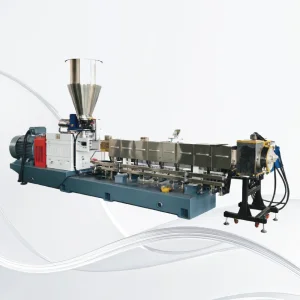
ODM LDPE SINGLE-SCREW PELLETIZING MACHINE Model 160-150 Pricelist, Quotes
Request Machinery Specs
ODM High-Load Shuttle Rotomolding Machine from China Suppliers - Custom Solutions for Large Products at Our Factory Quotes, Products
Request Machinery Specs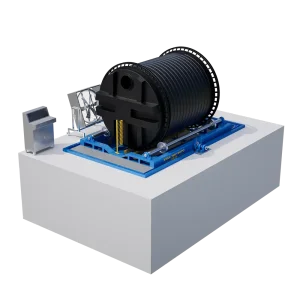
Famous Standard Open Flame Rock and Roll Machine for Steel-Lined Plastic Storage Tanks - China Suppliers Factory Company, Product
Request Machinery Specs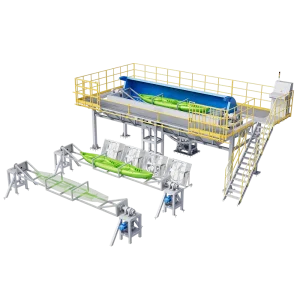
Custom China Suppliers Rock and Roll Swing Oven Machine for Large Yachts and Vessels - Factory Direct Quality Manufacturer, Products
Request Machinery Specs
Custom U-arm Open Flame Rock And Roll(swing) Machine Companies, Product
Request Machinery Specs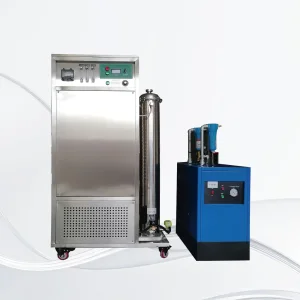
Custom EM Atomizer Processor Company, Product
Request Machinery Specs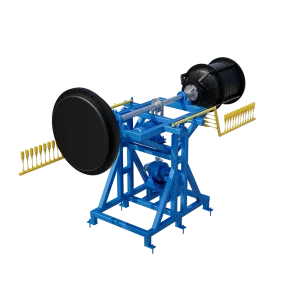
China China Suppliers Factory Small Open Flame Rock And Roll Machine for Hollow Products Production Exporter, Products
Request Machinery Specs
OEM Lined shuttle Machine Companies, Products
Request Machinery Specs