
Explore our top-tier shuttle, carousel, and rock-and-roll rotational molding systems designed for peak thermal efficiency and heavy-payload capability.
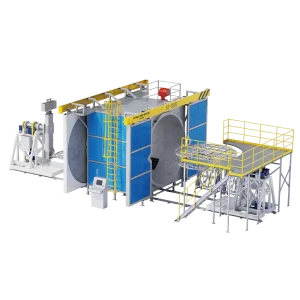
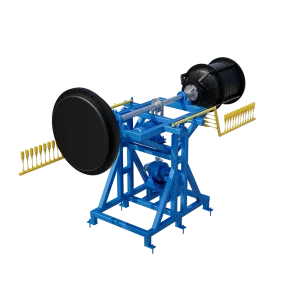
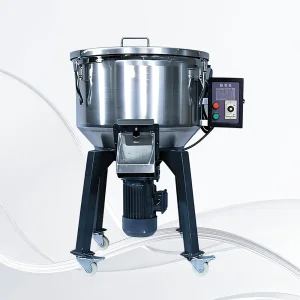
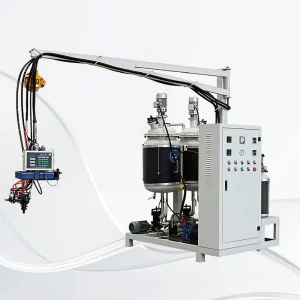
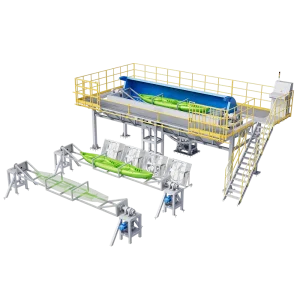
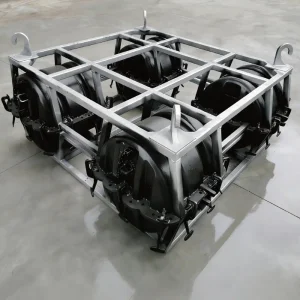
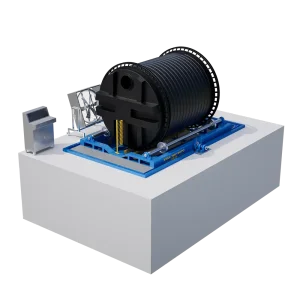
The global industrial polymer processing sector is experiencing an unprecedented structural shift toward large-format, seamlessly molded hollow thermoplastic products. Modern rotational molding (rotomolding) has evolved from a traditional craft-based process into a precise, automated thermomechanical science. At the center of this transition are CE Certified Oven Rotational Moulding Machines, engineered to meet demanding European Union safety directives while operating under strict thermal efficiency standards.
In today's global manufacturing climate, industrial buyers are no longer seeking basic heating chambers; they require fully validated, thermomechanically optimized processing cells capable of maintaining precise internal mold temperatures (TPT). As global energy markets fluctuate, thermal insulation performance, burner combustion efficiency, and safety compliance under the Machinery Directive 2006/42/EC, Low Voltage Directive 2014/35/EU, and Gas Appliance Regulation (EU) 2016/426 form the baseline criteria for machinery acquisition.
Achieving rigorous CE compliance requires structural engineering integrity across all mechanical assemblies, dual-channel safety interlocks, positive-pressure burner combustion management systems (BMS), and zero-leakage burner flue ductwork. Ningbo StarWay Roto Co., Ltd. integrates high-efficiency recirculating airflow technology, precision dual-axis gear drives, and intelligent Siemens PLC automation to ensure every oven-style rotomolding system delivers continuous, repeatable quality for complex polymers, including linear low-density polyethylene (LLDPE), cross-linked polyethylene (XLPE), polyamide (PA 6/12), and polypropylene (PP).
When global manufacturing enterprises search for CE Certification Oven Rotational Moulding Machine Quotes & Service, their commercial intent extends far beyond requesting a baseline price list. Procurement executives, plant managers, and senior tooling engineers evaluate equipment purchases using comprehensive Total Cost of Ownership (TCO) frameworks. Key financial and operational variables include capital expenditure (CAPEX), operational expenditure (OPEX)—specifically fuel/kWh per kilogram of processed resin—cycle time efficiency, and post-warranty technical support SLAs.
Information Gain Insight: Over a 10-year operational lifecycle, fuel energy consumption accounts for roughly 62% of a rotomolding machine's total TCO, whereas the initial capital purchase represents only 22%. Procuring a CE-certified oven equipped with multi-layer high-density ceramic fiber insulation ($k \le 0.038 \text{ W/m}\cdot\text{K}$) yields full ROI on the machinery premium within 14 months of continuous operation.
Selecting the appropriate machinery layout depends on part geometry, wall-thickness uniformity requirements, and polymer selection. The matrix below outlines operational tradeoffs across major rotational molding machine topologies:
| Architecture Type | Heating Efficiency | Wall Thickness Uniformity | CE Safety Compliance Level | Best Suited Applications |
|---|---|---|---|---|
| Enclosed Recirculating Oven (Carousels/Shuttles) | High (85% Thermal Recovery) | Superior (±0.25mm Control) | Category 4 / SIL 3 Automated Safety Interlocks | Complex industrial tanks, medical containers, automotive fuel cells, multi-layer marine craft |
| Oven Type Rock & Roll (Swing Machine) | Optimal for Long/Narrow Parts | Excellent Longitudinal Uniformity | Fully Enclosed EN 746-2 Thermal Safety Zone | Large vessel hulls, kayaks, cylindrical chemical storage, long structural pipes |
| Direct Open Flame Systems | Moderate (High Ambient Loss) | Variable (Operator Dependent) | Requires Custom Flame Safeguard Barrier Guards | Thick-walled heavy septic tanks, basic single-layer hollow agricultural products |
The quality of a rotationally molded thermoplastic part is governed by the heat transfer efficiency from the oven atmosphere into the mold cavity. Modern StarWay Roto oven chambers are engineered with dynamic air-flow ducting that channels high-velocity turbulent hot air evenly over complex, multi-cavity mold configurations.
Features independent AC frequency inverter drives for both Major and Minor axes, allowing infinite speed ratio adjustments (0.5 to 20 RPM) for balanced resin distribution in asymmetrical molds.
Employs direct-spark modulating gas burners (Weishaupt/Riello compatible) managed by digital ratio controllers, achieving optimal fuel combustion under varying arm thermal loads.
Engineered with double-recessed inflatable silicon perimeter seals and automated mechanical locking toggles, preventing heat leakage during high-temperature baking cycles.
Equipped with explosion relief doors, positive air pressure monitoring switches, and safety PLC logic complying with European Gas Appliance Safety Regulations.
StarWay Roto's CE certified oven machines serve critical OEM manufacturing operations worldwide. By offering tailor-made arm configurations (Straight, Offset, C-Frame, and Independent Shuttle Arms), our production lines power diverse global industries:
Fabrication of multi-layer vertical storage tanks, underground septic systems, and IBC tote liners ranging from 500L to 30,000L with seamless stress-free wall structures.
Production of high-impact DEF tanks, adblue reservoirs, diesel fuel cells, engine air intake ducts, and heavy truck mudguards certified to automotive environmental standards.
Seamless processing of polyethylene boat hulls, marine docks, high-buoyancy pontoons, commercial sea kayaks, and double-walled insulated ice chests.
Custom machinery lines producing heavy-duty automatic livestock feeders, water troughs, sprayer tanks, and durable grain distribution hoppers.
As rotational molding enters the digital automation era, StarWay Roto is pioneering smart oven processing cells. The future of high-yield rotomolding relies on real-time feedback loops that eliminate cycle guess-work and prevent polymer degradation caused by over-baking.
Next-Gen Smart Feature: Wireless In-Mold Temperature Telemetry (TPT)
Our latest CE-compliant oven platforms integrate continuous wireless radio-frequency TPT sensors embedded within the mold cavities. By directly tracking peak internal air temperature (PIAT), the system automatically triggers the oven door opening sequence precisely when the resin completes its densification phase—cutting overall cycle times by up to 15% and saving thousands of cubic meters of natural gas annually.
Furthermore, our digital twin software interfaces directly with plant ERP systems via OPC-UA protocols. Facilities can monitor real-time thermal profiles, arm weight loads, gas consumption statistics, and predictive maintenance indicators across their entire rotomolding fleet from a centralized control hub.
Purchasing capital machinery requires robust, responsive post-sale infrastructure. StarWay Roto provides end-to-end lifecycle engineering support, guaranteeing that every installation meets local safety standards regardless of geographic location.
Every oven rotomolding machine undergoes rigorous pre-shipment testing at our Ningbo production facility, including full thermal mapping, drive load testing, and emergency stop validation under operational temperatures.
Senior field engineers manage Site Acceptance Testing (SAT), equipment foundation alignment, gas supply connection verification, and initial tool sampling at the buyer's factory.
Machines are delivered with complete CE Declaration of Conformity dossiers, comprehensive electrical schematics (EN 60204-1), risk assessment documentation, and localized operator instruction manuals.
Integrated secure VPN telemetry modules enable StarWay engineers to troubleshoot PLC logic, adjust burner parameters, and diagnose sensor faults remotely within minutes.
Select from our specialized machinery portfolio designed for specific manufacturing outputs and custom mold geometries.
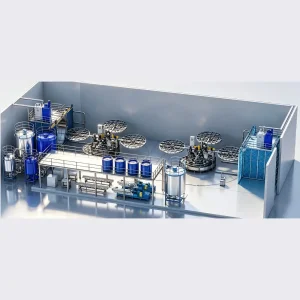
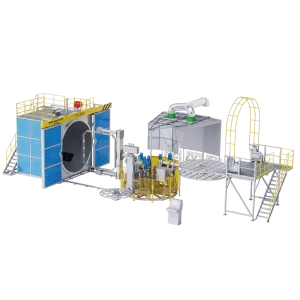
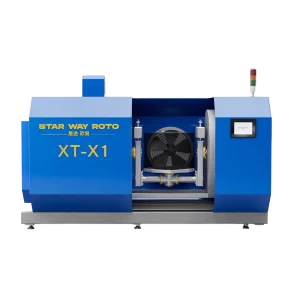
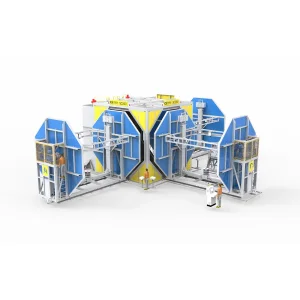
Get expert engineering answers to common procurement, compliance, and operational queries regarding our rotational molding equipment.
CE certification for industrial rotomolding ovens requires strict adherence to Directive 2006/42/EC (Machinery Safety), EN 60204-1 (Electrical Equipment of Machines), and EN 746-2 (Industrial Thermoprocessing Equipment - Safety requirements for combustion and fuel handling systems). StarWay machines undergo third-party testing to guarantee full compliance.
Pricing quotes are calculated based on oven spherical diameter (e.g., 2.0m to 7.0m+), maximum arm weight load capacity (from 500kg up to 12,000kg), burner thermal output requirement (Natural Gas, LPG, Diesel, or Electric), number of arms/stations, and automated material handling features requested.
Thanks to high-volume forced air recirculation dampers and multi-point PID burner modulation, StarWay Roto oven chambers maintain internal air temperature variations within ±3.5°C across the entire heating envelope, preventing spot-burning or thin-wall defects.
Our machines process a broad range of polymers, including LLDPE, HDPE, XLPE (Cross-linked Polyethylene), Polypropylene (PP), Polyamide/Nylon (PA 6, PA 12), and specialty Polycarbonate formulations requiring high baking temperatures up to 350°C.
Standard shuttle and carousel machines require approximately 45 to 60 days for production, full assembly, electrical wiring, and FAT testing. Custom ultra-large machines (e.g., S2-8500 series) typically require 75 to 90 days from design sign-off.
We offer 24/7 IoT remote diagnostic support via encrypted internet modules pre-installed on all control cabinets. Additionally, our global field engineers provide rapid on-site maintenance, operator training, and spare parts supply across 40+ countries.