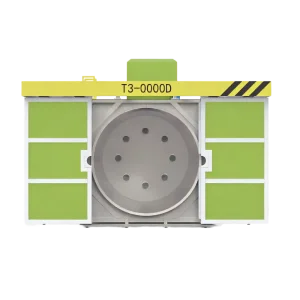
High-rigidity machine frames, intelligent temperature control chambers, and precision polymer pulverizing equipment for continuous industrial operations.
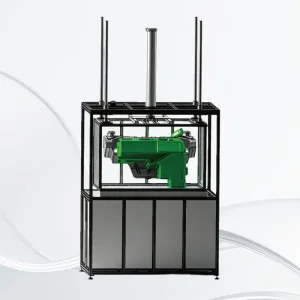
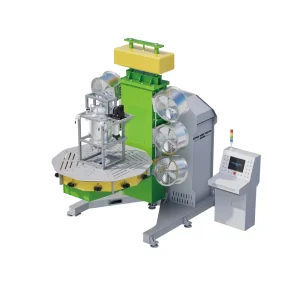
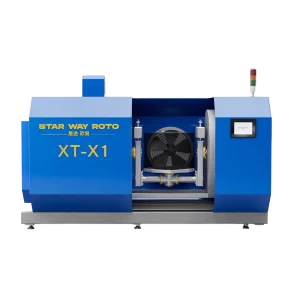
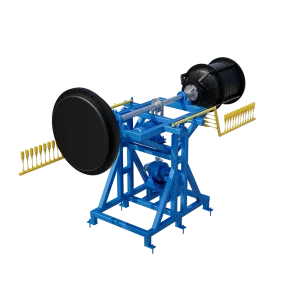
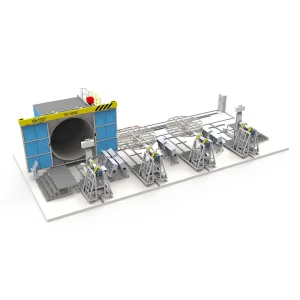
Transitioning from low-volume custom fabrication to high-yield, automated, continuous-flow manufacturing across European, North American, and Asia-Pacific industrial corridors.
The rotational molding industry is undergoing an unprecedented technological evolution. Historically considered a niche method reserved for prototype tanks and low-volume hollow articles, rotomolding has expanded into a mission-critical manufacturing sector for complex automotive geometries, heavy industrial chemical containment, insulated cold-chain logistics, and recreational marine hulls.
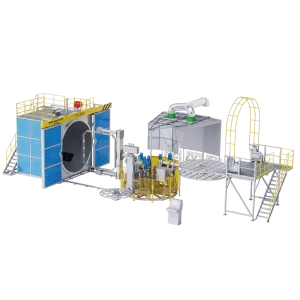
In high-labor-cost economies, the manual handling associated with single-arm rock-and-roll or stationary shuttle machinery is no longer economically sustainable. Global manufacturers are increasingly turning to Carrousel (Carousel) Rotomolding Systems equipped with three, four, or five independent arms. By decoupling the heating, pre-cooling, final cooling, and demolding/servicing stations, carousel layouts maintain uninterrupted oven cycling, maximizing thermal utilization while reducing cycle times by up to 38% compared to shuttle machinery.
International buyers in the European Union, the Americas, and Australasia now demand rigorous validation that imported heavy equipment meets harmonized occupational safety and environmental criteria. A simple CE declaration of conformity is no longer sufficient; buyers require full technical files, third-party notified body assessments, and complete verification under European harmonized directives.
Engineering a CE-certified Carrousel machine requires sophisticated safety integration: fail-safe interlocked perimeter physical barriers, optical safety curtains around indexing zones, dual-channel E-stop safety relays (SIL 2 / PL-d rated), Class 1 combustion burner safety under EN 746-2, and complete electromagnetic compatibility under EN 60204-1. These engineering protocols guarantee worker safety, lower insurance liabilities, and ensure smooth customs clearance across international borders.
A detailed blueprint of harmonized European standards governing heavy-duty multi-arm carrousel rotational molding equipment.
| Directive / Standard | Technical Scope & Legal Requirement | Engineering Implementation on StarWay Carousel Systems |
|---|---|---|
| 2006/42/EC Machinery Directive |
Essential health and safety requirements relating to the design and construction of heavy industrial machinery. | Finite element analysis (FEA) verified structural chassis, zero-backlash arm indexing gear trains, perimeter optoelectronic light grids, and mechanical arm locking pins. |
| 2014/35/EU Low Voltage Directive (LVD) |
Electrical equipment operating with a voltage rating between 50 and 1000 V AC and 75 and 1500 V DC. | Fully segregated low-voltage and control circuitry, IP55/NEMA 4X rated main enclosures, Siemens/Schneider contactors, and verified touch-safe finger guards. |
| 2014/30/EU EMC Directive |
Limiting electromagnetic emissions and ensuring equipment immunity to external electromagnetic disturbances. | Shielded industrial variable frequency drive (VFD) cabling, high-frequency line filters, grounded control cabinets, and optoisolated PLC I/O modules. |
| EN 746-2:2010 Combustion & Fuel Safety |
Safety requirements for combustion and fuel handling systems in industrial thermoprocessing equipment. | Integrated gas train with double solenoid shutoff valves, differential air pressure switches, automatic burner controllers with UV flame sensors, and pre-purge ventilation logic. |
| EN ISO 13849-1 Safety of Machinery |
Safety-related parts of control systems, establishing Performance Levels (PL a through e). | Architecture Category 3, Performance Level 'd' (PL-d) dual-channel safety loops covering emergency stops, access gates, and oven overtemperature cutoffs. |
Every Carrousel machine manufactured for export undergoes comprehensive Factory Acceptance Testing (FAT), including full mechanical run-in, continuous 72-hour thermal cycling, thermal imaging for insulation leakage, and electrical insulation resistance testing before containerization.
How Ningbo’s precision machining cluster and vertically integrated supply chains deliver unmatched technical value for international enterprises.
Located in Ningbo, Zhejiang—one of the world's dense precision manufacturing and mold-building centers—our production facilities leverage immediate access to heavy gantry CNC milling, laser cutting, automated shot blasting, and robotic welding infrastructure. This regional concentration reduces component sourcing lead times by 60% compared to Western counterparts.
By combining optimized structural fabrication with globally standardized core automation (Siemens PLC/HMI, SEW-Eurodrive helical geared motors, Riello/Weishaupt modular gas burners, and SKF heavy spherical bearings), our carousel machines offer tier-one European reliability at a dramatically lower capital expenditure.
Our standardized modular frame architecture allows 3-arm, 4-arm, and 5-arm machines to be fabricated, pre-assembled, and wired within 45–60 working days. Modular segmenting ensures that even our largest machines fit efficiently into standard 40ft High Cube containers, minimizing oceanic freight charges and simplifying on-site rigging.
How multi-arm carrousel rotomolding architecture synchronizes thermal cycles, biaxial rotation, and cooling dynamics for maximum yield.
High-velocity dual circulation fans deliver uniform thermal flux (±2.5°C variation). Automated pneumatic bi-parting doors preserve heat energy while maintaining rapid arm entry and exit transitions.
Controlled ambient air conditioning prevents thermal shock and internal crystalline shrinkage, preventing warpage on high-tolerance automotive components and flat-sided structural panels.
Variable frequency centrifugal blowers and optional atomized water mist injectors expedite crystallization. Closed-loop temperature sensing coordinates transition to the demold station.
Ergonomic floor-level operator access featuring pneumatic mold clamping assists, electric hoists, and automatic powder dosing systems to maximize operator productivity.
From heavy agricultural tanks to precision EV components, discover how multi-arm carousels meet sector-specific manufacturing challenges.
Applications: Multi-layer vertical water storage tanks (500L to 20,000L), chemical dosing tanks, intermediate bulk containers (IBCs), septic tanks, and agricultural spray tanks.
Technical Advantage: Precise biaxial speed ratios eliminate thin spots at bottom radiuses, delivering uniform wall thickness and superior stress-crack resistance under chemical exposure.
Applications: Commercial truck diesel and DEF/AdBlue tanks, hydraulic fluid reservoirs, tractor roofs, cabin air ducts, and EV battery thermal enclosures.
Technical Advantage: Multi-arm flexibility enables seamless co-molding of cross-linked polyethylene (XLPE) and polyamide (PA12) with complex threaded metal inserts and internal baffles.
Applications: Heavy-duty roto-molded insulated cooler boxes, vaccine transport totes, marine dock floats, modular pontoons, and sit-on-top kayaks.
Technical Advantage: Uniform heat penetration across multi-cavity aluminum tooling ensures consistent high-density polyurethane (PU) foam adherence and high impact strength in sub-zero conditions.
Next-generation innovations: Peak Internal Air Temperature (PIAT) telemetry, direct electrical heating, and IoT cloud monitoring.
Modern StarWay carousels feature wireless internal mold temperature sensors transmitting real-time Peak Internal Air Temperature (PIAT) data directly to the central PLC. The system automatically triggers the oven cycle completion when optimum resin fusion is reached, eliminating trial-and-error operator guessing and reducing scrap rates to under 0.5%.
To support global carbon neutrality and zero-emission factory initiatives, our electric heating carousels utilize high-density infrared heating modules. Compared to traditional gas combustion, electric systems eliminate open flames, produce zero flue emissions, and achieve 94% thermal conversion efficiency inside the chamber.
Every export-grade machine integrates secure VPN gateways for remote engineering diagnostics. Factory engineers in Ningbo can monitor drive vibrations, analyze burner air-gas stoichiometric ratios, upgrade PLC firmware, and assist client maintenance teams in real-time across all global time zones.
A structured step-by-step framework ensuring flawless international equipment deployment, compliance, and rapid time-to-market.
Analysis of product envelope, weight capacity, rotational swing diameter (e.g., 2000mm to 5500mm), straight vs. offset arm configurations, and mold mounting requirements.
Rigorous Factory Acceptance Testing at our Ningbo manufacturing facility. Comprehensive mechanical run-in, continuous thermal cycling, and safety interlock verification.
Professional maritime export packaging: moisture-barrier vacuum wrapping, heavy-duty anti-corrosion cosmoline coating, and structural steel container locking bracing.
On-site mechanical erection, electrical termination, SAT commissioning, and exhaustive hands-on operator training conducted by multilingual senior field engineers.
Answers to common engineering, procurement, compliance, and operational questions regarding industrial carrousel rotomolding systems.
An independent-arm Carrousel machine allows each arm to index between stations independently of the others. In a traditional fixed-arm carousel or shuttle setup, if one arm contains a heavy mold requiring a 25-minute heating cycle, all other arms are immobilized. With StarWay independent-arm architecture, arm indexing is governed by dynamic cycle completion. While one arm remains in the oven, other arms can complete cooling, demolding, and charging phases. This design increases overall facility throughput by 30% to 45% and accommodates divergent molds simultaneously.
CE Certification confirms compliance with European harmonized safety standards, specifically the Machinery Directive (2006/42/EC), Low Voltage Directive (2014/35/EU), and EMC Directive (2014/30/EU). For the operator, it guarantees physical fail-safe protections including category 3 / PL-d rated safety door interlocks, optical light grids protecting the carrousel swing radius, and thermal runaway emergency shutoffs. Electrically, it ensures touch-safe wiring, verified grounding dissipation, and certified industrial switchgear that prevents machine failure and reduces industrial insurance premiums.
StarWay carrousels support natural gas, LPG, diesel, and direct electric infrared heating systems. Natural gas and LPG offer the lowest operating cost per thermal unit in regions with established gas infrastructure. Diesel burners provide portability for greenfield facilities. Direct electric infrared heating is becoming the preferred choice in regions with strict emission caps or abundant renewable energy, delivering zero flue gas emissions, 94% thermal conversion efficiency, and precise digital zoned heating without atmospheric air contamination.
Thermal uniformity inside the oven chamber is achieved via computational fluid dynamics (CFD) engineered circulation plenums and variable-speed dual centrifugal turbo blowers. By generating a high-volume, laminar recirculating air pattern, hot air is driven evenly over both the primary and secondary axes of rotation. This maintains a temperature delta of less than ±2.5°C across the entire mold swing sphere, eliminating common defects such as thin corners, under-cured polymer resin pockets, and localized thermal warpage.
Peak Internal Air Temperature (PIAT) measures the internal mold cavity temperature throughout the heating and cooling cycle. When molding engineering resins such as Cross-linked Polyethylene (XLPE), Polypropylene (PP), or Polyamide (PA6/PA12), relying strictly on oven time often results in either under-cure (poor impact strength) or over-cure (thermal degradation and brittleness). Real-time PIAT monitoring identifies the exact moment the polymer reaches complete fusion, automating oven exit and cooling initiation for repeatable part quality.
Straight arms are suited for single or multi-cavity molds with balanced centers of gravity, while offset (C-frame / drop-style) arms accommodate large spherical, cylindrical, or asymmetrical molds such as multi-thousand-liter tanks. Dynamic balancing is performed by calculating the total center of mass on both the major and minor rotational axes using CAD modeling. Counterweight adjustment tracks on the arm frame allow operators to trim balance quickly, preventing premature wear on spherical roller bearings and drive gear reducers.
Essential maintenance includes semi-annual inspection of the heavy-duty slewing ring bearing and central turntable indexing gear teeth, monthly automatic grease replenishment of high-temperature arm bearings using synthetic polyurea grease, weekly checking of planetary gear oil levels, and thermal camera scanning of all main contactors and terminal blocks within the central slip-ring assembly.
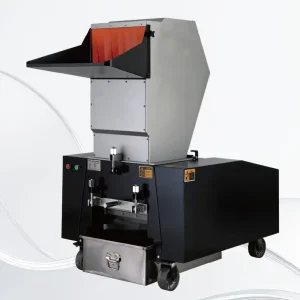
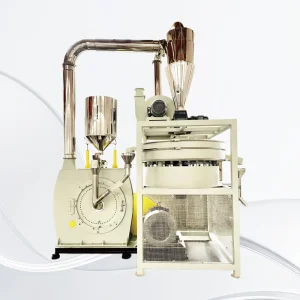
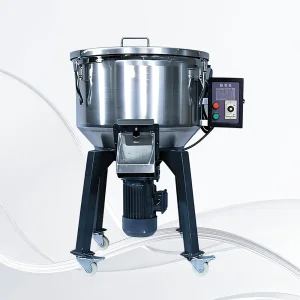
Rotomolding requires micro-pelletized or finely pulverized thermoplastic powders typically ground to 30–50 mesh (300–500 microns) with high bulk density and clean dry flow properties. Utilizing integrated on-site disc pulverizers ensures uniform powder particle distribution without tails, allowing resin to melt and coat mold cavities smoothly without pinholes, micro-voids, or internal porosity.
Yes. Because each arm possesses dedicated recipe programming within the central PLC interface, Arm 1 can run a 3mm thin-walled consumer product, Arm 2 can carry a 12mm multi-layer heavy industrial diesel tank, and Arm 3 can process a medium-thickness insulated cooler body. Each arm operates with its own specific major/minor rotational speeds, heating durations, and controlled cooling sequences.
We offer a standard 12 to 24-month comprehensive mechanical and structural warranty, backed by guaranteed lifetime spare parts availability. International technical service includes on-site installation by senior technicians, comprehensive operator certification training, and continuous 24/7 remote diagnostics via encrypted Industrial IoT VPN gateways.
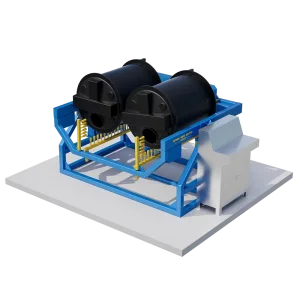
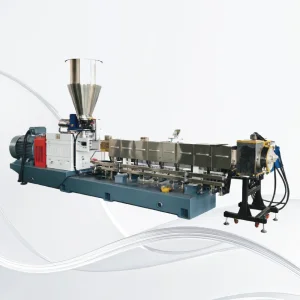
From single-screw pelletizers and rock-and-roll units to electric heating ovens and heavy-duty crushing equipment.