
Explore our tier-1 industrial rotational moulding machines engineered for seamless operation, low thermal losses, and high dimensional accuracy.
A deep dive into powder thermodynamics, biaxial rotation kinetics, and material consolidation mechanisms in modern polymer processing.
Rotational moulding (also recognized globally as rotomoulding or rotational casting) represents a specialized high-temperature, low-pressure thermoplastic process utilizing heat and biaxial rotation to yield seamless, stress-free hollow products. Unlike high-pressure polymer conversion techniques such as injection moulding or blow moulding, rotational moulding operates under ambient internal mold pressures. This fundamental thermodynamic advantage eliminates residual shear stresses within the finished polymer matrix, producing structural parts with exceptional environmental stress crack resistance (ESCR), superior wall thickness uniformity, and unmatched impact strength at low ambient temperatures.
The rotational moulding process relies on four distinct thermodynamic and mechanical phases: powder charging, thermal fusion in an enclosed convection oven, forced air/water spray cooling, and part demolding. During the heating phase, micro-milled polymer powder (typically 350 to 500-micron mesh Linear Low-Density Polyethylene, LLDPE, or High-Density Polyethylene, HDPE) tumbles continuously over the interior surfaces of a heated metal mould. As the mold surface passes the polymer's crystalline melting point (typically 120°C to 135°C for PE resins), powder granules adhere to the hot mold wall, forming a tacky layer that gradually fuses into a homogenous, bubble-free melt pool via thermal conduction and surface tension dynamics.
Achieving dimensional stability and minimizing cycle times requires rigorous control over internal air temperature (IAT). Modern rotomolding machinery manufactured by Ningbo StarWay Roto Co., Ltd. incorporates advanced wireless telemetry systems that measure real-time IAT curves. By pinpointing exact peak internal air temperatures (PIAT)—typically 190°C to 215°C depending on polymer melt index—engineers can eliminate thermal degradation while ensuring complete pinhole elimination and optimal cross-linking density.
Analyzing regional procurement shifts, energy efficiency mandates, and macro trends shaping the rotomolding machinery landscape.
High demand for fully automated Carousel and Shuttle rotomolding lines capable of rapid tool swapping. Key focus areas include heavy agricultural fuel tanks, septic systems, high-end marine craft, and insulated cold-chain containers.
Rapid urban infrastructure buildouts drive massive demand for large multi-layer vertical water storage tanks (1,000L to 20,000L) and chemical containment vessels. High preference for energy-efficient gas-fired Shuttle and Rock & Roll machines.
Expansion in agricultural, mining, and communal water supply sectors. Capital buyers prioritize robust, low-maintenance Open Flame Rock & Roll machines and cost-effective Shuttle configurations with strong local technical service support.
The global rotational moulding equipment market is experiencing a profound transition toward energy-efficient, IoT-integrated manufacturing lines. Volatile natural gas prices and stringent carbon emission regulations have forced global processing plants to re-evaluate their thermal footprint. Traditional uninsulated burners and legacy open-flame systems are rapidly being replaced by high-efficiency modulating gas burners, enclosed thermal-recirculating ovens, and direct electric heating rotomolding equipment.
Furthermore, supply chain diversification has led international procurement directors to look beyond local machine builders in North America and Western Europe, turning to premier Chinese OEMs like Ningbo StarWay Roto Co., Ltd. Chinese equipment manufacturers now offer international buyers European-grade mechanical stability, Siemens PLC controls, and Weishaupt/Riello burner technology at a fraction of Western capital costs.
A detailed engineering comparison of Carousel, Shuttle, Rock & Roll, and Electric Heating systems to match your operational capacity.
| Machine Architecture | Best Application / Part Geometry | Footprint & Layout | Thermal Efficiency | Target Production Volume |
|---|---|---|---|---|
| Carousel Machine (Fixed / Independent Arm) | Uniform high-volume parts (kayaks, drums, lids, small tanks) | Circular footprint; Requires higher vertical ceiling clearance | High (continuous oven utilization without idle cooling) | Mass Production / High Output (24/7 Operations) |
| Shuttle Machine (Linear / Square Layout) | Diverse product mix; Large hollow vessels, chemical tanks | Linear or L-shaped; Space-efficient long layout | Very High (Oven doors close completely during heating cycle) | Medium to High Batch Flexible Production |
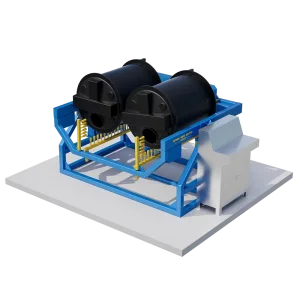
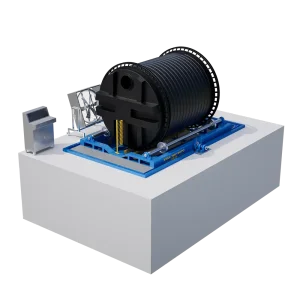
| Rock & Roll Machine (Open Flame / Enclosed) | Extreme length-to-diameter ratio (pipes, boats, large tanks) | Narrow, elongated rectangular footprint | Moderate (Open flame) to High (Enclosed chamber) | Custom Large-Scale Heavy Industrial Parts |
| Electric Heating Machine | Precision technical parts, cleanroom medical, zero-carbon plants | Compact, fully modular insulated cell | Maximum (Direct electrical thermal conversion, zero gas emissions) | Specialized Sustainable Manufacturing |
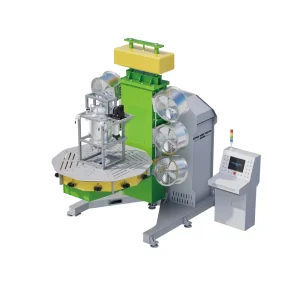
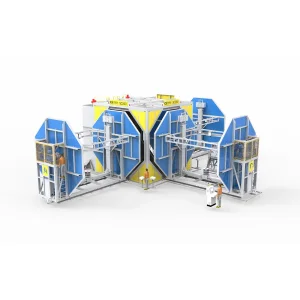
Carousel rotomolding machines are engineered for industrial processors demanding maximum yield and continuous production throughput. Configured in 3-arm or 4-arm layouts, carousel systems index arms sequentially through heating, cooling, and loading/unloading stations. In Independent Arm Carousel configurations, each arm moves autonomously on an overhead track, allowing vastly different heating and cooling cycles to run concurrently without bottlenecking adjacent arms. This flexibility is vital when running high-density multi-cavity tooling alongside thick-walled structural containers on separate arms.
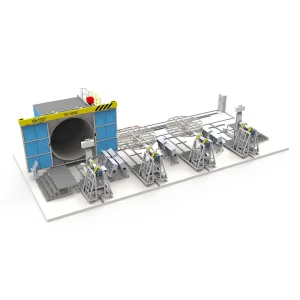
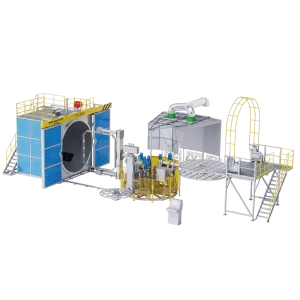
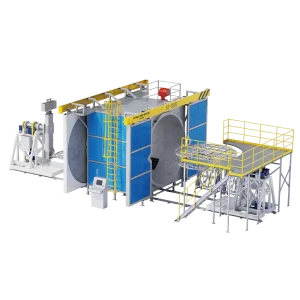
Linear and Square Shuttle machines represent the standard for custom rotomolders running medium-to-large product variations. A central oven is flanked by two independent shuttle carts operating on heavy-duty floor rails. While Cart A undergoes heating in the oven chamber, Cart B is in the cooling bay or undergoing manual part stripping and resin reloading. This dual-station setup guarantees nearly 100% oven utilization. For plants with constrained height or limited floor area, shuttle machines offer the ultimate ratio of capital expenditure to square-foot output.
How Ningbo StarWay Roto Co., Ltd. combines 23+ years of engineering heritage, in-house tooling, and scale advantages to deliver world-class machinery.
Headquartered in Ningbo, Zhejiang Province—China's premier manufacturing center for plastic machinery and CNC mould fabrication—Ningbo StarWay Roto Co., Ltd. operates an integrated 20-acre production facility. Unlike equipment vendors who outsource mould manufacturing, StarWay Roto integrates heavy machine steel fabrication, precision CNC cast aluminum mould tooling, electrical PLC assembly, and dry-run factory testing under one roof.
This end-to-end integration drastically reduces project lead times, eliminates compatibility friction between machine arm spiders and mold mounting plates, and lowers overall capital procurement expenses by 30% to 45% compared to European or American machinery builders.
From agricultural water tanks to military-grade transit cases, see how rotational moulding serves key sector verticals.
Manufacturing heavy-walled multi-layer vertical tanks (up to 50,000 Liters) with chemical-resistant XLPE liners. Rotomolded vessels feature stress-free corner radii and seamless structural integrity, preventing catastrophic stress cracking.
Complex geometric diesel fuel tanks, hydraulic oil reservoirs, air intake ducts, and cabin roofs for tractors, excavators, and commercial trucks. Molded-in brass inserts eliminate post-assembly welding.
High-density Polyethylene sit-on-top kayaks, recreational canoes, dock floats, navigation buoys, and pontoon hulls designed to withstand saltwater immersion and UV degradation.
Double-walled heavy-duty ice coolers, vaccine transportation boxes, and dry ice containers injected with high-density polyurethane (PU) foam for multi-day thermal preservation.
Vandal-resistant outdoor refuse containers, underground septic tanks, road barriers, and municipal traffic cones engineered for harsh climatic exposure.
Vibrant, weather-stable outdoor play slides, crawl tunnels, swing seats, and climbing modules compliant with international safety standards (EN1176 / ASTM F1487).
A strategic purchasing checklist to evaluate equipment quotes, operational expenditures, and long-term ROI.
When evaluating quotes for rotational moulding equipment, looking strictly at the upfront machinery purchasing price (CAPEX) can lead to costly operational mistakes. Industrial buyers must compute the Total Cost of Ownership (TCO) across a 10-to-15-year operational lifecycle. Key variables impacting lifetime profitability include fuel consumption efficiency, thermal insulation grade, pneumatic maintenance costs, and arm weight capacities.
Anticipating technological disruptions in intelligent rotomolding, green polymers, and Industry 4.0 automation.
Integrating artificial intelligence algorithms with in-mould wireless infrared sensors (TPAT). Machines automatically adjust burner flame intensity and arm rotation speed ratios based on real-time polymer viscosity and powder melting behavior.
Adaptation of machinery to process post-consumer recycled (PCR) resin blends, bio-based polyethylenes (derived from sugarcane ethanol), and cross-linked fluoropolymer liners without increasing void formation or degrading mechanical properties.
Transitioning servicing stations toward fully automated robotic cells. Automated pneumatic arms handle polymer powder weighing, drop-in color compound additions, automated mold clamping, and robotic part demolding.
Discover specialized shuttle machines, high-load rock and roll units, pelletizing lines, and quality testing systems.
Expert technical answers addressing common procurement questions, machine troubleshooting, and thermal optimization.