
High-precision rotational molding systems engineered for extreme durability, automated heat transfer, and complex structural hollow plastic manufacturing.
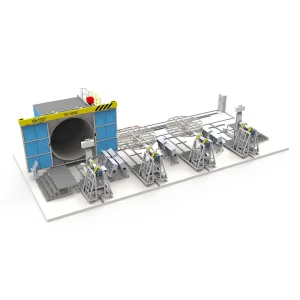
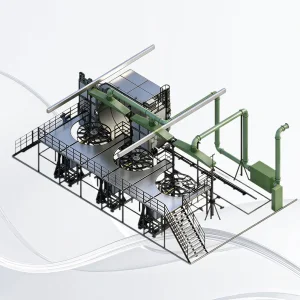
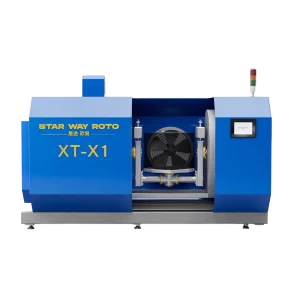
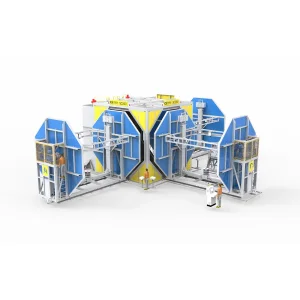
The global rotational molding (rotomolding) sector is undergoing a structural transformation driven by demands for thermal energy efficiency, automated process control, complex multi-layer polymer dynamics, and strict global decarbonization targets. As industrial end-users transition from traditional steel, fiberglass, and blow-molded assemblies to seamless, stress-free hollow plastic structures, the choice of original design manufacturing (ODM) equipment partners has become a critical strategic lever.
Modern Rotomachinery Groups operate at the intersection of mechanical design, thermodynamic balance, and material science. Unlike injection or blow molding, rotational molding relies on biaxial rotation and unpressurized heat fusion within a heated mold cavity. Achieving uniform wall thickness, eliminating structural voids, and optimizing cycle times require an enterprise-level understanding of polymer melt rheology, convection airflow thermodynamics, and real-time infrared temperature sensing.
Core Industry Insight: Energy overhead accounts for up to 28% of total operating costs in rotomolding plants. Next-generation ODM Rotomachinery architectures incorporate closed-loop heat recovery, intelligent burner modulation, and precision thermal chamber sealing to reduce kilowatt-hour consumption per kilogram of processed resin by up to 34%.
Advanced high-velocity recirculation ovens engineered with dual-burner proportional modulation to maintain chamber temperature variance within ±2.5°C across large mold volumes.
Precise control profiles optimized for LLDPE, HDPE, Cross-linked PE (XLPE), Polypropylene (PP), Polyamide (PA 6/12), and Polyurethane (PU) structural foaming.
Reinforced straight and offset arm configurations designed to support dynamic mold assemblies up to 15,000 kg with zero arm deflection or backlash.
Enterprise buyers—spanning chemical storage tank producers, agricultural equipment OEMs, automotive component suppliers, and marine vessel manufacturers—evaluate rotomolding equipment through a holistic Total Cost of Ownership (TCO) framework. Procurement decisions are no longer governed strictly by initial Capital Expenditure (CAPEX); Operational Expenditure (OPEX), machine availability, and long-term service level agreements (SLAs) determine competitive advantage.
When sourcing high-capacity rotomolding machinery from premier OEM/ODM manufacturers, technical procurement managers prioritize five key engineering benchmarks:
Selecting the optimal machine kinematics is fundamental to plant scalability and product profitability. An ODM Rotomachinery Group manufacturer provides tailored configurations designed for specific part geometries, production volumes, and footprint constraints.
Best for: High-volume, continuous standardized production runs (e.g., water containers, drums, outdoor products).
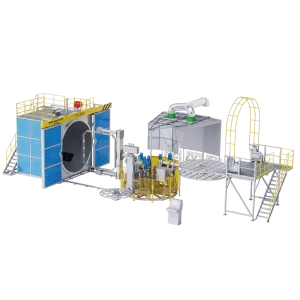
Features 3 to 4 independent arms indexing through Heating, Cooling, and Servicing stations simultaneously. Maximizes hourly throughput and labor productivity.
Best for: High product diversity, custom technical parts, and variable wall thickness requirements.
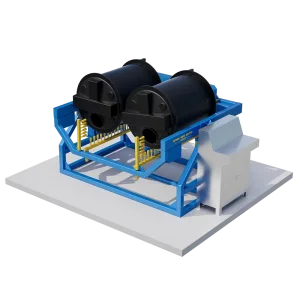
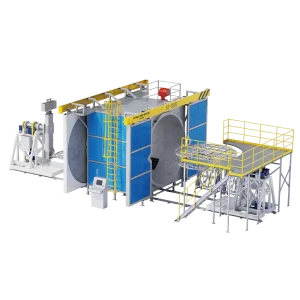
Dual carts shuttle independently into a central heating oven. Allows completely different cycle times, mold recipes, and material types per arm without interrupting the adjacent station.
Best for: Extremely long or large cylindrical vessels (e.g., agricultural tanks up to 50,000 Liters, marine hulls).
Utilizes full 360° longitudinal rotation paired with rocking transverse motion (±45°), reducing total building height requirements while minimizing fuel consumption.
Deploying complex industrial rotomachinery across North America, Europe, the Middle East, and Asia-Pacific requires strict adherence to regional electrical, mechanical, and environmental standards. An experienced ODM Rotomachinery Group provides comprehensive localization engineering, ensuring seamless integration into local power grids and regulatory ecosystems.
Full compliance with 2006/42/EC Machinery Directive, EN ISO 12100 safety standards, and EN 60204-1 electrical safety for European industrial deployment.
Custom control panel design conforming to UL 508A and CSA C22.2 standards, featuring dual-channel safety circuits, emergency stop networks, and localized voltage step-down transformers.
Integrated interlocked perimeter fencing, light curtains, pneumatic arm lockouts, and noise-attenuated burner housings reducing sound emissions below 78 dBA.
The future of rotational molding engineering lies in intelligent closed-loop control and zero-emission heating infrastructure. The ongoing R&D efforts within the Rotomachinery Group focus on three transformational technology pillars:
1. AI-Driven In-Mold Wireless Thermal Sensing: Embedded wireless sensor telemetry transmits real-time internal air temperature (IAT) data directly from inside the rotating mold cavity to the central PLC, allowing automatic phase transitions (sintering complete, curing started, cooling initiated) based on actual resin behavior rather than static timers.
2. All-Electric & Hydrogen Hybrid Burners: Transitioning away from fossil fuels through high-capacity electric heating arrays and hydrogen-blended gas combustion systems to assist clients in reaching net-zero carbon targets.
3. Automated Robot-Assisted Loading & Demolding: Integrating 6-axis heavy-payload industrial robots for automatic resin powder dosing, automated clamp opening, and ultrasonic non-destructive part inspection.
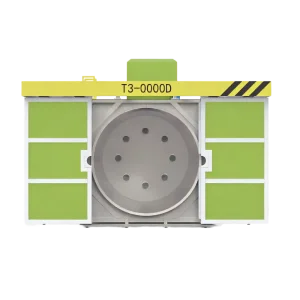
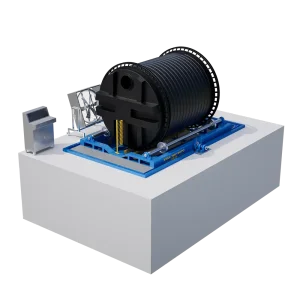
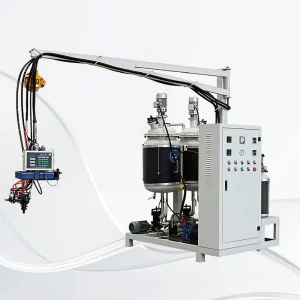
High-capacity carousel machines, electric heating ovens, high-load shuttle arms, and auxiliary PU foaming units.
Expert answers to common engineering, procurement, and process control questions regarding custom rotational molding machine systems.