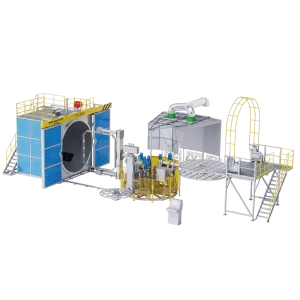
Factory-tested, energy-efficient carousel, shuttle, and open-flame systems engineered for high-throughput hollow component fabrication.
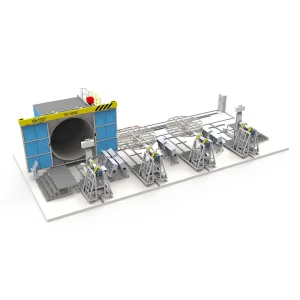
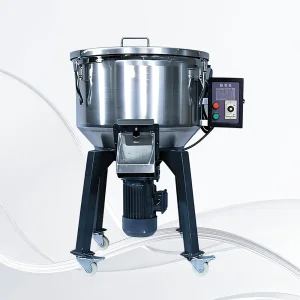
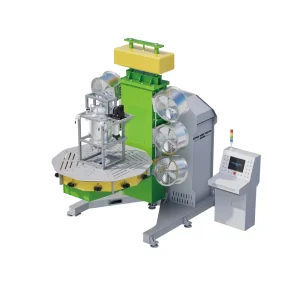
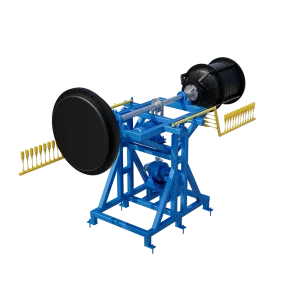
Navigating high-precision polymer biaxial kinematics, thermodynamic uniformity, and automated cell integration for modern industrial manufacturers.
Unlike high-pressure injection or blow molding methods that induce molecular residual shear stress, rotational molding operates at atmospheric pressure. This delivers hollow articles with uniform, isotropic wall thickness, superior environmental stress crack resistance (ESCR), and zero internal molecular orientation tension.
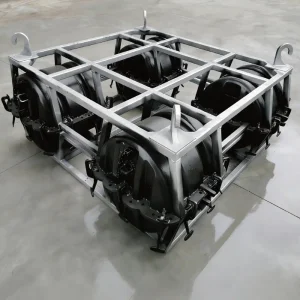
Rotomolding tooling utilizes cast aluminum (A356) and welded structural steel capable of operating at atmospheric pressures. Tooling development costs are 70% to 85% lower than high-pressure injection molds, drastically accelerating time-to-market for complex, multi-layer, and large-format structural geometry.
Modern ODM machine designs integrate precise drop-box systems and intelligent thermal stage controllers, enabling seamless production of multi-layer structures (e.g., solid skin, microcellular PE/PU foaming core, and chemically inert barrier liners) in a single continuous cycle without secondary bonding operations.
When evaluating large-format hollow components (50 Liters to 50,000+ Liters capacity), rotational molding demonstrates distinct economic and mechanical advantages. The table below outlines critical manufacturing parameters for high-volume engineering selection:
| Manufacturing Metric | Rotational Molding (ODM Machinery) | Extrusion Blow Molding | High-Pressure Injection Molding |
|---|---|---|---|
| Initial Tooling Investment | Low to Moderate ($5,000 – $45,000) | High ($60,000 – $250,000) | Extremely High ($150,000 – $1M+) |
| Internal Molecular Stress | Virtually Zero (Isotropic, high ESCR) | Moderate (Pinch-off lines, anisotropic) | High (Directional flow orientation) |
| Corner Wall Thickness Distribution | Naturally thicker at outer radii and corners | Thinning prone at deep draw corners | Controlled strictly by cavity design |
| Maximum Part Volume Capability | Unmatched (>50,000 Liters, 8.5m+ Length) | Limited (Typically < 5,000 Liters) | Strictly limited by clamping tonnage |
| Multi-Layer / In-Mold Insert Integration | Seamless encapsulation of metal/threaded inserts | Difficult, requires complex automation | High complexity, risk of insert displacement |
Key criteria used by enterprise procurement teams to calculate return on investment, cycle-time efficiency, and thermodynamic energy ratios.
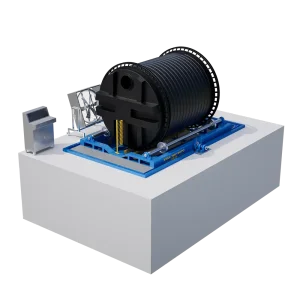
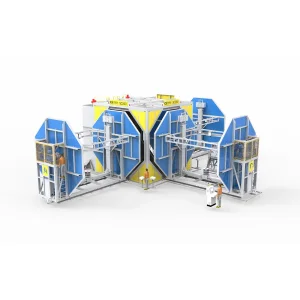
Procuring industrial rotomolding machinery demands rigorous evaluation of arm topologies: Straight Arms, Offset (C-type) Arms, and Four-Arm Independent Carousels. Heavy-load bearing ratings (from 1,500 kg up to 15,000 kg per station) must be evaluated alongside spherical swing clearance diameters. Advanced dual-motor direct-drive systems with variable frequency drives (VFD) guarantee smooth speed ratios (primary to secondary ratio 1:1 to 1:8), preventing mechanical backlash and harmonic vibration during continuous 24/7 duty cycles.
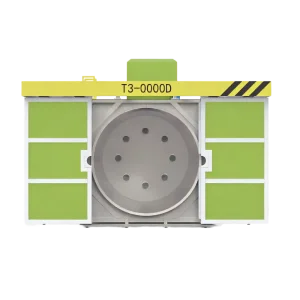
Heating chamber design represents up to 60% of ongoing rotomolding operational expenses (OPEX). Modern ODM specifications incorporate high-efficiency forced-air recirculating burners (compatible with Natural Gas, LPG, Diesel, or Direct Electric Heating elements) with high-density ceramic fiber insulation (200mm+ thickness). Airflow dynamic CFD modeling ensures turbulent air velocity across mould surfaces, reducing heat cycle duration by 15% to 22% while maintaining temperature homogeneity within ±2.5°C across the entire heating chamber envelope.
How Ningbo StarWay Roto integrates vertically clustered supply chains, CNC precision tooling, and smart telemetry to deliver world-class machinery.
Integrated Siemens or Mitsubishi PLC human-machine interfaces (HMI) log real-time process parameters, including peak internal air temperature (PIAT), oven exhaust thermals, and mechanical torque. Automated recipe management stores hundreds of multi-stage thermal and rotation profiles, enabling repeatable quality and sub-0.5% part rejection rates.
Operating from a 20-acre modern facility in Ningbo, StarWay Roto unites mechanical machine fabrication with in-house 5-axis CNC mold machining and CNC cast aluminum pattern foundries. This vertical integration eliminates subcontracting friction, cuts prototype lead times by 40%, and ensures perfect interface alignment between spider arms and moulds.
Every machine is subject to 72 hours of uninterrupted dry-cycle thermal endurance testing, full pneumatic and hydraulic pressure leak screening, and CE-certified interlock safety audits. Structural chassis frames are stress-relieved via vibratory stress relief (VSR) to prevent structural deflection under extreme payload weights.
StarWay Roto’s comprehensive ODM engagement framework covers every phase of industrial deployment: 1. DFM & Thermal Flow Simulation: Moldflow and finite element analysis (FEA) to verify polymer melt behavior and thermal gradient balance. 2. Structural Fabrication & Precision Machining: Heavy-duty robotic welding of turntable platforms, oven chambers, and precision CNC spindle boring. 3. Assembly & Smart Telemetry Calibration: Integration of proportional gas valves, digital optical pyrometers, and IoT remote diagnostic modules. 4. Factory Acceptance Testing (FAT) & On-Site Commissioning: Complete multi-mold test trials, cycle optimization, and comprehensive operator training worldwide.
From subsea marine infrastructure to ultra-pure chemical storage and high-performance logistics across global industrial sectors.
Manufacturing of seamless, heavy-duty vertical storage tanks (up to 50,000L), intermediate bulk containers (IBCs), cross-linked PE chemical tanks, acid dosing bins, and agricultural sprayers engineered to withstand extreme UV exposure and corrosive solvents.
Integrated fuel tanks (CE & EPA certified permeation resistance), DEF (diesel exhaust fluid) reservoirs, heavy machinery engine air intake ducts, ergonomic roof fairings, tractor cabins, and lightweight structural battery housings for electric utility vehicles.
High-buoyancy ocean navigation buoys, deep-water aquaculture fish cage brackets, unsinkable rotomolded HDPE boats, specialized floating dock pontoons, and marine marker floats built with high-density EPS/PU foam-filled structural chambers.
Rotomolded heavy-wall ice cooler chests, dry ice pharmaceutical shipping containers, vaccine transfer totes, and insulated fish/meat handling tubs engineered for 5+ days cold retention with polyurethane closed-cell core foam.
Underground stormwater drainage inspection chambers, mobile chemical sanitation toilets, heavy commercial waste bins, double-walled recreational kayaks, commercial water park slides, and modular children's playground structural sets.
Impact-resistant livestock drinking troughs, calf feeding huts, veterinary sterilization tanks, heavy feed carts, and silage dispensers that resist chewing, ammonia corrosion, and extreme sub-zero weather conditions.
Authoritative technical answers addressing cycle optimization, energy consumption, tooling metallurgy, and machine kinematics.
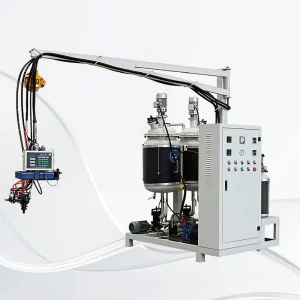
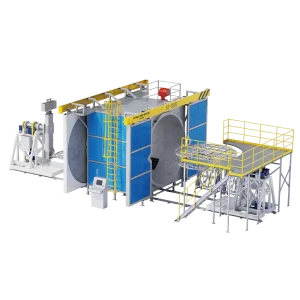
High-capacity rock & roll swing units, foaming dispensers, and electric heating ovens engineered for dedicated production lines.