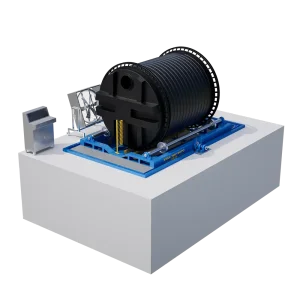

Engineered by Ningbo StarWay Roto Co., Ltd. (Est. 2009) to empower furniture manufacturers with precision thermal cyclics, multi-axis arm balances, and intelligent PLC process controls.
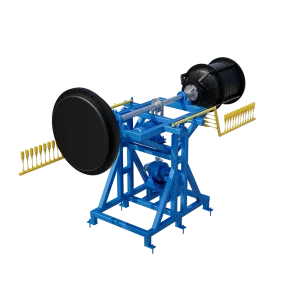
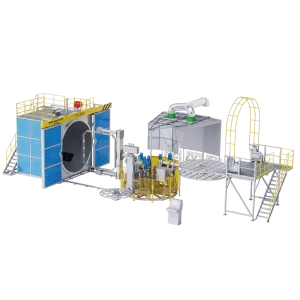
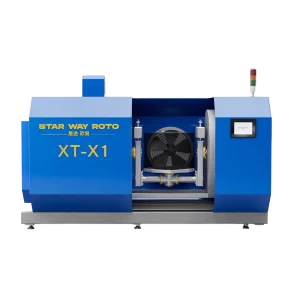
Examining how biaxial rotational molding has transitioned from utilitarian containers to an avant-garde pillar of commercial hospitality, urban streetscapes, and ergonomic interior spaces.
In modern industrial design and polymer manufacturing, rotational molding (rotomolding) represents a uniquely versatile thermodynamic process. Unlike injection molding or high-pressure blow molding—which depend on aggressive hydraulic pressures and suffer from severe shear-induced residual stress—rotomolding relies on low-pressure, biaxial rotation inside a heated oven chamber. As micronized thermoplastic powders sinter against the mould periphery layer-by-layer, they form structurally monolithic, hollow-core parts characterized by virtually zero molded-in stress, exceptional corner impact strength, and completely seamless surface continuousness.
Over the past decade, prominent global brands, industrial architects, and high-end contract furniture manufacturers have increasingly pivoted to custom rotomolding factories. This transition is catalyzed by the demand for sculptural, fluid geometries, integrated internal lighting fixtures (LED diffusion), biophilic modular public benches, and vandal-resistant urban planters that traditional timber, sheet metal, or composite lamination simply cannot produce cost-effectively at commercial volumes.
| Manufacturing Process | Tooling Capital Expenditure | Internal Residual Stress | Geometric Complexity & Undercuts | Wall Thickness Uniformity Control | Seamless Hollow Integration |
|---|---|---|---|---|---|
| Biaxial Rotomolding | Low to Medium ($10k - $45k) | Near Zero (Stress-Free) | Exceptional (Multi-piece tooling) | High (Controlled RPM Ratios) | 100% Monolithic Closed Cavity |
| Injection Molding | Extremely High ($80k - $300k+) | High (Shear & Packing Stress) | Moderate (Slide/Lifter bound) | Precision Microns | Requires Post-Welding/Screws |
| Extrusion Blow Molding | Medium ($30k - $90k) | Moderate (Parison Stretch) | Low to Medium (Pinch-off lines) | Moderate (Thinning at deep draws) | Hollow with Visible Flash Seams |
| Reaction Injection (RIM) | Medium ($25k - $60k) | Low | Moderate | High (Polyurethane Foam) | Solid / Microcellular Only |
How Ningbo StarWay Roto Co., Ltd. utilizes over 15+ years of R&D experience and a 20-acre production footprint to power tier-one rotomolded furniture operations.
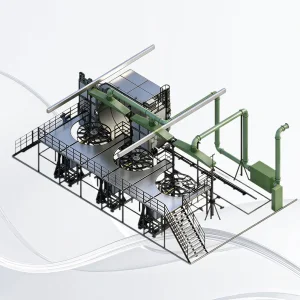
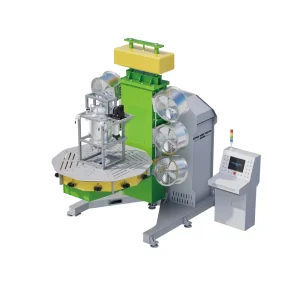
Engineered for large-volume standardized furniture items (e.g., barstools, outdoor dining chairs, children's desks). Featuring 3 to 5 independent station arms allowing simultaneous heating, secondary cooling, and loading/unloading without thermal interference.
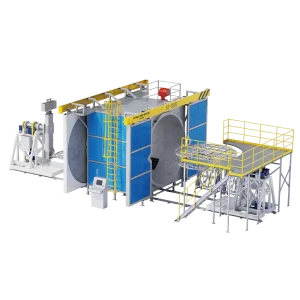
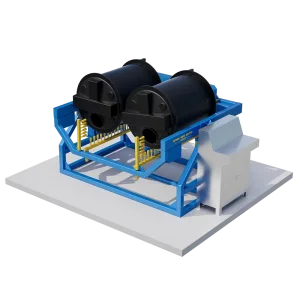
Optimized for medium-to-large architectural elements, such as 3-meter curved modular benches and illuminated reception counters. Allows single-oven servicing of two independent shuttles with custom cycle times and variable mould loads up to 5,000 kg.
Direct CAD-to-CAM high-speed 5-axis CNC machining of A356 grade aluminum castings and 6061-T6 aluminum blocks. Guarantees tight parting line tolerance (<0.15mm), eliminating flash and minimizing labor-intensive secondary finishing on furniture.
Rotomolded furniture must resist mechanical fatigue, extreme thermal cycles, UV photodegradation, and chemical cleaning agents. Our formulation matrix ensures over 15+ years of operational lifecycle.
The structural integrity and tactile finish of rotomolded furniture hinge entirely on selecting polymers with optimal Melt Flow Index (MFI: typically 3.5 to 7.0 g/10min) and narrow molecular weight distribution. StarWay Roto’s R&D team optimizes powder mesh size (standard 35 mesh / 500 microns) to ensure zero pinhole defects and rapid thermal coalescence.
Furniture deployed in Mediterranean, Middle Eastern, or equatorial resort settings experiences up to 180 kLy/year of solar UV radiation. Without robust stabilization, polymeric degradation leads to chalking, surface embrittlement, and color fading.
Entry-level indoor/outdoor residential usage with Hindered Amine Light Stabilizers (HALS).
Industrial marine and luxury outdoor hospitality spec with synergistic UV absorbers and nickel quenchers.
Non-halogenated flame retardants and silver-ion additives for hospital, airport, and prison furnishings.
Delivering turnkey rotomolding machinery, custom precision moulds, and end-to-end factory automation worldwide.
Explore how tier-one rotomolding factories engineer specialized product series across international vertical markets.
Illuminated IP67-waterproof pool loungers, glowing cocktail tables, and modular bar counters. Seamless hollow structures allow embedded battery packs, wireless charging coils, and DMX-controlled LED fixtures.
Heavy-duty public transit seating, curved landscape planters, and bollard integrated benches. Polyurethane-foam backfilled cavities provide extreme rigidity and acoustic dampening while resisting graffiti and vandalism.
Ergonomic children's desk sets, sensory play furniture, and hospital-grade sanitizable seating. Formed with smooth radiused contours (zero sharp edges) and chemical-resistant antimicrobial polymers compliant with FDA/CE sanitization protocols.
Our 4-stage end-to-end framework guarantees structural optimization, precise thermal shrinkage prediction, and rapid market ramp-up.
Optimizing draft angles (1.5° - 3.0° min), rib structural stiffness, and wall thickness gradients. Utilizing Finite Element Analysis to simulate maximum load capacity (up to 400kg on seating surfaces).
CNC pattern milling and high-density aluminum alloy casting. Integration of pneumatic clamping mechanisms, internal core pulls for undercuts, and engineered vent tubes to avoid backpressure defects.
Employing Peak Internal Air Temperature (PIAT) telemetry sensors. Fine-tuning the 280°C - 310°C thermal cure and staged air/water cooling ramps to prevent warpage and residual shrinkage stress.
Robotic CNC 6-axis edge trimming, ultrasonic wall thickness gauge verification, drop-impact testing (-20°C drop tower), and flame/plasma surface conditioning prior to assembly and packaging.
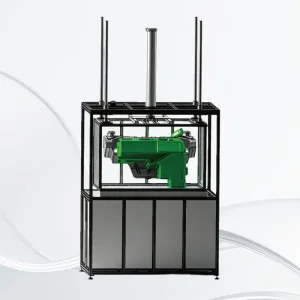
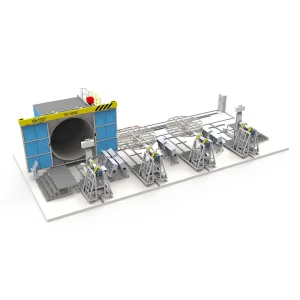
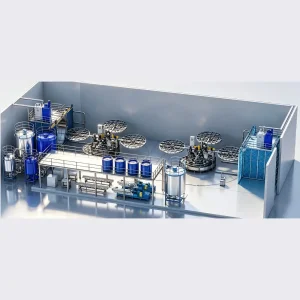
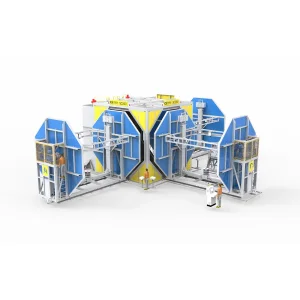
Equip your furniture manufacturing facility with heavy-load shuttle machines, automatic dosing units, and rigorous watertight testing rigs.
Guaranteeing frictionless international procurement with comprehensive CE, UL, and ISO certifications backed by on-site commissioning across 40+ countries.
Full compliance with CE Machinery Directive 2006/42/EC, ISO 9001:2015 Quality Management Systems, and North American UL508A electrical control standards. All rotomolded raw materials meet RoHS, REACH, and California Proposition 65 chemical thresholds.
Our field engineering division deploys factory-trained specialists to Europe, the Americas, the Middle East, and Southeast Asia. We deliver turnkey plant commissioning, operator training, burner tuning, and mold balancing within 72 hours of equipment arrival.
Every StarWay Future Series machine is integrated with secure industrial cloud connectivity. Our Ningbo R&D center performs real-time PLC diagnostics, predictive burner maintenance, and oven airflow cycle optimization remotely across international time zones.
Direct answers from our senior tooling engineers regarding rotomolding capabilities, design constraints, and production economics.
The typical nominal wall thickness for rotomolded poly chairs, loungers, and benches ranges between 4.0mm and 8.0mm depending on structural load requirements. Due to biaxial rotational dynamics, our machines achieve uniform wall distribution within ±10% across complex contours, with reinforced thicker sections naturally consolidating at external corners.
Cast aluminum (A356 grade) moulds offer superior thermal conductivity (approx. 4x higher than steel), allowing faster heating/cooling cycles and reducing cycle times by 20-30%. Furthermore, cast aluminum allows high-fidelity reproduction of complex ergonomic curves, acid-etched textures, simulated woodgrains, and embossed corporate logos without joint weld lines.
Both approaches are supported. Our engineering team incorporates recessed threaded brass inserts (molded-in fasteners) or twist-lock bottom cavity ports during the rotomolding cycle. This enables IP67/IP68 waterproof light pucks, rechargeable lithium-ion battery modules, and inductive charging plates to be installed flush with the furniture base.
A standard hollow-core outdoor lounge chair weighing 8kg-12kg in high-grade LLDPE has an oven heating cycle of approximately 14-18 minutes at 290°C, followed by a staged cooling cycle (air fan + gentle mist) of 12-16 minutes. On a 3-arm or 4-arm Carousel machine, finished chairs exit the line every 15-20 minutes in continuous operation.