
High-precision molding machinery, heavy-duty shuttle configurations, auxiliary pulverizers, and laboratory systems engineered for continuous industrial manufacturing.
Accelerated urbanization, extreme weather volatility, and industrial chemical safety regulations are fueling massive global demand for high-integrity, seamless thermoplastic storage vessels.
Traditional fabricated metal or welded plastic tanks inevitably suffer from joint degradation, weld notch stress cracking, and galvanic corrosion. Rotational molding utilizes biaxial low-speed centrifugal heating to generate completely seamless, stress-free hollow vessels. The polymer chains consolidate isotropically, ensuring that critical structural transitions—such as sidewall-to-base knuckles and inlet/outlet bosses—maintain uniform mechanical resistance under static hydrostatic loads exceeding 1.8 SG (Specific Gravity).
Modern commercial specifications mandate specialized barrier layers within a single tank geometry. Advanced multi-layer water tank molding systems allow sequential drop-box charging or pneumatic powder injection during the active thermal cycle. This produces 2-layer, 3-layer, and 4-layer tank walls engineered with dedicated functional attributes: an ultra-smooth food-grade LLDPE virgin contact liner, a foamed microcellular PE thermal insulation core, and a carbon-black UV-stabilized outer skin.
Compared to blow molding (which requires multi-million dollar tooling and hydraulic clamping forces) or injection molding, rotational molding machinery features drastically lower internal tool pressures (near-atmospheric). This lowers tooling capital expenditure by up to 80%, enabling water utility providers, agricultural OEMs, and industrial tank manufacturers to produce massive 500-liter to 50,000-liter containers with rapid tooling turnaround and modular scalability.
An engineering evaluation of mechanical arm kinematics, variable-ratio gear trains, and high-efficiency thermodynamic airflow chambers required for large water tank manufacturing.
Fabricating large water tanks (5,000L to 30,000L+) generates severe dynamic torsional stresses on rotating arms. Premium machine builders employ heavy-duty forged steel straight arms or reinforced offset C-arms with high-capacity tapered roller bearings. Independent variable-frequency drives (VFDs) modulate the major axis (primary rotation) and minor axis (secondary orbital rotation) with precise digital speed ratio control from 1:1 up to 1:8, guaranteeing uniform polymer powder lay-down across vertical ribs and deep recesses.
Thermal consistency is the governing parameter for polymer bubble dissolution and complete crystalline fusion. Our customized water tank molding machines integrate high-volume, low-velocity reverse-circulation thermal chambers powered by fully modulating Riello or Baltur dual-fuel burners (Natural Gas/LPG/Diesel) or heavy-duty electric heating matrix elements. Precision ducting balances top-to-bottom thermal gradients within ±1.5°C, eliminating thin spots on the top dome or brittle polymer degradation along the tank bottom.
| Machine Category | Applicable Tank Sizes | Kinematic Configuration | Thermal System Options | Ideal Production Model |
|---|---|---|---|---|
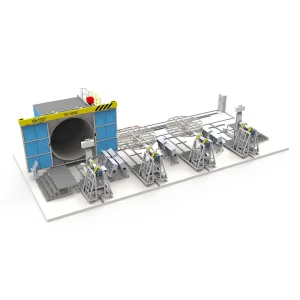
| Linear Shuttle Machine | 1,000L – 30,000L+ | 1 Oven, 2 Independent Heavy Arms | Direct Gas Injection / Forced Convection | High-mix large agricultural & industrial tanks |
| Carousel / Turret System | 200L – 5,000L | 3 to 5 Fixed or Independent Arms | High-velocity Recirculating Natural Gas/LPG | High-volume standardized residential water tanks |
| Rock and Roll Machine | 5,000L – 50,000L+ | Single-axis continuous 360° + Rocking | Enclosed Oven or Open-Flame Matrix | Extra-large cylindrical & horizontal transport tanks |
| Electric Infrared Hybrid | 500L – 3,000L | Precision Multi-Zone Shuttle Arm | Zone-Controlled Ceramic Infrared Heating | Clean-room, zero-emission & lab testing environments |
Customized machine configurations tailored to specific regional environmental challenges, raw material chemistries, and infrastructural mandates worldwide.
In regions with surface temperatures exceeding 50°C and extreme solar UV indices, potable water degrades rapidly in standard tanks. Custom molding machines engineered for this market feature automated dual-stage drop boxes to mold 3-layer insulated tanks. The inner layer utilizes antimicrobial FDA-certified virgin PE, the middle layer consists of physical chemical-foamed LLDPE for thermal insulation, and the outer shell incorporates 2.5% premium carbon black dispersion and hindered amine light stabilizers (HALS) to withstand 20+ years of direct desert radiation.
Underground wastewater and rainwater harvesting installations require high flexural modulus and heavy rib depth to resist severe soil overburden and hydrostatic groundwater flotation pressures. Machine configurations for North American and European OEMs prioritize extreme swing diameters (up to 6.5 meters) and high-load straight arms handling massive cast-aluminum or fabricated steel molds with pneumatic core-pulling actuators for complex inlet/outlet baffle geometries.
Driven by intensive agricultural irrigation, fertigation systems, and aquaculture storage, Asian manufacturers demand rapid cycling and versatile mold spider arrangements. Our shuttle and carousel machines operating in Southeast Asia and Australasia feature modular spider arms capable of holding 2 to 6 conical-bottom or vertical water tank molds simultaneously, maximizing throughput per cubic meter of natural gas consumed.
Why Tier-1 Chinese rotomolding machinery builders provide unbeatable technological depth, modular scalability, and return-on-investment advantages for global industrial buyers.
Headquartered in major coastal precision engineering clusters such as Ningbo and Changzhou, leading Chinese machinery factories benefit from complete vertical supply integration. From high-grade raw steel stock and casting foundries to multi-axis 5-axis CNC machining centers and auxiliary motor vendors, every assembly component is procured within a 50km radius. This eliminates tier-2 supply bottlenecks and shortens custom machine fabrication timelines to just 45–60 days.
Leading Chinese exporters eliminate reliability concerns by integrating globally certified electrical, pneumatic, and thermal components directly on factory assembly lines. Core architectures utilize Siemens S7-1500 or Omron PLCs, Schneider contactors, Festo or SMC pneumatic valves, SEW-Eurodrive geared motors, and Riello combustion systems. Buyers obtain European-grade operational dependability combined with competitive Asian capital expenditures.
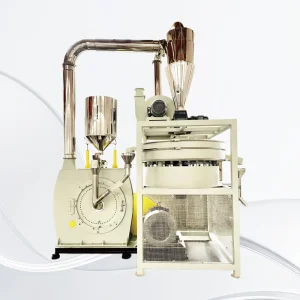
Beyond the core rotational molding oven and kinematic arm structure, Chinese turnkey manufacturers supply integrated auxiliary systems engineered specifically for water tank plants. These include high-output plastic pulverizers (cryogenic or ambient disc mills), automatic vacuum powder loaders, high-shear color masterbatch compounders, and hydrostatic watertightness test stations, providing a single-source warranty and cohesive PLC integration.
Pioneering smart rotomolding systems: wireless internal air temperature telemetry, AI-driven process optimization, and net-zero clean heating alternatives.
Moving away from arbitrary timer-based cycles, machines integrate non-contact IR and wireless in-mold radio probes. The PLC dynamically modulates burner firing based on Peak Internal Air Temperature (PIAT), guaranteeing complete polymer particle sintering without thermal degradation.
Implementation of heavy articulated 6-axis robotic arms for automated powder charging, pneumatic mold bolting/unbolting, and vacuum extraction of finished 5,000L tanks, reducing direct manual labor overhead by up to 65% and mitigating occupational heat exposure.
Transitioning toward low-emission manufacturing via electromagnetic direct-mold induction heating and dual-fuel green hydrogen/electric hybrid heating matrices, slashing Scope 1 carbon footprints to comply with strict European CBAM carbon border tariffs.
Intelligent torque-sensing control loops that adjust rotational acceleration profiles in real time, enabling the stable rotational molding of 100% PCR high-density polyethylene resins without compromising structural impact resistance or environmental stress crack resistance (ESCR).
Rigorous adherence to international safety directives, electrical panel codes, and comprehensive field commissioning services across six continents.
Every piece of rotomolding equipment manufactured for export complies strictly with the European Machinery Directive 2006/42/EC, Low Voltage Directive 2014/35/EU, and Electromagnetic Compatibility Directive 2014/30/EU. For North American shipments, electrical control consoles are built according to UL 508A industrial panel standards with NFPA 86 standard compliance for combustion ovens.
Before any machinery is packed for ocean freight, our engineering team executes a rigorous 5-step Factory Acceptance Testing protocol. The machine undergoes full mechanical dry runs, maximum thermal stress firing, gear backlash verification, and PLC sensor calibration. Clients can attend in person at our manufacturing plant or participate via multi-camera real-time digital FAT streams with full sensor telemetry logs provided.
We dispatch certified mechanical and electrical field service engineers directly to client facilities worldwide for installation, leveling, ductwork integration, and initial recipe tuning. All export machines feature built-in encrypted 4G/Wi-Fi remote VPN gateway modules, granting our senior software engineers direct access to troubleshoot PLC logic, update cycle algorithms, and diagnose alarms in real time 24/7.
Engineering specifications, dimensional parameters, thermal capacities, and indicative budgetary FOB pricing for complete industrial production configurations.
| Model Series | Target Water Tank Sizes | Max Swing Diameter | Arm Payload (Mould + Resin) | Burner Output (kcal/hr) | Average Cycle Time | Indicative Price Range (FOB) |
|---|---|---|---|---|---|---|
| SW-ST-2500 | 500L – 2,500L | 2,500 mm | 1,200 kg / arm | 250,000 kcal | 22 – 30 min | $48,000 – $65,000 |
| SW-ST-3500 | 2,000L – 5,000L | 3,500 mm | 2,500 kg / arm | 400,000 kcal | 28 – 38 min | $72,000 – $95,000 |
| SW-ST-4500 | 5,000L – 10,000L | 4,500 mm | 4,500 kg / arm | 600,000 kcal | 35 – 48 min | $110,000 – $145,000 |
| SW-ST-6500 (Heavy) | 10,000L – 25,000L | 6,500 mm | 8,500 kg / arm | 1,000,000 kcal | 45 – 65 min | $185,000 – $240,000 |
| SW-RR-8500 (Mega) | 20,000L – 50,000L+ | 8,500 mm Length | 15,000 kg total | 1,500,000 kcal | 60 – 90 min | $220,000 – $310,000 |
*Note: Final quotations vary based on optional automation features, dual-fuel burner brands (Riello / Weishaupt), pneumatic mold clamping systems, and specialized steel mold tooling sets.
In-depth technical answers addressing polymer dynamics, machine configuration, mold maintenance, energy efficiency, and operational procurement.
The cycle time for rotational molding of large water tanks is predominantly governed by the maximum wall thickness of the tank and the thermal transfer efficiency of the mold material. Because thermoplastics like LLDPE and HDPE have relatively low thermal conductivity, heat must conduct gradually through the mold wall and sintering polymer layer until the Peak Internal Air Temperature (PIAT) reaches approximately 195°C to 215°C. Mold material selection (cast aluminum with 3x higher thermal conductivity vs. fabricated sheet steel) and optimized recirculating convective airflow within the oven are the two most critical mechanical factors to reduce cycle times.
In rotational molding, wall thickness uniformity across the cylindrical sidewalls, top dome, and base knuckle is controlled purely through bi-axial rotation speed ratios and oven thermal profiling. By adjusting the major-to-minor axis speed ratio (typically between 1:3 and 1:5 for vertical cylindrical tanks) via the machine's PLC-driven variable frequency drives (VFDs), operators can direct resin powder dwell time preferentially toward corners or sidewalls. Furthermore, adjustable oven air baffles allow heat to be concentrated on thicker structural areas or throttled around thinner non-load-bearing top covers.
Linear Low-Density Polyethylene (LLDPE) with a melt flow index (MFI) of 3.0 to 5.0 g/10 min and high-density hexene/octene co-monomers is the global industry standard for potable water storage due to its exceptional Environmental Stress Crack Resistance (ESCR), tensile strength, and impact resistance at low temperatures. For heavy chemical storage (such as industrial bleach, acids, or diesel exhaust fluid), High-Density Polyethylene (HDPE) or Cross-Linked Polyethylene (XLPE) is used to prevent chemical permeation and long-term polymer chain degradation.
Fabricated steel moulds are typically selected for large, simple cylindrical vertical tanks (from 5,000L to 30,000L+) due to their lower initial tooling cost and fast fabrication lead times. However, Cast Aluminum moulds (machined via CNC patterns) offer superior thermal conductivity (shortening cycle times by 15-20%), allow intricate molded-in features such as structural ribs, mounting flanges, threaded ports, and company logos, and provide far longer production lifespans without geometric distortion caused by cyclic thermal expansion.
For an insulated, high-efficiency recirculating gas oven, thermal energy consumption averages between 1.8 and 2.6 kW·h equivalent of natural gas per kilogram of processed polyethylene resin (approx. 0.18 to 0.26 m³ of natural gas per kg). For an all-electric heating oven, consumption averages 0.95 to 1.35 kW·h per kg of resin due to direct infrared and radiant heat transfer with zero flue gas exhaust losses. Real-world consumption depends on ambient factory temperature, mold thickness, and continuous vs. intermittent running shifts.
Because rotational molding is an atmospheric process, air inside the sealed mold expands significantly during heating and contracts rapidly during cooling. If the mold is not properly vented, internal vacuum forces during the cooling phase will cause severe wall cave-ins and warpage on large water tanks. Our machines and mold tooling utilize specialized high-temperature Teflon breather tubes filled with porous silicone or ceramic core media (Supavent style), ensuring pressure equalization with the outside atmosphere while preventing raw polymer powder from spilling into the vent passage.
Yes. Shuttle machines and independent-arm carousel systems are specifically designed for high-mix production. On a shuttle machine with dual independent carriages, Arm A can run a 10,000-liter vertical tank in the oven, while Arm B is cooling or being demolded with two 1,500-liter horizontal agricultural tanks. The advanced PLC software stores independent recipe programs (cooking time, rotation speeds, burner temperatures, and cooling ramp rates) for each individual arm.
A standard industrial setup for a 4.5-meter swing diameter shuttle rotomolding machine requires: (1) Minimum building ceiling clearance of 7.5 to 9.0 meters for arm rotation and overhead crane loading; (2) Reinforced level concrete flooring (min. 250mm thickness, 30 MPa compressive strength); (3) Industrial gas supply line (2.5 to 5.0 bar dynamic pressure) or 3-phase industrial power supply (380V-480V, 50/60Hz); (4) Clean compressed air line (6-8 bar, min. 1.2 m³/min); and (5) An overhead gantry crane (min. 5-ton to 10-ton capacity) for mold handling and tank demolding.
Pelletizing extruders, Rock and Roll mega ovens, high-precision steel molds, and testing machinery completing the industrial production chain.
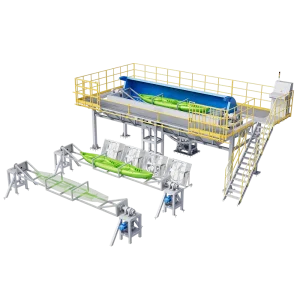
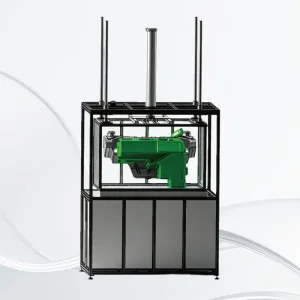
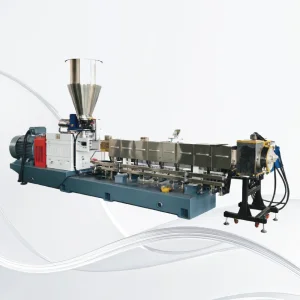
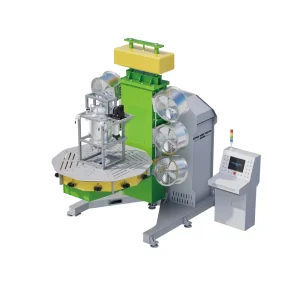
Partner directly with China's leading rotational molding machinery engineering factory. From complete plant layout blueprints and mold toolmaking to international on-site commissioning and after-sales support, we deliver customized, high-yield solutions tailored to your operational specifications.