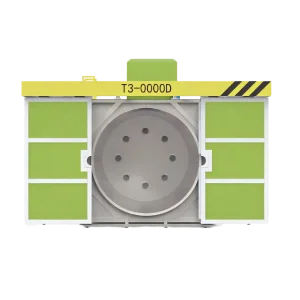
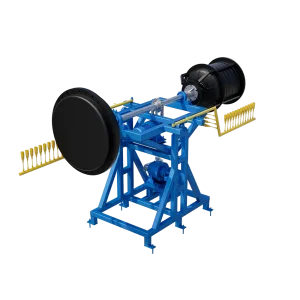
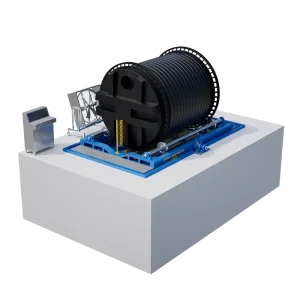
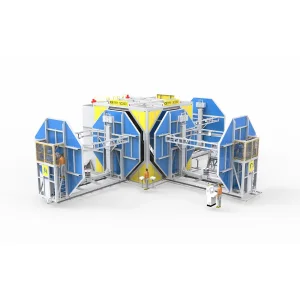
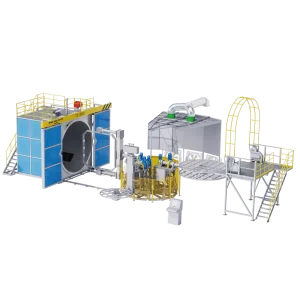
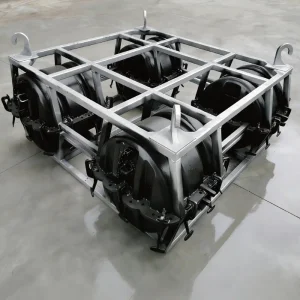
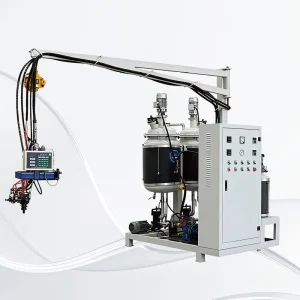
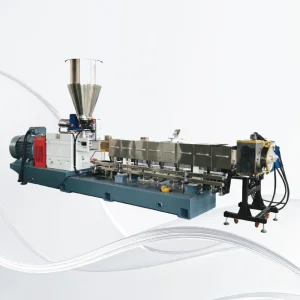
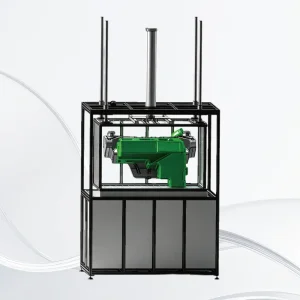
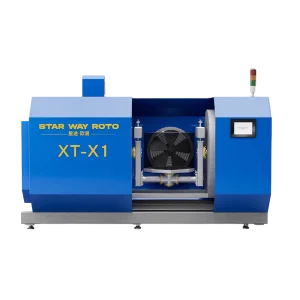
Featured commercial configurations engineered for heavy-duty, continuous cycle industrial manufacturing.
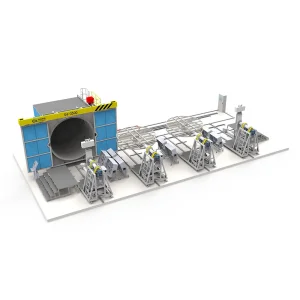
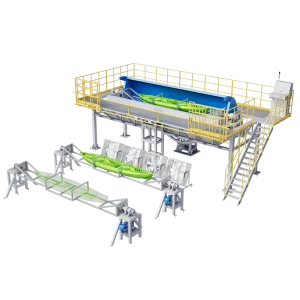
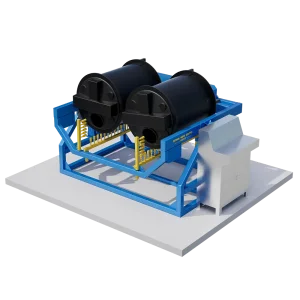
Bridging the gap between thermoplastic polymer engineering, robotic multi-axis articulation, and thermal efficiency.
The transition from fragmented batch rotational molding to synchronous, multi-arm carousel setups is accelerating. Modern industrial demands across North America, Europe, and Asia-Pacific require automated cell architectures capable of reducing cycle idle times by up to 35% while sustaining non-stop, 24/7 continuous operations.
Unlike fixed-turret predecessors, contemporary multi-arm machines utilize independent arm control systems. Each arm indexes into heating, pre-cooling, active air/water mist cooling, and demolding stations based entirely on dedicated digital recipes rather than the pacing of the slowest mold cycle.
By implementing direct-injected high-velocity airflow geometry and ceramic fiber multi-layer insulation matrices, radiant heat leakage is mitigated. This yields uniform polymer wall thickness distributions across highly intricate and non-symmetrical hollow profiles.
Evaluating multi-arm turret carousels, square shuttles, and rock-and-roll systems for distinct manufacturing workloads.
| Machine Architecture | Kinematic Configuration | Ideal Product Matrix | Cycle Time Flexibility | Energy Efficiency Rating |
|---|---|---|---|---|
| 3-Arm Carousel (Independent) | Central turret with offset cantilever arms | IBC totes, water tanks (500L–5000L), road barriers | High (asynchronous indexing per station) | Superior (Continuous oven utilization) |
| 4-Arm Carousel (Fixed / Indexing) | Synchronized 90-degree four-station layout | High-volume automotive ducts, play structures | Medium (Paced by longest heating station) | Optimized for mass repetitive production |
| Multi-Arm Linear Shuttle | Dual or triple bi-directional linear rail carriages | Large agricultural tanks, marine vessels, kayaks | Maximum (Complete recipe independence) | Excellent for mixed batch short-runs |
| Square Shuttle Frame | Enclosed rigid box structure with heavy-load carriers | Multi-cavity industrial containers, extreme weight molds | High (Dedicated cooling/demolding bays) | Advanced closed-loop heat recovery capable |
Engineered to adapt to localized resin characteristics, climate variables, and production standards.
Multi-layer polyethylene vessels ranging from 500 liters to 20,000 liters. Multi-arm configurations allow specialized multi-layer dosing (outer UV layer, middle foamed insulation core, inner food-grade virgin PE) within a single controlled rotational sequence.
Tight-tolerance manufacturing of cross-linked PE and complex polyamide (PA6/PA12) fuel tanks, AdBlue diesel exhaust fluid reservoirs, and large HVAC air ducts. Requires precise internal air temperature (IAT) curve feedback to eliminate micro-porosity.
Rotomolding long, monocoque structures such as ocean kayaks, recreational catamarans, and perimeter mooring buoys. Utilizing wide-swing multi-arm tooling to ensure structural integrity across extreme longitudinal parting lines.
A rigorous industrial process guaranteeing operational readiness from blueprint through on-site mass manufacturing.
CAD finite-element analysis of arm payloads and computational fluid dynamics (CFD) of oven airflow circulation.
Heavy-duty structural steel frame construction, automated submerged arc welding, and complete thermal stress-relief machining.
Integration of low-backlash planetary gearboxes, high-efficiency modulated gas burners, and servo-motor indexing units.
Deployment of Siemens or Omron architectures with integrated wireless infrared mold temperature tracing sensors.
Full dry-cycle indexing and live trial runs with client tooling, documented via exhaustive video performance metrics.
Anti-corrosion coating, disassembled modular alignment pin tagging, and heavy-gauge ocean freight crating.
Mechanical erection, industrial burner certification, electrical panel tie-in, and local operator workflow optimization.
Continuous telemetry diagnostics, cloud recipe backup, preventive maintenance schedules, and guaranteed spare parts dispatch.
Strategic technological paradigms to future-proof rotational molding infrastructure.
Eliminate labor bottlenecks and raw powder airborne contamination through enclosed vacuum feeders, gravimetric loss-in-weight batch blenders, and robotic drop-box feeding systems synchronized directly with arm station indexing.
Recapture up to 22% of high-grade exhaust thermal energy via counter-flow air-to-air heat exchangers. Pre-heated intake air lowers fuel gas burn per cycle and accelerates thermal stabilization across the heating chamber.
Continuous vibration, temperature, and current monitoring across drive train gearboxes and circulation fan bearings identify thermal degradation and bearing fatigue weeks before an unpredicted failure stops production.
Direct responses from mechanical specialists regarding commissioning, mold tooling, and capital efficiency.
In standard fixed-turret carousel machines, every arm moves concurrently—meaning if one thick-walled tank needs a 25-minute bake, all other arms remain idle in cooling or demold stations. Independent arm machines enable each arm to index autonomously, allowing thinner products to exit the oven and enter the cooling chamber without waiting for heavier cycles.
CNC-machined aluminum molds carved from aerospace-grade solid billet eliminate sub-surface porosity, ensure precise cavity dimensional repeatability (±0.05 mm), and provide drastically superior thermal conductivity compared to cast tooling. This makes them ideal for consumer products, high-end coolers, and precision automotive components.
IAT utilizes wireless telemetry probes inside the mold cavity to track the exact thermodynamic transition of the resin—from powder pool through fusion, peak internal temperature (PIAT), and crystallization. Operating by actual resin melt states rather than fixed timers prevents over-baking, eliminates thermal warpage, and cuts energy consumption by 10% to 18%.
A full-scale installation requires a dedicated 380V/480V 3-phase electrical supply, dry compressed air (minimum 6-8 bar with desiccant drying for pneumatic actuators), stable natural gas or LPG delivery (regulated at 100-300 mbar), and a dedicated cooling water loop for mold cooling mist circuits and internal cooling blowers.
Explore auxiliary testing equipment, open-flame systems, and multi-arm carousels engineered for specialized production.