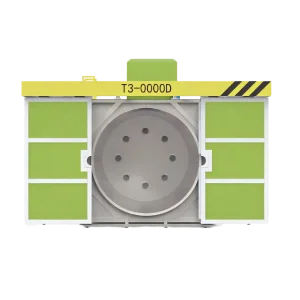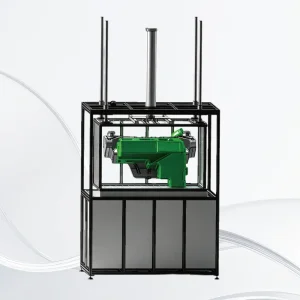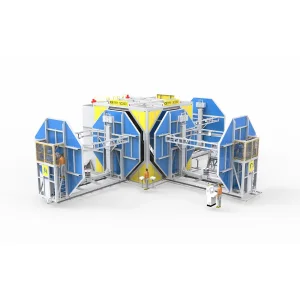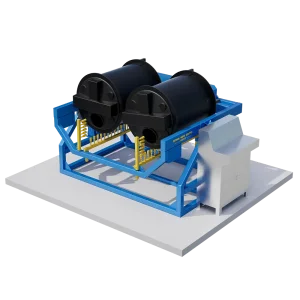
Explore heavy-duty rock-and-roll units, intelligent feeding lines, high-output pulverizers, and specialized multi-layer heating platforms engineered for industrial stability.
A technical assessment of shifting capital expenditures, energy restrictions, and technological integration across modern rotational molding and polymer shaping plants.
Traditional hollow-part manufacturing relied heavily on open-flame systems with massive thermal loss. Today, closed-loop smart ovens, ceramic-fiber chamber insulation, and intelligent heat recirculators achieve a documented 18% reduction in gas consumption, complying with stringent European Tier-IV carbon audits.
Transitioning from static timer-based heating to Internal Air Temperature (IAT) wireless monitoring sensors. By capturing resin fusion and peak crystallization curves in real-time, machines trigger automatic cooling phase swaps, eliminating internal micro-bubbles, pinholes, and warpage.
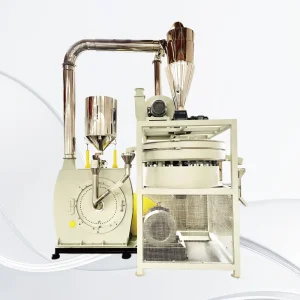
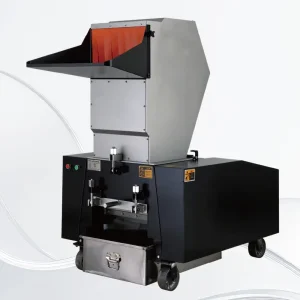
Processing performance hinges on feed consistency. Enterprise plants now deploy synchronous automatic batching, precision pulverizing disc calibration, and continuous vacuum loading units that feed multi-layer cross-linkable resins without human intervention.
The global footprint of plastic processing equipment manufactured in China is undergoing an irreversible structural leap. Historically perceived as suppliers of standard rotational molding frames for agrarian water reservoirs and roadside drainage barriers, premier domestic manufacturers have shifted investments toward precision thermodynamic modeling and multi-axis kinematics.
Today's procurement directors from Germany, the United States, Japan, and Australia demand sub-millimeter tolerances on mounting flanges, multi-cavity liquid nitrogen cooling manifolds, and integration with advanced resin recipes including liquid polyamide (Nylon 6/12), high-density XLPE, and conductive plastics. The modernization of China's heavy machinery base—anchored by proprietary automated welding, stress-relieved furnace beds, and five-axis CNC bridge mills—ensures that machinery delivered today withstands decade-long continuous duty cycles under 24/7 operating stress.
How Tier-1 and Tier-2 manufacturers systematically mitigate project risks through modular procurement specifications and comprehensive factory acceptance validations.
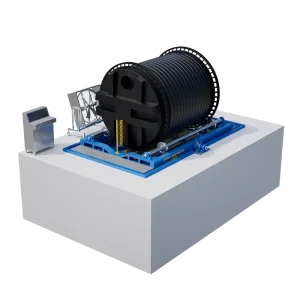
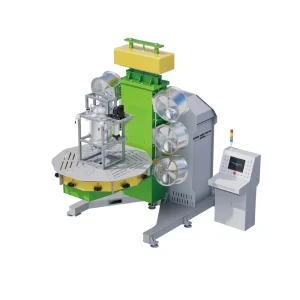
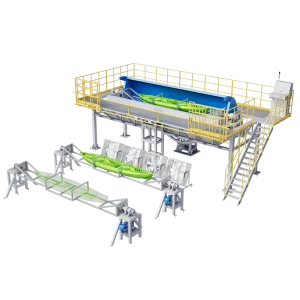
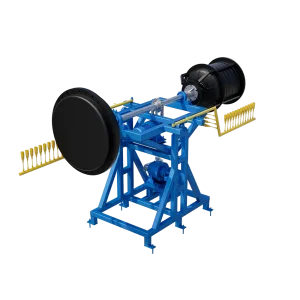
Choosing the correct kinematic profile dictates long-term factory ROI. While independent-arm Carousels excel at uniform production volumes with balanced stations, Rock & Roll ovens eliminate rotational dead zones for long-aspect geometries such as yacht hulls, kayaks, and chemical vessels.
A machine is only as capable as its paired tooling. We integrate cast aluminum, carbon steel fabrications, and monolithic CNC-machined aluminum billets. CNC tooling ensures micro-level surface texturing, leak-free mold parting beads, and structural wall repeatability across millions of thermal cycles.
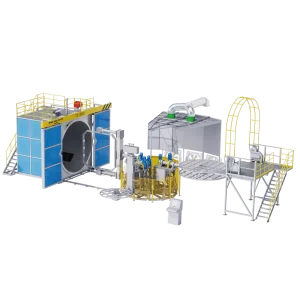
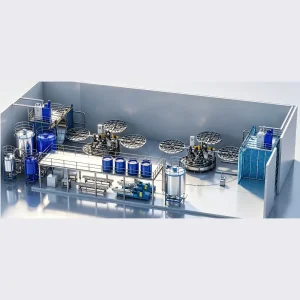
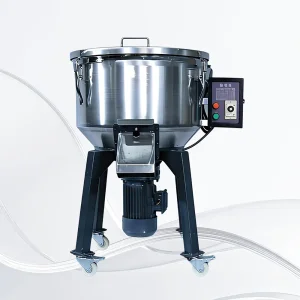
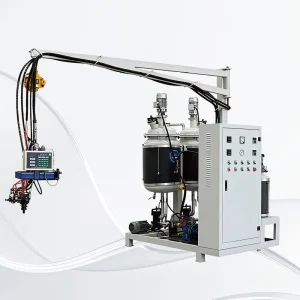
Modern procurement treats hollow molding as an interconnected ecosystem. Auxiliary systems—such as high-torque grinding disc pulverizers, high-shear pigment mixers, robotic trimming cells, and polyurethane foam dosing dispensers—operate on unified industrial bus networks.
Global procurement teams face immense downtime costs when purchasing cross-border machinery. To eliminate deployment ambiguity, our manufacturing facilities adhere to a fully audited 8-stage manufacturing roadmap. This begins with comprehensive FEA stress analysis on rotary arms under maximum swing loads and continues through simulated thermodynamic computational fluid dynamics (CFD) in oven burner manifolds.
Prior to sea freight containerization, every machine undergoes a full Factory Acceptance Test (FAT) where mold mounting, multi-arm sequencing, drive gear synchronicity, and burner firing profiles are captured via high-definition operational video dossiers. The customer receives fully annotated PLC backup programs, electrical schematics translated to local power grid requirements (e.g., 480V 60Hz, 380V 50Hz), and mechanical drawings verified against ISO and CE compliance manuals.
Delivering machinery that matches international workplace health and safety laws, environmental codes, and zero-latency operational continuity across 40+ destinations.
Every control cabinet is designed around internationally serviceable hardware, integrating Siemens or Omron PLCs, Schneider contactors, and SEW-Eurodrive gear motors. Burner assemblies conform strictly to EN 746-2 industrial thermo-processing standards and UL safety protocols.
Machinery is equipped with secure VPN remote gateway modules. Our Ningbo automation center performs live diagnostic polling, PLC firmware flashing, and cycle-time optimizations across North America, Europe, Africa, and Australia without overseas transit delays.
To eliminate logistical vulnerability, each machine export is accompanied by a dedicated 2-year maintenance pack: high-temperature bearings, silicon heat gaskets, rotary joint unions, thermocouple harnesses, and igniter electrodes packed in protective export seaworthy crating.
A preview of our ongoing R&D pipeline, integrating robotics, carbon-neutral heating, and next-generation composite polymer technologies into serial manufacturing.
Commercial deployment of zero-emission induction heating cells and dual-fuel hydrogen-ready burners tailored for EU carbon border compliance.
Scale-up of reactive rotomolding chemistry in partnership with BCIRI, enabling high-temperature, fuel-resistant tanks without high-pressure tooling.
Deployment of 6-axis articulated robotic arms for automated mold bolt unlocking, insert placement, part extraction, and automated flash trimming.
Real-time neural networks adjusting mold arm rotation speeds and burner modulation based on internal mold resin flow simulations.
Engineering responses detailing machine sizing, mold selection, energy calculations, and overseas commissioning protocols.
Explore electric eco-heating ovens, large diameter shuttle units, watertight testing instruments, and custom rock & roll tank equipment.