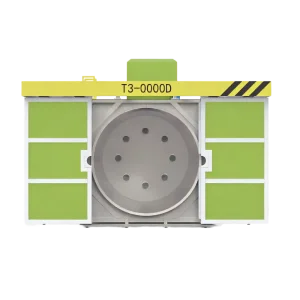

Turnkey rotational moulding machines, precision casting/milling tooling, and integrated downstream auxiliary solutions certified for high-yield cross-continental deployment.
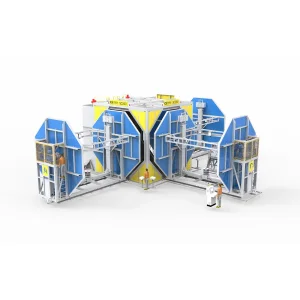
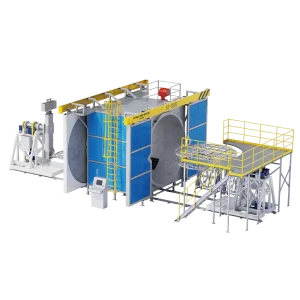
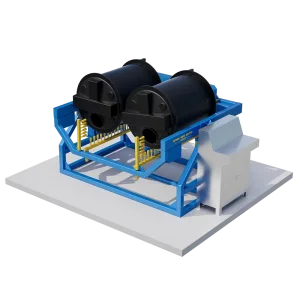
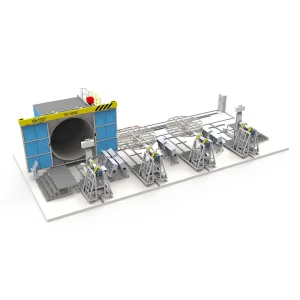
From empirical artisan craftsmanship to thermodynamic predictive modeling, the rotational moulding sector is undergoing an unprecedented technological renaissance.
Traditional rotational moulding has historically been constrained by uncontrolled thermal gradients, leading to asymmetric warpage, internal stress crystallization, and localized pinholing. Modern systems utilize direct-mold wireless thermocouple arrays (PIAT - Peak Internal Air Temperature monitoring) coupled with automated burner air-gas ratio throttling. This guarantees optimal polymer sintering during the exact fusion transition phase.
The industrial landscape is aggressively migrating past virgin linear low-density polyethylene (LLDPE). Modern applications demand cross-linked high-density polyethylene (XLPE), polyamide resins (PA6, PA12), conductive polypropylene (PP), and fluoropolymer linings (ETFE/PVDF) for aggressive chemical storage. Furthermore, graphene-reinforced and carbon-nanotube matrices enhance structural stiffness by up to 45% without weight penalties.
Spurred by ESG protocols and stringent European emissions trading schemes, electric heating rotomolding systems have emerged as a high-efficiency alternative to direct natural gas burners. StarWay's electric heating carousel and shuttle units eliminate combustion flue gas, provide uniform radiant and convective thermal fields, and lower energy usage per kilogram by up to 28% through precision thermal recapture.
For international buyers, genuine CE compliance is not a marketing badge—it is a rigorous, legally binding safety, mechanical, and electrical validation mandated by the European Union.
Full conformance with Annex I Essential Health and Safety Requirements (EHSR). Every StarWay rotary machine undergoes rigorous mechanical hazard risk assessments (EN ISO 12100:2010), integrating category-4 dual-channel emergency stop circuits, pneumatic brake locking mechanisms on rotating arms, and interlocked optical perimeter light curtains.
Factory automation panels are engineered per EN 60204-1 (Safety of Machinery – Electrical Equipment of Machines). Utilizing genuine Schneider, Siemens, and Omron contactors and variable frequency drives (VFDs), the electrical cabinets ensure galvanic isolation, harmonic filtration, and zero electromagnetic interference with facility industrial bus networks.
For direct-fired shuttle and rock-and-roll ovens, StarWay adheres strictly to EN 746-2 (Industrial thermo-processing equipment - Safety systems for combustion and fuel handling). Dual automatic shut-off safety valves, continuous flame ionization monitoring, and forced pre-purge ventilation sequences prevent gas accumulation hazards.
| Directive / Harmonized Standard | Technical Scope | StarWay Engineering Implementation | Compliance Status |
|---|---|---|---|
| 2006/42/EC (Machinery Directive) | Mechanical movement, dynamic arm inertia, guarding | Hydraulic dynamic clamps, optical safety grids, interlocked gates | Independently Certified |
| EN ISO 12100:2010 | Risk assessment and risk reduction principles | Comprehensive Hazard & Operability (HAZOP) factory documentation | Documented Audit |
| 2014/35/EU (Low Voltage Directive) | Electrical distribution, shock prevention, insulation | Siemens PLC architectures, IP55 enclosure seals, EN 60204-1 validation | Independently Certified |
| 2014/30/EU (EMC Directive) | Electromagnetic interference & immunity thresholds | Shielded drive cabling, RFI filters on all high-capacity inverters | Lab Tested |
| EN 746-2:2010 | Combustion gas lines and industrial oven enclosures | Automated pre-purge cycles, double solenoid isolation, flame sensors | Fully Compliant |
How StarWay leverages Ningbo's world-class maritime industrial cluster to compress production lead times, ensure microscopic tooling precision, and deliver unmatched CapEx efficiency.
Moving beyond conventional sand-casting porosity, our tooling division utilizes massive 5-axis gantry CNC milling centers. Billet aircraft-grade aluminum (6061-T6) ensures absolute dimensional repeatability, micro-fine parting line tolerances (±0.05mm), and mirror surface finishes.
Located in the heart of Zhejiang's manufacturing corridor, StarWay benefits from immediate proximity to specialty alloy mills, high-purity mold foundries, and the world's busiest container terminal (Port of Ningbo-Zhoushan). This eliminates supply disruptions and cushions raw material volatility.
We do not merely assemble machines. StarWay controls the entire value chain in-house: structural chassis stress-relieving, burner chamber thermal simulation (CFD), multi-axis arm CNC machining, electrical wiring harness production, and proprietary PLC firmware coding.
By optimizing thermodynamic oven efficiency, engineering automated quick-clamp mould systems, and providing direct-factory pricing, StarWay delivers a 35% to 50% CapEx advantage over North American and European OEM competitors, dramatically shortening the payback horizon.
Procurement leaders across Fortune 500 chemical producers, agricultural giants, and automotive OEMs apply strict assessment rubrics when qualifying high-tonnage rotomolding equipment suppliers.
Tier-1 procurement prohibits blind overseas shipping. StarWay enforces exhaustive pre-shipment FAT routines: 72-hour continuous dry-cycle arm rotation under maximum rated mechanical payload, thermal imaging mapping across oven chambers to detect micro-hotspots, and verification of safety interlock trips witnessed in person or via live telemetry video links.
Unplanned downtime in heavy rotational processing can cost upwards of $10,000 per shift. Buyers demand guaranteed service-level agreements: modular plug-and-play field-replaceable components, VPN/IoT remote telemetry troubleshooting via embedded edge gateway modules, and flying field service engineer networks deployed to North America, Europe, and Southeast Asia.
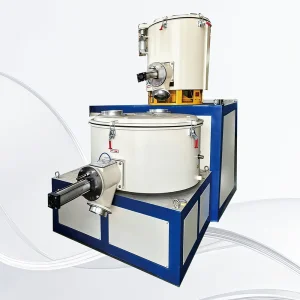
A rotomolding machine does not operate in a vacuum. Discerning plant directors look for one-stop exporters capable of providing turnkey compounding systems: high-speed pulverizers with cryogenic milling capabilities for micro-mesh powder distribution, vertical mixers, granulators, and photo-oxygen VOC abatement units to satisfy municipal EPA/clean-air mandates.
Rotational moulding is the chosen manufacturing methodology where structural integrity, wall thickness uniformity, seamless corrosion proofing, and geometric complexity intersect.
Ultra-large vertical tanks up to 50,000 liters and UN-certified Intermediate Bulk Containers (IBCs). Utilizing cross-linked polyethylene (XLPE) or dual-layer PE with carbon conductive inner barriers, these tanks resist aggressive surfactants, hydrochloric acid, and agricultural liquid fertilizers without weld seam failure points.
Replacing sheet metal and hand-laid fiberglass in excavators, tractors, and mining haulers. Modern rotomolded diesel fuel tanks, hydraulic oil reservoirs, acoustic engine hoods, and ROPS/FOPS structural operator cab roofs offer up to 40% weight reduction and zero corrosion over decades of service.
Seamless oceanographic navigational buoys, commercial fish cages, workboat pontoons, and performance sit-on-top kayaks. Formed with high UV-stabilization masterbatches (UV8 to UV20), these hollow hulls offer buoyancy resilience, impact recovery against rocky shores, and marine organism bio-fouling resistance.
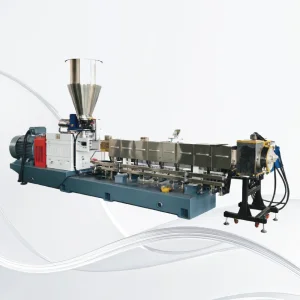
Complete the production circuit with high-torque granulators, specialized laboratory pilot testing machinery, environmental VOC systems, and high-efficiency carousel stations.
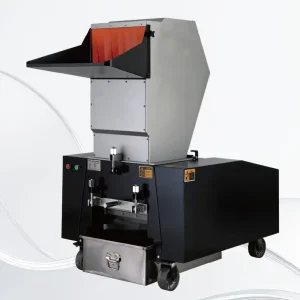
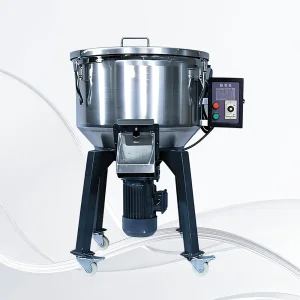
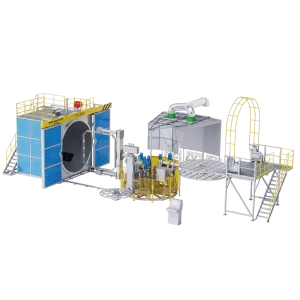
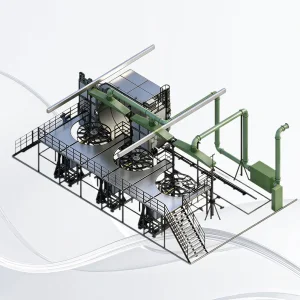
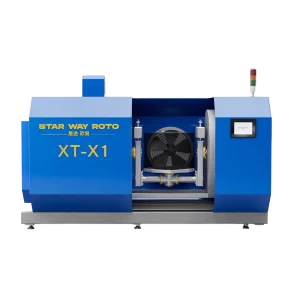
Detailed answers to critical procurement, regulatory, and engineering questions encountered during international rotomolding factory setup.
To legally clear European customs and operate in EU member states, rotational moulding machinery must strictly satisfy three directives: the Machinery Directive (2006/42/EC), the Low Voltage Directive (2014/35/EU), and the Electromagnetic Compatibility Directive (2014/30/EU). If gas-fired combustion heating is utilized, EN 746-2 governing industrial thermoprocessing safety is also mandatory. Suppliers must provide a comprehensive Technical Construction File (TCF) and a formal EU Declaration of Conformity signed by a licensed legal representative.
Wall thickness distribution in rotational molding is governed by the bi-axial speed ratio (primary major axis vs. secondary minor axis) and localized mold surface thermal transfer. StarWay machines incorporate independent dual VFD closed-loop vector drives for both axes, allowing infinite variable speed ratio adjustment (e.g., 4:1, 3:1, 1:1, or reverse step rotation) programmable per recipe phase on the Siemens HMI. Furthermore, internal mold air-deflector baffles and external directional heat shields are custom-engineered during the CAD/CAE simulation stage.
Cast aluminum tooling (typically A356 alloy) is cost-effective for large organic shapes like kayaks, playground slides, and agricultural cisterns, but it carries microscopic internal microporosity and lower dimensional parting line accuracy (±0.5mm). CNC machined billet molds (6061-T6 block) possess zero porosity, provide significantly faster thermal conductivity (shortening bake cycles by 10-15%), and hold ultra-tight tolerances (±0.05mm), which is essential for automotive fuel tanks, pressurized vessels, and threaded access manholes.
Under continuous 24/7 industrial duty, StarWay heavy-duty cast/forged carousel arms and spider assemblies are engineered for a 20+ year fatigue life. Key preventive maintenance intervals include: weekly high-temperature grease replenishment on internal arm shaft bearings (using specialized polyurea or perfluorinated greases rated for 280°C), monthly backlash checks on planetary drive reduction gearboxes, and semi-annual dynamic balance and run-out alignment inspections.
Yes. However, processing XLPE requires precise control over the gelation and cross-linking temperature window (typically 210°C - 230°C internal air temperature). Overheating results in thermal scorch and micro-cracking, while underheating leaves unreacted peroxide catalysts, degrading impact strength. StarWay machines achieve recipe-specific repeatability via stored HMI thermal profiles and continuous wireless PIAT feedback, enabling rapid changeovers between LLDPE, HDPE, XLPE, and Polyamides.
We operate a dual-tier onboarding framework. Tier 1 consists of digital twin factory simulation, pre-shipment FAT video trials, and complete English operational and PLC electrical schematics. Tier 2 involves dispatching certified bilingual field installation engineers directly to your production site to oversee physical anchoring, electrical hookup, burner calibration, and on-site operator training through first-part production validation (PPAP).