Engineered for maximum thermal efficiency, structural integrity, and high-capacity global exports.
Analyzing market shifts, heat dissipation dynamics, and advanced metallurgy in high-performance rotomolding mold manufacturing.
Rotational molding (Rotomolding) has transformed from a niche polymer processing method into an indispensable manufacturing technology for large-scale, stress-free, seamless hollow plastic products. At the core of this industrial revolution lies the design and engineering precision of Rotomolding Molds. As global demand escalates for durable chemical tanks, insulated cold-chain containers, complex automotive ducting, and marine navigation buoys, international buyers and original equipment manufacturers (OEMs) demand mold tools that deliver unyielding structural longevity, minimal cycle times, and impeccable surface finish.
Navigating the global sourcing landscape requires a deep technical understanding of tooling metallurgy, thermal conductivity optimization, and mechanical CAD/CAM precision. Standard injection or blow molding tooling operates under high hydraulic pressures; conversely, rotomolding relies on atmospheric pressure combined with biaxial rotation inside a heating chamber. Consequently, mold design is governed entirely by thermal transfer efficiency, volumetric expansion coefficients of polymers, and uniform heat propagation across intricate geometry walls.
Key Engineering Insight: Information gain in rotational molding is driven by optimizing the Internal Air Temperature (IAT) curve. Molds constructed with high-grade cast aluminum alloys (A356/A357) or CNC-machined aluminum billets reduce cycle times by up to 22% compared to conventional fabricated sheet steel molds due to superior thermal diffusivity (k ≈ 160 W/m·K).
As a senior exporter and manufacturer based in Ningbo, China—the global hub for advanced mold manufacturing—Ningbo StarWay Roto Co., Ltd. has spearheaded key technological breakthroughs. By integrating Computer-Aided Engineering (CAE), Finite Element Analysis (FEA), and 5-axis CNC machining, modern rotomolding exporters have bridged the gap between rapid prototyping and mass-scale industrial production.
Evaluating material selection, microstructural density, heat conductivity, and geometric complexity limits.
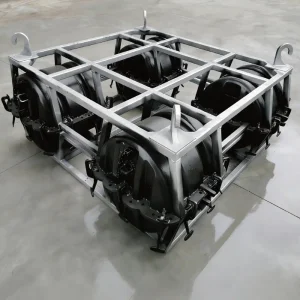
The selection of mold construction material governs the thermal efficiency, production lifespan, unit cost, and detail reproduction of the final molded plastic product. Industrial rotomolding molds fall into two primary categories: Cast Aluminum Molds and Fabricated Sheet Steel Molds.
| Evaluation Parameter | CNC Cast Aluminum Mold (A356/A357) | Fabricated Steel Sheet Mold (SS400/Q235) | CNC Billet Machined Aluminum |
|---|---|---|---|
| Thermal Conductivity | High (~160 W/m·K) | Moderate (~50 W/m·K) | Ultra-High (~180 W/m·K) |
| Geometric Complexity | Complex 3D contours, textures, undercuts | Simple shapes, cylindrical tanks, boxes | Ultra-precise, high micro-accuracy |
| Surface Finish Capability | Shot-blasted, mirror polish, etched textures | Smooth painted, basic polished steel | Optical finish, zero-porosity surface |
| Cooling Cycle Time | 15% to 25% Faster Heat Dissipation | Standard Cooling Curve Rate | Optimized Uniform Heat Dissipation |
| Tooling Weight & Arm Load | Lightweight (Reduces Arm Wear) | Heavy Steel Weight Load | Medium-Light High Structural Rigidity |
| Mold Repairability | TIG/Argon Welding & Re-machining | Easy On-site Steel Welding & Cutting | Specialized CNC Re-milling Required |
Advanced mold framing utilizes FEA thermal flow simulations to eliminate cold spots, ensuring consistent poly-fusion and preventing localized wall thinning in hollow corners.
Utilizing high-speed 5-axis CNC machining for pattern creation guarantees dimensional tolerances within ±0.15mm, enabling flawless split-line sealing and flash-free parts.
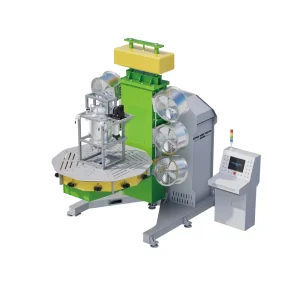
Heavy-duty forged spring clamps and quick-release pneumatic latch systems minimize operator labor and mold changeover times across Carousel and Shuttle systems.
Navigating international compliance, tariff regulations, seaworthy packaging, and technical exporter protocols.
The global rotational molding market is experiencing unprecedented expansion, driven by infrastructure investments in North America, agricultural modernization in Latin America, environmental water treatment mandates in Europe, and rapid industrialization across the Asia-Pacific region. As international buyers seek overseas tooling partners, choosing an experienced Rotomolding Molds Exporter becomes a crucial strategic decision.
Exporting heavy, high-precision tooling across continents presents logistical and technical challenges. Temperature fluctuations during ocean freight can induce condensation, leading to mold oxidation if improper surface preservation coatings are omitted. Furthermore, electrical compliance for heating systems in rock-and-roll or shuttle machinery must comply strictly with localized electrical grids (e.g., 480V 60Hz 3-Phase for USA vs. 400V 50Hz for EU).
Molds are coated with anti-rust vapor phase corrosion inhibitors (VCI), vacuum-sealed in moisture-barrier film, and encapsulated inside fumigated wooden crates reinforced with heavy steel bands.
All exported machinery and molds undergo rigorous ISO 9001:2015 quality management audits and hold full CE Certification for European safety, health, and environmental compliance.
Every exported mold includes 3D CAD files (STEP/IGES), thermal imaging mold flow reports, material composition certificates, and detailed maintenance operational manuals.
Tailored rotomolding mold solutions engineered for critical industrial, marine, agricultural, and commercial sectors.
Precision tooling for seamless vertical and horizontal storage tanks ranging from 500L to 50,000L. Features specialized thread insert holders, double-wall insulation cavities, and crack-resistant radius corners designed for cross-linked polyethylene (XLPE).
Robust molds for high-impact marine buoys, dock floats, and kayak hulls. Tooling incorporates UV-stabilized texture etching and foam-filled chamber baffles to guarantee buoyancy and salt-water corrosion resistance.
Complex 3D geometrical molds for diesel fuel tanks, air intake ducts, and heavy equipment cabin fenders. CNC machined to strict automotive dimensional tolerances, ensuring zero leakage and precise bolt-on mounting points.
High-grade aluminum molds for commercial iceboxes, medical vaccine carriers, and food transport totes. Tooling enables uniform poly-foam wall thickness for maximum thermal containment performance.
Heavy-duty molds engineered for municipal trash containers, septic tanks, and spill containment pallets. Designed to withstand repetitive mechanical lifter strain and harsh chemical exposures.
Impact-resistant molds tailored for agricultural liquid fertilizer sprayers, livestock feeders, and crop storage units. Tooling incorporates stress-relieved radii to endure extreme ambient temperature shifts.
Demonstrating institutional authority, technical expertise, and rigorous quality assurance across all export operations.
Under Google's Search Quality Rater Guidelines (E-E-A-T: Experience, Expertise, Authoritativeness, and Trustworthiness), industrial B2B procurement decisions require verifiable operational proof, engineering credibility, and comprehensive post-sale support. Ningbo StarWay Roto Co., Ltd. maintains a staff of 40+ specialized engineers (80% holding Bachelor's degrees in mechanical and material science engineering) operating within a 20-acre modern manufacturing park.
Our global field service engineering team delivers overseas commissioning, operator mold clamping safety training, and thermal cycle optimization directly at the client's production plant.
We maintain an extensive inventory of standardized mold mounting arms, pneumatic clamps, vent pipes, and silicone gaskets to support fast international dispatch within 48 hours.
Before shipment, every mold undergoes trial production runs and thermal imaging camera calibration to verify heat uniformity, flash containment, and pin ejection performance.
Pioneering Industry 4.0 smart molds, wireless internal temperature monitoring, and low-carbon heating systems.
Integrating real-time embedded wireless sensors into mold cavities to measure real-time polymer melting states and dynamically adjust oven dwell times.
Deploying direct metal laser sintering (DMLS) for internal mold core cooling channels, accelerating heavy corner cooling cycles by 30%.
Engineering specialized mold surface treatments to facilitate high-percentage post-consumer recycled (PCR) resin flow without pinhole formation.
Transitioning from gas-fired ovens to direct electrically heated smart mold arm matrices, drastically reducing carbon footprint and energy waste.
Expert responses to critical engineering questions faced by global procurement specialists and plant operators.
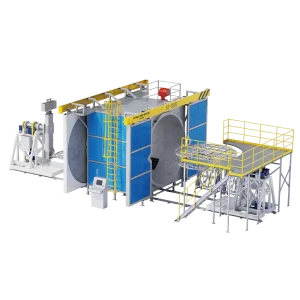
High-performance shuttle machines, electric heating ovens, watertight testers, and single-screw pulverizing systems.