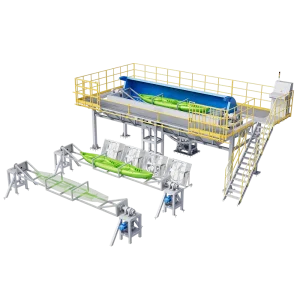
Heavy-duty, precision-engineered rotomolding moulds and equipment customized for Egyptian infrastructure, water management, and commercial manufacturing requirements.
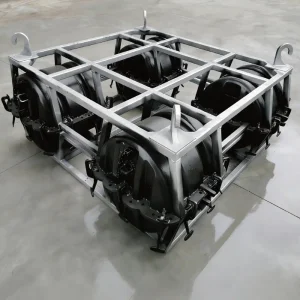
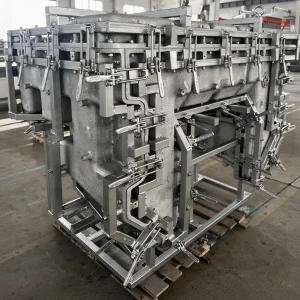
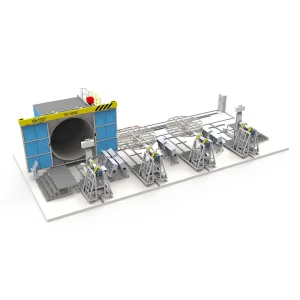
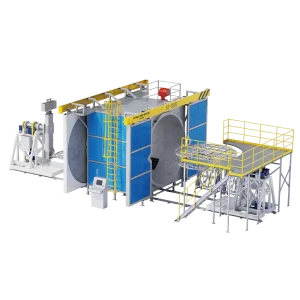
Strategic insights into the rapidly expanding plastic manufacturing ecosystem across Cairo, Alexandria, 6th of October City, and the Suez Canal Economic Zone (SCZONE).
Egypt stands as the northern gateway to Africa and a pivotal industrial hub spanning the Middle East and North Africa (MENA) region. Driven by national initiatives under Egypt Vision 2030, massive urban development projects—such as the New Administrative Capital—and significant investments in municipal infrastructure, the demand for large-capacity, high-durability polymer products has surged exponentially over the past decade.
Rotational molding (rotomolding) has emerged as the definitive polymer processing technology required to fulfill Egypt’s unique structural demands. Unlike traditional blow molding or injection molding, rotomolding excels in producing hollow, seamless, stress-free plastic components characterized by uniform wall thickness, high impact resistance, and long-term UV stabilization—essential for surviving the extreme arid climates of North Africa.
Rapid urban growth and agricultural expansion require multi-layer LLDPE vertical storage tanks ranging from 1,000 to 30,000 Liters, septic systems, and chemical treatment units.
With expanded land reclamation programs in Upper Egypt and the Nile Delta, demand for agricultural fertigation tanks, pesticide sprayers, and livestock feeding troughs has reached historic highs.
The Suez Canal Economic Zone provides duty-free trade leverage across COMESA and European markets, making local rotomolding production an attractive venture for global exports.
However, local Egyptian rotomolding factories face significant technical bottlenecks when reliant on domestic mold fabrication: traditional hand-welded steel sheets often yield uneven thermal dissipation, resulting in warped plastic products, localized stress cracking, high scrap rates, and excessive cycle times. To maintain high throughput and structural integrity, Egyptian industrial leaders increasingly source custom CNC cast aluminum moulds and precision fabricated steel tooling directly from accredited Chinese manufacturing hubs like Ningbo StarWay Roto Co., Ltd.
A comprehensive technical comparison of mold metallurgy, thermal dynamics, and mechanical performance engineered for high-efficiency production.
The global rotational molding sector has transitioned rapidly from manual, empirical operational methods to digitalized thermal engineering. The key to optimizing polymer fusion—specifically for linear low-density polyethylene (LLDPE), cross-linked polyethylene (XLPE), polypropylene (PP), and polyamide (Nylon)—lies in the selection of mold material and thermal mass design.
| Performance Specification | CNC Machined Cast Aluminum Mould (A356 Grade) | Fabricated Sheet Steel Mould (C45 / P20 Grade) |
|---|---|---|
| Thermal Conductivity | High (~160 W/m·K) – Ensures uniform heating/cooling & fast cycle times | Moderate (~50 W/m·K) – Requires gradual thermal ramps |
| Surface Detail & Geometry Complexity | Exceptional – 5-Axis CNC allows intricate logos, ribs, & texturing | Standard – Ideal for large, geometric, smooth cylindrical shapes |
| Dimensional Tolerances | Ultra-Tight (±0.1mm to ±0.3mm) | Industrial Standard (±0.5mm to ±1.2mm) |
| Mould Longevity & Thermal Fatigue | 50,000+ Cycles (Resistant to thermal shock cracking) | 20,000 – 35,000 Cycles (Periodic parting line refurbishment required) |
| Best Egyptian Application Scenarios | Cooler boxes, complex kayaks, medical bins, automotive ducts, playground sets | Large 5,000L–30,000L water storage tanks, chemical vats, septic tanks |
In high-ambient-temperature regions like Egypt, ambient factory temperatures often exceed 40°C during summer months. Molds engineered without precise thermal management suffer from localized overheating, causing thermal degradation of the resin, sink marks, or excessive pinhole voids. Ningbo StarWay Roto Co., Ltd. utilizes advanced CAD/CAM mold-flow simulation to optimize wall thickness variation across cast aluminum tooling, ensuring thermal symmetry during both the heating phase (oven chamber) and cooling cycle (forced air & water mist stations).
Furthermore, our precision CNC-machined tongue-and-groove parting lines feature heat-resistant silicone or fluoropolymer sealing gaskets. This eliminates flash formation during biaxial rotation, minimizing post-molding labor and guaranteeing seamless air-tight closures for products like marine buoys and underground fuel tanks.
Analyzing the operational, technological, and cost-performance advantages of China’s premier rotomolding manufacturing ecosystem.
China's rotomolding manufacturing centers—headquartered in industrial hubs like Ningbo—integrate wood pattern modeling, foundry aluminum casting, 5-axis CNC high-speed milling, surface sandblasting/Teflon coating, and full-scale test molding under one unified quality management system (ISO 9001:2015 certified). This eliminates supply chain friction and guarantees rapid prototype execution.
Compared to European or North American mold fabricators, Chinese tooling manufacturers deliver equivalent metallurgical quality and tighter tolerances at a 35% to 50% lower total cost of ownership (TCO). This CAPEX reduction allows Egyptian manufacturers to diversify their product catalogs rapidly without overextending capital reserves.
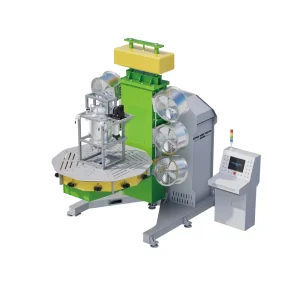
Prior to ocean transport, all moulds undergo rigorous trial runs (sampling) on automated shuttle or carousel rotomolding machines in our testing facility. Wall thickness distribution is measured via ultrasonic gauges, ensuring that Egyptian clients receive pre-calibrated, ready-to-run tooling upon delivery at Alexandria or Sokhna ports.
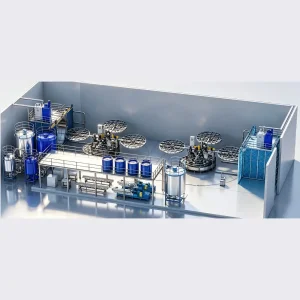
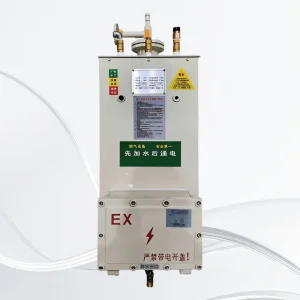
Beyond individual moulds, Chinese leading exporters like StarWay Roto deliver total plant solutions—including carousel machines, shuttle units, rock-and-roll ovens, automated pulverizers, pneumatic resin loading systems, and eco-friendly gas/electric burner configurations engineered specifically for North African utility standards.
Tailor-made rotational molding tooling built for high-performance deployment across North African environmental conditions.
Custom steel sheet moulds engineered for 3-layer and 4-layer UV-stabilized potable water storage tanks (anti-bacterial inner layer, foam insulation core, weather-resistant outer shell) widely deployed across Cairo's residential towers and rural Sinai installations.
Heavy-duty cast aluminum moulds for floating pontoon docks, fish farming cage floats, navigation buoys, and jet-ski ports designed to withstand high salinity, intense solar radiation, and wave action off Hurghada and Sharm El-Sheikh.
Precision-fitted lid and body mold sets for commercial cooler boxes, vaccine carrier chests, and agricultural produce transport tubs essential for Egypt's food export corridor to Europe and the Gulf region.
Staying ahead of the curve: Next-generation rotomolding innovations transforming efficiency, sustainability, and automated factory output.
Traditional rotomolding relies on gas-fired hot-air ovens, which lose up to 60% of thermal energy to the surrounding environment. The industry is rapidly advancing toward electrically heated internal-element moulds. By embedding insulated electric heating elements directly into the aluminum mold matrix, thermal efficiency increases to over 85%, reducing energy consumption, carbon emissions, and cycle times significantly.
Modern rotomolding moulds are no longer static metal shells. Advanced tooling now incorporates internal wireless thermocouple probes, air-pressure transducers, and resin flow sensors. These IoT modules transmit real-time internal mold temperature (TP) data directly to the central machine PLC, automatically signaling the exact moment of polymer melting, densification, and cooling initiation.
As global environmental mandates tighten, Egyptian manufacturers are increasingly required to incorporate recycled polyethylene (PCR-LLDPE) into non-food-contact applications such as road barriers, drainage pipes, and trash carts. Modern moulds manufactured by StarWay Roto feature optimized draft angles (typically 2° to 5°) and specialized micro-textured sandblast finishes that facilitate effortless mold release even when processing high-viscosity recycled polymers.
Crucial quality control protocols, import documentation, and structural parameters for seamless procurement.
Every mold manufactured for international buyers undergoes rigorous coordinate measuring machine (CMM) dimensional verification. Parting line gaps are guaranteed under 0.15mm to eliminate flash. Hydraulic pressure testing is conducted on internal cooling cores to prevent water leaks during operation.
We provide complete export documentation compliant with Egyptian Customs Authority requirements, including Advanced Cargo Information System (ACI) / Nafeza registration, COO (Certificate of Origin), CE declarations, and fumigated solid-wood or steel crate packaging for ocean transport to Alexandria, Damietta, or Sokhna ports.
Direct expert answers to common engineering, commercial, and operational questions from Egyptian factory owners.
Partner with Ningbo StarWay Roto Co., Ltd. for engineering-grade cast aluminum & steel moulds, automated shuttle and carousel machines, and complete turnkey manufacturing systems.
Send Inquiry Now →Explore our extensive portfolio of high-performance rotational molding machines, custom mold fabrications, and smart auxiliary automation systems.