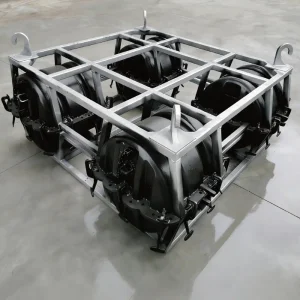

Direct export configurations compliant with CE Machinery Directive 2006/42/EC and Cal/OSHA operational safety guidelines.
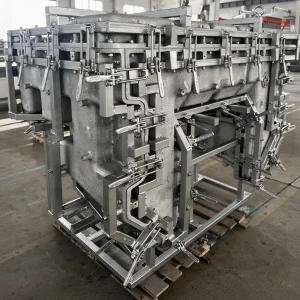
Analyzing Southern California's shifting polymer manufacturing dynamics, environmental mandates, and tooling requirements.
The Greater Los Angeles metropolitan area—encompassing LA County, Orange County, San Bernardino, and the Inland Empire—represents one of North America’s most complex and high-value manufacturing hubs. As industrial operations in Southern California navigate stringent environmental regulations enforced by the South Coast Air Quality Management District (SCAQMD) and state-level decarbonization goals, rotational molders face a dual mandate: maximize production efficiency while adhering to ultra-strict machinery safety and emissions standards.
Rotational molding (rotomolding) has evolved from a low-tech plastic forming method into a high-precision polymer processing discipline. In Los Angeles, demand is surging across key strategic sectors:
While European Conformity (CE) marking is natively mandatory within the European Economic Area (EEA), leading Los Angeles OEMs and original exporters specifically mandate CE certified rotomolding machinery and tooling. A CE mark serves as a global benchmark for structural integrity, electrical safety (EN 60204-1), pressure containment safety (2014/68/EU), and risk mitigation under the Machinery Directive 2006/42/EC. For LA exporters shipping final products globally, buying CE-compliant tooling guarantees seamless international compliance and satisfies insurance underwriter audits.
Understanding thermal conductivity, grain structure, and dimensional stability for high-output West Coast factories.
Selecting the optimal mold architecture is a fundamental determinant of overall equipment effectiveness (OEE) in rotational molding. As a dedicated exporter to the Southern California market, our manufacturing infrastructure utilizes advanced CAD/CAM modeling, 5-axis CNC machining centers, and automated foundry casting processes to engineer tools capable of enduring thousands of rapid heating and cooling cycles.
Manufactured using high-purity A356 alloy refined with strontium modifiers. Cast aluminum molds exhibit exceptional thermal conductivity (~160 W/m·K), facilitating uniform heat transfer throughout complex geometries. Ideal for intricate products such as medical enclosures, detailed outdoor furniture, kayaks, and multi-walled containers requiring crisp parting lines and zero void formation.
Constructed from high-tensile Q235/Q345 structural steel plate ranging from 3mm to 8mm in thickness. Fabricated steel molds are the industry gold standard for large-volume cylindrical water tanks, septic systems, fuel storage units, and heavy industrial hoppers. Steel molds provide unmatched structural durability, lower initial tooling investment, and rapid turn-around for large-scale geometries.
The following technical table provides an objective benchmark for engineering managers in Los Angeles evaluating mold selection criteria:
| Engineering Property | Cast Aluminum (A356 Alloy) | CNC Billet Aluminum (6061-T6) | Fabricated Steel (Q345 Plate) |
|---|---|---|---|
| Thermal Conductivity | 150 - 170 W/m·K (High) | 160 - 180 W/m·K (Ultra High) | 45 - 55 W/m·K (Moderate) |
| Cycle Time Efficiency | 15% - 25% Faster Curing | 20% - 30% Faster Curing | Standard Thermal Ingress |
| Surface Texture Flexibility | Extremely High (Shot-peened, mirror, custom grain) | Ultra Precision (Micro-machined) | Standard Smooth / Polished |
| Structural Rigidity / Durability | High (Subject to thermal fatigue over 8k cycles) | Superior (Minimal thermal fatigue) | Maximum Impact Resistance (15k+ cycles) |
| Lead Time (Design to Ship) | 4 - 6 Weeks | 3 - 5 Weeks | 3 - 4 Weeks |
| CE Certification Standards | EN ISO 12100, Pressure-Tested Vents | EN ISO 12100, EN 60204-1 | Directive 2006/42/EC, NDT Weld Verified |
Navigating Cal/OSHA requirements, Port of Los Angeles customs clearances, and technical field assistance.
Importing capital equipment and custom tooling into California requires comprehensive alignment with localized safety and environmental directives. As a seasoned global exporter, our engineering operations bridge the gap between Asian manufacturing capability and North American regulatory frameworks.
California’s Division of Occupational Safety and Health (Cal/OSHA) enforces some of the strictest workplace safety rules in the nation. Our export tooling and automated shuttle/carousel machinery undergo rigorous multi-point validation before departing our facilities:
Supply chain predictability is vital for West Coast buyers. All molds and auxiliary machines shipped to the Los Angeles market benefit from tailored export logistics management:
Engineering custom tooling across diverse high-performance commercial use-cases.
Precision CNC aluminum tooling producing seamless, flame-retardant cross-linked polyethylene (XLPE) and polyamides (PA12) environmental control system (ECS) ducts for aviation hubs in Long Beach and Palmdale.
Heavy-duty fabricated steel molds for double-walled containment tanks. Engineered to sustain aggressive specific gravities (up to 1.9 SG) for agricultural chemical suppliers in the Inland Empire.
Complex multi-cavity aluminum molds producing impact-resistant structural battery trays, wheel well liners, and heavy equipment fairings tailored for SoCal electric commercial vehicle OEMs.
Complete turn-key production machinery exported directly to Southern California plastic manufacturing facilities.
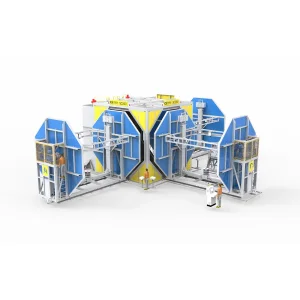
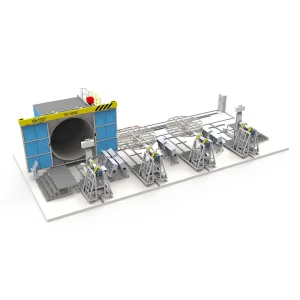
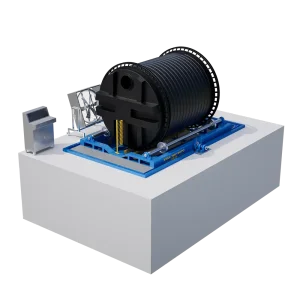
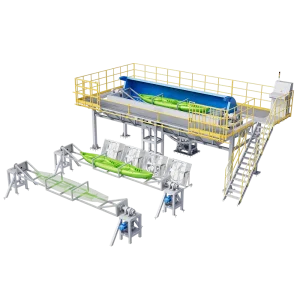
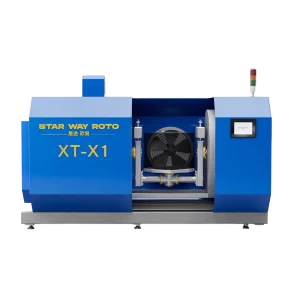
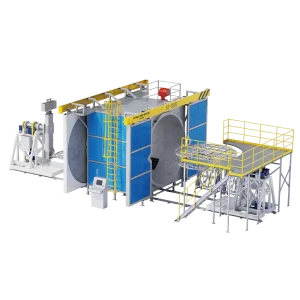
Pioneering Next-Generation Tooling Technologies for California’s Modern Industrial Facilities.
As the rotational molding industry transitions into Industry 4.0, static tooling is rapidly giving way to sensor-embedded, data-driven smart molds. In response to Southern California's strict energy consumption benchmarks and recycled content requirements, our R&D team has implemented three breakthrough innovations across our CE-certified tooling lines:
Integrated wireless thermocouples and internal air temperature (IAT) sensors monitor the real-time thermal curve during the oven phase. This eliminates guesswork, prevents resin degradation, and optimizes cycle times by up to 18%.
Specifically engineered mold wall textures and internal variable-conduction thermal barriers designed to process up to 50% PCR HDPE blends without sacrificing tensile strength or causing surface pinholes.
3D Finite Element Thermal Analysis (FETA) is utilized during tool design to predict volumetric shrinkage patterns for non-symmetrical parts, ensuring sub-millimeter dimensional fidelity for multi-part assemblies.
By leveraging these intelligent design protocols, Los Angeles manufacturers can significantly decrease reject rates, lower natural gas consumption per molding cycle, and comply with California SB 54 regulations governing plastic packaging and material circularity.
Direct answers for procurement managers, tooling engineers, and plant operators in Greater Los Angeles.
Connect directly with our senior technical engineering team for custom CAD analysis, tooling quotes, and West Coast delivery schedules.
Send Inquiry Now