
Explore high-efficiency rotational molding equipment and turnkey auxiliary systems engineered for heavy-duty industrial tanks, precision containers, and high-throughput production lines.
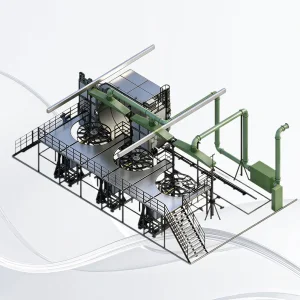
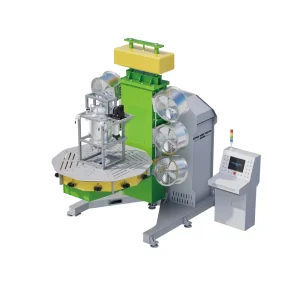
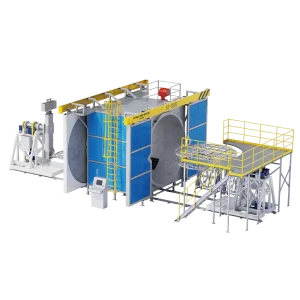
A granular examination of tooling material thermodynamics, CNC precision machining hours, core pull systems, and total lifecycle amortization for industrial storage containers.
In the rotational molding industry, the acquisition cost of an OEM tank mold is governed not merely by gross metal tonnage, but by an interplay of thermal transfer efficiency, mechanical draft angles, metallurgical integrity, and parting-line tolerance. Industrial storage tanks—ranging from 100-liter vertical dosing vessels to massive 30,000-liter horizontal chemical storage units—impose intense structural and cyclic thermodynamic demands on tooling. As a leading manufacturer established in 2009 with over 23 years of accumulated rotomolding engineering expertise, Ningbo StarWay Roto delivers optimized tooling systems that dramatically compress heating/cooling cycles while preventing wall-thickness irregularities.
OEM tank mold pricing is typically structured around three core fabrication methodologies: Fabricated Steel Plate Tooling (ideal for low-complexity, massive cylindrical or rectangular tanks), Cast A356 Grade Aluminum Tooling (the global standard for complex shapes, ribbed vessels, and textured finishes), and 5-Axis CNC Billet 6061-T6 Machined Aluminum Tooling (demanded by mission-critical automotive DEF, chemical IBC, and high-precision fluid systems). The engineering table below outlines typical factory-direct pricing benchmarks, production lead times, and thermal life expectancies based on global procurement parameters.
| Tank Capacity & Geometry | Tooling Material & Process | Wall Thickness & Precision | Est. Lead Time | Tool Lifespan (Shots) | OEM Price Range (USD) |
|---|---|---|---|---|---|
| 100L – 500L Cylindrical / Dosing Tank | Fabricated Steel / Cast A356 Al | 8.0 mm (±0.4 mm) | 20 – 25 Days | 8,000 – 15,000 | $2,800 – $5,200 |
| 1,000L – 2,000L Standard Vertical Cistern | Cast A356-T6 Aluminum (Pored Pattern) | 9.5 mm (±0.3 mm) | 30 – 35 Days | 15,000 – 25,000 | $6,500 – $11,800 |
| 1,000L IBC Composite Chemical Tote Tank | 5-Axis CNC Machined 6061 Billet Al | 12.0 mm (±0.15 mm) | 35 – 45 Days | 35,000 – 50,000+ | $14,500 – $24,000 |
| 3,000L – 5,000L Agricultural Spraying / Chemical | Cast Aluminum w/ Integrated Core Cooling | 10.5 mm (±0.35 mm) | 40 – 48 Days | 18,000 – 30,000 | $16,000 – $28,500 |
| 10,000L – 20,000L Heavy-Duty Water & Acid Storage | Fabricated Q235B Pressure-Vessel Steel | 4.5 – 6.0 mm Steel Plate | 45 – 55 Days | 6,000 – 12,000 | $22,000 – $42,000 |
| 20,000L – 30,000L+ Ultra-Large Mega Tank | Modular Fabricated Structural Steel Frame | 6.0 mm Plate / Reinforcing Trusses | 60 – 75 Days | 5,000 – 10,000 | $45,000 – $85,000+ |
Beyond metal procurement and machining, secondary tooling systems directly govern final operational cycle efficiency. StarWay Roto integrates pneumatic vent tubes with high-temperature fluoropolymer filtration, spring-loaded mechanical latches, and T-slot alignment pins as standard specifications. These components eliminate parting line flash, minimize operator labor, and prevent vacuum-induced collapse during the cooling stage—safeguarding client return on investment across tens of thousands of continuous heating hours.
Why Tier-1 industrial buyers leverage China's Yangtze River Delta ecosystem for high-capacity, mission-critical rotational molding tooling.
Located in the heart of Ningbo's precision toolmaking cluster, StarWay Roto commands direct access to primary aluminum smelters, automated lost-foam casting foundries, and large-bed 5-axis gantry CNC milling centers. This concentrated industrial density reduces raw material transit lead times to zero and cuts overall tooling production costs by 35% to 55% relative to European or North American tool shops.
Unlike conventional commercial casting that suffers from trapped air pockets and localized brittle spots, our foundry operations apply vacuum degassing and secondary argon purging to molten A356 alloy. Combined with high-pressure die compression and complete ultrasonic flaw detection, our molds guarantee uniform thermal conductivity across the entire wall geometry, eliminating hot spots and premature tool fatigue.
Our 20-acre manufacturing plant houses specialized high-speed CNC machining centers capable of handling single-piece mold envelopes exceeding 8.5 meters in diameter. By integrating 3D CAD/CAM workflows with automated tool path optimization, complex rib architectures, lifting lug inserts, and zero-draft threaded neck ports are carved with micron-level repeatable fidelity.
From CFD thermodynamic simulation to multi-layer barrier co-extrusion and automated sensorized tooling.
The rotational molding sector is undergoing a profound paradigm shift. Historically viewed as a low-tech, forgiving manufacturing process, modern polymer requirements—driven by aggressive industrial chemicals, stringent environmental standards for fuel permeation, and demanding payload logistics—have forced mold designers to embrace advanced aerospace-grade methodologies. Tooling is no longer an inert metal vessel; it is an active thermodynamic heat-transfer device that governs resin sintering kinetics and crystal structure orientation.
Prior to tool fabrication, engineers deploy computational fluid dynamics and Finite Element Analysis (FEA) to simulate oven convection flow, radiant heat absorption, and internal resin flow trajectories. By identifying cold spots in sharp corners and thick flanges, our tooling features variable-thickness heat dissipation fins that harmonize thermal gradients and eradicate volumetric shrinkage distortion.
Modern chemical and underground fuel tanks demand multi-layer architectures—often combining virgin outer PE layers, foamed PE core insulation layers, and chemical-impervious inner EVOH/cross-linked polyethylene (XLPE) barriers. StarWay Roto engineers multi-port drop-box mechanisms and automated barrier dosing chambers integrated directly into mold spider arms for automated layer sequencing.
Next-generation rotational molding relies on live telemetry. By embedding wireless Piezo-thermocouples within the mold cavity wall (measuring the Peak Internal Air Temperature, or PIAT), plant operators achieve pinpoint real-time cure detection. Coupled with pressure-regulating dynamic Teflon vents, this system prevents blowouts and optimizes oven dwell duration.
Engineered mold solutions tailored for demanding chemical, agricultural, and municipal infrastructure sectors.
Specifically contoured for liquid nitrogen (UAN), pesticide, and liquid fertilizer storage. Molds feature conical bottoms for 100% complete drainage, engineered baffle indentations to suppress liquid sloshing during transit, and robust deep-tie ribs to accommodate high specific gravity fluids (up to 1.9 SG rating) without circumferential bulging.
Precision-milled 5-axis billet molds engineered for UN/DOT certified Intermediate Bulk Containers (IBCs). StarWay Roto’s tooling delivers mirror-finish SPI A2 internal cavities to prevent chemical pitting, multi-part parting lines for integrated stacking feet, and zero-leak threaded valve containment pockets.
Heavy-duty ribbed underground cistern molds engineered to withstand continuous lateral hydrostatic soil pressures and vehicular traffic loads. Fabricated with split-flange core designs, modular ring extensions, and automated mechanical ejectors to demold deep corrugations without human intervention.
How StarWay Roto bridges the gap between digital CAD geometries and fully automated factory output.
Reviewing client 3D models for rotomolding feasibility: verifying 1.5°–3.0° draft angles, corner fillets (R ≥ wall thickness × 3), structural rib-to-gap ratios, and wall-thickness transitions.
Pattern carving, high-integrity A356 casting, or monolithic CNC billet cutting. Includes precision machining of parting surfaces, tongue-and-groove alignment registers, and balanced clamping assemblies.
Custom spider framework fabrication and counterbalance balancing. Mounting tooling to straight, offset, or drop-arm spindles for seamless compatibility with Carousel, Shuttle, or Rock & Roll machinery.
Full-scale Factory Acceptance Testing on factory ovens. Sample part CMM laser scanning, wall thickness ultrasonic mapping, drop impact testing at -40°C, and cycle-time validation prior to global shipping.
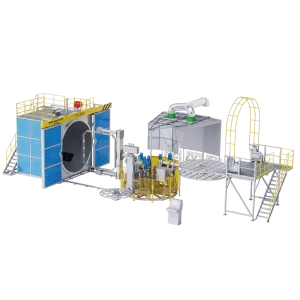
StarWay Roto does not operate simply as an isolated mold builder. As a comprehensive builder of large-scale carousel machines, smart shuttle systems, and auxiliary LDPE pulverizers, we ensure that every OEM tank mold arrives pre-plumbed, balanced, and thermally matched to your plant's specific heating medium—whether direct natural gas burners, open-flame systems, or clean electric ovens.
Strategic purchasing criteria, vendor evaluation metrics, and quality assurance protocols for institutional buyers.
Sophisticated manufacturing groups evaluate tooling contracts beyond initial invoice amounts. A poorly engineered mold that lengthens oven cycle times by 3 minutes across 20,000 cycles wastes tens of thousands of dollars in gas or electric utility overhead. StarWay Roto builds high-conductivity A356 molds with optimized wall cross-sections that accelerate thermal throughput, yielding up to 18% cycle-time reductions and rapid Capex payback.
Every tank mold exported by StarWay Roto undergoes comprehensive metrology validation: FARO Arm 3D laser coordinate inspection to verify CAD deviations within ±0.3mm, hydrostatic wall porosity checks, and CNC planar validation of mold parting surfaces. Customers receive complete dimensional inspection dossiers, raw material melt certificates, and trial cycle data sheets with their shipment.
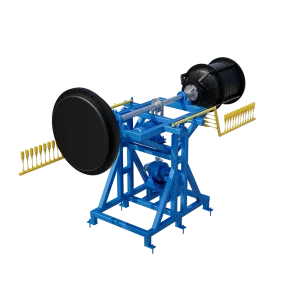
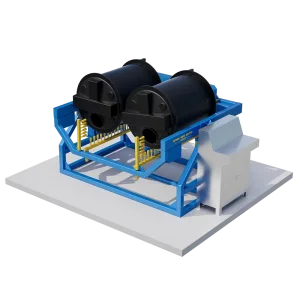
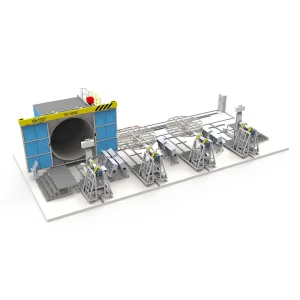
Review our specialized rock and roll machines, energy-efficient electric ovens, and heavy-duty shuttle configurations engineered to run heavy tank molds.
Direct answers from senior tooling engineers regarding shrinkage rates, venting physics, surface treatments, and payment security.
Rotomolded polymers (like LLDPE and HDPE) exhibit volumetric shrinkage ranging between 2.5% and 3.8% depending on resin melt index, density, and cooling rate. Our engineers employ proprietary 3D CAD scaling matrices that apply anisotropic shrinkage factors across different axes. Critical areas, such as threaded tank bungs and manhole flanges, utilize localized aluminum inserts with tailored cooling jackets to ensure finished dimensions align precisely with mating components.
Fabricated steel tooling is recommended for simple cylindrical or box-shaped storage tanks exceeding 5,000L where upfront tooling budget is constrained, and geometry requires minimal texturing. Cast A356 aluminum is essential for complex ribbed geometries, cone-bottom agricultural vessels, integrated lifting lugs, and applications requiring rapid, uniform thermal transfer to compress oven cycle times.
Improper venting causes tank wall porosity, localized blowout, or internal vacuum collapse. As an engineering standard, StarWay Roto sizes mold vents to 13mm – 25mm of cross-sectional vent area per cubic meter of interior mold volume. We utilize temperature-resistant PTFE breathable tubes packed with woven copper or ceramic fibers that allow volatile off-gases to vent without resin powder ingestion or external parting line contamination.
Standard tank molds receive fine glass-bead micro-blasting (SPI-C1 to B2 finishes) to promote consistent resin grab without surface drag marks. For high-volume production cells running cross-linked polyethylene (XLPE) or aggressive masterbatches, we apply semi-permanent ceramic or PTFE-infused DuPont matrix coatings that allow 1,500+ molding cycles without supplementary spray-on release agents.
All mold parting surfaces are precision CNC face-milled with interlocking tongue-and-groove or double-register steps. We reinforce the parting perimeter with high-tensile structural steel clamping rims and install forged over-center toggle clamps capable of exerting balanced mechanical sealing pressure. This design ensures that mold closure remains gap-free despite repeated thermal expansion and contraction cycles.
Before global ocean dispatch, every mold undergoes trial rotation on our factory machines. Clients receive full 3D CMM coordinate inspection reports, resin trial shrinkage verification certificates, photographic documentation of parting line seals, and thermal profile logs. Overseas buyers may either attend FAT in person at our Ningbo facility or review our comprehensive real-time digital video commissioning sessions.