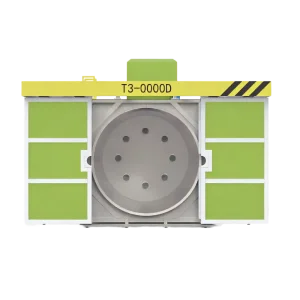
Explore our world-class line of high-throughput machinery and precision-engineered rotational tooling designed for demanding multi-cavity, large-scale polymer synthesis.
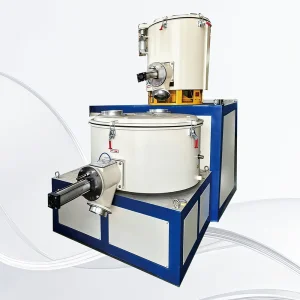
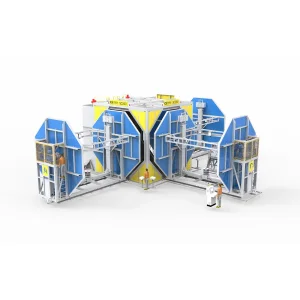
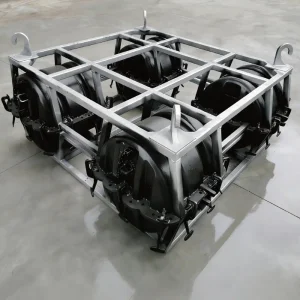
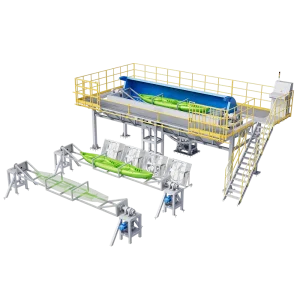
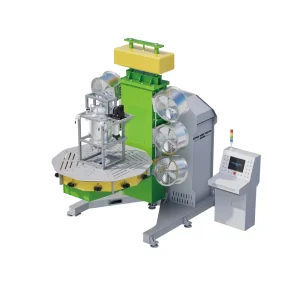
Evaluating structural transformation in polymer conversion, shifting global supply chain hubs, and the growing transition toward high-tolerance precision tooling.
Rotational molding is no longer confined to basic hollow tanks. Modern industrial OEM demands require complex multi-chamber structures, micro-textured surfaces, and tight-tolerance inserts replacing heavy steel and composite fabrications across global automotive and aerospace supply chains.
Traditional open-flame and inefficient hot-air recirculating ovens are rapidly being replaced by closed-loop thermal control systems, direct-conductive electric moulds, and infrared thermal imaging matrices that drastically cut cycle times and eliminate internal thermal warping.
Material science in rotational moulding has expanded beyond standard LLDPE and HDPE. OEM applications now actively deploy cross-linked PE (XLPE), polyamide formulations (PA6, PA11, PA12), polypropylene (PP), and high-barrier EVOH co-rotomolding layers for hyper-critical fluid storage.
Precision engineering starts at the tooling interface. Selecting the optimal mould substrate and machining methodology dictates part surface fidelity, thermal cycle velocity, and dimensional repeatability.
| Engineering Parameter | 5-Axis CNC Billet Aluminum (6061-T6) | Cast Aluminum Alloy (A356 / AC4C) | Fabricated Sheet Steel / Stainless Steel |
|---|---|---|---|
| Primary Application Scope | Automotive fuel tanks, medical enclosures, aerospace ducts, high-precision aesthetic housings. | Consumer kayaks, complex industrial components, multi-cavity small-to-medium parts. | Ultra-large water tanks, septic containment, simple geometry industrial containers (>5,000L). |
| Thermal Conductivity (W/m·K) | High (~160 - 180) | Medium-High (~120 - 140) | Low (~45 - 55) |
| Dimensional Tolerance | ±0.05 mm to ±0.15 mm | ±0.5 mm to ±1.0 mm | ±1.5 mm to ±3.0 mm |
| Parting Line Quality | Micro-machined, knife-edge seamless fit (<0.05mm flash) | Hand-matched CNC finishing (<0.3mm flash) | Gasketed / welded clamp seams (<1.0mm flash) |
| Surface Finish Capabilities | Mirror polish, SPI A1, VDI texture, laser micro-etching | Cast shot-blast, textured matte, sand-cast grain | Mill finish, brushed, Teflon/fluoropolymer coated |
| Tooling Durability & Longevity | 150,000+ Thermal Cycles | 80,000 - 120,000 Thermal Cycles | 40,000 - 60,000 Thermal Cycles |
Improper venting induces back-pressure, wall thinning, and severe blowholes. Our moulds integrate Teflon-sleeved breather tubes and porous metal venting inserts engineered to match volumetric air displacement during exothermic expansion.
For complex undercut features, collapsible cores, and internal threaded bosses, our OEM tooling designs incorporate high-temperature pneumatic drop-pins and automated clamping systems that reduce manual operator demoulding labor.
Eliminating sacrificial chemical release agents through proprietary semi-permanent multi-layer nano-ceramic and PTFE fluoropolymer impregnations. Results in cleaner resin surfaces, zero transfer contamination, and rapid cycle turnarounds.
From initial 3D generative CAD topology optimization to high-precision CMM dimensional verification, our rigorous 6-stage gateway ensures zero-defect tooling delivery.
Comprehensive Design for Manufacturability (DFM) analysis reviewing draft angles (min 1.5° to 3° for textured surfaces), wall thickness transitions, corner radius fillets, and thermodynamic moldflow FEA modeling.
Multi-axis high-speed CNC cutting of aircraft-grade 6061-T6 aluminum billets or high-density tooling patterns for precision foundry casting, maintaining microscopic stepover tolerances and contour precision.
Chemical acid-etching, hand stoning, laser micro-texturing, and master-craftsman bench fitting. Parting line blueing checks guarantee flush metal-to-metal sealing to prevent resin flash formation.
Balancing rotational inertia through customized structural steel spiders and mounting arms. Precision alignment of major/minor rotation axes ensures even bi-axial resin coat distribution throughout heating.
Trial pilot moulding using customer-specified resins. Real-time datalogging of Peak Internal Air Temperature (PIAT), cure indexes, warp vectors, and shrinkage calibration against volumetric parameters.
Full 3D coordinate measuring machine (CMM) scanning, ultrasonic wall thickness mapping, non-destructive leak testing, and hydrostatic pressure testing before crate packaging and global deployment.
Supplying heavy-duty tooling and processing machinery across Tier-1 automotive, municipal infrastructure, maritime defense, and global chemical containment sectors.
Lightweight, impact-resistant Diesel Exhaust Fluid (DEF) AdBlue tanks, hydraulic oil reservoirs, complex engine intake ducts, operator cabin roofs, and battery enclosure cooling jackets manufactured to rigorous IATF 16949 standards.
Multi-layer, seamless cross-linked polyethylene (XLPE) containment tanks ranging from 500L to 50,000L. Engineered for corrosive acids, aggressive oxidizers, and hazardous waste with high environmental stress crack resistance (ESCR).
Unsinkable polyurethane foam-filled navigation buoys, floating dock pontoons, aquaculture cages, leisure yachts, and high-performance touring kayaks engineered to resist intense UV exposure, saltwater degradation, and wave impacts.
Heavy-duty rotationally moulded cooler boxes, cryogenic dry ice containers, and temperature-controlled medical vaccine transport units featuring airtight silicone seals, heavy-duty latches, and ultra-dense PU insulation.
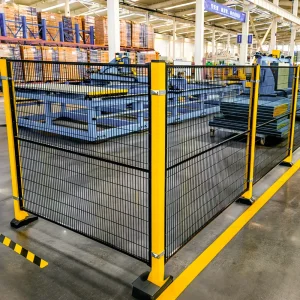
Road traffic barriers, perimeter perimeter safety fences, modular septic tanks, storm-water retention chambers, and heavy-duty waste management wheelie bins built to withstand aggressive environmental loading and mechanical fatigue.
Corrosion-free cattle feeding troughs, automated calf hutches, agricultural sprayer tanks, fertilizer hoppers, and grain chutes designed for extreme outdoor survivability and easy hygienic chemical washdowns.
Full alignment with North American, European, and Asia-Pacific statutory, environmental, and mechanical performance mandates.
Rigid quality management systems governing every stage of tooling development, machining tolerances, metallurgical traceability, and assembly torque specifications.
Full compliance with European Machinery Directive 2006/42/EC, low voltage directives, and automated fail-safe emergency cutoffs on all shuttle and carousel machinery.
Tooling and resin qualification adhering to FDA 21 CFR 177.1520 and EU No 10/2011 for sanitary potable water tanks, food ingredient bins, and pharmaceutical vessels.
Comprehensive on-site commissioning, operator training, rapid spare parts fulfillment, and digital remote telemetry support across 40+ countries on 6 continents.
Leading the transformation into Industry 4.0 rotational molding through smart embedded sensors, robotic automation, and sustainable circular polymer systems.
Integration of wireless, high-temperature embedded thermocouples and pressure micro-transducers directly into mould cavities. Delivers live wireless thermodynamic data to central PLC controllers during rotation.
Fully automated 6-axis robotic cells executing high-speed part extraction, pneumatic de-clamping, deflashing, and ultra-precise CNC routing along complex parting lines, eliminating ergonomic strain and human error.
Advanced heating chamber profiles specifically tuned to handle Post-Consumer Recycled (PCR) resin blends and biodegradable polylactic acid (PLA) polymers without compromising mechanical tensile strength or impact integrity.
Authoritative insights and precise data addressing common technical queries regarding rotational mould design, lead times, shrink rates, and multi-layer tooling.
Polymer shrinkage varies significantly by resin density and cooling speed. Standard LLDPE exhibits 2.5% to 3.5% volumetric shrinkage, while HDPE can reach 3.0% to 4.5%, and PP up to 1.5% to 2.2%. In our 3D CAD modeling stage, we apply non-uniform volumetric scaling based on localized wall thickness, corner geometry, and cooling airflow pathways to ensure finished parts land precisely within client CMM tolerance bands.
Direct 5-axis CNC machined billet aluminum tooling typically requires 25 to 35 business days from final 3D CAD approval to initial T1 sampling. Cast aluminum moulds require pattern creation, foundry casting, and CNC secondary machining, averaging 40 to 55 business days depending on geometric intricacy, surface texture specification, and multi-cavity layout complexity.
Optimal cast and CNC aluminum mould wall thickness is engineered between 8mm and 12mm. Thinner walls (<6mm) risk mechanical warping under repeated thermal cycling, while excessively thick walls (>15mm) create high thermal inertia, lengthening oven cook times and cooling phases. Uniform mould thickness ensures even heat conductivity and uniform resin sinterization across all part faces.
Yes. Multi-layer parts (e.g., solid outer skin, foamed insulation core, chemical-resistant inner liner) utilize standard precision moulds in conjunction with drop-box timing actuators or sequentially loaded multi-layer thermal charge systems. Our moulds are specifically engineered to accommodate internal drop-box mounting brackets and optimal internal air volume expansion.
For smooth or light bead-blasted surfaces, a minimum draft angle of 1.0° to 1.5° is required. For deep laser-textured, leather-grain, or heavy pebble finishes, draft angles must be expanded to 3.0° to 5.0° to prevent scuffing, drag marks, and resin shearing during the demoulding process.
Preventative mould maintenance includes routine ultrasonic cleaning of vent tubes, regular inspection and torque re-calibration of clamping hardware, parting line integrity checks to remove micro-burrs, and periodic reapplication of semi-permanent release coatings. Aluminum tool surfaces should never be cleaned with abrasive steel wire brushes or caustic chemical washes.
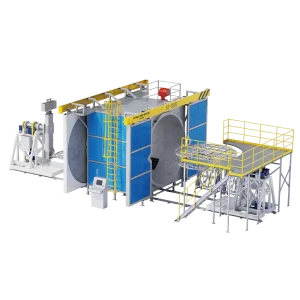
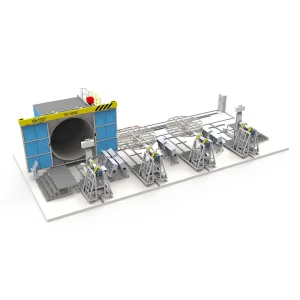
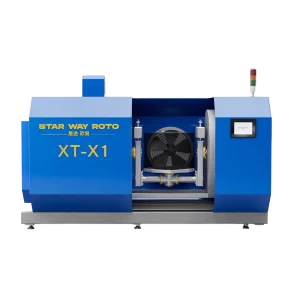
Complete turnkey manufacturing equipment, auxiliary systems, and lab-scale test machinery designed to empower automated, energy-efficient plastic molding facilities.