StarWayRoto
Request a Catalog
Industry Whitepaper & OEM Procurement Guide

OEM Rotational Casting Pricelist & Exporter Guide

An authoritative engineering breakdown on rotational molding physics, custom tooling pricing matrices, global supply chain strategies, and total cost of ownership (TCO) benchmarks for industrial buyers.

ISO 9001:2015 & CE Certified
23+ Proprietary Patents
40+ Countries Exported

Featured Rotomolding Machinery & OEM Solutions

Explore our core product portfolio featuring automated carousel systems, energy-efficient electric shuttle machines, and custom steel tooling.
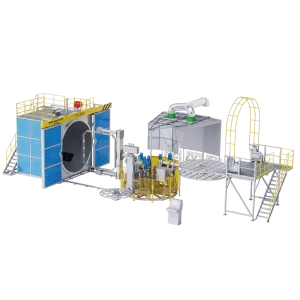
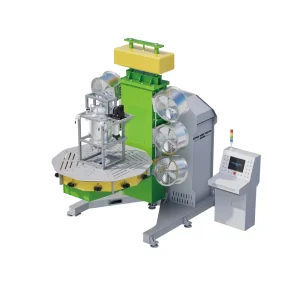
Buy Carousel rotomolding machine Manufacturers, Service
View Specs
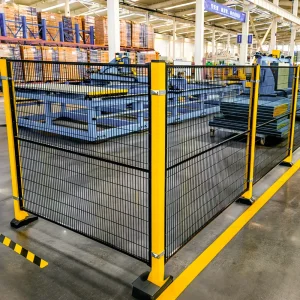
Best Surrounding Fence Pricelist, Quotes
View Specs
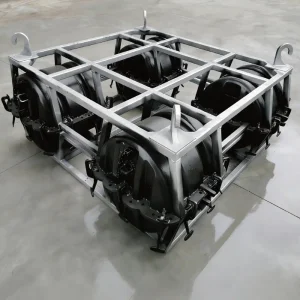
Famous China Steel Mould Suppliers
Famous China Steel Mould Suppliers - Quality Factory-Made Moulds for Durable Industrial Solutions
View Specs
CE Certification Electric Heating Rotomolding Machine
CE Certification Electric Heating Rotomolding Machine for Eco-Friendly Production
View Specs
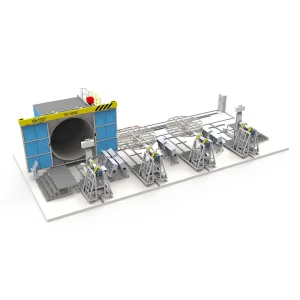
OEM Lined shuttle Machine Companies
OEM Lined shuttle Machine Companies, Products
View Specs
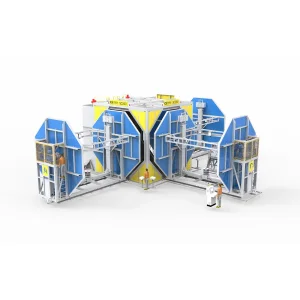
ODM China Square Shuttle Machine
ODM China Square Shuttle Machine - Flexible Oven with Integrated Design
View Specs
Custom Electrical Heating Rotomolding Machine
Custom Electrical Heating Rotomolding Machine (Oven) Exporters, Factory
View Specs
Best Electrical Heating Rotomolding Machine Mould
Best Electrical Heating Rotomolding Machine (Mould) Companies, Service
View Specs

Technical Foundation of OEM Rotational Casting

Understanding the thermodynamic mechanics, stress-free polymer physics, and design parameters that drive high-performance hollow plastic manufacturing.

Bi-Axial Rotation & Thermal Fusion Mechanics

Rotational casting (commonly referred to as rotational molding or rotomolding) is a thermoforming process ideal for producing seamless, hollow, multi-wall plastic structures. Unlike high-pressure injection molding or blow molding, rotational casting relies on a zero-pressure, bi-axial rotation mechanism inside a heated oven environment.

During the heating cycle, pulverized thermoplastic resin (typically 35-50 mesh powder) tumbles continuously across the inner surface of a pre-heated metal mold. As the mold surface temperature passes the polymer's melting point ($T_m$), micro-particles adhere to the tool wall layer by layer, fusing into a homogeneous melt without external shear stress.

  • Zero Residual Stress: Absence of hydraulic injection pressure eliminates internal molecular stress, preventing warp and environmental stress cracking (ESCR).
  • Uniform Corner Wall Thickness: Centrifugal force and thermal distribution draw extra resin into outer radii, strengthening critical structural corners.
  • Integrated Double-Wall Design: Effortless molding of complex foam-filled structures, dual-laminate liners, and heavy-duty double-wall profiles.
Polymer Engineering Selection Criteria
Selecting the appropriate resin grade directly impacts mechanical performance, impact resistance, and final part cost.

LLDPE (Linear Low-Density Polyethylene): 85% of market share. Superior impact resistance, flexibility, and processing ease (MFI: 3.0 to 7.0 g/10min).
HDPE (High-Density Polyethylene): Higher flexural modulus ($>1000\text{ MPa}$), excellent chemical containment rigidity.
XLPE (Cross-linked Polyethylene): Chemically cross-linked during heating for extreme puncture resistance and hot oil/fuel storage.
Polyamide (Nylon 6 / 12): High-temperature stability, superior tensile strength, and hydrocarbon barrier properties.
23+
Years Engineering Expertise
230+
Turnkey Factory Projects
30%
Average Energy Reduction
40+
Global Export Markets

OEM Rotational Casting Pricelist & Cost Structure

Transparent pricing frameworks for machine acquisition, CNC mold tooling, and per-piece manufacturing unit cost calculations.

Evaluating the total cost of ownership (TCO) in rotational molding requires dissecting three primary budget centers: Capital Equipment Investment (Rotomolding Machines), Tooling/Mould Costs (Cast Aluminum vs. Steel Fabricated), and Variable Unit Manufacturing Costs (Resin powder, burner gas/electricity, and cycle labor).

1. Rotomolding Machinery Capital Expenditure Benchmark (2026-2027)

Machine Category / Type Heating System Arm Configuration Max Mold Swing (Dia.) Est. Price Range (USD) Ideal Application
Carousel Machine (Fixed/Independent) Gas / Diesel Burner 3-Arm / 4-Arm Carousel 1,500 mm – 4,500 mm $85,000 – $260,000 High-volume industrial parts, water tanks, mass containers.
Electric Heating Rotomolding Machine Clean Electric Radiant Shuttle or Fixed Arm 1,200 mm – 3,200 mm $45,000 – $140,000 Eco-friendly factories, precision medical & lab housings.
Square / Lined Shuttle Machine Direct Gas / Lined Oven 2 Shuttle Arms / 3 Stations 2,000 mm – 5,000 mm $60,000 – $180,000 Diverse product mixes, frequent mold changes, large tanks.
Rock & Roll Machine Open Flame / Micro Oven Single Rocking Frame 3,000 mm – 8,500 mm $28,000 – $95,000 Extra-large slender hollow parts (Kayaks, fuel pipes, septic tanks).
High-Speed Material Mixer / Pulverizer Auxiliary Electric High-Shear Blades 500 L – 2,000 L Capacity $12,000 – $38,000 In-house resin compounding, pigment blending, and grinding.

2. OEM Tooling & Mold Manufacturing Cost Guidelines

Fabricated Steel Molds
Price Range: $2,500 – $12,000
Lead Time: 15 – 25 Days
Best For: Simple geometries, large cylindrical storage tanks, budget-constrained prototype production.
Low Tooling Cost
CNC Machined Aluminum Molds
Price Range: $6,000 – $35,000
Lead Time: 25 – 40 Days
Best For: Intricate parts with tight tolerances, fine logos, uniform thermal conduction, premium surface finish.
High Precision
Cast Aluminum (A356) Tooling
Price Range: $8,000 – $45,000
Lead Time: 35 – 50 Days
Best For: Complex 3D curves (Kayaks, toys, medical equipment), multi-cavity production runs.
Complex Geometry

China OEM Manufacturing & Export Strategic Advantages

Why leading global enterprises partner with Chinese OEM exporters like StarWayRoto for rotomolding infrastructure.

End-to-End Vertical Integration
From 3D CAD design for rotomolding (DFM), CNC pattern carving, cast aluminum foundry operations, to automated machinery assembly—China's industrial hubs (such as Ningbo, Zhejiang) offer complete regional supply chain synergy, drastically reducing lead times by up to 40%.
Cost Efficiency & Scalability
Capitalize on optimized raw material sourcing, scale-driven steel fabrication, and competitive skilled engineering labor. OEM buyers typically achieve 30% to 50% capital savings on machinery purchase orders compared to European or North American equipment suppliers.
Rigorous International Standards
Modern Chinese exporters adhere strictly to global engineering standards including CE compliance, ISO 9001 quality management, UL control panel wiring, and EU EN-71 non-toxic material certifications, assuring seamless deployment in European and American markets.

Industry Trends & Next-Gen Technological Innovations

The shift toward Industry 4.0 smart controls, eco-friendly heating, and automated material handling.

1. Smart In-Mold Temperature Monitoring (TP-Control)

Historically, rotational molding relied heavily on operator intuition and timed heating schedules. Modern smart factories utilize wireless radio-frequency (RF) thermal sensors mounted directly inside the mold cavity. By measuring internal air temperature (IAT) continuously, the Siemens PLC system dynamically adjusts burner output, pinpointing the exact peak internal air temperature (PIAT) for perfect polymer crystallization and zero bubble voiding.

2. Transition to Clean Electric & Direct-Heating Ovens

With global carbon neutral mandates tightening, electric rotomolding ovens are replacing traditional direct-gas burners. Advanced electric ceramic radiant elements provide 98% thermal conversion efficiency, zero emissions inside factory air spaces, and precise surface heat transfer, lowering total energy consumption per kilogram of resin processed by up to 25%.

3. Automated Robotic Demolding & Powder Dispensing

High-capacity manufacturing plants are integrating 6-axis heavy payload industrial robots at cooling and demolding stations. Automated pneumatic mold clamps combined with robotic vacuum grippers allow rapid part extraction, while automated multi-resin powder dispensers load pre-weighed shots into hot molds within seconds, drastically cutting cycle time.

4. Multi-Layer Foamed Sandwich Structures

Co-extruded or multi-drop powder systems enable 3-layer rotomolding: an aesthetic solid outer skin, a lightweight micro-cellular PE foam core for high flexural rigidity, and an chemical-resistant inner wall liner. This process optimizes part weight while quadrupling structural beam strength.

Localized Application Scenarios & Global Sector Solutions

From heavy agricultural liquid storage to marine vessels and urban infrastructure—how rotomolded products solve critical engineering challenges.

Agriculture & Chemical Storage
Key Products: 5,000L–20,000L Vertical Water Tanks, Agricultural Fertilizer Spray Tanks, Septic Systems.
Technical Requirement: UV-8 to UV-20 weather stabilization, seamless stress-free wall structure to withstand hydraulic hydrostatic pressure without cracking.
Logistics & Cold-Chain Infrastructure
Key Products: PU-Foam Insulated Dry Ice Coolers, Heavy-Duty Roto-Molded Pallets, Spill Containment Decks.
Technical Requirement: Double-wall polyurethane foam injection, high dynamic payload rating ($>2,000\text{ kg}$), impact resilience down to $-40^\circ\text{C}$.
Marine, Kayaks & Water Sports
Key Products: Single/Double Recreational Kayaks, Modular Floating Docks, Navigation Buoys, Pontoon Hulls.
Technical Requirement: Zero porosity, precise hull balance, resistance to saltwater bio-fouling and long-term solar UV degradation.
Urban Sanitation & Security Fencing
Key Products: Mobile Sanitation Waste Containers, Traffic Safety Barriers, Modular Surrounding Fences.
Technical Requirement: High rigidity, resistance to municipal chemical detergents, quick assembly interlocking designs.
Heavy Machinery & Automotive
Key Products: Tractor Fuel Tanks, Engine Air Intake Ducts, Construction Equipment Housings, Wheel Arch Covers.
Technical Requirement: Cross-linked PE (XLPE) or Nylon material compatibility, oil/diesel permeability compliance, molded-in brass inserts.
Medical & Laboratory Enclosures
Key Products: Hospital Bed Panels, Centrifuge Covers, Blood Transport Insulation Boxes, Laboratory Waste Carts.
Technical Requirement: Smooth non-porous antimicrobial surface finish, resistance to medical-grade disinfectants, precise dimensional tolerances.

B2B Procurement Playbook: Supplier Evaluation Framework

Key technical milestones to verify when auditing an OEM Rotational Casting exporter.

5-Step OEM Quality Control Protocol for Overseas Buyers
  1. 3D DFM Analysis & Mold Flow Simulation: Ensure the factory provides finite element thermal analysis to identify potential shrink warpage and thick-wall heat sinks before tool cutting.
  2. Tooling Material Verification: Inspect material certificates for cast aluminum (A356 grade) or forged steel plates to prevent micro-porosity and premature thermal fatigue.
  3. Ultrasonic Wall Thickness Mapping: Mandatory multi-point ultrasonic testing across molded sample parts to confirm minimum wall thickness tolerances ($\pm 0.5\text{ mm}$).
  4. ARM Low-Temperature Impact Testing: Conduct Dart Drop Impact tests at $-40^\circ\text{C}$ according to Association of Rotational Molders (ARM) standard guidelines.
  5. Factory Acceptance Test (FAT): Mandate a full 24-hour continuous dry-run of machinery with mold trial heating cycles prior to export crating.

Additional OEM Rotomolding Equipment & Components

Complete your plant setup with custom lab testing units, open-flame systems, and specialized mold tooling.
Best Electric Heating Rotomolding Machine Suppliers in China
Best Electric Heating Rotomolding Machine Suppliers in China | Eco-Friendly Factory Solutions
View Specs
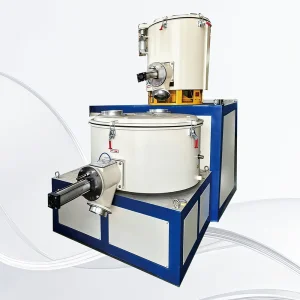
Famous High-Speed Mixer Manufacturer
Famous High-Speed Mixer Manufacturer, Exporter
View Specs
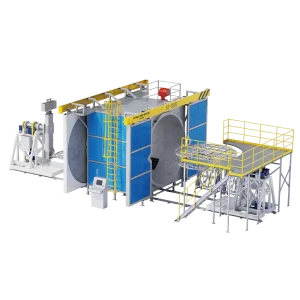
Buy High-Load Shuttle Rotomolding Machine
Buy High-Load Shuttle Rotomolding Machine from China Suppliers | Factory for Large Products
View Specs
Custom China Lab Machine Suppliers
Custom China Lab Machine Suppliers: Advanced Factory Equipment for PE, PP, PA Material Testing
View Specs
Small Open Flame Rock And Roll Machine
China Suppliers Factory Small Open Flame Rock And Roll Machine for Hollow Products Production
View Specs
ODM High-Load Shuttle Rotomolding Machine
ODM High-Load Shuttle Rotomolding Machine from China Suppliers - Custom Solutions for Large Products
View Specs
Buy China Square Shuttle Machine Suppliers
Buy China Square Shuttle Machine Suppliers - Integrated Oven Door Design, Flexible 1/2/3 Arm Configuration
View Specs
China China Steel Mould Factory
China Steel Mould Factory: Quality Products from Trusted Suppliers for Your Manufacturing Needs
View Specs

Technical FAQ: Rotational Casting OEM Sourcing

Expert answers to standard procurement, engineering, and manufacturing questions for industrial buyers.

What is the typical tooling lifespan for Cast Aluminum vs. CNC Machined Steel molds?
Cast aluminum (A356 grade) tooling typically withstands 8,000 to 15,000 thermal heating cycles before requiring surface repolishing or parting line refurbishment. CNC machined aluminum tools can reach up to 25,000 cycles. Fabricated steel molds, while heavier, offer virtually unlimited structural life ($>50,000\text{ cycles}$), though surface oxidation must be managed via nickel plating or teflon coatings.
How does electric heating compare to natural gas direct-burn ovens in terms of operating cost?
Electric rotomolding machines provide up to 98% thermal efficiency with zero direct combustion emissions, ideal for cleanroom or eco-regulated zones. Natural gas systems have a lower per-BTU fuel cost in regions with abundant gas infrastructure, but electric ovens require up to 40% less maintenance due to the absence of burner blowers, flue gas ducting, and ignition flame sensors.
What shrinkage rate should be designed into 3D CAD files for LLDPE rotomolding?
Standard Polyethylene (LLDPE/HDPE) experiences a volumetric shrinkage rate of 2.5% to 3.5% during air and water cooling phases. When engineering OEM tooling, our CAD team applies a precise nominal shrinkage factor of 3.0% ($1.03\times$ scale expansion) on CNC models to ensure final part dimensions meet print tolerances ($\pm 1.5\text{ mm}$ on standard 1-meter nominal spans).
Can metallic or threaded brass inserts be directly molded during the rotational casting process?
Yes. Molded-in inserts (such as coarse-threaded brass, stainless steel studs, or aluminum structural brackets) are secured onto locator pins within the mold prior to powder loading. During the heating cycle, molten PE encapsulates the knurled outer surface of the insert, providing pull-out resistance up to $15\text{ kN}$ without requiring secondary tapping operations.
What export shipping & packaging protections are used for large rotomolding equipment?
All StarWayRoto machinery exports undergo heavy anti-rust VCI film wrapping, wooden pallet skid mounting, and sea-freight reinforced steel framing. Large oven chambers are modularized into standard 40ft High Cube (40HC) or Open Top (40OT) containers to minimize international freight surcharges.