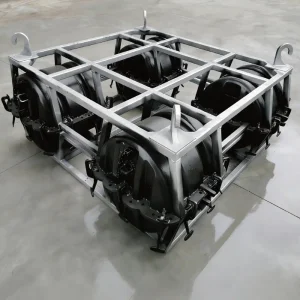
High-performance custom rotational molding equipment engineered for enterprise water tank production lines worldwide.
Why Original Design Manufacturing (ODM) rotational molding is transforming critical water storage infrastructure across industrial, agricultural, and municipal sectors worldwide.
The global industrial water management sector is currently experiencing a structural paradigm shift. Escalating climate volatility, expanding agricultural irrigation networks, and stringent municipal potable water standards have accelerated the demand for ultra-durable, corrosion-resistant, seamless liquid containment systems. Traditional steel and concrete tanks—once the benchmark of large-volume storage—are increasingly suffering from catastrophic weld failures, chemical oxidation, and high installation overheads. In contrast, Original Design Manufacturing (ODM) Rotational Moulding Water Tanks offer an unyielding polymer architecture engineered specifically to withstand extreme environmental degradation.
Unlike blow molding or injection molding processes that induce inherent mechanical shear stresses and weld-line vulnerabilities during rapid high-pressure polymer injection, rotational molding (rotomolding) relies on biaxial low-speed rotation combined with conductive or convective thermal sintering. This zero-pressure molding methodology guarantees that the resulting hollow vessel possesses a completely stress-free molecular structure. For enterprise procurement officers and municipal project managers, this translates to unmatched impact strength, resistance to Environmental Stress Cracking (ESCR), and operational longevity extending past three decades.
| Manufacturing Process | Structural Seamlessness | Wall Thickness Uniformity | Maximum Volume Capacity | Tooling Cost Ratio | Residual Internal Stress |
|---|---|---|---|---|---|
| ODM Rotational Moulding | 100% Seamless (Single Piece) | Superior Corner Reinforcement | Up to 50,000 Liters | Low to Moderate (1.0x) | Zero (Stress-Free Melt) |
| Heavy-Duty Blow Molding | Pinch-off Weld Lines Present | Thin Corner Stretching | Limited to ~5,000 Liters | High (3.5x) | Moderate to High |
| Injection Molding (Assembled) | Multi-Segment Welded Joints | Uniform Ribbed Walls | Limited to Small Containers | Extremely High (8.0x) | High Shear-Induced Stress |
Deciphering the melt-flow mechanics, thermal transfer loops, and multi-layer structural compounding behind world-class tank production.
Utilizing hexene (C6) and octene (C8) copolymer Linear Low-Density Polyethylene with narrow molecular weight distribution (MWD) to achieve exceptional crack resistance, high stiffness, and superior ESCR ratings exceeding 1,000 hours under ASTM D1693 standards.
Integrating an outer UV-20 stabilized shield layer, a micro-cellular foam insulation core for temperature regulation, and an inner virgin food-contact layer infused with silver-ion antimicrobial agents to eliminate algae growth and bacterial bio-films.
Internal Air Temperature (IAT) telemetry sensors track the exact thermal phase transformation inside the mold—from initial powder coating to total bubble coalescence and bubble-free sintering—ensuring zero porosity across thick walls.
The manufacturing quality of an ODM rotomolded water tank is fundamentally dictated by thermodynamic control during the heating and cooling cycles. The process begins with micronized polyethylene powder (typically 35 Mesh / 500 microns) deposited into a CNC-machined or fabricated metal mold. As the mold is transferred into the heating chamber, it rotates simultaneously along primary and secondary axes at precise gear ratios (commonly 4:1 for upright cylindrical tanks or 3:1 for horizontal transport tanks).
During the thermal ramp-up phase (180°C to 240°C peak internal air temperature), polymer particles stick to the hot mold walls, forming a porous, granular layer. As heating continues, heat transfer through the mold wall causes viscous flow in the polymer particles, driving sintering. Surface tension forces force trapped air pockets to dissolve into the polymer matrix. Achieving complete bubble dissolution without causing thermal oxidation or molecular degradation of the polyethylene chain requires precise, multi-stage temperature control algorithm automation—a key engineering advantage built into our advanced factory machine configurations.
From finite element analysis (FEA) rib structural design to custom mold cavity tooling, we deliver turnkey OEM/ODM solutions tailored to exact client specifications.
Global procurement teams demand far more than standard off-the-shelf catalog products. Enterprise water projects often involve specialized installation environments—ranging from underground municipal septic installations to high-vibration mobile transport tankers for mining operations. As an elite ODM rotational moulding factory, our engineering workflow integrates complete full-stack design validation prior to physical mold cut.
Utilizing advanced ANSYS Finite Element Analysis (FEA) to calculate hoop stress distribution along the bottom third of tall vertical tanks. We strategically embed circumferential ribbing and vertical kiss-off columns to prevent wall deflection when fully loaded with high-density fluids (up to 1.9 Specific Gravity).
Constructing heavy-duty machined aluminum molds and mirrored-surface fabricated steel tools. Incorporating pneumatic core-pulling actuators, internal mold pressurization channels, and custom baffle plates to produce complex geometry fittings, molded-in threads, and flush-mount flanges.
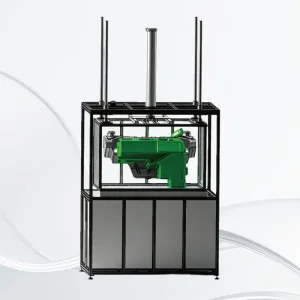
Every ODM production run undergoes ultrasonic non-destructive wall thickness mapping across 32 critical grid points. Laboratory testing includes -40°C ARM impact drop tests, tensile yield strength evaluation, and hydrostatic burst pressure verification.
| Testing Parameter | Industry Standard | Factory Quality Control Threshold | Engineering Significance |
|---|---|---|---|
| Low-Temperature Impact Resistance | ARM Low-Temp Impact Method | No brittle failure at -40°C (>120 ft-lbs) | Ensures tank survival in sub-zero arctic environments during physical shock or dropping. |
| Environmental Stress Crack Resistance (ESCR) | ASTM D1693 Condition B (10% Igepal) | Zero cracks detected beyond 1,000 hours | Guarantees resistance against aggressive surfactants, oils, and chemical reagents. |
| Food Grade Chemical Migration | FDA 21 CFR 177.1520 / NSF 61 | Passed heavy metal & extractable residue limits | Validates total safety for human drinking water storage without taste contamination. |
| Accelerated Weathering (UV Resistance) | ASTM G154 (QUV Weathering) | >85% tensile strength retention after 10,000 hours | Prevents polymer backbone chain scission under high solar irradiance regions (Equatorial deployment). |
Optimizing manufacturing plant layouts with automated material handling, energy-efficient oven heating cycles, and zero-emissions thermal recovery systems.
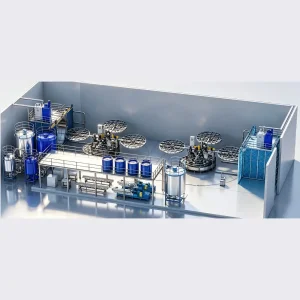
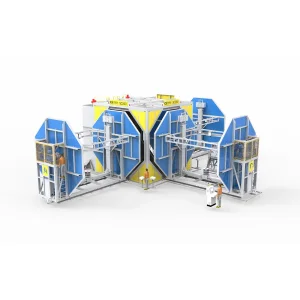
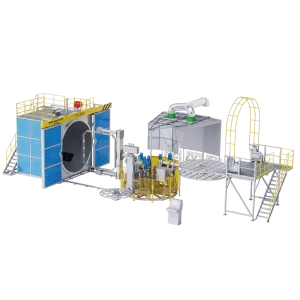
Building a scalable, modern rotomolding water tank factory requires seamless synchronization between heavy machinery, material preparation equipment, and quality testing systems. As a vertically integrated manufacturer and equipment developer, our ODM turnkey solutions encompass total plant layout design, utility routing, and process optimization.
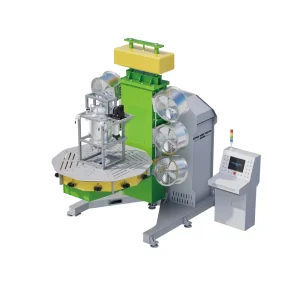
Ideal for production flexibility. Shuttle rotomolding machines allow two independent arms to alternately enter a central heating oven while the opposite arm undergoes forced cooling and demolding. Perfect for manufacturing variable tank sizes (e.g., 1,000L to 10,000L) simultaneously.
Designed for maximum continuous throughput of standard water tank geometry. Featuring 3 or 4 independent arms operating in a fixed circular sequence (Heating -> Pre-Cooling -> Cooling -> Unloading/Loading), maximizing energy retention inside the main oven chamber.
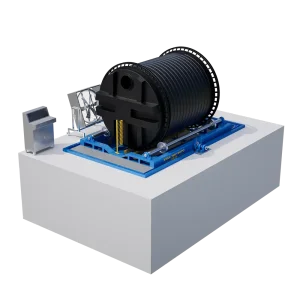
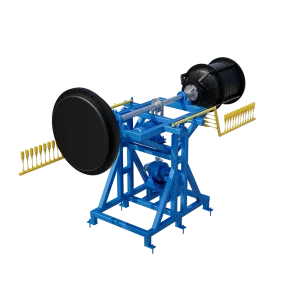
Engineered specifically for long, cylindrical horizontal vessels, agricultural spray tanks, and underground septic tanks. The narrow rectangular oven profile minimizes unused thermal space, delivering up to 35% lower fuel consumption per kilogram of processed plastic.
Ensuring complete compliance with international potable water guidelines, environmental protection directives, and cross-border delivery logistics.
Navigating global regulatory compliance is essential for multi-national buyers, OEMs, and government contractors. Our ODM water tanks and equipment are engineered to align seamlessly with regional building codes and health safety standards across key international markets:
To support global enterprise partnerships, we provide end-to-end localization services including localized field technical commissioning, CAD/STEP mold engineering transfers, comprehensive spare parts SLA coverage, and multi-lingual operator training modules.
Expert engineering answers addressing critical design, manufacturing, and procurement inquiries for enterprise clients.
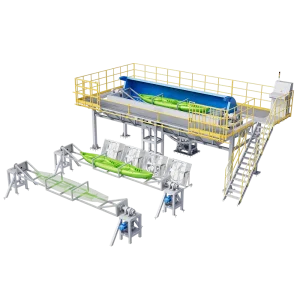
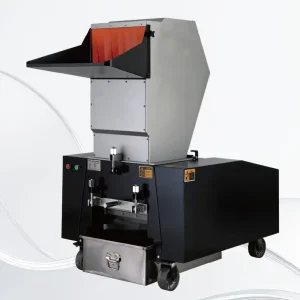
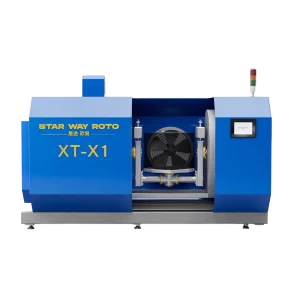
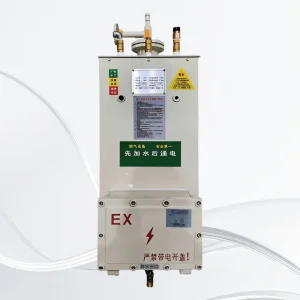
Complete factory ecosystem solutions: automated dosing, precision crushing, rock & roll swing systems, and quality testing rigs.