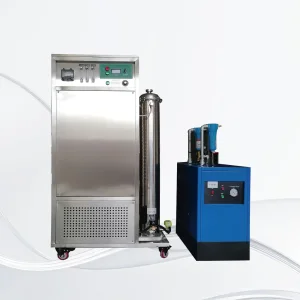
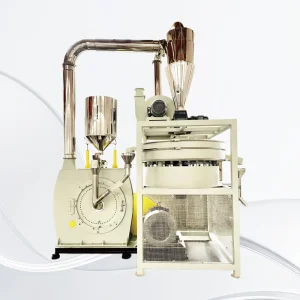
Industrial-grade rotational molding machines engineered for maximum thermal efficiency and high-yield throughput.
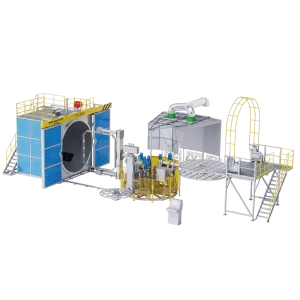
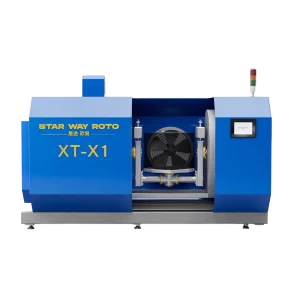
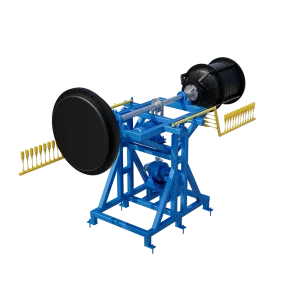
In the rapidly changing landscape of polymer processing, Stp Rotomachinery (Rotational Molding Machinery) stands out as a core technology for producing seamless, stress-free, and complex hollow plastic components. Unlike injection molding or blow molding—which rely on high pressure to force molten polymer into cavities—rotomolding relies on biaxial rotation and thermal conduction inside an oven chamber. This stress-free manufacturing process produces durable items with uniform wall thickness, exceptional impact strength, and excellent chemical resistance.
The global industrial market is shifting toward eco-conscious, automated, and energy-efficient machinery. Today's global buyers need more than just traditional machinery. Modern procurement requires intelligent thermal management systems, closed-loop PLC automation, low-emissions burners, and modular arm designs. Modern Stp Rotomachinery meets these technical demands by providing high-throughput carousel architectures, flexible shuttle configurations, and cost-effective rock-and-roll units for large tanks, marine craft, and agricultural systems.
As raw material costs rise and carbon regulations tighten globally, polymer processors must optimize every stage of their production cycle. Upgrading to high-efficiency Stp Rotomachinery allows companies to optimize resin consumption, reduce cycle times by up to 22%, and eliminate localized hot spots that lead to structural defects or brittle failure in finished polyethylene (LLDPE/HDPE), polypropylene (PP), and polyamide (PA) products.
Achieving consistent wall thickness, high impact resistance, and flawless surface finishes requires tight integration between thermal dynamics, structural engineering, and motion control. Modern Stp Rotomachinery utilizes multi-stage engineering advancements that differentiate high-end industrial systems from entry-level equipment:
Custom oven chambers feature high-velocity, multi-directional airflow dampers driven by variable-frequency blowers. This design maintains internal temperature variances within ±2°C, preventing localized warping, sink marks, or bubble entrapment during polymer coalescence.
Precision-machined gearboxes featuring hardened steel bevel gears provide independent, step-less control over primary and secondary rotational speeds. This flexibility allows operators to tailor coating distributions for asymmetric, deep-draw, or multi-cavity molds.
Beyond direct gas burners, electric radiant heating modules provide zero operational emissions, quiet performance, and fine-grained thermal control. This makes them ideal for cleanroom environments and regions with strict air quality regulations.
Selecting the ideal Stp Rotomachinery layout depends on your target volume, product complexity, and plant footprint. Below is an engineering comparison matrix:
| Machine Architecture | Ideal Production Scale | Thermal System Type | Mold Weight Capacity | Primary Advantages |
|---|---|---|---|---|
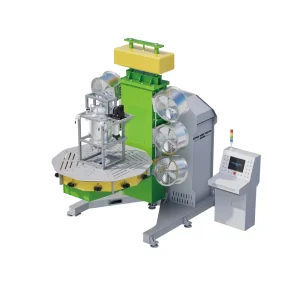
| Carousel (Independent Station) | High Volume / Continuous | Direct Gas / Electric Forced Air | Up to 3,500 kg per arm | Maximum output, fully automated indexing, isolated heating & cooling cycles. |
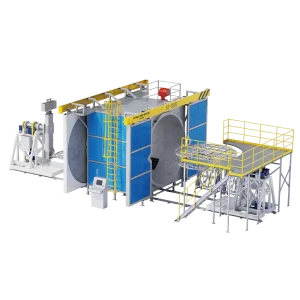
| Shuttle System (Linear) | Medium to High / Flexible | Convection Gas / Dual Ovens | Up to 8,000 kg per cart | Allows different mold sizes on alternate arms without delaying cycle times. |
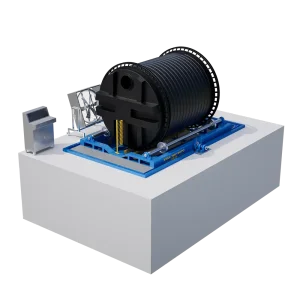
| Rock & Roll (Open Flame / Oven) | Large Cylindrical Tanks | Open Gas Ribbon / Enclosed Oven | Up to 15,000 kg+ | Minimal space required, lower capital investment, ideal for long cylindrical vessels. |
| Lab & R&D Testing Units | Prototyping / Material Science | Precision Infrared / Electric | Up to 50 kg | Enables real-time resin testing (PE, PP, PA) without interrupting main production lines. |
China’s manufacturing sector has transformed from low-cost assembly into a sophisticated ecosystem driven by Industry 4.0 automation, smart supply chains, and advanced material engineering. For global procurement officers and plant managers, sourcing Stp Rotomachinery from Tier-1 Chinese manufacturers like StarWay Roto delivers distinct strategic advantages:
From raw steel and alloy ingot sourcing to 5-axis CNC mold machining, robotic welding, burner integration, and PLC programming, everything happens under one roof. This vertical integration eliminates vendor delays, speeds up tooling lead times, and guarantees strict quality control across every sub-assembly.
Combining advanced CAD/CAM reverse engineering with low-pressure aluminum casting technology produces seamless, porosity-free molds. These molds offer superior thermal conductivity, reducing heating cycle times while maintaining intricate surface textures and logos.
Modern Chinese Stp Rotomachinery incorporates Siemens, Schneider, or Delta PLC systems with cloud-connected telemetry. Factory supervisors can monitor internal mold temperatures, cycle countdowns, gas usage, and fault diagnostics in real time from mobile devices anywhere in the world.
Furthermore, China’s industrial infrastructure provides robust export logistics. Located near major ports like Ningbo and Shanghai, machinery manufacturers offer turnkey export packaging, containerized loading optimization, and international compliance documentation (CE, ISO9001:2015, UL electrical panels), ensuring smooth customs clearance and commissioning worldwide.
When investing in heavy industrial Stp Rotomachinery, experienced procurement leaders evaluate more than just the upfront purchase price. Evaluating Total Cost of Ownership (TCO) involves assessing capital expenditure against long-term energy consumption, routine maintenance costs, cycle speed, scrap rates, and spare parts availability over a 15- to 20-year service life.
To minimize operational risks, engineering procurement teams should follow a comprehensive checklist when vetting potential equipment partners:
By partnering directly with experienced manufacturers that offer customizable OEM/ODM solutions, buyers bypass trading intermediaries, securing custom-engineered rotomolding lines tailored precisely to their factory footprint and production demands.
The versatility of Stp Rotomachinery supports a wide array of global industries. Because rotational molding creates hollow, seamless, and stress-free parts, it replaces traditional metal fabrications, fiberglass (FRP), and multi-part assemblies across critical sectors:
Vertical and horizontal storage vessels ranging from 500 liters to 50,000+ liters require uniform wall thickness and stress-free construction to safely hold aggressive chemicals, fertilizers, and potable water.
Equipment Used: Shuttle & Large Rock & Roll MachinesHeavy-duty kayaks, boat hulls, navigation buoys, and modular floating dock pontoons rely on high-density LLDPE rotomolding for UV resistance, impact strength, and long-term buoyancy.
Equipment Used: High-Capacity Carousel SystemsDouble-walled coolers, medical transport boxes, and dry ice containers feature PU foam-filled cores rotomolded as single shells, providing superior thermal retention for global logistics networks.
Equipment Used: Independent Station Carousel UnitsTractor roof canopies, fuel tanks, adblue reservoirs, fenders, and construction vehicle cabins require durable, lightweight, impact-resistant structures designed to withstand harsh outdoor operation.
Equipment Used: ODM Precision Shuttle MachinesCommercial wheelie bins, septic tanks, inspection chambers, and road safety barriers require high wall thickness and cost-effective mass production to support municipal development programs.
Equipment Used: Multi-Arm Carousel MachinesVibrant, smooth-surfaced spiral slides, activity tunnels, playhouses, and outdoor furniture rely on non-toxic, food-grade polyethylene processed through high-precision rotomolding moulds.
Equipment Used: Customized Rock & Roll / CarouselComplete turnkey solutions: pulverizers, open-flame systems, specialized mold assemblies, and lab testing machines.
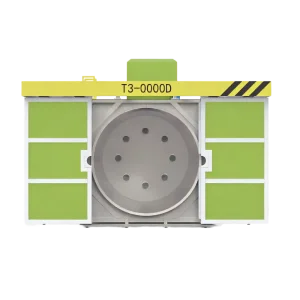
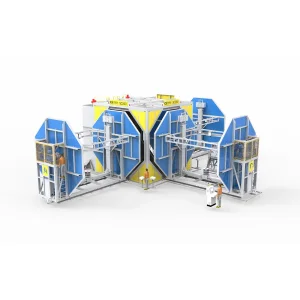
Environmental accountability and energy efficiency are key parameters for modern industrial manufacturers. Traditional open-flame systems and older inefficient ovens consumed large amounts of fossil fuels, resulting in higher emissions and elevated unit costs. Next-generation Stp Rotomachinery solves these issues through targeted thermal engineering:
Exhaust gases from the main heating chamber are captured and redirected into pre-heating stations or secondary resin drying units. This reduces total thermal energy consumption by 14% to 20% depending on cycle times.
Using high-density ceramic heating elements, electric rotomolding machines provide precise, instant heat without combustion emissions. This aligns perfectly with zero-emission factory initiatives and renewable power grids.
Advanced temperature monitoring allows machines to run co-extruded or multi-layer parts using post-consumer recycled (PCR) resin in internal core layers, wrapped in a virgin LLDPE outer shell for maximum durability.
Technical and commercial answers to help procurement managers evaluate Stp Rotomachinery options.