
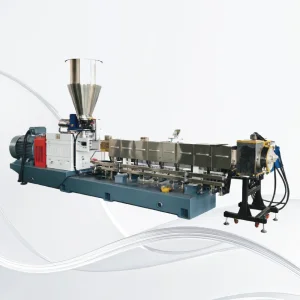
High-torque rotational molding machines, precision CNC fabricated boat molds, and specialized recycling extruders engineered for marine-grade polyolefin manufacturing.
The international maritime engineering sector is undergoing a rapid transition toward high-density polyethylene (HDPE) and linear low-density polyethylene (LLDPE) monocoque construction, replacing traditional fiberglass and welded aluminum hulls.
Traditional naval fabrication relies on thermoset polyester resins with fiberglass reinforcement (FRP) or welded marine-grade aluminum alloy sheets (such as 5083-H116). While functional, both methods suffer from inherent structural vulnerabilities: fiberglass hulls are prone to osmotic blistering, gel-coat micro-fracturing under point impacts, and structural delamination. Aluminum hulls experience electrolytic galvanic corrosion in hypersaline environments and fatigue cracking along high-stress weld seams.
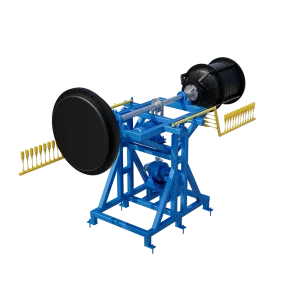
Rotational molding fundamentally overcomes these mechanical constraints by utilizing bi-axial centrifugal and thermal kinematics within closed, heated tooling. The thermoplastic polymer (formulated with advanced hexene or octene copolymer resins) melts and consolidates against the mold walls in a state of zero shear stress, producing a completely 100% seamless, stress-free, homogeneous hull structure.
| Performance Metric | Rotomolded PE Hull | Fiberglass (GRP/FRP) | Marine Aluminum (5083) |
|---|---|---|---|
| Impact Resistance | Exceptional (Elastic Memory) | Brittle (Gelcoat Cracks) | Moderate (Permanent Denting) |
| Osmosis & Corrosion | 100% Chemically Inert | Susceptible to Blistering | Galvanic Pitting Risks |
| Maintenance Cost | Near Zero (No Paint/Wax) | High (Repainting/Buffing) | Moderate (Sacrificial Anodes) |
| Inherent Buoyancy | Positive (Density < 0.95) | Negative (Sinks without foam) | Negative (Density 2.70 g/cm³) |
| Acoustic Dampening | Superior (Absorbs chop noise) | Poor (Echoing hull shell) | Poor (Metallic resonance) |
| Recyclability & LCA | 100% Circular / Remeltable | Landfill Only (Thermoset) | High Energy Remelt |
Vertically integrated machinery design, high-precision marine tooling fabrication, and turn-key factory automation trusted across 40+ international territories.
Founded in 2009 (with core roots dating back through Jinlei Rotomolding, Yuanhuai, and OE Technology), StarWay Roto delivers complete, automated vessel manufacturing plants—from raw polyolefin pulverizing to robotic finishing.
Engineering pioneers behind the world's largest rotational molding machine, the S2-8500 platform, capable of molding complex monocoque hulls up to 12 meters in length with uniform wall thickness control.
Officially accredited as a National High-Tech Enterprise, StarWay Roto maintains over 23 structural and automation patents, providing global clients with certified CE, ISO 9001, and UL-compliant processing lines.
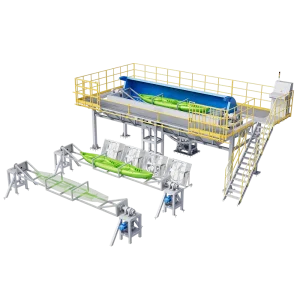
Exploring the thermodynamics of bi-axial rotation, internal foam-core crystallization, and integrated structural ribs that ensure unsinkable 100% positive buoyancy.
Modern rotomolded workboats, angling crafts, and emergency vessels utilize a multi-layer composite matrix molded in a single continuous heating cycle or via sequential powder-drop technology. By leveraging differential melting points and chemical foaming agents, StarWay Roto machines engineer a three-phase cross-section:
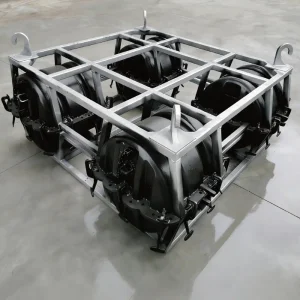
StarWay Roto’s dedicated mold foundry manufactures CNC-machined cast aluminum (A356 grade) and fabricated high-tensile boiler steel tooling. With integrated internal air-venting channels, optimized thermal draft angles (2°–4°), and parametric CAD flow analysis, our tooling prevents wall thinning along reverse chines and deep-V keel profiles.
By controlling the bi-axial speed ratio (typically 4:1 primary to secondary rotation for shallow hulls, and 1:1 to 2.5:1 for deep catamarans), molten polymer distribution is regulated to ±0.5mm across the entire hull perimeter, ensuring structural rigidity without adding excess deadweight.
Whether you are expanding from a traditional fiberglass boat workshop or launching a new commercial workboat brand, StarWay Roto delivers end-to-end factory implementation: polymer formulation, custom mold design, Rock & Roll or Shuttle machinery, cooling chamber automation, operator training, and ISO/CE structural certification support.
Explore Machine SystemsFrom rugged aquaculture cages to fast-response flood rescue missions, rotomolded vessels provide operational durability where conventional materials fail.
Heavy-duty open workboats used in salmon, sea bass, and oyster farms in Norway, Chile, and the Mediterranean. High resistance to constant impact against floating cage collar pipes, ropes, hydraulic lifting cranes, and saline antifouling chemicals.
Rapidly deployed flood defense craft utilized by civil emergency response agencies across Southeast Asia, Europe, and the Americas. The impact-absorbing HDPE hull glides over submerged concrete pillars, metal debris, and shallow rocks without hull breaches.
Family recreation runabouts, pedal boats, sit-on-top fishing kayaks, and coastal expedition tenders. Rotomolded hulls naturally absorb wave slap noise, providing quiet drifting for shallow water fishing and zero hull maintenance for boat rental fleets.
Durable patrol vessels and uncrewed autonomous surface vehicles (USVs). Integrated mounting points for radar masts, high-thrust outboard brackets, and elastomeric fender systems molded directly into the monocoque geometry.
Rugged shuttle launches and spill-response pushers operating around commercial shipping docks, tugboats, and barge terminals. Resists fuel spills, lubricating oils, severe abrasions, and prolonged docking without external fenders.
Modular pontoon docks, high-buoyancy catamaran hulls, navigational channel marker buoys, and heavy offshore barrier systems engineered for 20+ year continuous immersion in harsh marine environments.
Every rotomolding line and mold engineered by StarWay Roto complies with stringent global naval architecture codes and environmental regulations.
Building commercial and recreational watercraft requires compliance with stringent regional maritime authorities. StarWay Roto tooling and machines are engineered to meet global structural and buoyancy specifications:
StarWay Roto integrates dedicated laboratory equipment (including the Lab Machine for PE, PP, and PA testing) to ensure resin batches meet maritime-grade mechanical tolerances before full-scale production:
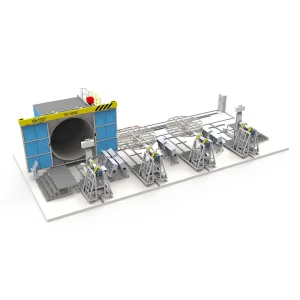
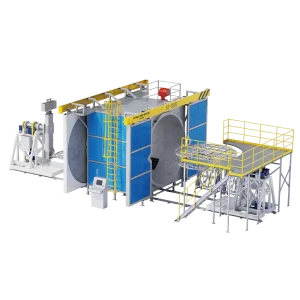
High-capacity carousel machines, heavy-duty shuttle configurations, and smart energy-saving electric rotomolding ovens engineered for multi-vessel volume production.
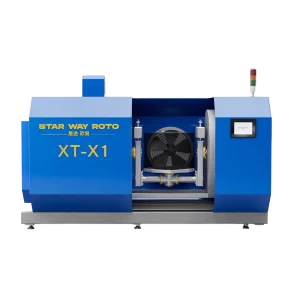
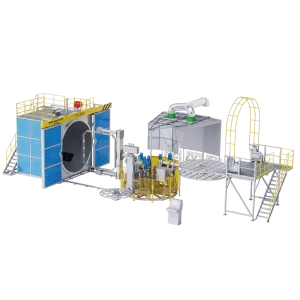
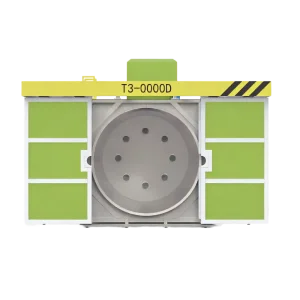
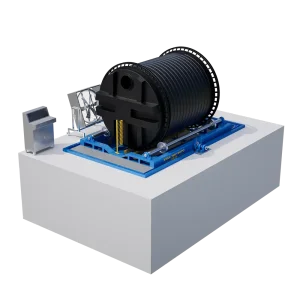
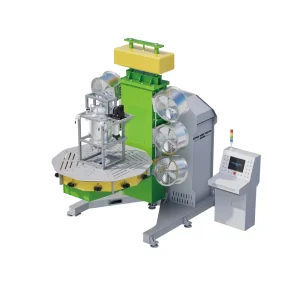
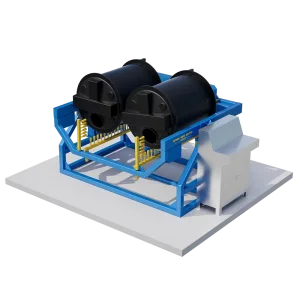
How artificial intelligence, real-time wireless mold telemetry, bio-circular resins, and robotics are reshaping large-scale marine rotational molding.
Initiated in 2025, our Future Series R&D platform implements embedded infrared pyrometers and multi-channel wireless thermocouple probes inside the boat mold cavity. Neural network algorithms dynamically adjust burner intensity and axis RPM to ensure precise resin sintering with zero internal micro-porosity.
Collaborating with global petrochemical leaders to qualify chemically recycled ocean-bound plastics and ISCC-certified bio-based polyethylene (Bio-HDPE) derived from sustainable feedstocks. This enables commercial boat builders to offer net-zero carbon lifecycle watercraft.
Integration of 6-axis articulated robotic arms equipped with ultrasonic routing tools for automated flash removal, transom drilling, and gunwale finishing, reducing manufacturing cycle time per boat hull by over 45% while eliminating human positioning errors.
Expert technical answers addressing engineering mechanics, mold costs, cycle times, resin selection, and full-scale factory setup.
Rotomolded boats are made from high-density or linear low-density polyethylene (HDPE/LLDPE), which has an elongation at break exceeding 800%. Unlike rigid thermoset polyester fiberglass, which shatters and cracks under localized point loads, thermoplastic polyethylene elastically absorbs energy and flexes before returning to its original geometry without cracking or delamination.
With StarWay Roto's advanced large-scale platforms, such as the record-setting S2-8500 and heavy-duty enclosed Rock & Roll swing oven systems, monocoque vessel hulls up to 12 meters (approx. 40 feet) in length can be produced in a single continuous molding cycle with precise wall thickness uniformity.
For complex leisure boats, fishing kayaks, and yachts featuring intricate non-skid deck patterns, curved gunwales, and integrated logos, CNC-machined Cast Aluminum (A356) provides optimal thermal conductivity and surface finish. For large commercial hulls, workboats, and barges with simpler geometry, CNC Fabricated Steel tooling provides high durability and lower initial tooling costs.
Polyethylene resin naturally has a density of approximately 0.935 to 0.945 g/cm³, meaning raw solid PE floats on freshwater (density 1.0 g/cm³) and seawater (1.025 g/cm³). Furthermore, StarWay Roto designs incorporate twin-wall hollow chambers or internal closed-cell polyurethane/polyethylene foam cores, ensuring the vessel remains buoyant and level even when fully swamped.
Depending on wall thickness (typically 6mm to 10mm) and machine heating efficiency, a typical heating and cooling cycle ranges from 28 to 45 minutes on a modern StarWay Roto shuttle or carousel machine. In a multi-arm setup, a finished boat hull can be demolded every 30 minutes, significantly faster than multi-day fiberglass lamination schedules.
We provide full turn-key engineering support, including plant layout design, power/gas line calculation, mold engineering, machine installation, bi-axial recipe optimization, raw material sourcing, and complete operator training to ensure immediate factory commissioning.