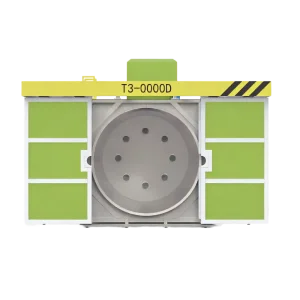
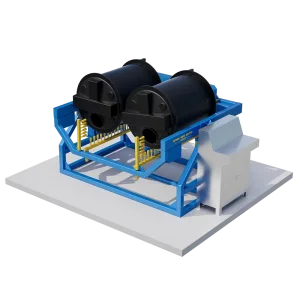
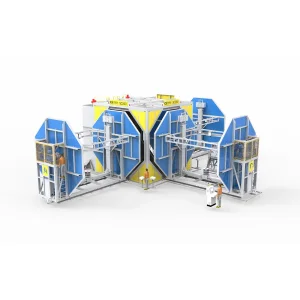
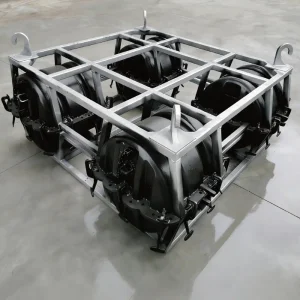
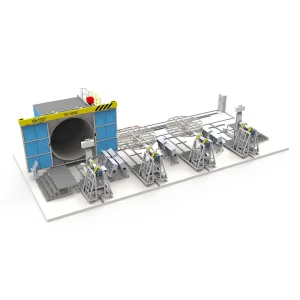
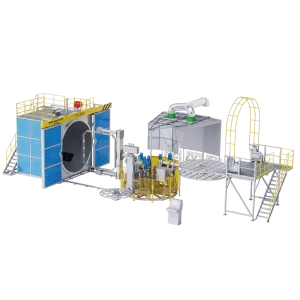
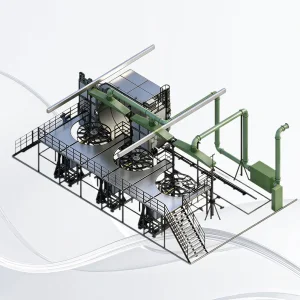
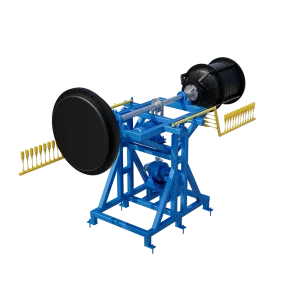
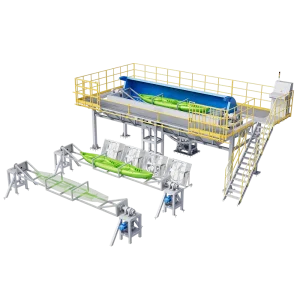
Explore premier rotomolding ovens, rock and roll machines, shuttle units, and custom tooling manufactured for global compliance and maximum production yield.
In the rapidly evolving landscape of hollow plastic processing, rotational molding (rotomolding) has established itself as an indispensable manufacturing paradigm for stress-free, seamless, and highly durable polymer components. At the apex of this technology lies the design and fabrication of Aluminium Rotational Moulds. As international OEMs and industrial processors shift away from traditional fabricated steel molds toward high-thermal-conductivity aluminum tooling, top exporters from primary manufacturing hubs are setting new benchmarks in engineering accuracy, energy efficiency, and operational speed.
Unlike injection molding or blow molding—where molten resin is injected under extreme hydraulic pressures—rotational molding operates under near-ambient atmospheric pressure. Thermoplastic powder (primarily LLDPE, HDPE, XLPE, PP, PA, or PVC) is loaded into a hollow mold cavity, sealed, and continuously rotated along biaxial axes inside an oven elevated to temperatures ranging between 250°C and 350°C. The choice of mold material dictates the rate of thermal penetration, the uniformity of polymer skinning, the cooling cycle duration, and ultimately the dimensional stability of the final product.
Global demand for aluminum rotomoulds is driven by five macro-environmental trends: increasing consumer demand for premium outdoor recreation goods (such as rotomolded kayaks, heavy-duty coolers, and marine hulls), strict municipal guidelines for chemical and water storage infrastructure, expansion of complex agricultural apparatus, strict safety requirements for automotive fluid containment, and an aggressive industry-wide mandate to curb factory carbon footprints through reduced natural gas heating cycles.
Professional aluminium rotational mould exporters primarily provide two fundamental tooling manufacturing processes: Cast Aluminium Tooling and CNC Machined Aluminium Tooling. Choosing between these options requires a balanced evaluation of part complexity, surface aesthetic requirements, budget, structural wall thickness, and production volumes.
Created by pouring molten aluminum alloy into ceramic or sand patterns derived from 3D master models. Cast tooling excels in producing complex 3D organic geometries, textured surfaces, structural undercuts, and deep draw ratios without prohibitive machining costs. Modern vacuum-assisted casting drastically eliminates subsurface gas porosity.
Directly carved from solid forged aluminum blocks using 5-axis high-speed CNC milling centers. Machined tooling provides zero-porosity structural density, exceptionally crisp parting line definition, and tight dimensional tolerances ($\pm 0.05\text{ mm}$ to $\pm 0.15\text{ mm}$). Ideal for automotive tanks, threads, and high-precision technical parts.
Combining cast aluminum main cavities with CNC-machined aluminum inserts, core pins, and parting line flanges. This engineering methodology optimizes lead time and capital outlay while ensuring critical sealing areas, molded-in threads, and mounting points achieve strict mechanical tolerances.
Aluminum possesses a thermal conductivity rating of roughly 160–210 W/m·K, compared to fabricated carbon steel which yields a modest 45–55 W/m·K. Because heat transfer during the heating cycle is proportional to the material's thermal conductivity, aluminum molds achieve internal air temperatures (PIAT) up to 35% faster. Consequently, resin powder sinters and fuses into a homogenous melt layer with substantially lower thermal stress, eliminating pinholes, warpage, and micro-voids.
When global enterprise procurement directors evaluate suppliers for aluminium rotational moulds, the initial purchase price represents only a fraction of the mold’s total lifecycle cost. Leading exporters emphasize a comprehensive Total Cost of Ownership (TCO) methodology, demonstrating how advanced aluminum tooling directly lowers operational expense (OPEX) at the rotomoulding machine level.
Energy consumption in natural-gas or electric rotomolding ovens accounts for nearly 25-30% of total part cost. Aluminum's rapid heat absorption and dissipation shorten heating and cooling cycles by 20–35%. Over a 50,000-cycle production lifespan, energy savings frequently exceed the initial cost of the mold.
Cast aluminum possesses a significantly lower mass density ($\approx 2.7\text{ g/cm}^3$) compared to steel ($\approx 7.85\text{ g/cm}^3$). Operating lighter molds reduces cantilever strain, gearbox torque, and bearing wear on carousel, shuttle, and rock-and-roll machine arms, minimizing maintenance downtime.
Thermally balanced aluminum tooling eliminates localized cold spots. This ensures resin powder coats evenly across deep ribs, internal corners, and vertical walls, drastically cutting scrap rates from wall thinning, warping, or incomplete powder fusion.
Aluminium rotational moulds cater to diverse market sectors, each imposing strict material, surface finish, structural, and regulatory criteria:
Applications: AdBlue DEF tanks, heavy truck fuel cells, air intake ducts, mudguards, and EV battery cooling shrouds.
Tooling Requirements: High-precision CNC aluminum moulds with integrated hydraulic core-pullers, molded-in brass/steel threaded inserts, and strict pressure-leak sealing surfaces.
Applications: Touring kayaks, commercial canoes, boat fenders, marine pontoons, and premium double-walled insulated cooler boxes.
Tooling Requirements: Large cast aluminum multi-piece moulds with shot-blasted textured exteriors, mirror-polished split lines, and rapid pneumatic clamping mechanisms.
Applications: Intermediate Bulk Containers (IBCs), vertical chemical dosing tanks, septic systems, and agricultural spray hoppers.
Tooling Requirements: Heavy-duty cast aluminum moulds with engineered structural ribbing, high-capacity Teflon-lined air venting systems, and uniform wall thickness compensation.
The rotational molding industry is undergoing a digital and metallurgical transformation. Premier exporters are integrating advanced Industry 4.0 paradigms directly into aluminum tooling design and manufacturing.
Migrating from traditional direct hot-air convection toward internal liquid/oil conformal heating and cooling channels cast directly inside the aluminum walls. This technology promises to shorten total cycle times by up to 50% while operating outside standard heating ovens.
Embedding wireless thermistor sensors, micro-pressure transducers, and accelerometer nodes directly within the mold framing structure. Real-time telemetry streams Internal Mold Temperature (IRT) data straight to PLC systems to dynamically automate oven exit times.
Combining Large Scale Additive Manufacturing (LSAM) with 5-axis CNC finishing. 3D printing aluminum alloy mold cavities significantly compresses prototype tooling lead times from 8 weeks down to 10 business days.
International trade in capital tooling demands rigorous quality verification, environmental compliance, and rapid localized technical service. Reputable exporters operate under standardized international frameworks to guarantee plug-and-play installation for buyers worldwide.
Every aluminum mold undergoes 3D Coordinate Measuring Machine (CMM) inspection and optical laser scanning. Digital point-cloud data is cross-referenced against the original native CAD model to verify linear dimensions, draft angles, and wall thicknesses prior to dispatch.
Advanced Finite Element Analysis (FEA) thermal modeling simulates heat distribution across irregular mold geometries. Exporters provide first-article plastic sampling (T1 samples) along with full wall-thickness ultrasound reports.
Leading exporters maintain international engineering field service networks. Services include on-site mold mounting, spider frame balancing, thermal cycle tuning, clamping optimization, and operator technical training.
This authoritative benchmark matrix outlines key operational performance attributes across Cast Aluminium, CNC Machined Aluminium, and Traditional Fabricated Sheet Steel Moulds.
| Performance Parameter | Cast Aluminium Mould (A356) | CNC Machined Aluminium (6061-T6) | Fabricated Sheet Steel Mould |
|---|---|---|---|
| Thermal Conductivity (W/m·K) | 160 – 180 | 180 – 200 | 45 – 55 |
| Dimensional Tolerance | ± 0.50 mm to ± 1.0 mm | ± 0.05 mm to ± 0.15 mm | ± 1.5 mm to ± 3.0 mm |
| Relative Heating Cycle Time | Fast (Baseline -25%) | Fastest (Baseline -35%) | Slow (Standard Baseline) |
| Geometrical Complexity Support | Exceptional (3D Organic / Textures) | High (Prismatic / Precision Threads) | Limited (Simple Cylindrical / Box Shapes) |
| Surface Texture Capability | Cast-in grain, sandblast, chemical etch | Micro-milled, bead-blast, polished | Basic smooth or hand-grained |
| Material Density / Porosity Risk | Low (Eliminated via Vacuum Casting) | Zero Porosity (Forged Billet) | Zero Porosity (Weld Seams Risk Cracking) |
| Weight / Mass Density (g/cm³) | ~ 2.70 | ~ 2.70 | ~ 7.85 |
| Expected Tooling Lifespan | 80,000 – 120,000 Cycles | > 150,000 Cycles | 30,000 – 50,000 Cycles |
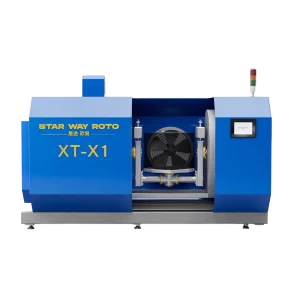
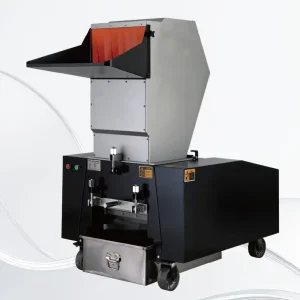
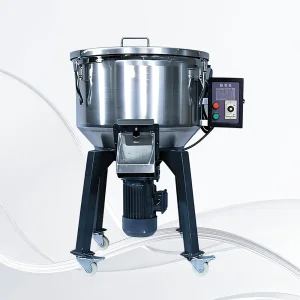
Complete your operational ecosystem with certified crushers, mixers, photo-oxygen purification units, and precision lab machines.
Expert answers addressing high-intent technical, procurement, and manufacturing queries regarding rotational molds.