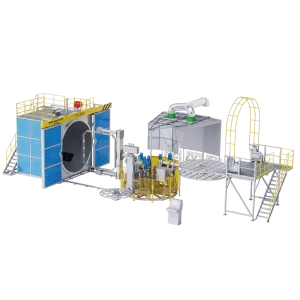
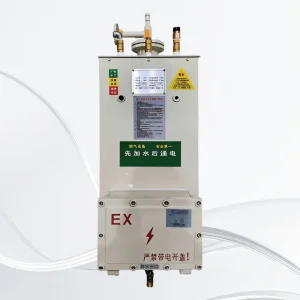
Explore our high-performance machinery, automated ovens, and custom rotational molding infrastructure engineered for industrial step manufacturing and hollow component molding.
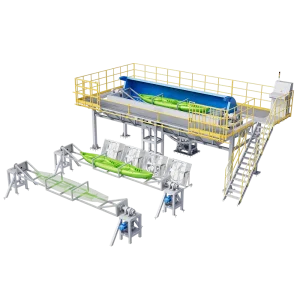
CE Certification China Rock and Roll Oven Machine Suppliers - Ideal for Large Yachts, Vessels, and Steel-Lined Pipes Factory Manufacturers, Quotes
View Equipment Details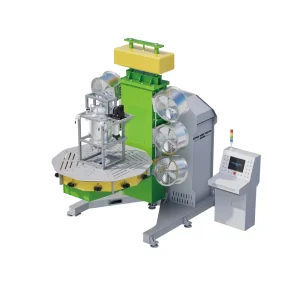
Custom Electric Heating Rotomolding Machine - Eco-Friendly Suppliers in China, Automated Factory Solutions for Energy Efficiency Company, Quotes
View Equipment Details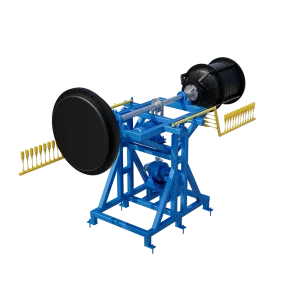
OEM China Suppliers Small Open Flame Rock and Roll Machine for Producing Hollow Products at Factory Price Factory, Pricelist
View Equipment Details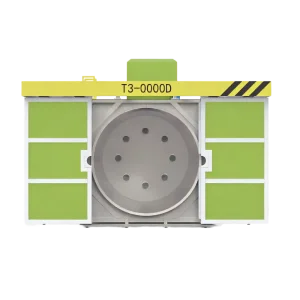
OEM Electric Heating Rotomolding Machine Suppliers in China - Eco-Friendly, Safe, and Efficient Factory Solutions Factory, Service
View Equipment Details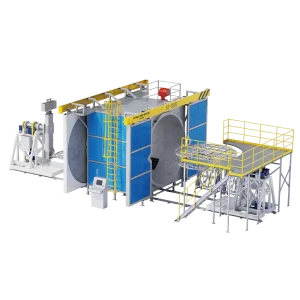
ODM High-Load Shuttle Rotomolding Machine from China Suppliers - Custom Solutions for Large Products at Our Factory Quotes, Products
View Equipment Details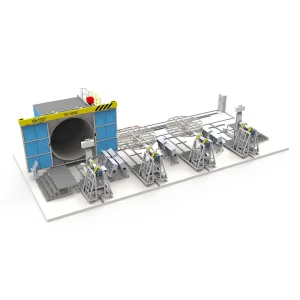
Custom China Lined Shuttle Machine: Efficient Factory Solution with 30% Less Floor Space from Top Suppliers Manufacturer, Exporters
View Equipment Details
ODM Electric Heating Rotomolding Machine for Eco-Friendly Manufacturing - Leading China Suppliers for Efficient Factory Solutions Factory, Pricelist
View Equipment DetailsThe global demand for custom rotational moulding steps has surged dramatically across industrial, marine, municipal, and commercial sectors. Unlike injection molding or blow molding, rotational molding (rotomolding) provides a stress-free thermal forming environment, enabling manufacturers to produce seamless, hollow, multi-level structural steps featuring uniform wall thickness and exceptional impact resistance.
Modern industrial step solutions demand rigorous load-bearing performance, resistance to aggressive chemical environments, UV stabilization for long-term outdoor exposure, and anti-slip surface geometries. OEM and ODM manufacturers are increasingly replacing traditional fabricated steel, fiberglass, or timber steps with rotomolded high-density polyethylene (HDPE) and linear low-density polyethylene (LLDPE) steps due to zero-corrosion properties and significantly lower total cost of ownership (TCO).
Rotational molding operates at ambient atmospheric pressure inside the mold cavity. Because the melted polymer powder coats the mold walls dynamically via dual-axis rotation, the final rotomolded step exhibits zero internal residual stress—eliminating warpage and micro-cracks under heavy mechanical loads.
Rotomolding steps can integrate internal structural ribbing, molded-in metal inserts, secondary handrail mounting points, anti-skid treads, and dual-walled foam insulation directly during the molding cycle, avoiding post-assembly work.
Formulated with UV-8 to UV-20 stabilized polyethylene compounds, custom rotomolded steps withstand harsh marine saltwater, industrial acid exposure, intense solar radiation, and sub-zero freeze-thaw cycles without degradation.
Manufacturing custom rotational moulding steps requires high technical mastery of thermodynamic control, polymer kinetics, and CNC tool design. The precise production cycle executes across seven integrated engineering phases:
Engineers utilize SolidWorks and ANSYS to model step geometries, evaluating structural deflection under concentrated loads (e.g., 500 kg static point loads). Internal Kiss-off ribs (structural supports connecting top and bottom walls) are designed to maximize bending stiffness while accounting for polymer shrinkage rates (typically 2.5% - 3.0%).
Tooling for custom steps is manufactured using cast aluminum (A356) or CNC-machined forged aluminum blocks (6061-T6). High thermal conductivity aluminum ensures fast heat transfer across intricate step treads, logo embossments, and anti-slip patterns.
Polyethylene resin pellets are pulverized into fine 35-mesh (500 micron) powder using high-speed mill discs. Controlled particle size distribution ensures optimal flowability during rotation, preventing void formation in deep step corners.
Exact resin quantities are weighed using automated dosing systems. Pigments, flame retardants, anti-static agents, and UV stabilizers are dry-blended to guarantee color uniformity and structural durability.
The mold is mounted on a shuttle or carousel machine arm and locked inside a direct gas-fired or electric heating oven (260°C – 320°C). The arm rotates biaxially at controlled speed ratios (typically 4:1 primary to secondary ratio), melting the powder uniformly onto mold walls until reaching Peak Internal Air Temperature (PIAT ~ 190°C).
The arm transitions to the cooling chamber. Controlled cooling rate prevents thermal shock, warpage, and amorphous crystalline deformation, ensuring accurate dimensional tolerances across all step surfaces.
Parts are demolded at 60°C. Automated 5-axis CNC routers trim flash lines and drill mounting apertures. Ultrasonic wall thickness gages, drop-weight impact testers, and coordinate measuring machines (CMM) verify quality parameters.
| Parameter / Specification | Standard Polyethylene (LLDPE) | High-Density Polyethylene (HDPE) | Cross-linked Polyethylene (XLPE) |
|---|---|---|---|
| Density (g/cm³) | 0.932 - 0.939 | 0.941 - 0.960 | 0.938 - 0.944 |
| Melt Flow Index (g/10 min) | 3.5 - 5.0 | 2.0 - 4.0 | N/A (Thermoset network) |
| Tensile Strength at Yield (MPa) | 18 - 22 | 26 - 32 | 22 - 28 |
| Flexural Modulus (MPa) | 650 - 850 | 1000 - 1400 | 800 - 1100 |
| ARM Cold Impact Resistance (-40°C) | 60 - 90 J | 80 - 120 J | > 160 J (Extreme Duty) |
| Shrinkage Allowance (%) | 2.5% - 3.0% | 3.0% - 3.5% | 2.0% - 2.5% |
The rotational molding industry is undergoing a digital and material transformation. Leading manufacturers are shifting from traditional empirical molding practices to Industry 4.0 data-driven smart manufacturing.
Integrating wireless sensors inside the mold cavity during rotation allows continuous tracking of internal air temperature (TP-System). This eliminates guesswork, optimizes cycle times, prevents thermal degradation, and guarantees 100% cure consistency across thick-walled steps.
Replacing traditional gas-fired hot air recirculation ovens with direct electric heating systems reduces carbon emissions by up to 45%, improves thermal efficiency to 90%, and provides precise zonal temperature control across multi-cavity step moulds.
Using multi-drop drop box technology, steps are produced with skin-foam-skin sandwich structures. A dense solid outer skin provides impact and UV protection, while a closed-cell micro-cellular foam core reduces weight by 30% while dramatically increasing flexural rigidity.
Custom rotational moulding steps are engineered to meet specialized regulatory, ergonomic, and environmental specifications across global commercial sectors:
Heavy-duty boarding steps for docks, yachts, and commercial vessels. Engineered with textured non-skid surfaces, internal drainage channels, and saltwater/algae-resistant LLDPE grades.
Vibration-damping steps for tractors, combines, and mining haul trucks. High impact strength at sub-zero temperatures (-40°C) with molded-in steel mounting brackets.
Corrosion-proof access steps for chemical processing plants, wastewater facilities, and battery storage rooms where metal steps suffer from acid or alkali degradation.
Ergonomic multi-tier steps for public swimming facilities, outdoor hot tubs, and playground access platforms featuring UV-20 resistance and integrated LED light housings.
Headquartered in Ningbo, China, Ningbo StarWay Roto Co., Ltd. has been a premier pioneer in rotational molding machine design, custom mould engineering, and auxiliary automation systems since 2009. Backed by over 23 years of accumulated industry experience, our state-of-the-art 20-acre production plant houses an elite R&D group of over 40 technical engineers—80% holding specialized engineering degrees.
StarWay Roto maintains over 23 national invention patents and has successfully delivered more than 230 complex rotational molding plants across 40+ countries in North America, Europe, Asia, and Latin America. Recognized as a National High-Tech Enterprise, we specialize in delivering high-efficiency shuttle machines, carousel equipment, rock and roll systems, and custom aluminum tooling engineered for challenging industrial applications like custom steps, massive water tanks, and vessel components.
Explore our complete product line including CNC-machined steel and aluminum moulds, laboratory testing units, and high-efficiency shuttle stations.
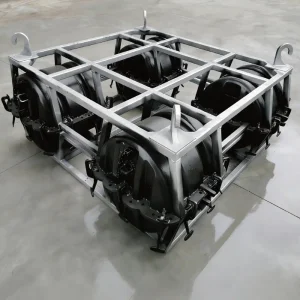
Buy High-Quality Steel Moulds from China Suppliers and Leading Factory for Precision Manufacturing Manufacturer, Products
View Mould Specifications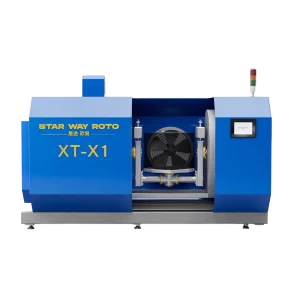
Custom Lab Machine for PE, PP, PA - China Suppliers & Factory with Intelligent Temperature Control System Factory, Quotes
View Equipment Details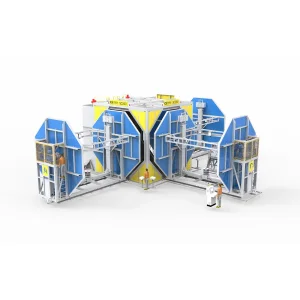
Best China Square Shuttle Machine Factory - Flexible Oven Door Design with Multi-Station Heating/Cooling from Trusted Suppliers Company, Factory
View Equipment Details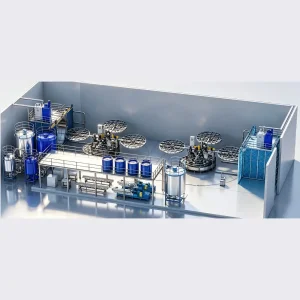
Custom China Automatic Feeding & Weighing System - Suppliers & Factory for Precision Livestock Management Solutions Manufacturer, Manufacturers
View Equipment Details
Best China Lab Machine Suppliers - Intelligent Temperature Control for PE, PP, PA Materials in R&D and Testing Factory Manufacturer, Company
View Equipment Details
OEM Customizable Shuttle Rotomolding Machine for Large Products - China Suppliers & Factory Solutions Company, Service
View Equipment DetailsThe next decade of custom rotational moulding will be defined by rapid advancements in digital twin simulations, artificial intelligence process optimization, and circular economy polymers:
Sensors embedded within mold frames feed real-time viscosity and powder movement data to an AI core. The machine automatically adjusts primary and secondary arm speed ratios on-the-fly to guarantee uniform thickness across complex sharp step radii.
Advancements in chemical recycling allow up to 50% post-consumer recycled (PCR) resin integration into structural step formulations without compromising low-temperature impact performance or UV longevity.
Virtual thermal simulation software models internal air temperature profiles before tooling steel is ever cut, reducing mold trial iterations from 4 cycles down to 1 single production run.
Technical answers to common engineering, procurement, and manufacturing queries regarding custom rotational moulding steps.
Rotational molding requires significantly lower tooling investment (up to 70% less than injection molds) while producing seamless, one-piece hollow components with no internal mold stress. Rotomolded steps will not rust or corrode like steel, nor break down under marine exposure like timber or fiberglass. Additionally, complex features such as anti-skid textures, internal structural ribbing, handles, and metal inserts can be molded in a single step without assembly costs.
Rotational molding typically achieves a wall thickness tolerance of ±10% to ±15%. By utilizing precision CNC aluminum molds, optimal pulverization particle sizing (35 mesh), and real-time internal air temperature sensors (PIAT control), StarWay Roto maintains stringent uniform wall thickness across both flat step treads and vertical risers.
Anti-slip textures are engineered directly into the cavity surface of the CNC aluminum or cast mold through chemical etching, sandblasting, or precision 3D CNC machining. The melted polymer powder conforms exactly to these micro-textures during rotation, creating permanent slip-resistant surfaces that cannot wear off or peel over time.
High-Density Polyethylene (HDPE) with a density range of 0.941–0.950 g/cm³ or Cross-linked Polyethylene (XLPE) are ideal for heavy-duty structural steps. For extreme impact applications at sub-zero temperatures (e.g., agricultural or heavy mining vehicles), XLPE or specialized LLDPE resins formulated with UV-20 stabilizers are deployed.
Complete project execution from 3D CAD design, FEA structural simulation, CNC aluminum tool fabrication, to first article sample inspection typically takes 30 to 45 days. Production arm setup on automated shuttle or carousel machines allows rapid ramp-up to mass production once samples are certified.