
Precision-engineered equipment manufactured under rigid ISO 9001 and CE frameworks, optimized for high-capacity hollow container molding, marine hulls, and specialized technical polymer parts.
Analyzing macroeconomic production vectors, capital allocation trends, and technological convergence across global polymer conversion industries.
The global rotational molding machinery market is undergoing a structural realignment. Historically dominated by long-established European and North American builders, the international sector has systematically shifted its capital expenditure (CAPEX) sourcing toward China roto mold plastic machine companies. This migration is not merely cost-driven; it is fundamentally powered by major strides in thermodynamic efficiency, closed-loop PLC automation, structural frame rigidity, and the integration of full-turnkey manufacturing ecosystems.
In traditional processing setups, converters faced crippling lead times ranging from 9 to 14 months for multi-arm carousel machinery, compounded by exorbitant replacement tooling costs. Chinese machine manufacturers, anchored by state-of-the-art facilities like Ningbo StarWay Roto Co., Ltd., have disrupted this paradigm. By uniting finite element analysis (FEA) computer-aided oven airflow modeling with vertically integrated CNC casting and fabrication suites, Chinese enterprise builders deliver high-throughput, high-yield rotational systems capable of handling multi-layer cross-linked polyethylene (XLPE), nylon (PA-6/PA-12), and polypropylene (PP) powders with micrometer-level precision.
A systematic technical breakdown of carousel, shuttle, rock & roll, and modern electric heating configurations.
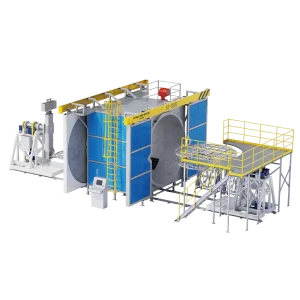
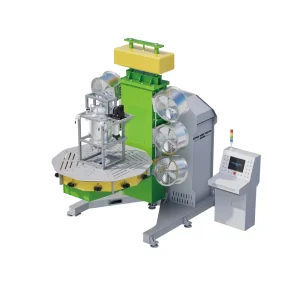
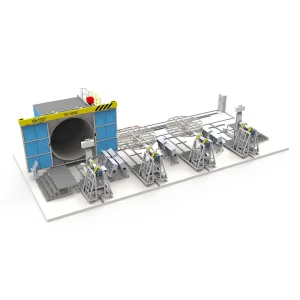
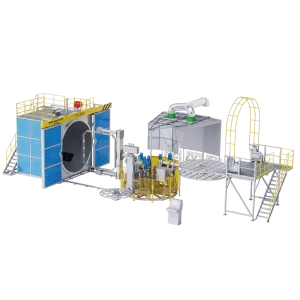
Equipped with 3 to 6 independent or fixed arms revolving through heating, cooling, and service stations. Designed for continuous 24/7 industrial production, offering optimized index timing and maximum cycle synchronization.
Utilizes a centrally positioned heating oven with dual independent cooling/loading carriages shuttling bi-directionally on hardened rails. Offers extreme flexibility for varied mold sizes and cycle variations.
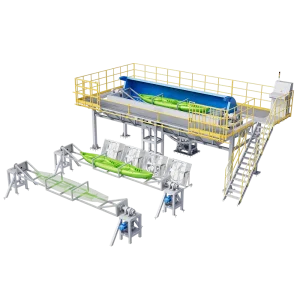
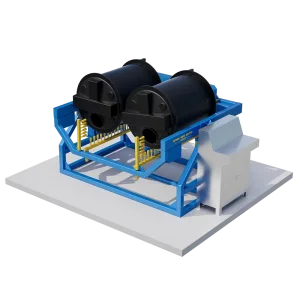
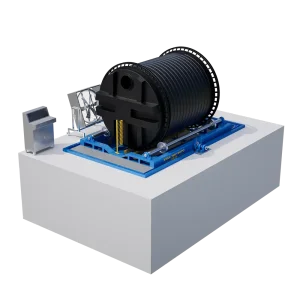
Engineered exclusively for massive, elongated hollow structures such as ocean kayak hulls, industrial drainage tubes, and chemical vessel hulls. Employs 360-degree axial roll paired with bi-directional longitudinal pitch rocking.
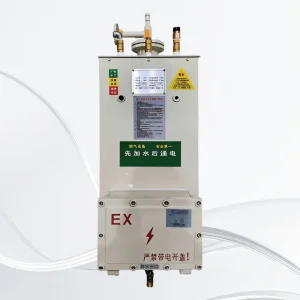
Eliminates open burner flames via high-efficiency ceramic or quartz infrared resistive heating elements. Provides ultra-pure internal chamber conditions, zero combustion exhaust, and ±1.5°C thermal uniformity.
| Machine Architecture | Primary Thermal Medium | Typical Payload / Arm | Kinematic Drive Mechanism | Cycle Automation Grade | Target Product Portfolio |
|---|---|---|---|---|---|
| Independent Carousel (4-Arm) | Natural Gas / LPG / Diesel | 1,500 kg – 4,500 kg | Dual AC Servo + Cycloidal Reducers | Full SCADA / Industry 4.0 Closed-Loop | IBC Totes, Water Tanks, Agriculture Pods |
| Linear Shuttle System | Forced Hot-Air Gas Burner | 2,000 kg – 8,000 kg | Variable Frequency Drive (VFD) Heavy Rails | Semi-Automated with Manual Recipe Overrides | Heavy Septic Tanks, Bins, Mining Floats |
| Enclosed Oven Rock & Roll | Recirculating Gas / Direct Flame | 1,000 kg – 6,000 kg | Heavy-Duty Trunnion Shaft + Crank Rocker | PLC Recipe Controlled (Thermal Ramp Curves) | Yacht Hulls, Fishing Vessels, Silos |
| Direct Electric Heating Oven | Ceramic / Infrared Resistance | 500 kg – 2,500 kg | High-Precision Servo Biaxial Gimbal | Digital Microprocessor PID Loop (±1.5°C) | Medical Insulated Coolers, Tech Parts |
How geographical manufacturing integration, raw material localization, and agile production ecosystems guarantee uninterrupted delivery schedules.
Located in industrial superclusters like Ningbo and Changzhou, leading factories sit within a 50km radius of foundries, precision CNC tooling facilities, and structural steel mills.
Tier-1 Chinese factories encompass mold design, CNC 5-axis pattern machining, aluminum alloy sand casting, burner integration, and PLC panel builds under one unified manufacturing roof.
By deploying dual-sourced tier-1 global components (e.g., Siemens or Schneider electronics, Weishaupt or Riello gas burners), Chinese builders insulate buyers against single-point failure risks.
Turnaround from CAD conceptualization to mold fabrication and live machine trial runs (Factory Acceptance Testing) is routinely compressed to under 8 weeks without compromising safety tolerances.
Examining real-world industrial environments where rotational molding replaces heavy steel, fiberglass, and injection tooling.
Production of vertical and horizontal seamless tanks ranging from 500 to 50,000 liters. Stress-crack resistant linear low-density polyethylene (LLDPE) yields superior UV resistance and corrosion-free liquid storage for agricultural and chemical dosing hubs.
Double-walled recreational kayaks, patrol boat hulls, and offshore navigation floats manufactured on Rock & Roll or heavy-duty Shuttle units. Unaffected by salt water, high impact, or marine biofouling.
High-integrity diesel fuel tanks, air intake ducting, hydraulic fluid reservoirs, and operator cabin roofs for construction machinery. Rotational molding eliminates internal stress concentrations common in blow-molded equivalents.
Rotomolded double-wall cooler boxes and vaccine shippers injected with high-density polyurethane (PU) foam. Exceptional thermal barrier retention maintains -20°C to 4°C environments over 120-hour overland shipping routes.
Underground ribbed septic tanks, rainwater harvesting interceptors, and hazardous chemical spill containment sumps engineered with thickened ribs for subterranean soil load compliance.
Impact-resistant commercial playground components, traffic barricades, high-end furniture shells, and custom electronic instrument enclosures manufactured in multi-color aesthetic matrixes.
Strategic research and engineering trajectories defining next-generation intelligent rotational molding systems.
Real-time wireless telemetry inside rotating mold cavities. Systems capture Internal Air Temperature (PIAT) curves, streaming directly to edge controllers to adjust heating burner modulation dynamically.
Next-generation burners engineered to blend natural gas with green hydrogen at ratios up to 30%, drastically shrinking scope 1 manufacturing carbon footprints for export compliance.
Integrating 6-axis articulated robotic arms equipped with pneumatic vacuum grippers directly into carousel unloading zones, reducing human operator exposure to residual heat and accelerating arm indexing.
Conductive tooling featuring integrated heating coils embedded inside CNC machined aluminum mold matrices. Bypasses convection ovens entirely, slashing cycle thermal energy requirements by over 40%.
Navigating international safety certifications, remote telemetry diagnostics, and on-site commissioning standards.
Full compliance with European Machinery Directive 2006/42/EC, Low Voltage Directive 2014/35/EU, and EN 746-2 combustion atmosphere safety norms.
Optional UL 508A certified industrial electrical control enclosures for seamless deployment across North American municipal and manufacturing power grids.
Encrypted industrial VPN gateway connection enables remote software debugging, recipe optimization, and firmware upgrades directly from Ningbo engineering headquarters.
Experienced mechanical and electrical field engineers dispatched worldwide to oversee mechanical anchoring, burner calibration, and comprehensive team operation training.
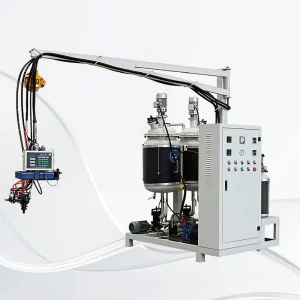
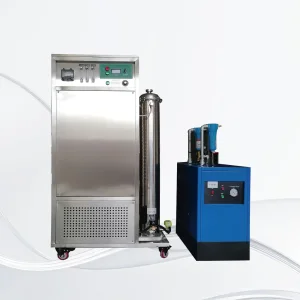
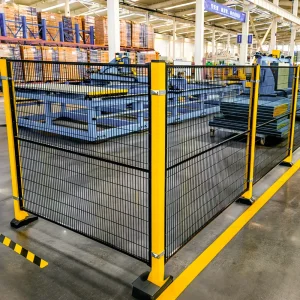
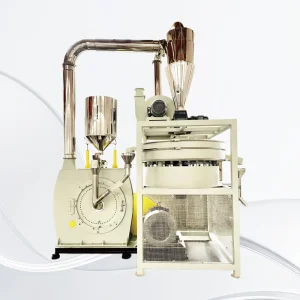
Complete turnkey ecosystem components: high-output polymer pulverizers, high-pressure polyurethane foaming units, high-capacity carousel designs, and specialized safety perimeter tooling.
Key technical factors international procurement directors must verify prior to signing an equipment contract.
Evaluate chamber airflow CFM (cubic feet per minute) and burner draft design. Proper high-velocity dual centrifugal blowers prevent stratification hotspots, ensuring uniform skin thickness across deep-draw hollow molds.
Insist on heavy-duty forged 40Cr alloy steel or equivalent heat-treated trunnion shafts. Verify that gear reducers use high-torque cycloidal or planetary drive systems capable of sustaining high rotational inertia.
Ensure the combustion system features modulating air-fuel ratio controls with integrated flame ionization scanners, double safety shutoff solenoid valves, and compliant flame-arresting hardware.
Verify PLC software interface support for multi-language recipe storage, historical temperature trend recording, real-time motor amp draw monitoring, and proactive maintenance alarms.
A comprehensive cooling stage requires independent inverter-controlled air blowers paired with atomized water mist nozzles to prevent fast cooling shock and resultant mold part warpage.
Mandate live dry-cycle mechanical tests and thermal oven ramp verification at the Chinese facility prior to container packing, accompanied by signed calibration reports.
Clear engineering answers to critical inquiries raised by global polymer conversion specialists.
Independent arm carousels allow each mold arm to transition between heating, cooling, and demolding stations based purely on its specific part recipe time rather than being bottlenecked by the slowest mold on the machine. This eliminates over-baking of thin-walled parts and increases factory production throughput by up to 35%.
Standard spherical or cubical hollow containers typically utilize a 4:1 or 3:1 rotation ratio. However, asymmetric geometries (such as automotive ducting or kayak hulls) require dynamic PLC-programmable variable speed profiles ranging from 1:1 up to 8:1 to ensure polymer powder pools evenly across sharp interior corners.
Electric heating is optimal where natural gas pipeline infrastructure is absent, where carbon emissions are heavily penalized by municipal green codes, or where cleanroom standards (medical containers, high-purity food packaging) demand zero combustion particulate exhaust in the production facility.
PIAT is the benchmark metric representing the maximum temperature reached by air inside the sealed mold cavity. It precisely dictates the complete melting, fusion, and bubble-evacuation of polymer granules (typically 195°C–215°C for LLDPE). Controlling cycles via PIAT rather than simple oven dwell time prevents brittleness and pinhole voids.
Oversized carousel mainframes and rock & roll ovens are engineered in modular, bolted sections designed to pack efficiently into standard 40ft High Cube (OT/FR flat rack when necessary) maritime containers. Structural joints use keyed alignment dowels to ensure factory-calibrated reassembly tolerances on-site.
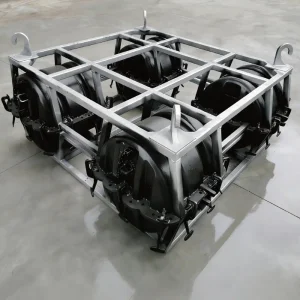
Cast tooling relies primarily on high-conductivity A356 aluminum alloy, offering fast thermal transfer and porous-free internal mold cavity finishes. Fabricated sheet metal molds for simple rectangular tanks and vessels employ structural carbon steel (Q235B) or 304 stainless steel with laser-cut reinforcement trusses.
A complete turnkey production cell requires high-speed grinding disc pulverizers (typically 20–80 mesh powder output), high-shear ribbon blenders for masterbatch color compounding, hydraulic mold clamping cranes or spiders, and high-pressure polyurethane foaming injection dispensers for insulated articles.
Standard OEM export agreements provide 12 to 24 months of warranty coverage across structural assemblies, spindles, and gear transmissions. Electrical control modules (Siemens/Schneider) carry global manufacturer warranty swap programs, backed by direct 24/7 remote PLC software telemetry support.