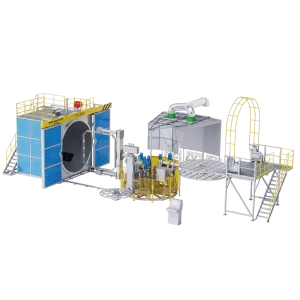
Explore our top-tier industrial rotomolding machinery, gasifiers, foam systems, and pelletizing lines engineered for global performance.
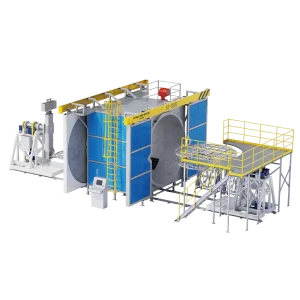
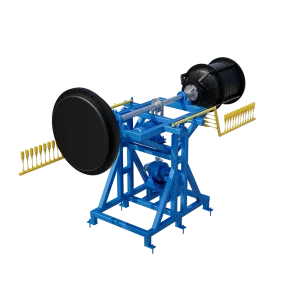
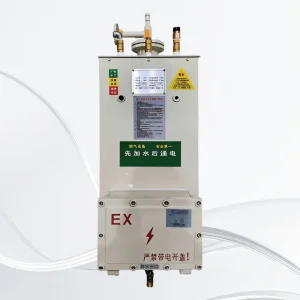
Understanding the mechanics, economic advantages, and material behavior of rotational molding in modern global manufacturing.
Technical Key Takeaway: Rotational Moulding (Rotomolding) is a zero-pressure thermoplastic processing technique ideal for stress-free, seamless, hollow plastic components. Unlike high-pressure injection molding or extrusion blow molding, rotomolding relies on thermal convection and gravity to melt polymer resin across a bi-axially rotating mold cavity, yielding superior wall uniformity and extreme structural longevity.
Because rotomolding operates under ambient atmospheric pressure, molds require no high-clamping force hydraulic cores. Tooling costs are 60% to 80% lower than injection tooling, allowing low-to-medium production volume flexibility with rapid ROI.
Produces completely stress-free, continuous double-walled or single-walled hollow articles without weld lines or structural weak points. Wall thickness can be adjusted easily without modifying mold geometries.
Accommodates complex undercut geometries, molded-in threads, metallic inserts, multi-layer co-moulding (foamed core insulation), and complex graphics directly embedded into the polymer matrix.
A granular breakdown of chemical preparation, bi-axial thermal dynamics, phase crystallization, and quality control protocol.
Raw polyolefin resins (primarily LLDPE, HDPE, XLPE, or PP) are pulverized into a fine 35-50 mesh (350–500 micron) micro-powder. Dry blending occurs with UV stabilizers, thermal antioxidants, and organic pigments to ensure rapid heat transfer and bubble-free sintering.
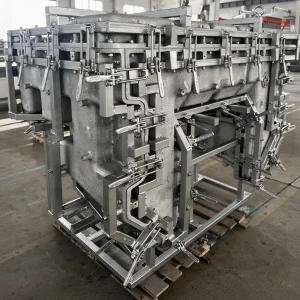
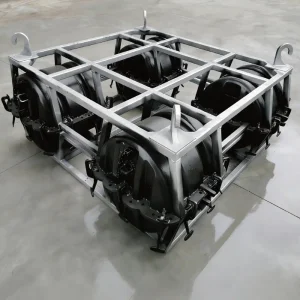
A pre-weighed mass of pulverized resin powder is loaded into the open mold cavity. The mold half-shells (CNC-machined aluminum or fabricated steel) are locked tight using pneumatic toggles or high-torque quick-clamp assemblies with silicone/PTFE parting line gaskets to prevent flashing.
The mold arm enters the high-temperature oven chamber ( heated to 260°C – 340°C via natural gas, LPG, electric heat, or biomass gasifiers). The mold rotates simultaneously along major (major axis: 4-12 RPM) and minor axes (minor axis: 1-3 RPM). As the metal cavity heats up, powder melts, sticks to the interior walls, and fuses into a homogenous, bubble-free layer.
While continuing bi-axial rotation to prevent sag and warpage, the mold transitions into the cooling bay. High-velocity air blowers, followed by atomized fine water mist, gradually reduce the polymer temperature below its crystallization point (approx. 110°C). Precise cooling ramp rates ensure optimal impact strength and minimal internal stress.
Once internal air temperature drops safely to 60°C–70°C, rotation stops. Clamps are unfastened, mold halves are parted, and the solidified plastic hollow part is removed utilizing pneumatic ejector pins or manual extraction hoists without causing mechanical distortion.
Flash is trimmed using 6-axis robotic CNC routers. If thermal insulation is required, double-walled parts undergo polyurethane (PU) foam injection. Finished products pass ultrasonic wall-thickness profiling, hydrostatic leakage testing, and low-temperature drop-impact certification.
Leveraging Ningbo & Zhejiang industrial clusters for unprecedented cost efficiencies, tooling speed, and vertically integrated engineering.
China's coastal manufacturing centers house world-class 5-axis CNC machining, cast aluminum foundries (A356 grade), and electro-discharge machinery. Complex rotomolding tooling lead times are compressed from months to 3-4 weeks.
Chinese manufacturers lead in thermal burner technology, implementing closed-loop heat circulation, eco-friendly electric heating coils, and industrial biomass gasifiers that reduce fuel consumption by 25% to 40% per molding cycle.
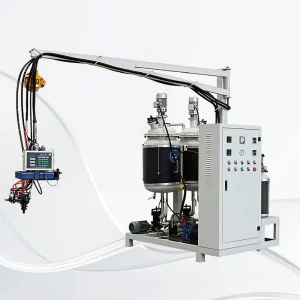
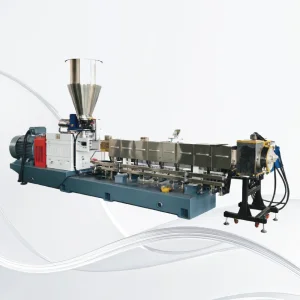
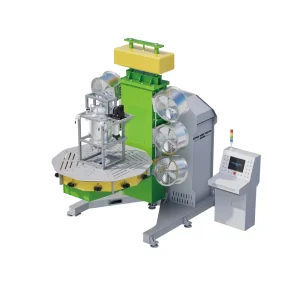
From raw material compounding and micro-pelletizing lines to automatic weighing equipment, PU foam dispensers, and multi-arm carousel rotomolders—Chinese suppliers offer seamless one-stop plant turnkeys.
Comparative evaluation of initial tooling capital, energy metrics, and lifecycle production costs across global suppliers.
| Evaluation Parameter | China Manufacturer (e.g. StarWay Roto) | European / North American OEM | Procurement Advantage |
|---|---|---|---|
| Cast Aluminum Tooling Cost (1000L Tank) | $4,500 – $7,500 | $18,000 – $28,000 | 65-75% Tooling CAPEX Reduction |
| Shuttle / Carousel Machine (3.5m Swing) | $65,000 – $95,000 | $190,000 – $280,000 | Rapid Payback Period (< 14 Months) |
| Custom Tooling Lead Time | 25 – 35 Days | 60 – 90 Days | 50% Faster Time-to-Market |
| Heating Medium Versatility | Natural Gas, Diesel, Biomass, Electric, Hybrid | Natural Gas / Electric Only | High Energy Adaptation Flexibility |
| Control Systems Integration | Siemens PLC + Remote IoT 5G Diagnostic | Siemens / Allen Bradley | Equal Industrial 4.0 Standard |
Ensuring global machine safety compliance, rapid technician dispatch, and regional operational continuity.
All equipment adheres to EU Machinery Directive 2006/42/EC, CE electrical safety ratings, ISO 9001:2015 quality management, and pressure vessel certification (ASME / PED) for gasifier systems.
Field service engineers are dispatched worldwide for turnkey installation, burner tuning, PLC commissioning, and comprehensive plant personnel operational training in English, Spanish, or Russian.
Standardized international components (Siemens PLCs, Schneider electronics, Kromschroder burners, SKF bearings) ensure fast, off-the-shelf component replacement globally.
The evolution of smart rotomolding: wireless temperature telemetry, eco-friendly heating, and robotic automation.
Real-time internal air temperature (PIAT) sensors transmit live thermal data directly from inside rotating molds to the master PLC, eliminating guesswork and guaranteeing 100% cure optimization.
Next-gen energy-efficient electric heating ovens and heat-recovery exchangers minimize carbon emissions while delivering thermal control accuracy within ±1°C.
Optimized machine thermal recipes handle Post-Consumer Recycled (PCR) polyolefins and bio-based HDPE without sacrificing drop-impact resistance or structural stiffness.
Rotomolded products perform reliably across harsh chemical, agricultural, marine, and industrial logistics environments.
Heavy-duty 1000L Intermediate Bulk Containers (IBCs), double-walled chemical storage vessels, septic tanks, and acid-resistant dosing drums built with XLPE cross-linked polyethylene.
AdBlue/DEF tanks, fuel tanks for tractors, construction machinery air intake ducts, roof cabs, fender flares, and ergonomic operator seating units.
Impact-resistant kayaks, leisure boats, marine navigation buoys, floating dock pontoons, and foam-filled sea barrier markers engineered for saltwater UV exposure.
Roto-molded high-performance ice coolers, insulated vaccine transport chests, commercial waste bins, road barriers, and outdoor playground structures.
Expert answers addressing critical technical questions, machine selection criteria, and cost quote estimation.
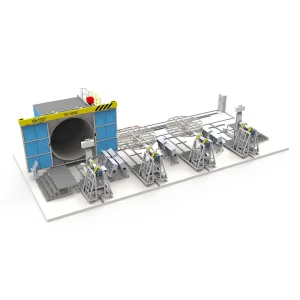
Machine quotes depend on five core criteria: 1) Machine architecture type (Independent Arm Carousel, Shuttle, or Rock & Roll); 2) Maximum spherical swing diameter (e.g., 2.0m to 5.5m); 3) Oven heating medium (Natural Gas, LPG, Electric, or Biomass Gasifier); 4) Number of arms and stations; 5) Level of PLC automation (e.g., automatic door opening, wireless PIAT system integration, auto-weighing).
PIAT stands for Peak Internal Air Temperature. It represents the actual air temperature inside the hollow mold cavity during heating. Reaching the optimum PIAT (typically 190°C–215°C for LLDPE) ensures complete polymer sintering and bubble removal without causing thermal degradation or oxidation of the inner plastic wall.
Cast aluminum molds (A356) offer superior thermal conductivity, rapid cycle times, and excellent surface finish ideal for complex shapes, undercuts, and textured aesthetics. Fabricated sheet steel molds are best suited for large, simple geometric shapes such as cylindrical water tanks and agricultural storage vessels due to lower initial material tooling costs.
Standard machine manufacturing takes 30 to 45 days. Tooling fabrication requires 25 to 35 days (often conducted concurrently). Factory FAT (Factory Acceptance Testing) takes 3–5 days. Shipping and installation take an additional 20–30 days depending on the destination port.
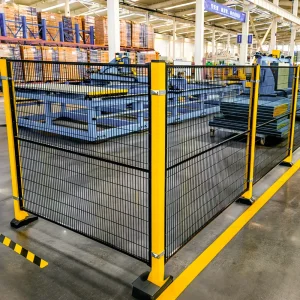
Discover our custom cast aluminum moulds, steel tooling, surrounding fences, and automated carousel rotomolding equipment.