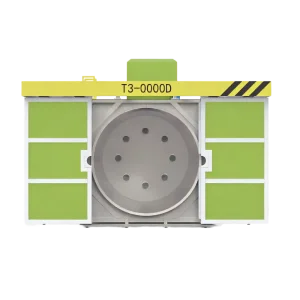
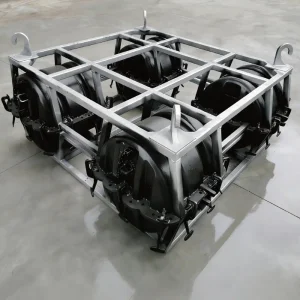
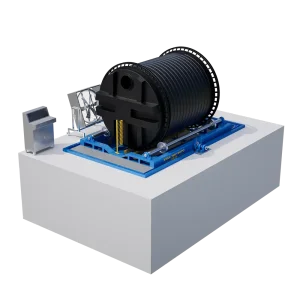
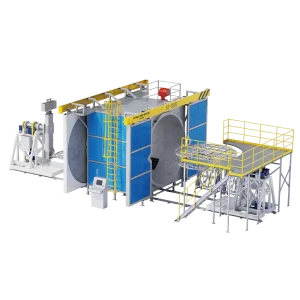
High-efficiency rotational molding machinery engineered for compliance with European Union Machinery Directives, featuring intelligent heat distribution and heavy-duty structural integrity.
Analysis of international industrial manufacturing trends, technological migration, and market demand for CE-certified rotational molding hardware.
The global rotational molding (rotomoulding) equipment sector is undergoing a profound paradigm shift driven by stringent global environmental regulations, rising energy costs, and the structural demand for hollow plastic products with uncompromised physical integrity. Rotational molding is uniquely suited for producing seamless, stress-free, double-walled, or multi-layered hollow structures—ranging from small medical fluid containers to massive 30,000-liter agricultural liquid storage tanks and intricate automotive ducting.
Industrial procurement teams and global OEM buyers are increasingly prioritizing machinery suppliers whose factories adhere strictly to the CE Certification (Conformité Européenne) framework. In modern polymer processing, CE compliance is no longer a mere trade passport for the European Economic Area (EEA); it serves as a global benchmark for machine safety, electromagnetic compatibility, environmental sustainability, and operational reliability.
As polymer formulation advances—incorporating cross-linked polyethylene (XLPE), polypropylene (PP), polyamide (PA 6/12), and bio-based thermoplastic polymers—the thermal dynamics of rotomoulding machines must match this material evolution. Advanced factories are replacing legacy, uncalibrated direct-fired open-flame systems with precision-controlled hot-air circulation ovens, electric induction heating systems, and automated multi-station carousel configurations designed to reduce thermal cycle times while enhancing overall product consistency.
Technical breakdown of European safety standards, risk assessment protocols, and engineering compliance required for industrial machinery manufacturing.
Enforces rigorous mechanical risk assessment, structural integrity checks under maximum dynamic payload, dual-channel emergency stop safety relays, and ergonomic perimeter guarding with interlocked optical sensors.
Mandates electrical equipment insulation, thermal dissipation safety in control cabinets (IP54/IP65 ratings), redundant grounding networks, and protection against direct and indirect electrical contact hazards.
Governs gas-fired burners (natural gas/LPG). Requires automated flame safeguard controls, pre-purge cycle venting, double-block solenoid valves, and continuous oxygen/combustion monitor feedback loops.
Investing in verified CE-certified rotational molding hardware directly correlates with long-term factory profitability, lower insurance premiums, and reduced operational downtime. The table below details the engineering distinctions between certified and non-compliant manufacturing solutions.
| Technical Parameter | CE-Certified Manufacturers (e.g., StarWay Standard) | Non-Certified / Conventional Suppliers |
|---|---|---|
| Thermal Insulation & Efficiency | High-density ceramic fiber insulation (1200°C rating); outer shell temp < 45°C. | Standard mineral wool; outer wall heat loss causes safety hazards and high energy waste. |
| Burner & Combustion Safety | EN 746-2 certified automatic burner control with double flame detectors and airflow switches. | Manual ignition or basic single-valve gas manifolds lacking safety shutoff redundancy. |
| Arm Spindle & Drive Integrity | Finite Element Analysis (FEA) verified forged steel shafts with oil-bathed planetary gearboxes. | Standard welded carbon steel shafts prone to dynamic fatigue, deflection, and stress fractures. |
| Control System Architecture | Siemens/Schneider PLC with Safety Integrated modules and real-time TPAT sensor telemetry. | Generic microcontrollers lacking emergency diagnostic logging or thermal override interlocks. |
| Noise & Operational Health | Vibration-damped fans and acoustic motor enclosures maintaining noise levels < 75 dB(A). | Unshielded blowers exceeding 88 dB(A), causing operator fatigue and regulatory violations. |
Selecting the optimal mechanical configuration based on production volume, part footprint, and mold cycling requirements.
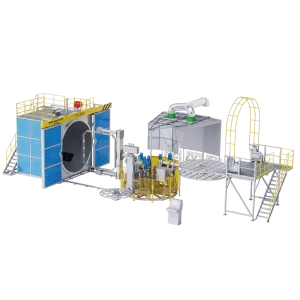
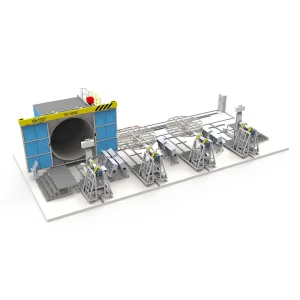
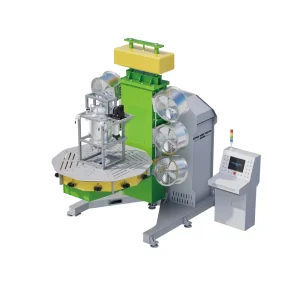
Designed for continuous mass production. Features 3 to 4 independent arms indexing sequentially through Heating, Pre-cooling, Cooling, and Servicing stations to maximize throughput.
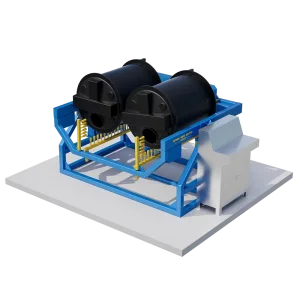
Offers maximum manufacturing flexibility. Ideal for running disparate mold sizes simultaneously on separate shuttles moving linearly into a central high-efficiency heating chamber.
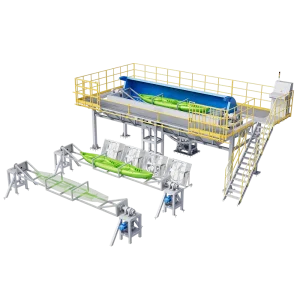
Tailored for long, cylindrical, or massive hollow structures (such as boats, kayaks, and heavy chemical tanks). Uses 360-degree major rotation combined with controlled rocking minor axes.
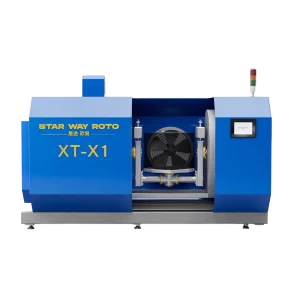
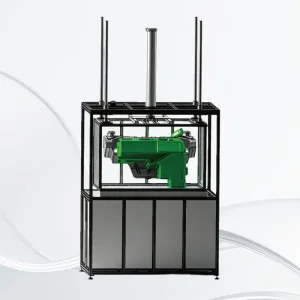
Compact, lab-scale machines equipped with multi-zone digital temperature controllers for analyzing resin fusion dynamics, pigment dispersion, and melt flow index (MFI) characteristics.
The technological migration toward zero-carbon thermal energy, closed-loop process control, and real-time internal air temperature telemetry.
Historically, rotational molding suffered from an "open-loop" control deficiency, where oven residence times were dictated solely by external air temperature timers rather than polymer melt progression. Modern CE-certified machines incorporate radio-frequency (RF) wireless thermocouples mounted directly inside the mold cavity.
By measuring the precise Temperature-Peak Internal Air Temperature (TPAT) curves, the system automatically detects crucial thermal thresholds:
With global manufacturing transitioning toward net-zero emissions, electric heating rotomoulding systems are gaining massive traction across Europe, North America, and East Asia. Direct electric resistance heating or infrared thermal radiant panels eliminate direct carbon dioxide and nitrogen oxide emissions within the plant while yielding up to 92% thermal conversion efficiency compared to traditional gas burners.
Machinery performance is inextricably linked to tooling quality. Leading machinery manufacturers integrate precision CNC-machined cast aluminum molds and fabricated C45 steel molds engineered with CAD/CAM simulation software. This ensures wall thickness tolerances within ±0.15mm and eliminates thermal bridging during high-speed rotation.
How specialized CE-certified rotomoulding machinery addresses high-volume requirements across key global vertical sectors.
Machine configuration: Large-swing Rock & Roll or Open-Flame Systems. Capable of processing LLDPE and HDPE resins for multi-layer anti-algae, food-contact compliant vertical/horizontal liquid tanks ranging from 500L to 30,000L.
Machine configuration: Lined Shuttle or Double-Arm Rock & Roll systems. Enables uniform wall thickness distribution across complex hydro-dynamic hulls, seating molds, and watertight internal buoyancy chambers.
Machine configuration: High-speed Carousel Rotomolders. Fabricates heavy-duty diesel fuel tanks, tractor canopies, air intake ducts, and wheel arches using impact-resistant modified Polyamide (PA) and XLPE materials.
Machine configuration: Independent-Arm Carousel Machines. Produces high-strength, double-wall insulated transport boxes, medical cold-chain containers, and commercial coolers designed for PU foam injection.
Machine configuration: Extra Large Diameter Swing Machines. Manufactures structural rib-reinforced underground septic tanks, inspection chambers, and drainage sumps resistant to soil load deformation.
Machine configuration: Specialized Shuttle / Lab Hybrid units. Tailored for contract molders serving municipal floor scrubber housings, traffic barriers, play sets, and environmental waste receptacles.
Expert answers addressing critical questions regarding CE certification, machine selection, heat source ROI, and factory commissioning.
Explore additional specialized machinery models, eco-friendly heating configurations, precision mold tooling, and auxiliary factory equipment.