
Explore our premium-grade rotational molding machines, intelligent electric ovens, and precision steel molds certified for European and international industrial compliance.
Analyzing the transition toward energy-efficient, CE-certified rotational molding systems across North America, Europe, and Asia-Pacific manufacturing hubs.
The global rotational molding (rotomolding) equipment sector is undergoing a profound technological transformation. Driven by stringent environmental legislation in the European Union (such as the EU Eco-design Directive and ESG disclosure requirements) as well as surging demand for seamless, stress-free hollow plastic structures, industrial buyers are rapidly pivoting away from legacy open-flame systems toward highly controlled, CE-compliant biaxial rotational molding machinery.
Unlike injection or blow molding, rotational molding relies on the pressureless thermal sintering of thermoplastic powders (primarily LLDPE, HDPE, XLPE, PP, and Polyamide 12/PA6) inside biaxially rotating molds. This unique process creates multi-layer hollow components with uniform wall thickness, exceptional impact resistance, and zero internal stress concentrations. As global infrastructure, chemical logistics, automotive, and agricultural sectors expand, the global rotomolding machinery market is projected to expand at a CAGR of 6.2% through 2030, exceeding a global market valuation of $5.8 billion.
A comprehensive breakdown of European safety directives required for rotational molding machinery importing into the European Economic Area (EEA).
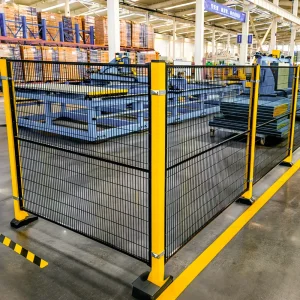
Enforces rigorous risk assessment (EN ISO 12100), mechanical perimeter guarding (EN ISO 14120), safety distances (EN ISO 13857), and dual-channel Category 3/4 emergency stop circuits (EN ISO 13850) to prevent operator access to rotating arms during operation.
Mandates electrical equipment safety compliant with EN 60204-1. Requires IP54 enclosure rating for control cabinets, short-circuit current protection, thermal overload protection, and equipotential bonding across all steel frames and drive assemblies.
Ensures that high-power Variable Frequency Drives (VFDs) and PLC automation modules do not generate electromagnetic interference (EMI) that disrupts factory electronics, while maintaining high immunity against industrial voltage surges.
For gas-fired rotomolding heating chambers, exporters must integrate dual solenoid shut-off valves, automatic burner flame management systems (such as Riello or Weishaupt burners), digital combustion air pressure switches, and forced exhaust duct monitoring to guarantee zero accumulation of unburnt gas prior to ignition cycles.
How vertically integrated manufacturing hubs in Ningbo, Zhejiang provide global industrial buyers with superior CAPEX returns without sacrificing engineering precision.
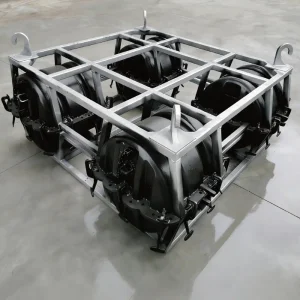
Chinese OEM/ODM rotomolding machinery exporters offer an unprecedented competitive advantage by combining full vertical integration with advanced CNC toolmaking and automated assembly workflows. Headquartered in Ningbo—China's primary hub for mold manufacturing and heavy equipment engineering—factories manage every step of production under one roof: from raw resin pulverizing system integration to multi-axis CNC mold machining and final PLC SCADA automation commissioning.
| Evaluation Parameter | European OEM Brands | China CE-Certified Exporters | Buyer Advantage / Operational Gain |
|---|---|---|---|
| Initial Capital Expenditure (CAPEX) | High ($350,000 - $850,000+) | Optimized ($120,000 - $380,000) | 45% - 60% lower initial capital barrier for plant expansion. |
| Tooling & Mold Lead Time | 14 to 20 Weeks | 6 to 8 Weeks | Faster time-to-market for custom hollow plastic products. |
| Thermal Control Precision | ±2°C PID Control | ±2°C Smart PLC PID Control | Identical wall thickness consistency & resin sintering quality. |
| Customization Agility (ODM) | Standard Rigid Options | 100% Bespoke Arm & Chamber | Tailored arm load capacity, swing radiuses & oven dimensions. |
| Compliance Certification | CE / UL Standard | TÜV / SGS Verified CE | Full regulatory clearance for EU, UK, and US imports. |
Selecting the optimal equipment configuration for high-throughput manufacturing, localized space constraints, and specialized polymer processing.
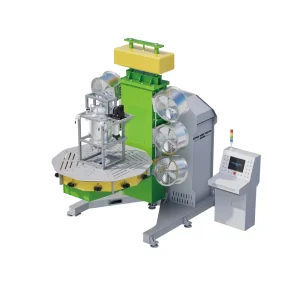
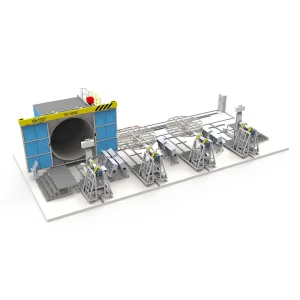
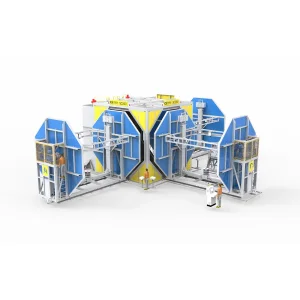
Available in 3-arm or 4-arm independent/fixed configurations. Ideal for continuous, high-volume mass production of standardized plastic products like water tanks and outdoor containers.
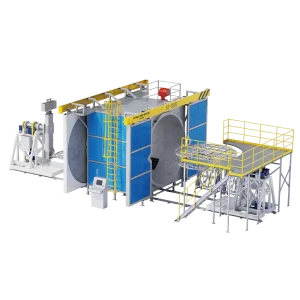
Features a central heating oven with dual shuttles moving linearly on tracks. Saves factory floor footprint while allowing flexible mold changing and variable heating cycles per station.
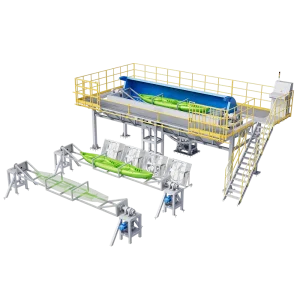
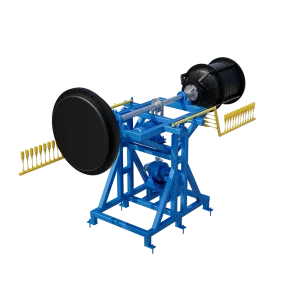
Specifically engineered for long, narrow, or large linear hollow objects (such as kayaks, drainage pipes, and troughs). Uses a single-axis full 360° rotation with a rocking movement.
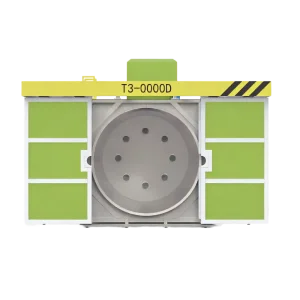
Eliminates carbon combustion emissions. Utilizes high-density ceramic wool insulation and multi-zone heating elements for zero-emission cleanroom or eco-friendly factories.
Enabling heavy-duty, corrosion-resistant plastic manufacturing across key global commercial sectors.
Production of 500L to 50,000L vertical and horizontal polyethylene tanks, septic tanks, chemical dosing vessels, and IBC inner liners designed for extreme chemical resistance.
Manufacturing heavy-duty double-walled plastic pallets, insulated fish boxes, medical vaccine coolers, and ruggedized shipping containers with polyurethane foam injection.
Seamless processing of single and double kayaks, recreational boats, marine buoys, dock floats, and surrounding safety barriers built for UV-stabilized saltwater environments.
Ensuring seamless equipment commissioning, operator safety training, and lifetime spare parts availability for overseas clients.
Before dispatch, every rotomolding machine undergoes a 48-hour continuous thermal dry-run and mold testing cycle. Internal oven temperature sensors map 12 zone thermal uniformities to ensure compliance with contract specifications.
Integrated Siemens PLC controls feature encrypted remote SCADA connectivity, enabling Chinese software engineers to troubleshoot VFD drive parameters, update PLC software, and inspect operational telemetry globally in real-time.
The next era of rotomolding equipment integrates wireless Peak Internal Air Temperature (PIAT) sensing, automated powder handling, and heat recovery circuits.
Modern rotational molding is evolving beyond traditional empirical heating timers. Leading CE exporters now equip machines with wireless in-mold radio-frequency temperature sensors that transmit real-time internal air temperatures (PIAT) directly to the main HMI screen. This eliminates resin under-curing (which causes brittle structural failure) and over-curing (which causes thermal degradation and discoloration), optimizing cycle times by up to 18%.
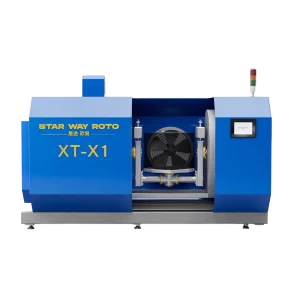
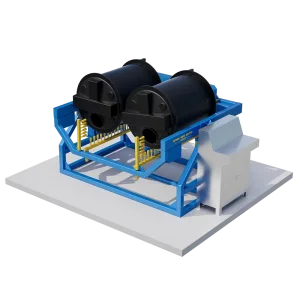
Explore our complete export line of rock and roll machines, customizable shuttle rotomolding systems, specialized laboratory machines, and surrounding safety barriers.
Expert technical answers regarding CE compliance, heating technology choices, export logistics, and custom tooling.
CE certification verifies that the rotomolding equipment complies with European directives regarding mechanical safety (Machinery Directive 2006/42/EC), electrical insulation & grounding (EN 60204-1), and electromagnetic compatibility (2014/30/EU). Without CE marking, equipment cannot legally clear customs or be insured within European industrial plants.
Electric heating ovens offer zero direct combustion emissions, lower noise levels, precise zone-by-zone PID thermal control, and zero risk of gas exhaust contamination. Gas-fired ovens generally provide faster initial heat-up rates for high-volume production in regions with lower natural gas prices.
Standard CE-certified shuttle or carousel rotomolding machines require approximately 40 to 60 days for manufacturing and factory testing. Custom CNC machined aluminum molds or fabricated steel molds typically require 30 to 45 days, allowing complete system synchronization before overseas shipping.
By utilizing high-CFM hot air recirculation blowers combined with internal air baffle systems and multi-burner or multi-zone electric element banks. Thermal imaging tests ensure oven temperatures stay within ±2°C across all rotation radiuses.
Exporters send field engineers for on-site mechanical assembly, electrical wiring verification, PLC parameter tuning, and operator safety training. Additionally, 24/7 remote SCADA connection provides instant software diagnostics globally.
Yes. Machines specified for Polyamide (PA6/PA12) or Polypropylene (PP) feature high-temperature heating chambers (reaching up to 350°C), inert gas (nitrogen) mold purging systems, and rapid multi-stage cooling stations to handle complex resin crystallization requirements.