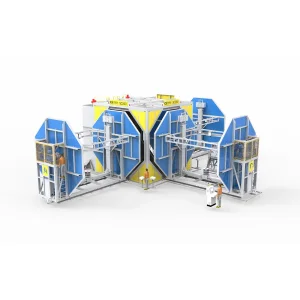
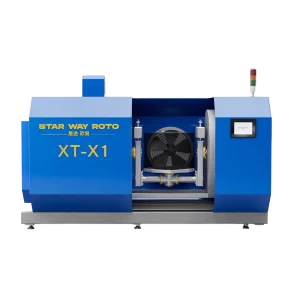
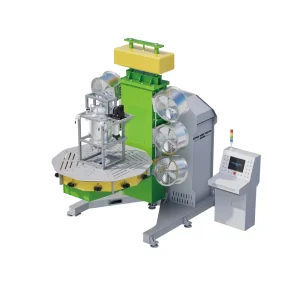
High-efficiency rotational molding equipment designed for heavy-duty manufacturing, seamless polymer fusion, and low thermal consumption.
In the modern global manufacturing landscape, the acquisition of CE Certification for rotational molding machinery represents far more than a basic regulatory checkmark; it is an authoritative benchmark of mechanical safety, electromagnetic compatibility, thermal isolation efficiency, and structural integrity. Operating from Ningbo, China, Ningbo StarWay Roto Co., Ltd. (Rising Sun Rotomolding lineage) has spent over 23 years perfecting the synthesis between high-output polymer processing and stringent European Union regulatory standards. Our engineering team—comprising 40+ dedicated senior R&D specialists—manufactures advanced Carousel, Shuttle, and Rock & Roll rotomolding equipment designed to fulfill and exceed the statutory requirements of the EU Machinery Directive 2006/42/EC and Low Voltage Directive 2014/35/EU.
Information gain in polymer processing relies heavily on understanding how thermal energy interacts with stress distribution during non-pressure rotational molding. Unlike traditional injection molding or blow molding where polymer melts are driven by extreme hydraulic pressures, rotational molding is a atmospheric thermal fusion process. Consequently, machine compliance requires precise control over burner modulation, chamber airflow dynamics, emergency thermal cutoff circuits, and fail-safe mechanical locking assemblies on rotating arms.
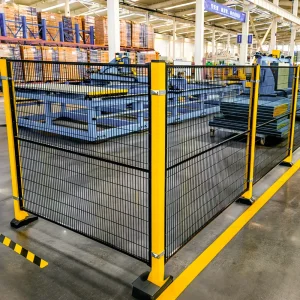
Comprehensive hazard mitigation protocols, dual-circuit emergency stop relays, zero-pressure interlocking doors, and perimeter light curtains built directly into the main PLC control cabinet.
High-density rockwool insulation modules (up to 250mm thick) paired with Italian Riello or Weishaupt automated gas burners, decreasing radiative heat losses by up to 28% compared to non-CE standard ovens.
Heavy-duty forged steel gear trains and dynamic balance-tested spider arms designed to withstand continuous asymmetric loads exceeding 8,500 kg during multi-axis rotation cycles.
The core objective of modern rotational molding equipment design is achieving isotropic polymer crystallization while minimizing cycle times. In traditional rock-and-roll or shuttle systems, non-uniform heat distribution often yields variable wall thickness, internal stress concentration, and premature pinhole defects. Rising Sun Rotomolding / StarWay Roto addresses these kinetic challenges through CFD (Computational Fluid Dynamics) modeled hot-air recirculation chambers.
During the heating cycle, the linear low-density polyethylene (LLDPE), cross-linked PE (XLPE), or polypropylene (PP) powder undergoes four distinct thermal phases: powder flow, sintering/coalescence, bubble dissolution, and cooling crystallization.
Every machine built under the Rising Sun Rotomolding umbrella undergoes strict inspection protocols before leaving the assembly plant. Below is an engineering overview of our CE-compliant shuttle and rock-and-roll parameters:
| Parameter | Specification Standard | CE Directive Reference |
|---|---|---|
| Insulation Resistance | > 100 MΩ at 500V DC | EN 60204-1 (LVD) |
| Noise Emission | < 75 dB(A) at 1 meter | 2006/42/EC Annex I |
| Oven Temp Control | ± 2°C PID Precision | EMC 2014/30/EU |
| Burner Safety Cutoff | Dual Solenoid Lockout | EN 746-2 Gas Safety |
The international demand for hollow plastic products is experiencing unprecedented growth driven by municipal water management, agricultural modernizations, marine infrastructure, and chemical logistics. As factories across Europe, North America, the Middle East, and Southeast Asia replace aging metal containers with corrosion-resistant rotomolded poly-tanks, equipment suppliers must offer robust technical backup alongside certified hardware.
From factory floor plan layouts and electrical drop routing to gas pipe manifold sizing, our field engineers deploy on-site to execute complete line commissionings worldwide.
Configurations meet regional codes, including NFPA gas safety guidelines for North America, CE machinery compliance for Europe, and AS/NZS electrical safety standards for Australasia.
Integrated IoT cloud modules allow StarWay Roto engineers to inspect PLC code, diagnose sensor faults, and recalibrate burner curves remotely across time zones.
Rotational molding excels where seamless design, stress-free corners, and extreme mechanical durability are non-negotiable. Below are five strategic application domains serviced by Rising Sun Rotomolding systems:
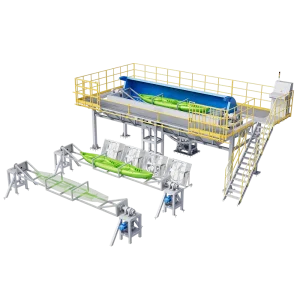
Utilizing large-scale Rock & Roll machines or oversized Shuttle ovens to manufacture double-walled kayak hulls, yacht pontoons, marine fenders, and heavy-duty floating dock modules resistant to saltwater oxidation.
Open flame and oven-heated Rock & Roll machinery specifically engineered for rotational lining of steel vessels with cross-linked polyethylene, creating seamless anti-corrosion barriers for acid/alkali transport.
Manufacturing high-volume agricultural spray tanks, liquid fertilizer dispensers, cattle troughs, and grain storage hoppers featuring integrated fluid level indicators and reinforced ribbing structures.
Production of heavy-duty septic tanks, underground water cisterns, grease traps, and industrial waste collection containers engineered to withstand soil pressure and chemical erosion.
Fabrication of high-impact insulated cooler boxes, medical vaccine transit chests, and ultra-long military packaging cases with foam-filled sandwich wall structures.
The future of rotational molding lies at the intersection of energy optimization, digital control, and advanced material processing. Rising Sun Rotomolding / StarWay Roto is pioneering several technological breakthroughs designed to transition traditional rotomolding operations into fully automated Industry 4.0 smart factories:
Implementing machine learning models that analyze mold geometry, resin thermal mass, ambient humidity, and gas calorific value in real-time. The system automatically adjusts burner flame height and air damper positions, ensuring optimal energy consumption per kilogram of molded resin.
Developing electric-induction and green hydrogen hybrid heating chambers. By replacing conventional fossil fuel burners with precision infrared electric arrays and zero-emission hydrogen gas mixing burners, global factories can drastically lower their scope-1 carbon footprint.
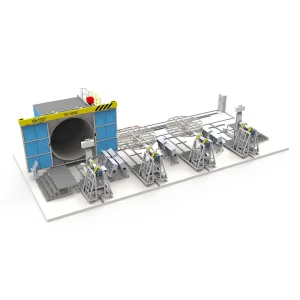
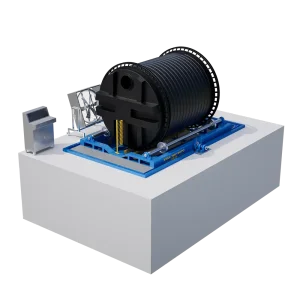
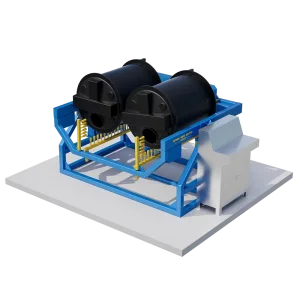
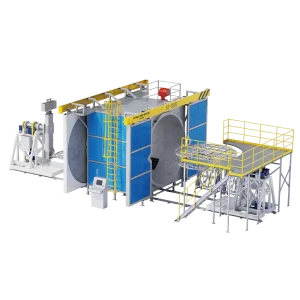
Advanced multi-station machinery, linear shuttle lines, testing units, and heavy industrial rock-and-roll configurations.