Explore our top-tier rotational molding equipment and CNC-machined aluminum moulds designed for heavy-duty manufacturing operations in Namibia and global export markets.
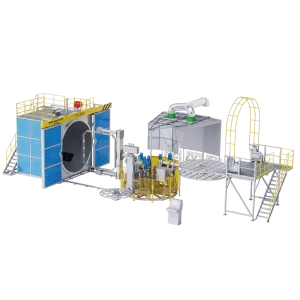
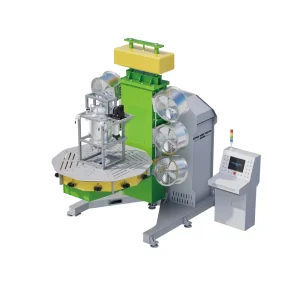
As Southern Africa accelerates infrastructure development, agricultural expansion, and mining modernization, the demand for high-durability, seam-free polymer products has hit an all-time high. Commercial entities seeking to buy rotomould machinery in Namibia or partner with international exporters must navigate complex procurement landscapes. This comprehensive technical whitepaper analyzes the mechanical engineering, material dynamics, compliance frameworks, and global supply chain strategies necessary to establish reliable rotational molding operations in Namibia.
Rotational molding (Rotomoulding) offers unmatched structural integrity for manufacturing large-scale hollow products, ranging from 500L to 30,000L agricultural water storage tanks, chemical dosing vessels, mining leaching vats, and marine pontoons. Compared to traditional blow molding or injection molding, rotomoulding exhibits virtually stress-free material distribution, uniform wall thickness, and exceptional resistance to environmental stress cracking (ESCR) under extreme climatic conditions.
Selecting the right rotational molding machine architecture is critical for matching production throughput with regional demand in Windhoek, Walvis Bay, Swakopmund, and broader Namibian industrial zones. Equipment configuration dictates energy efficiency, cycle times, and scrap rates.
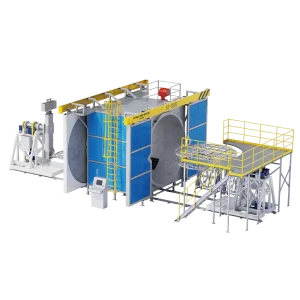
Engineered for high-volume, multi-product continuous manufacturing. Featuring 3 to 4 independent arms operating in synchronized indexing stations (Heating, Cooling, Loading/Unloading), Carousel machines maximize thermal efficiency and ensure continuous production cycles.
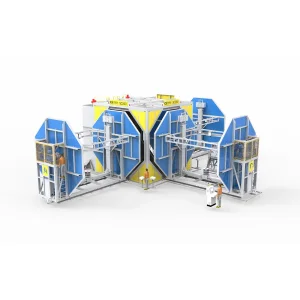
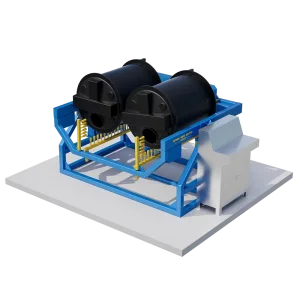
Designed for ultimate operational flexibility. Dual carriages shuttle back and forth into a central heating oven. Ideal for Namibian factories producing disparate mold sizes simultaneously (e.g., small septic tanks on Arm A and massive agricultural tanks on Arm B).
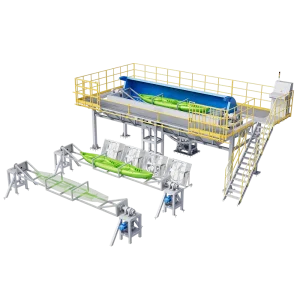
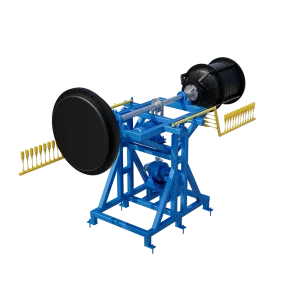
Optimized for ultra-long or oversized hollow items such as boat hulls, kayaks, transport pipes, and chemical storage cylinders. Rock & Roll machinery rocks the mold along its longitudinal axis while rotating 360 degrees, minimizing oven volume and fuel consumption.
| Machine Type | Ideal Application | Heating Efficiency | Footprint Requirement | Operational Flexibility |
|---|---|---|---|---|
| Carousel (Fixed/Independent Arm) | Mass production of standard water tanks (1000L-5000L) | 92% (Continuous thermal retention) | Large (15m x 15m+) | Moderate (Requires balanced cycle times) |
| Shuttle (Square/Linear) | Custom job shops & diverse product mix | 85% (Intermittent door cycling) | Medium to Large | High (Independent arm controls) |
| Rock & Roll (Open Flame/Oven) | Ultra-large tanks, long vessels, pipes, kayaks | 78-88% (Direct flame / targeted oven) | Linear elongated footprint | High for specific geometry |
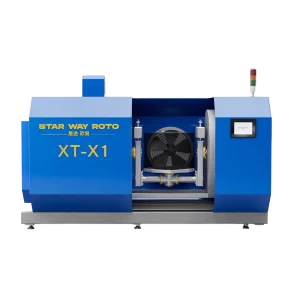
| Electric Heating Smart Series | Eco-sensitive regions & precise R&D labs | 96% (Zero direct emissions) | Compact | Maximum thermal precision (+/- 1°C) |
Operating industrial machinery in Southern Africa demands rigorous compliance with regional environmental conditions, grid stability challenges, and strict regulatory standards. Importing machinery without local adaptation can result in premature thermal breakdown, electrical component failure, and costly downtime.
Namibia experiences some of the highest solar UV irradiance globally. Rotomoulded products must utilize LLDPE/HDPE powders formulated with high-performance light stabilizers (UV-20+ classification) to prevent photo-oxidation, embrittlement, and environmental stress cracking.
Namibian industrial zones operate on 400V 50Hz 3-phase power grids. StarWay Roto machines integrate robust Schneider/Siemens electrical protection systems, transient voltage surge suppressors (TVSS), and soft-start frequency converters to handle localized voltage fluctuations.
Manufacturing liquid storage vessels in Namibia requires adherence to South African Bureau of Standards (SABS) and SANS 1731:2017 specifications for rotational moulded polyethylene water tanks, ensuring wall thickness integrity, impact strength, and non-toxicity for potable water.
To ensure zero operational disruption, StarWay Roto provides direct technical support, remote telemetry diagnostics, rapid spare parts dispatch to Walvis Bay and Windhoek, and complete commissioning guidance for local technicians.
Navigating global procurement requires a balance of engineering sophistication, cost structure optimization, and proven execution reliability. Headquartered in Ningbo, China—a global epicenter for mold making and heavy manufacturing—Ningbo StarWay Roto Co., Ltd. brings over 23 years of specialized expertise in rotational molding innovation.
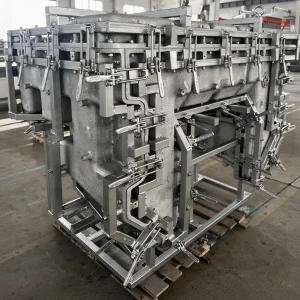
Utilizing high-grade A356 aluminum alloys, our moulds undergo 5-axis CNC machining and precision pattern casting. This guarantees rapid heat transfer, flawless surface finishing, pinhole-free interiors, and intricate exterior graphic/logo integration.
Operating from a 20-acre production plant, our engineering team consists of over 40 technical specialists. Holding 23 proprietary patents, we pioneered the world-renowned S2-8500 mega-scale rotomolding machine, proving our ability to solve extreme engineering challenges.
Every rotomolding line undergoes rigorous Factory Acceptance Testing (FAT), including trial mold rotation, burner combustion efficiency tests, PLC sequence validation, and thermal imaging calibration prior to sea-freight packing.
Rotomolded products serve as the backbone for critical municipal, industrial, and agricultural operations across Namibia's unique geography.
Namibia's uranium, copper, and gold mining operations require heavy-duty cross-linked polyethylene (XLPE) chemical dosing tanks, acid storage containers, and slurry agitation vats capable of withstanding corrosive reagents.
Given arid conditions, Namibian cattle farmers and commercial agriculture rely on high-capacity (5,000L to 20,000L) UV-stabilized vertical water tanks, livestock drinking troughs, and mobile liquid fertilizer transport tanks.
Urban centers such as Windhoek utilize rotomolded underground septic tanks, rainwater harvesting systems, chemical-resistant refuse bins, and emergency drought storage vessels.
The bustling port of Walvis Bay utilizes rotomolded navigation buoys, dock floats, insulated fish storage boxes, and heavy-duty marine fenders engineered to resist saltwater corrosion.
When procuring industrial machinery internationally, evaluating the initial Capital Expenditure (CAPEX) alone yields an incomplete financial picture. Decision-makers must analyze the Total Cost of Ownership (TCO) across the equipment's 20-year lifespan.
Sourcing directly from Ningbo StarWay Roto provides a 30% to 45% CAPEX reduction compared to Western European equipment manufacturers without sacrificing mechanical precision or component reliability (utilizing Siemens PLCs, Kromschroeder burners, and Italian gearboxes).
Energy accounts for over 35% of ongoing rotomoulding operational costs. Our patented thermal insulation chambers, automated burner modulators, and energy-efficient electric heating technology lower natural gas, LPG, or diesel consumption by up to 22% per heating cycle.
We handle complete sea-freight logistics, flat-rack container securing, and custom export documentation. Goods arrive seamlessly at the Port of Walvis Bay, offering direct road-freight transit via the Walvis Bay Corridor to Windhoek and neighboring SADC nations.
The global rotational molding sector is undergoing a rapid transition toward Industry 4.0 digitisation and eco-friendly manufacturing practices. Forward-thinking Namibian enterprises must adopt modern equipment to stay competitive.
Real-time infrared thermal cameras inside the heating chamber continuously monitor mould surface temperatures, automatically adjusting burner intensity to eliminate under-curing or polymer degradation.
Eliminating direct fossil fuel combustion, next-generation electric heating rotomolding machines reduce carbon footprints, minimize internal shop-floor heat, and provide ultra-clean mold environments.
Advanced multi-layer rotomoulding allows factories to introduce up to 50% recycled PCR materials into middle wall layers while maintaining virgin LLDPE on internal food-grade contact surfaces.
Integrated pneumatic powder feeding systems and automated mould opening/closing mechanisms reduce manual operator labor by 60%, drastically cutting down unit cycle times.
Browse our specialized shuttle machines, lab R&D equipment, and auxiliary systems built for global industrial exporters and local manufacturing facilities.