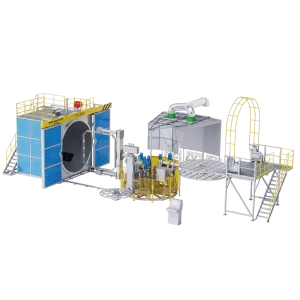
Explore our premium factory-direct automatic rotational moulding machines engineered with intelligent temperature controls, multi-station versatility, and reduced energy footprints.
The global rotational molding sector is experiencing a paradigm shift from traditional, labor-intensive batch operations to high-precision, fully automated manufacturing ecosystems. Driven by rising industrial energy costs, stringent carbon emission mandates, and the demand for complex seamless hollow plastic products, leading global enterprises are upgrading their facilities with fully automatic rotomolding equipment.
Modern automatic rotomolding platforms integrate Industrial Internet of Things (IIoT) sensors, SCADA architectures, and programmable logic controller (PLC) systems. Real-time telemetry tracks internal air temperature (IAT), powder fusion states, and arm rotation speeds, eliminating human error and delivering reproducible wall thickness across batch runs.
Energy management is paramount. Advanced thermal dynamics utilize direct-flame modulating burners, electric heat ex-changers, micro-porous insulation blankets, and heat recovery circuits. Modern automatic ovens reduce natural gas or electrical power consumption by up to 28% per molding cycle compared to legacy open-flame systems.
The transition toward high-performance technical polymers—such as Linear Low-Density Polyethylene (LLDPE), Cross-linked Polyethylene (XLPE), Polypropylene (PP), and Liquid Polyamide (Nylon 6/Nylon 12)—demands multi-zone automated temperature control to ensure structural integrity and zero micro-void formation.
When sourcing fully automatic rotomolding machines, enterprise buyers evaluate suppliers beyond initial capital expenditure. Modern procurement frameworks prioritize total cost of ownership (TCO), machine versatility, downtime reduction, and engineering support for complex custom tooling.
Automotive tier-1 manufacturers demand tight mechanical tolerances, documented quality tracking, and multi-layer rotational molding capabilities. Key requirements include automated resin loading, precise cooling chamber management, and seamless integration with CNC-machined aluminum molds for manufacturing adblue tanks, air ducts, and heavy-vehicle fuel cells.
Producers of large vertical/horizontal storage vessels (ranging from 500 liters to 50,000+ liters) require shuttle and carousel machine configurations featuring high load-bearing steel arms, variable arm-speed control, and heavy-duty frame rigidity to maintain uniform wall thickness across massive cylindrical surfaces.
| Buyer Category | Core Intent & Procurement Priorities | Recommended Machine Architecture | Critical Features Required |
|---|---|---|---|
| High-Volume Consumer Goods | Maximum daily cycle throughput, fast mold changeover, low cycle variance | Multi-Arm Carousel Rotomolding Line | Independent Arm Recipes, Dynamic Air Circulation, Automated Cooling |
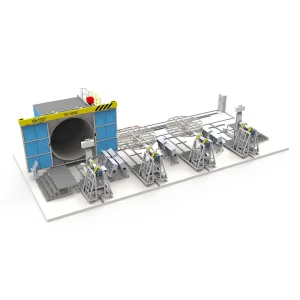
| Custom Molders & Job Shops | Versatility, low floor footprint, multi-product batch flexibility | Compact Lined Shuttle / Square Shuttle | Dual-Station Operations, 30% Floor Space Reduction, Quick Arm Swaps |
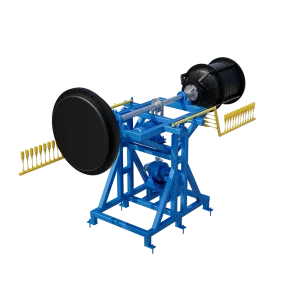
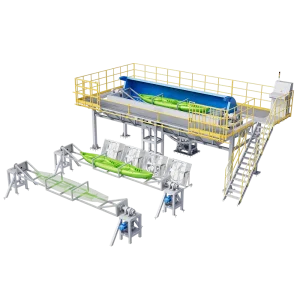
| Long-Vessel Manufacturers | Long slender hollow parts (Kayaks, Marine Hulls, Drainage Pipes) | Oven Type / Open-Flame Rock & Roll Machine | Bi-Axial Angle Adjustment, Targeted Burner Manifolds, Heavy Rock Arm |
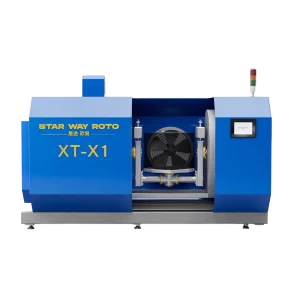
| R&D and Testing Laboratories | Polymer melt testing, pigment evaluation, resin viscosity verification | Custom Intelligent Lab Rotomolding Machine | Precision Micro-Oven Sensors, Full Process Data Logging, PLC Interface |
A fully automatic rotomolding machine acts as the heart of an integrated production cell. Leading factories deliver complete turnkey macro-solutions that bridge resin preparation, automated processing, post-mold finishing, and quality assurance compliance.
Integrates high-speed turbo-mixers, cryogenic pulverizers, and automatic vacuum powder feeders. Ensures fine mesh sizing (35-50 mesh) for void-free resin flow inside complex mold cavities during heating.
Combines central PLC control units with multi-zone heating chambers. Monitors burner heat output, internal cavity pressure, mold rotation ratios (1:1 to 1:10), and fan cooling curve profiles.
Utilizes 6-axis robotic arm demolding, automated routing/flashing removal jigs, polyurethane (PU) insulation foam injection, and leak-detection hydrostatic testing stations for finished vessels.
Understanding machine kinestatics and heating methods ensures buyers match their target application with the correct equipment envelope.
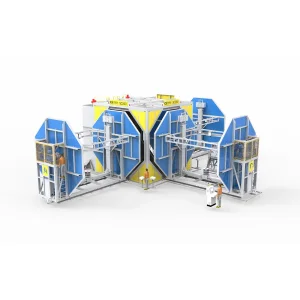
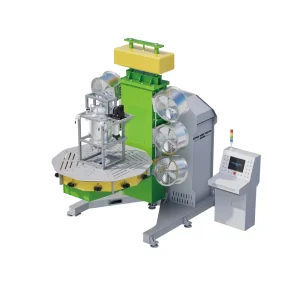
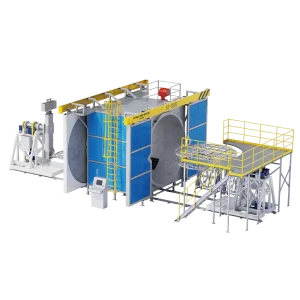
Designed for high-throughput, continuous industrial output. Features a central indexing turret carrying 3 to 4 independent arms through specialized operational stations: Loading/Unloading → Heating Oven → Pre-Cooling → Final Cooling Chamber. Each arm operates on independent speed, rotation ratio, and cycle timing controls.
Optimized for space-constrained facilities and custom job shops. The central oven remains stationary while shuttle carriages transport molds laterally along precision tracks into the heating chamber. Reduces plant floor footprint by up to 30% while retaining dynamic multi-station heating capabilities.
International equipment procurement requires absolute compliance with regional safety, environmental, and electrical standards. Reputable rotational molding machine manufacturers implement rigorous quality control metrics to ensure long-term equipment reliability.
All machinery is engineered in strict accordance with CE Marking directives, ISO 9001:2015 quality management protocols, and UL/CSA electrical standard options, incorporating multi-tier safety interlocking doors and emergency stop safety curtains.
Before shipment, comprehensive FAT protocols validate burner ignition, arm mechanical runout, noise levels (<75 dB), thermal camera insulation uniformity, and dry-run PLC operational cycles with full customer video documentation.
Global field engineering teams provide localized installation, gas line calibration, PLC user interface training in local languages, preventive maintenance schedule setup, and rapid spare-part logistics dispatch.
As the rotomolding industry aligns with Industry 4.0 standards, automated rotomolding machinery is transitioning toward self-optimizing thermal control loops and sustainable manufacturing methodologies.
Replacing timer-based oven cycles with optical infrared pyrometers and internal air temperature wireless telemetry. The PLC dynamically adjusts burner intensity based on exact polymer melt stages, reducing scrap rates to under 0.5%.
Integration of ultra-efficient electric induction heating and green hydrogen-blended natural gas burners to achieve near-zero carbon emission profiles across industrial molding facilities.
Integration of vibration and thermal sensors on mechanical arm gearboxes and bearings. Cloud-based digital twin software predicts mechanical wear weeks in advance, preventing unplanned production downtime.
Expert insights compiled by rotational molding process engineers for prospective machinery buyers.
A Carousel machine features a central rotating hub that moves 3 or 4 arms sequentially through fixed stations (heating, cooling, unloading). It is ideal for continuous high-volume production of standardized products. A Shuttle machine operates linearly, moving carriages back and forth into a single central oven from opposite sides. Shuttle systems are better suited for medium-volume production, frequent mold changes, and facilities with restricted floor layouts.
Electric heating offers zero direct emissions, precise micro-zone temperature regulation (±1°C), and lower noise levels, making it ideal for clean-room manufacturing or regions with strict environmental regulations. Gas/Diesel burners deliver faster heat-up times and lower operating utility costs in regions with affordable fuel access, especially for large volumetric tanks requiring high thermal energy transfer.
IAT monitoring tracks the exact internal air temperature inside the hollow mold cavity in real time. It identifies the precise moments of polymer powder adhesion, melt completion, and peak internal temperature (PIAT). Using IAT feedback instead of fixed-time timers prevents under-curing (brittle parts) or over-curing (material degradation), optimizing cycle times by 10-18%.
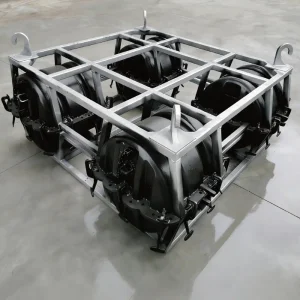
CNC-machined forged aluminum molds provide the highest dimensional precision, excellent heat conductivity, and superior surface finish for consumer goods and automotive components. Cast aluminum molds are economical for complex contoured shapes. Fabricated carbon steel or stainless steel molds are preferred for massive low-volume tanks where tooling budget is prioritized.
Standard shuttle or rock and roll machines are typically manufactured within 45 to 60 working days following engineering drawing approval. Complex multi-arm carousel lines or custom automated cells require approximately 75 to 90 working days, including full factory acceptance testing (FAT) prior to packing and sea freight containerization.
Browse our expanded catalog of specialized rotational molding machinery, high-load shuttle systems, and precision molds.