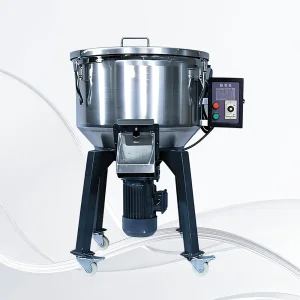
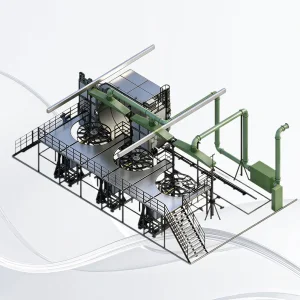
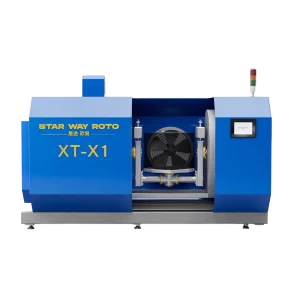
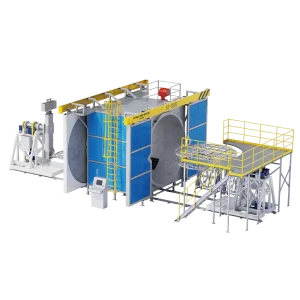
Explore our flagship heavy-duty rotomolding machinery, shuttle systems, electric heating technology, and precision steel moulds designed for high-capacity industrial tank output.
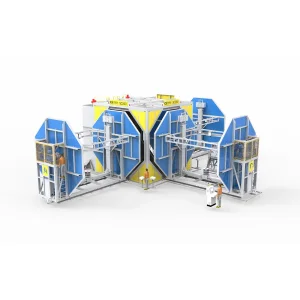
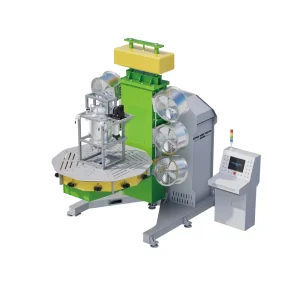
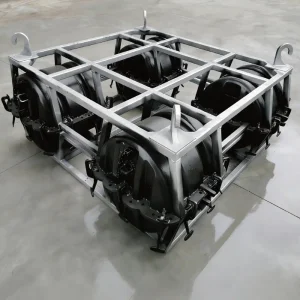
An authoritative overview of modern rotational moulding tooling economics, micro-structural density demands, and global manufacturing dynamics.
The global demand for seamlessly molded, hollow thermoplastic containers—ranging from 500-liter municipal water tanks to 30,000-liter industrial chemical storage systems and complex agricultural sprayer reservoirs—has driven a fundamental evolution in rotational mould engineering. As global infrastructure investments accelerate and environmental regulations regarding fluid containment tighten, industrial buyers can no longer rely on traditional, low-precision tooling. The modern rotational moulding ecosystem demands a trusted Tank Mould Factory & Exporter capable of integrating finite element thermal modeling, advanced metallurgical selection, and 5-axis CNC precision matching.
Historically, the production of large-scale tanks suffered from uneven wall thickness, internal stress concentration, excessive cooling warpage, and long production cycle times. These defects stem directly from thermal inefficiencies inherent in poorly engineered tooling. Premium exported tank moulds solve these macro-industrial challenges by optimizing thermo-mechanical heat transfer, integrating automated pneumatic core pulls, and implementing micro-venting assemblies that preserve structural integrity across high-density polyethylene (HDPE), linear low-density polyethylene (LLDPE), and cross-linked polyethylene (XLPE) resins.
For global original equipment manufacturers (OEMs) and contract plastic molders in North America, Europe, the Middle East, and Southeast Asia, partnering with a high-tier factory in China offers substantial competitive advantages. By leveraging advanced manufacturing clusters, sophisticated CAD/CAM workflows, and scalable aluminum casting and steel fabrication facilities, premier exporters deliver industrial-grade tank tooling at a total cost of ownership (TCO) that accelerates return on investment (ROI) while maintaining strict ISO 9001 and CE compliance.
Deep engineering breakdown comparing Cast Aluminum A356-T6 against Fabricated C45/SS304 Sheet Steel Moulds for large-scale tank manufacturing.
Preferred for geometrically complex tanks with integral ribs, recessed handles, molded-in threads, and complex surface textures. A356-T6 alloy exhibits high thermal conductivity ($k \approx 160 \text{ W/m}\cdot\text{K}$), permitting rapid heat transfer from the oven environment to the resin powder, resulting in shorter heating cycles and exceptional surface reproduction.
Ideal for mega-volume vertical water storage tanks (5,000L to 30,000L+) and cylindrical vessels. High-tensile steel plate construction prevents structural distortion under repeated thermal cycling ($200^\circ\text{C}$ to $300^\circ\text{C}$). Low material cost per unit volume renders fabricated steel the most economical path for massive, smooth-walled containment tanks.
Mould interior cavities undergo precision shot-peening (VDI 3400 standard) or electro-polished finishes. Fluoropolymer (PTFE) anti-stick barrier coatings are applied via multi-pass thermal spraying to guarantee clean product release without surface drag marks, eliminating the need for constant external liquid mould release agents.
One of the defining metrics of a world-class tank mould factory is parting line matching accuracy. When two or more mold sections clamp together on a rotational moulding machine arm, any alignment deviation exceeding $0.15\text{mm}$ results in excessive resin flash, manual trimming labor, and localized structural weakness in the finished tank wall. Premier factories utilize 5-axis CNC-machined tongue-and-groove joint profiles backed by spring-loaded toggle latches or high-torque pneumatic clamping pins to maintain hermetic contact throughout biaxial rotation.
Furthermore, rotational moulding is an unpressurized process. As air inside the mold cavity expands during the heating phase, internal pressure increases ($P \propto T$). Without engineered venting, this expansion forces hot air through the molten resin layer, creating micro-pinholes, severe wall thinning, and structural blowouts. Our advanced tank moulds incorporate high-temperature silicone or PTFE breathable vent tubes filled with aluminum wool or ceramic micro-filters. This permits gas evacuation while preventing powder ingress or melt blowback, achieving uniform wall density across deep corners and internal radii.
How modern simulation software eliminates thermal inertia, prevents structural warping, and balances kinetic wall build-up.
In large-scale tank manufacturing, thermal mass imbalance is the primary cause of product rejection. Thick steel frames, heavy clamping plates, and solid mounting spiders draw heat away from the mold wall, creating localized "cold spots." Resin powder adheres sluggishly to cold areas, causing dangerous wall thinning on stress-bearing tank bottoms or sidewall structural ribs.
Simulating heat flux ($\dot{q} = -k \nabla T$) across every square millimeter of the mould shell ensures uniform heat transfer. Steel framework structures are topologically optimized to minimize thermal shadowing while maintaining maximum mechanical rigidity under high rotational loads.
CFD air-flow simulations inside forced-convection gas or electric heating ovens analyze convective heat transfer coefficients ($h$). Mould exterior surfaces are equipped with heat-directing fins or conductive heat sinks to homogenize heating rates across irregular geometry.
Polyethylene undergoes volumetric shrinkage between $1.5\%$ and $3.0\%$ during crystallization. Advanced CAD algorithms pre-distort the mould cavity dimensions inversely to the thermal shrinkage vectors, delivering finished tanks that strictly conform to target volumetric capacities and geometric blueprints.
Comprehensive operational parameters for industrial tank moulds, highlighting structural ratings, tooling materials, and production performance metrics.
| Tank Capacity (Liters) | Tooling Material | Wall Thickness Range | Dimensional Tolerance | Venting System Type | Expected Tool Life |
|---|---|---|---|---|---|
| 500L – 1,500L | Cast Aluminum A356-T6 / CNC Milled | 6.0mm – 10.0mm | ±0.5 mm (ISO 2768-mK) | PTFE Micro-porous Mesh Vent | 12,000+ Oven Cycles |
| 2,000L – 5,000L | Cast Aluminum or C45 Fabricated Steel | 8.0mm – 14.0mm | ±1.0 mm | Spring-Loaded Pressure Relief Tube | 10,000+ Oven Cycles |
| 6,000L – 12,000L | High-Tensile Fabricated C45 Steel Plate | 10.0mm – 18.0mm | ±1.5 mm | Multi-Point Ceramic Core Venting | 8,000+ Oven Cycles |
| 15,000L – 30,000L+ | Heavy Steel Plate with SS304 Reinforcement | 14.0mm – 25.0mm | ±2.5 mm | Forced Air Exhaust Venting Assembly | 7,500+ Oven Cycles |
Every tank mould manufactured by our factory undergoes rigorous non-destructive testing (NDT), including ultrasonic wall thickness gauge verification, dye penetrant inspection of welded structural seams, and full CMM laser scanner dimensional verification before international crating and export shipping.
Tailored tooling configurations designed to meet international standards across agriculture, chemical processing, municipal utilities, and automotive sectors.
Specifically engineered for high-UV agricultural environments. Tooling designs accommodate complex mounting inserts, integrated sump basins for total liquid drainage, and level indicator scales molded directly into the tank wall. Highly popular in North America, Australia, and Brazil.
Heavy-duty moulds built to process cross-linked polyethylene (XLPE) or co-extruded multi-layer barriers. Capable of producing tanks with specific gravity ratings up to 1.9 SG for safe containment of concentrated acids, sodium hypochlorite, and industrial effluents.
Deep-ribbed spherical or low-profile rectangular mould designs engineered to withstand heavy soil overburden pressure and hydrostatic groundwater uplift. Precision interlocking flange designs facilitate modular two-piece tank assembly for optimized shipping logistics.
A disciplined, 4-stage engineering methodology ensuring absolute precision, zero-defect casting, and rapid global deployment.
Parametric 3D modeling, wall thickness optimization, thermal gradient simulation, and parting line determination using SolidWorks and ANSYS.
Pattern carving, high-density alloy casting, 5-axis CNC high-speed milling of cavity faces, tongue-and-groove joint shaping, and mounting frame fabrication.
Internal glass-bead sandblasting, PTFE anti-stick coating application, pneumatic clamp installation, and micro-porous venting assembly alignment.
First-article rotomolding trial run, CMM coordinate verification, ultrasonic wall thickness scanning, heavy-duty anti-corrosion oiling, and seaworthy wooden box packing.
Pioneering innovations in smart wireless mold sensing, electric direct-drive heating, and additive tool manufacturing.
Embedding real-time thermocouple sensors and RF transmitters directly inside the rotating tank mould cavity. This provides live telemetry of internal air temperature (IAT), enabling automated PLC oven extraction at the exact instant of peak resin fusion.
Transitioning away from gas-fired convection ovens toward conductive and infrared electric heating elements mounted directly onto the mould frame. This innovation cuts total energy consumption by up to $45\%$ and reduces cycle times by eliminating external oven heating delays.
Utilizing large-scale metal 3D printing (DMLS) to embed internal cooling fluid channels into thick cast aluminum mold walls. Controlled rapid cooling prevents polymer crystallization distortion and reduces overall cycle times by up to 30%.
In-depth technical answers addressing procurement, tooling customization, resin shrinkage calculations, and international shipping protocols.
Explore our extensive range of high-efficiency mixers, carousel machines, high-load shuttle rotomolding setups, and custom lab testing stations.