StarWayRoto
Request a Catalog
Industry 4.0 Rotomolding Tooling Standard

Best Roto Mold Tooling Manufacturer & Quotes

Engineered CAD/CAM Precision Molds, Advanced Thermal Simulation, and High-Throughput Rotational Molding Solutions for Global OEM/ODM Procurement

Featured Rotomolding Equipment & Tooling Systems

High-performance custom open-flame rock and roll systems, square shuttle machinery, and specialized industrial hollow product tooling.
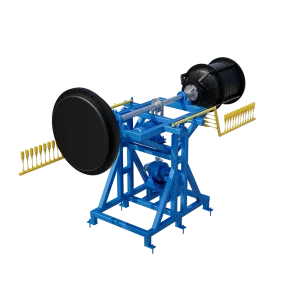
Custom China Suppliers U-arm Open Flame Rock and Roll Machine

Custom China Suppliers U-arm Open Flame Rock and Roll Machine for Large Hollow Product Manufacturing

Request Instant Quote
Custom China U-arm Open Flame Rock and Roll Machine

Custom China U-arm Open Flame Rock and Roll Machine for Hollow Product Manufacturing - Factory Solutions

Request Instant Quote
Famous Oven Type Rock And Roll Machine

Famous Oven Type Rock And Roll (Swing) Machine Manufacturer & Global Exporter

Request Instant Quote
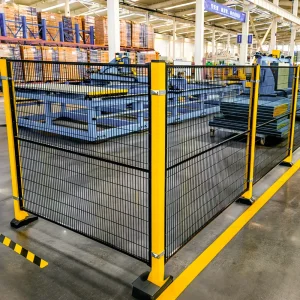
Custom China Surrounding Fence

Custom China Surrounding Fence - Durable and Secure Solutions from Reliable Factory Suppliers

Request Instant Quote
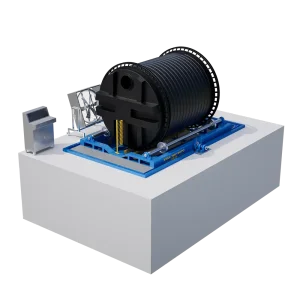
Custom Standard Open Flame Rock and Roll Machine

Custom Standard Open Flame Rock and Roll Machine for Steel-Lined Plastic Tanks

Request Instant Quote
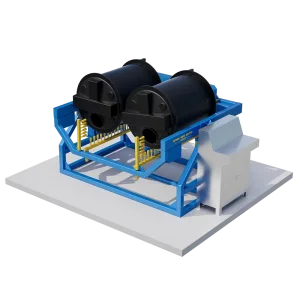
OEM Small Open Flame Rock And Roll Machine

OEM Small Open Flame Rock And Roll Machine for Hollow Products - Factory Direct Services

Request Instant Quote
China Factory Small Open Flame Machine

China Factory Small Open Flame Rock And Roll Machine for Precision Hollow Tooling Production

Request Instant Quote
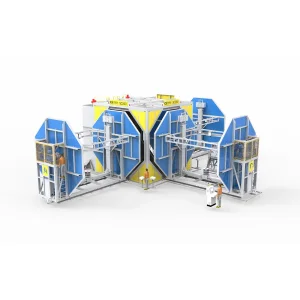
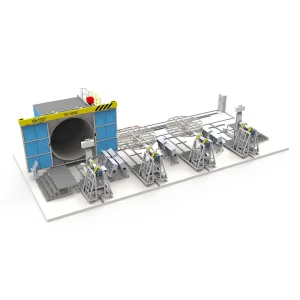
ODM Square Shuttle Machine

ODM Square Shuttle Machine Companies & Customized Integrated Rotomolding Services

Request Instant Quote

1. Executive Summary: The Evolution of Roto Mold Tooling Systems

Rotational molding (Rotomolding) has evolved from a niche plastic fabrication method into a core process for manufacturing large, stress-free, seamless hollow plastic components. At the heart of this manufacturing discipline lies Roto Mold Tooling—the physical substrate that dictates component geometry, wall thickness uniformity, thermal efficiency, surface aesthetics, and structural integrity. Selecting an elite roto mold tooling manufacturer directly influences production yield, energy utilization per cycle, and total cost of ownership (TCO) over the lifecycle of an industrial program.

In modern industrial manufacturing, roto mold tooling is no longer treated as mere metal cavity fabrication. It represents an integrated system involving high-precision thermodynamic modeling, multi-axis Computer Numerical Control (CNC) machining, advanced cast aluminum metallurgies (A356-T6), micro-porosity control, and automated parting line alignment. Global procurement leaders across automotive, aerospace, defense, chemical storage, and outdoor logistics must evaluate tooling vendors through a multi-dimensional framework: thermal transfer physics, structural durability under cyclic heating and cooling, dimensional stability, and supplier supply chain agility.

±0.05mm
CNC Parting Line Precision
A356-T6
Certified Mold Alloy
35%
Cycle Time Reduction
10,000+
Cycle Tooling Life Span

2. Technical Deep-Dive: Tooling Engineering & Manufacturing Physics

Achieving defect-free rotational molded parts requires precise thermal management. Because rotomolding depends on unpressurized polymer powder melting against heated mold walls, the thermal conductivity of the tool material dictates the sintering rate, bubble removal, and cooling shrinkage dynamics of polymers such as LLDPE, HDPE, Cross-linked Polyethylene (XLPE), Polypropylene (PP), and Polyamide (Nylon 6/12).

2.1 CNC Billet Aluminum vs. Cast Aluminum Mold Systems

Choosing between CNC-machined billet aluminum tools and cast aluminum molds is a fundamental engineering decision based on volume, geometric complexity, surface finish requirements, and budgetary constraints:

Engineering Vector Cast Aluminum Tooling (A356-T6) CNC Billet Machined Tooling (6061-T6) Fabricated Steel Sheet Molds
Ideal Geometry Complex 3D curves, organic contours, textured surfaces Ultra-high precision, geometric tolerances, tight parting lines Large cylindrical tanks, simple boxes, flat panels
Thermal Conductivity High (~160 W/m·K), even thermal distribution Very High (~170 W/m·K), highly uniform block structure Moderate (~50 W/m·K), susceptible to hot/cold spots
Surface Finish Integrity Requires hand-polishing or chemical etching; micro-porosity risks Exceptional surface density; optical polishing, zero porosity Welded seam lines visible; basic sandblasted/painted finish
Dimensional Tolerance ±0.5mm to ±1.0mm (dependent on pattern shrinkage) ±0.05mm to ±0.1mm (direct 5-axis CAD execution) ±1.5mm to ±3.0mm (manual fabrication variances)
Tooling Lead Time 4 - 7 Weeks (Pattern -> Foundry -> CNC Finishing) 2 - 4 Weeks (Direct Milling from 3D CAD) 3 - 5 Weeks (Bending, Laser Cutting, Welding)

2.2 Finite Element Thermal Simulation & Shrinkage Compensation

Advanced tooling design incorporates Finite Element Analysis (FEA) and Computational Fluid Dynamics (CFD) to model heat transfer throughout the oven heating and forced-air/water mist cooling cycles. Polymers exhibit volumetric shrinkage ranging from 1.5% to 3.0% depending on resin density and cooling rate. Advanced manufacturers employ 3D scaling algorithms within CAD software (PTC Creo, SolidWorks) to compensate for anisotropic shrinkage across non-uniform wall thicknesses, ensuring that final molded parts align with strict GD&T (Geometric Dimensioning and Tolerancing) specifications.

Information Gain Insight: Modern high-performance roto mold tooling integrates internal air-assisted venting systems (PTFE core vents) and embedded wireless thermocouple sensors. These allow real-time monitoring of Internal Air Temperature (IAT) inside the mold cavity, pinpointing the exact moment of polymer powder peak internal temperature (PIAT) to eliminate under-curing or thermal degradation.

3. Global Market Status & Procurement Dynamics

The global demand for industrial rotational molding tooling is driven by several key macro-economic transitions:

  • Automotive & EV Transformation: Replacement of heavy metal fluid reservoirs, DEF tanks, and battery cooling ducts with lightweight, seamless roto-molded polymers.
  • Chemical Logistics & Material Handling: Growth in UN-certified Intermediate Bulk Containers (IBCs), hazardous chemical storage tanks, and heavy-duty double-wall containment systems requiring massive cast aluminum tooling.
  • Global Supply Chain Diversification: Enterprise procurement teams are shifting toward suppliers capable of delivering rapid tooling iteration, certified material testing, and lower Total Cost of Ownership (TCO).

4. China Industry 4.0: Supply Chain Resilience & Cost Advantages

China's industrial tooling ecosystem—specifically concentrated in advanced manufacturing hubs like Ningbo and Zhejiang province—has transitioned from low-cost manual patternmaking to high-tech Industry 4.0 production environments. High-end Chinese manufacturers offer distinct advantages for enterprise B2B buyers:

Integrated Metallurgical Ecosystem

Direct integration between local aluminum foundries, 5-axis CNC machining centers, and surface treatment facilities shortens production feedback loops and reduces tooling lead times by up to 40% compared to Western counterparts.

Precision Automated Machining

Large-scale gantry 5-axis milling centers handle massive mold dimensions (up to 8.5 meters in length), guaranteeing seamless parting line matches, integrated pneumatic ejection systems, and precise mounting frames.

Rigorous Quality Verification

Comprehensive Quality Assurance (QA) protocols, including Coordinate Measuring Machine (CMM) inspection, hydrostatic pressure testing of mold cooling channels, and first-article trial mold sampling prior to shipment.

5. Localized Application Scenarios & Engineering Case Studies

High-end roto mold tooling serves diverse industries. Below are core application sectors where tooling quality dictates product viability:

5.1 Heavy Industrial Storage & Hazardous Chemical Vessels

Industrial chemical storage tanks require thick wall structures (up to 25mm) with zero void defects. Roto mold tooling designed for these applications utilizes high-density cast A356 aluminum with specialized external heating pin arrays (thermal pins) to drive heat into deep radius corners, preventing thin spots and stress cracking.

5.2 Automotive, Agricultural & Heavy Equipment Components

Modern diesel fuel tanks, hydraulic oil reservoirs, and tractor cabs require complex geometries with molded-in metal inserts, threaded neck ports, and tight exterior dimensional envelopes. Tooling incorporates CNC-machined drop-in cores, collapsible mold inserts, and robust pneumatic latching mechanisms to allow rapid unloading on automated carousel rotomolding machines.

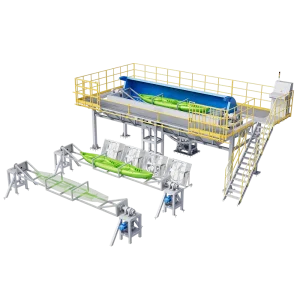
5.3 Commercial Marine, Kayaks & Water Sports

Marine applications demand superior aesthetic exterior finishes, dynamic hydrodynamic profiles, and double-hull structural integrity. High-precision CNC-milled aluminum molds ensure hydrophobic surface mirror finishes or micro-textured sandblasted skins that reduce water friction while offering UV resistance.

Advanced Machinery, Testing & Shuttle Systems

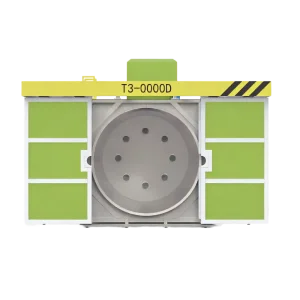
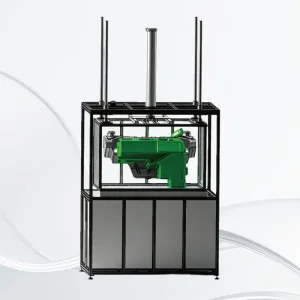
Complete line of square shuttle machines, energy-efficient electric heating ovens, and watertight testing systems.
Best China Suppliers Small Open Flame Machine

Best China Suppliers Small Open Flame Rock and Roll Machine for Hollow Products - Direct Quotes

Request Instant Quote
High-Quality China Electric Heating Rotomolding Machine

High-Quality China Electric Heating Rotomolding Machine Suppliers - Eco-Friendly Precise Oven Control

Request Instant Quote
OEM Watertight Tester

OEM Watertight Tester Companies & Industrial Quality Assurance Equipment

Request Instant Quote
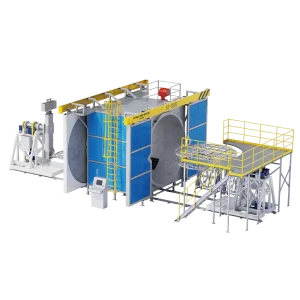
ODM China Square Shuttle Machine

ODM China Square Shuttle Machine: Flexible Design with Integrated Oven Door & Multiple Arms

Request Instant Quote
Custom China Lined Shuttle Machine

Custom China Lined Shuttle Machine: Efficient Factory Solution with 30% Less Floor Space

Request Instant Quote
OEM Customizable Shuttle Rotomolding Machine

OEM Customizable Shuttle Rotomolding Machine for Large Products - Global Supplier Solutions

Request Instant Quote
Best China Square Shuttle Machine Suppliers

Best China Square Shuttle Machine Suppliers | Integrated Oven Door Design & Flexible Systems

Request Instant Quote
High-Quality Small Open Flame Rock And Roll Machine

High-Quality Small Open Flame Rock And Roll Machine for Hollow Products - Factory Solutions

Request Instant Quote

Frequently Asked Questions (FAQ) & Procurement Guide

Expert technical insights regarding mold tooling selection, lead times, quote structures, and engineering parameters.

What key engineering data is required to get an accurate Roto Mold Tooling quote?

To generate a precise B2B commercial quote, manufacturers require: (1) 3D CAD files in STEP, IGES, or X_T format; (2) Polymer resin specification (e.g., LLDPE, HDPE, XLPE, Nylon) to calculate exact volumetric shrinkage rates; (3) Preferred tooling construction (Cast A356 aluminum, 5-axis CNC billet 6061, or fabricated steel); (4) Surface finish requirement (Sandblasted SPI-D, mirror polish SPI-A2, or custom texture); and (5) Expected mold mounting interface for target machine type (Carousel, Shuttle, or Rock & Roll).

How does cast aluminum tooling compare to CNC billet tooling in terms of lifespan and thermal efficiency?

Cast A356 aluminum tools offer superior cost-efficiency for organic shapes, complex 3D contours, and medium-to-large production runs, typically yielding 8,000 to 12,000 thermal cycles before refurbishing. CNC billet aluminum tooling (machined from solid forged blocks) provides zero porosity, higher density, and tighter parting line tolerances (±0.05mm), ideal for high-precision components and automotive applications requiring over 15,000 to 20,000 cycles.

What is the typical lead time for custom rotomolding tool fabrication in China?

Standard manufacturing lead times for cast aluminum roto mold tooling range between 4 to 6 weeks, which includes 3D pattern development, foundry casting, CNC finish machining, clamping frame assembly, and first-article sampling (T1 trial). CNC billet tools can be produced faster (2 to 4 weeks) as they bypass the pattern and casting foundry phases.

How is parting line flash minimized in rotomolded parts?

Parting line flash is minimized by utilizing precision CNC 5-axis contour milling along matching mold flanges, integrating hardened tongue-and-groove alignment pins, and employing heavy-duty spring-loaded or pneumatic mold clamps. Ensuring uniform clamping pressure prevents molten polymer leakage during the primary rotation phase inside the oven.

Why is internal mold venting critical for rotational molding tools?

As the air inside a sealed mold expands during the heating cycle (reaching up to 250°C - 300°C oven temp), it creates internal pressure. Without proper venting, expanding gas causes wall blowouts, severe part distortion, and pinholes. Vent tubes lined with high-temperature Teflon (PTFE) fiber allow internal air pressure to equalize without allowing molten plastic to bleed out or collapse inward during cooling.