
Explore high-precision rotational molding machinery, lab testing equipment, and engineering-grade steel molds engineered for high-throughput operational excellence.
Understanding the shift toward intelligent thermal monitoring, low-emissions heating, and high-performance polyolefins.
The global market for Plastic Rotational Moulding Products is undergoing a profound structural evolution. Historically viewed as a low-tech alternative to blow molding or injection molding, rotational molding has transformed into a precision-driven manufacturing process capable of producing seamless, stress-free, double-walled hollow structures with complex geometries. According to recent industrial data, the global market size for rotomolded products is projected to expand at a CAGR of 6.4%, reaching over $6.2 billion USD by 2030.
Key drivers behind this surge include the growing demand for lightweight, corrosion-resistant industrial containment systems, hyper-durable outdoor recreational equipment, and ruggedized military-grade logistical containers. Furthermore, advancements in Peak Internal Air Temperature (PIAT) control and non-contact infra-red pyrometry have solved historical challenges regarding wall-thickness variance and thermal degradation, empowering OEM manufacturers to achieve zero-defect repeatability.
Transitioning from open-flame systems to closed-loop electric infrared and indirect thermal oil heating ovens. Reduces carbon footprint by 35% while extending mold lifespan.
Expansion beyond standard LLDPE into Linear Low-Density Polyethylene nanocomposites, Cross-linked Polyethylene (XLPE), Polyamide (PA12), and polypropylene formulations for severe chem-duty apps.
Integration of PLC-driven multi-arm carousels equipped with automatic powder feeding, automated demolding robots, and real-time cavity wireless telemetry systems.
Why enterprise procurement teams choose rotational molding for large-scale, stress-free hollow products.
| Evaluation Parameter | Rotational Molding (Rotomolding) | Blow Molding | Injection Molding |
|---|---|---|---|
| Tooling Cost (Initial CAPEX) | Low to Moderate (Cast Aluminum / Fabricated Steel) | Moderate to High | Extremely High (Hardened Tool Steel) |
| Part Wall Uniformity | High corner thickness; uniform wall distribution without thinning | Thinning prone at deep draw corners | High precision, but internal ribbing causes sink marks |
| Residual Mold Stress | Near Zero (Atmospheric sintering process) | Moderate (Stretching & inflation stresses) | High (High injection pressure & shear strain) |
| Multi-Wall / Insulated Capability | Excellent (Easy double-wall, PU foam-injected builds) | Limited | Difficult / High Complexity |
| Maximum Part Volume | Unmatched (Up to 50,000L+ chemical tanks) | Medium (Under 5,000L) | Small to Medium (Limited by clamp tonnage) |
| Lead Time for Custom Tooling | Fast (3 to 6 weeks) | 8 to 12 weeks | 12 to 24 weeks |
Technical Insight: Because rotational molding relies on biaxial rotation and atmospheric powder melting rather than high pressure, parts possess virtually zero internal stress. This renders rotomolded plastic products exceptionally resistant to Environmental Stress Cracking (ESCR) and severe impact under cryogenic temperatures.
How Ningbo’s manufacturing ecosystem combines raw material synthesis, CNC tooling, and digitalized machinery production.
Situated in the heart of China’s advanced manufacturing belt, Ningbo facilities leverage immediate proximity to premium polymer resin refiners, precision CNC mold shops, and major international deep-water ports (Ningbo-Zhoushan Port).
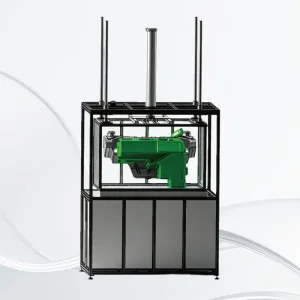
From CAD dynamic finite element analysis (FEA) to post-molding Ultrasonic Thickness Testing and Hydrostatic Pressure Verification, every rotomolding system undergoes strict ISO 9001 and CE compliance certification.
Digitalized Smart Factory infrastructure enables rapid tooling fabrication—reducing prototype lead times from months to weeks, allowing global buyers to bring OEM products to market ahead of competitors.
Rotomolded plastic products deliver unmatched durability across diverse operational environments worldwide.
Scenario: Harsh chemical storage facilities require corrosion-proof vessels capable of handling concentrated acids and alkalis.
Solution: Double-walled XLPE and LLDPE vertical tanks engineered via high-capacity carousel machines ensure zero joint lines or weak seams, guaranteeing 100% leak-proof containment.
Scenario: Marine operators demand lightweight, puncture-resistant hulls, buoyancy pontoons, and fuel tanks resistant to salt water exposure.
Solution: Specialized Rock and Roll ovens fabricate ultra-long, seamless boat hulls up to 12 meters in length with integrated foam insulation cores.
Scenario: Pharmaceutical and perishable food transport requires thermal retention over 72+ hours under high ambient heat.
Solution: Rotomolded insulated ice boxes with dual-wall food-grade LLDPE shells housing PU insulation provide drop-proof resilience and thermal isolation.
Scenario: Agricultural spraying equipment and construction vehicles require complex-shaped diesel fuel tanks and water reservoirs fitted into tight chassis spaces.
Solution: Precision CNC aluminum molds yield intricate hydraulic and fuel tanks featuring embedded brass inserts and anti-slosh internal baffles.
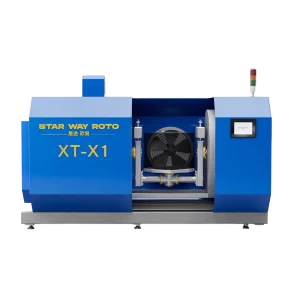
Select high-performance machinery, custom mold lines, and automated assembly solutions designed for modern manufacturing plants.
Expert technical insights to assist procurement managers and tooling engineers in optimizing rotomolding investments.
Linear Low-Density Polyethylene (LLDPE) remains the dominant resin, accounting for over 85% of rotomolding applications due to its excellent flowability, tensile strength, and impact resistance. However, for specialized industrial applications, high-density polyethylene (HDPE), cross-linked polyethylene (XLPE) for chemical resistance, polyamide (PA12 / Nylon) for elevated operating temperatures and fuel containment, and polypropylene (PP) are utilized. Polymer selection hinges on Melt Flow Index (MFI typically 2.0 to 7.0 g/10min) and material density.
Intelligent temperature control systems monitor the Peak Internal Air Temperature (PIAT) within the mold cavity in real time. Maintaining exact PIAT (typically between 190°C and 220°C depending on polymer grade) ensures complete resin powder coalescence and bubble removal without causing thermal degradation or oxidation of the polymer matrix. This yields consistent wall thickness, optimum tensile strength, and zero inner-wall pinholes.
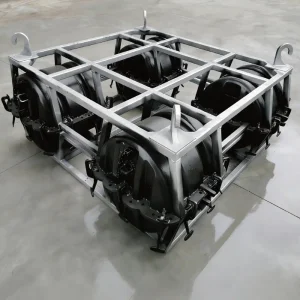
Cast Aluminum Moulds: CNC-machined or pattern-cast, aluminum tooling provides superior thermal conductivity, enabling faster heating/cooling cycles. Ideal for complex shapes, aesthetic textures, and high-volume production.
Fabricated Steel Moulds: Built from sheet steel, these molds are cost-effective for large, simple shapes such as cylindrical water tanks and bulk containers. Steel molds offer high durability for heavy-duty industrial molds.
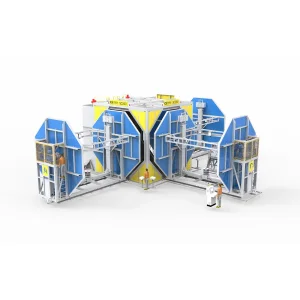
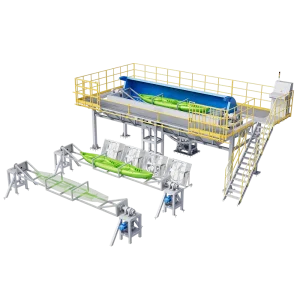
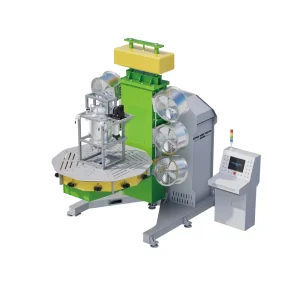
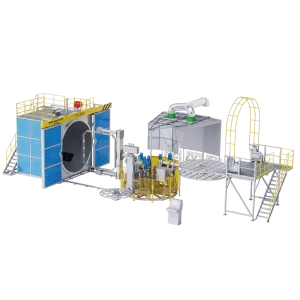
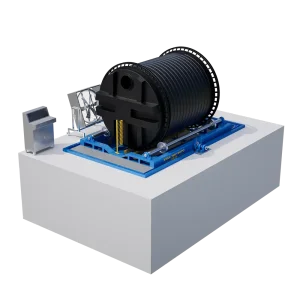
Carousel Rotomolding Machines: Feature 3 or 4 independent arms rotating through heating, cooling, and loading/unloading stations simultaneously. High efficiency, designed for continuous, high-volume mass production.
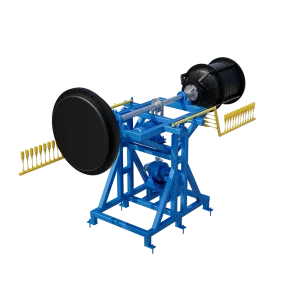
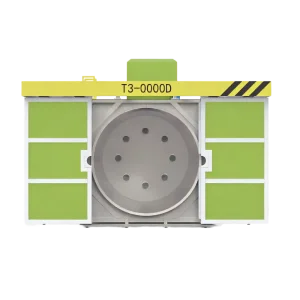
Shuttle Rotomolding Machines: Move a single mold frame back and forth on a straight track into a central oven. Highly flexible, allowing operators to run different mold sizes and cycle parameters on opposite arms.
Shrinkage in rotational molding typically ranges between 1.5% and 3.0% depending on resin density, wall thickness, cooling rate, and mold venting. Standard Polyethylene resins shrink approximately 2.0% to 2.5%. Advanced 3D CAD modeling and mold compensation algorithms are applied during tool engineering to ensure finished parts meet exact dimensional tolerances.