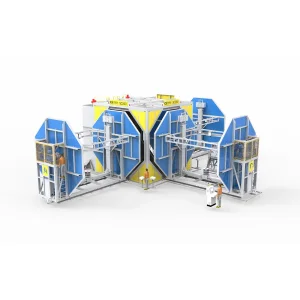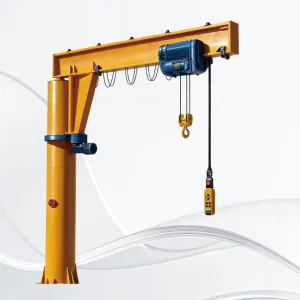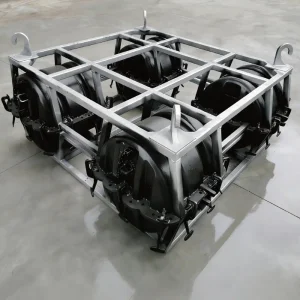

Engineered for high-repeatability, low thermal warping, and stringent Japanese industrial compliance.
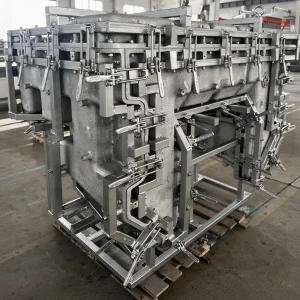
Japan’s manufacturing ecosystem, renowned globally for its philosophy of Monozukuri (物作り), imposes ultra-stringent benchmarks on structural integrity, surface finishing, and dimensional consistency. Historically reliant on high-precision injection molding and heavy sheet-metal fabrication, Japanese industrial sectors—ranging from automotive manufacturing in the Chūkyō industrial region to marine logistics hubs across Hokkaido and Kyushu—are increasingly adopting rotational molding (rotomolding) as a strategic alternative for large-scale, hollow, seamless plastic structures.
The shift towards rotomolding in Japan is predominantly accelerated by three structural factors: the aggressive lightweighting initiatives led by major automotive OEMs to increase Electric Vehicle (EV) battery efficiency, the demand for non-corrosive chemical storage under Japan's rigorous Ministry of Economy, Trade and Industry (METI) environmental guidelines, and the critical need to mitigate soaring domestic tooling costs caused by an aging technical workforce and shrinking foundry capacities in prefectures like Osaka and Aichi.
Information Gain Insight: Domestic mold tooling production in Japan faces significant lead-time constraints, often exceeding 20–26 weeks for complex CNC aluminum rotomolding tooling. Partnering with elite, audited cross-border original equipment manufacturers allows Japanese factories to compress tooling lead times by up to 45% while achieving exact JIS B 0601 surface roughness specifications.
Achieving flawless part geometry during the rotational molding of Linear Low-Density Polyethylene (LLDPE), Cross-linked Polyethylene (XLPE), and Polypropylene (PP) requires a deep understanding of thermal dynamics. Japanese manufacturers demand uniform wall thickness tolerances within ±5%, zero inner void entrapment, and minimal warpage over 5,000+ thermal cycles.
| Parameter / Specification | CNC Milled Aircraft Aluminum (7075-T6) | High-Grade Cast Aluminum (A356) | Fabricated Sheet Steel Moulds |
|---|---|---|---|
| Thermal Conductivity | 130 - 160 W/m·K (Ultra-fast heat transfer) | 150 - 170 W/m·K (Excellent thermal balance) | 50 - 60 W/m·K (Slower heating/cooling) |
| Surface Finish Quality | Mirror finish / Ra 0.2 µm (JIS B 0601) | Textured / Shot-peened / Teflon coated | Industrial smooth / Painted / Electro-polished |
| Complex Internal Geometry | Exceptional (5-Axis CNC Machined) | Superior (Ideal for complex curves/undercuts) | Moderate (Limited to geometric bends) |
| Mold Durability & Life | > 15,000 Cycles | 10,000 - 15,000 Cycles | 5,000 - 8,000 Cycles |
| Primary Japan Applications | Automotive fluid tanks, medical housings | Commercial coolers, kayaks, machinery covers | Large septic tanks, 10,000L chemical vessels |
To guarantee zero porosity in cast aluminum molds exported to Japan, StarWay Roto utilizes high-density vacuum casting paired with Finite Element Analysis (FEA) thermal profiling. This process eliminates hot spots and micro-shrinkage voids, ensuring that the molded polymer cures at a homogenous rate across the entire inner cavity.
Rotomolding equipment and mold tooling exported to the Japanese market must integrate seamlessly into highly automated production environments. Below are the core sectors in Japan where specialized rotomolding solutions deliver massive operational efficiencies:
Precision-molded fuel tanks, hydraulic fluid reservoirs, and air intake ducts for top-tier Japanese OEMs. Features multi-layer co-extrusion and insert molding capabilities for brass and steel fittings directly during the rotomolding cycle.
Heavy-duty UV-stabilized PE pontoon floats, insulated fish storage tubs, and navigation buoys designed to withstand the harsh oceanic saltwater conditions off the Japanese coast, compliant with JIS K 6760 standards.
Electrostatic discharge (ESD) resistant plastic containers and ultra-pure chemical dosing tanks engineered specifically for Japan’s high-tech semiconductor fabrication plants in Kyushu (Silicon Island).
Navigating the Japanese import market requires absolute compliance with national industrial regulations. StarWay Roto provides comprehensive technical auditing, rigorous material traceabilities, and dedicated localized after-sales support to ensure frictionless integration for Japanese plant operators.
As Japan commits to achieving carbon neutrality by 2050 under the Green Growth Strategy, rotomolding factories in Japan are rapidly replacing open-flame heating ovens with energy-efficient electric heating systems and smart IoT-monitored thermal chambers.
Integration of real-time wireless internal air temperature (IAT) sensors directly inside rotating molds, transmitting continuous thermodynamic data to PLC controllers to automatically trigger optimal cooling cycles.
Transitioning from traditional gas-fired burners to zero-emission electric heating ovens, cutting carbon emissions by up to 35% while delivering uniform oven air velocity across high-volume carousel arms.
Automated pneumatic pin-locking and quick-change mold mounting plates engineered to reduce demolding labor and prevent mold parting line wear over extended production shifts.
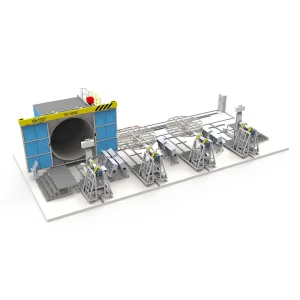
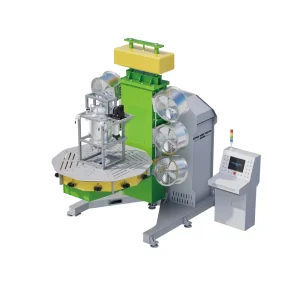
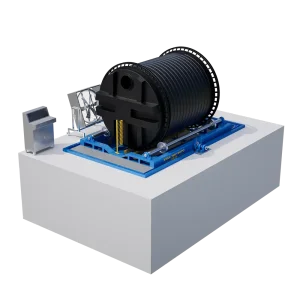
Explore our complete range of rotomolding shuttle machines, carousel ovens, and specialized auxiliary support equipment.