
Engineered for high thermal efficiency, maximum structural integrity, and harsh tropical operating conditions.
An authoritative technical evaluation on custom mould design, heat transfer dynamics, and manufacturing scaling in West Africa.
The manufacturing ecosystem in Ghana is undergoing a structural transition. Driven by national industrialization frameworks such as One District, One Factory (1D1A), the expansion of the West Africa Trade Hub, and the implementation of the African Continental Free Trade Area (AfCFTA) secretariat in Accra, local plastic processors are shifting away from basic finished-goods imports toward domestic production. Among polymer processing technologies, Rotational Molding (Rotomolding) has emerged as the definitive strategy for manufacturing large-capacity, stress-free, seamless hollow plastic articles essential for Ghana’s agricultural, municipal, mining, and maritime infrastructure.
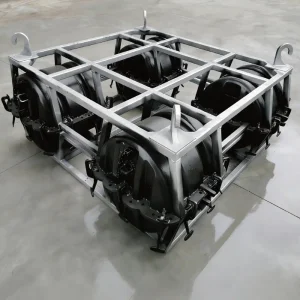
As premier China rotomolding mould manufacturers and exporters, our engineering teams bridge the gap between advanced Chinese metallurgical casting, 5-axis CNC machining precision, and the specific operational challenges faced by Ghanaian factories. Producing durable rotomolded items in West Africa requires tooling capable of handling elevated ambient humidity, fluctuating power supply, variable thermal cycles, and demanding UV radiation profiles (exceeding UV20 standards).
Custom A356 cast aluminum and Q235/P20 fabricated steel moulds engineered with wall thickness uniformity ($\pm 0.5\text{ mm}$) to minimize oven heating cycles by up to 18% in Ghanaian facilities.
Multi-layer Teflon (PTFE) mold surface releasing agents combined with nickel-alloy plating to resist coastal humidity and marine atmospheric degradation along the Gulf of Guinea.
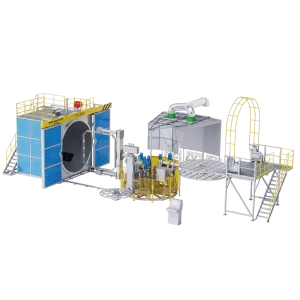
Universal spider-arm mounting designs compatible with Italian, Chinese, and Indian carousel and shuttle rotomolding machinery operating in Accra, Tema, Kumasi, and Takoradi.
Evaluating economic corridors, infrastructure growth, and specific rotational molding application demands across major industrial zones.
To deliver maximum Information Gain for Ghanaian factory owners and procurement executives, our engineering consulting model maps rotomolding mold specifications directly to local industrial realities. Ghana’s demand for rotomolded products is concentrated across four distinct economic zones:
| Ghana Industrial Hub | Primary Industry Focus | Required Rotomolded Products | Mold Engineering Specifications |
|---|---|---|---|
| Accra & Tema Free Zones Enclave | Municipal Water, FMCG Packaging, Chemical Processing | Vertical Storage Tanks (1,000L–25,000L), Chemical IBC Clean Tanks, Pallets | Fabricated Sheet Steel Moulds, Heavy-Duty Flange Joints, Internal Baffle Tooling |
| Kumasi (Ashanti Region) | Agribusiness, Cocoa Logistics, Farming Infrastructure | Agro-chemical Spray Tanks, Irrigation Cisterns, Harvest Containers | CNC Cast Aluminum Moulds (A356), Fine Surface Polish, Molded-in Thread Inserts |
| Sekondi-Takoradi Hub | Offshore Oil & Gas, Maritime, Commercial Fisheries | Offshore Navigation Buoys, Marine Floatation Pontoon Systems, Fish Crates | Heavy-Wall Polyethylene Tooling, Anti-Corrosion Coated Frames, Seamless Joints |
| Tarkwa, Obuasi & Sunyani Belt | Gold & Mineral Mining, Environmental Remediation | Leach Tanks, Heavy Chemical Reagent Vessels, Acid Slurry Piping | Cross-Linked Polyethylene (XLPE) Compatible Tooling, Reinforced Rib Geometry |
Understanding these regional dynamics allows us to optimize mold design prior to steel fabrication or aluminum casting. For instance, high ambient temperatures in northern regions like Tamale require molds engineered for faster cooling cycle dissipation, preventing warpage and post-molding shrinkage in linear low-density polyethylene (LLDPE).
Deep-dive into materials selection, heat transfer physics, thermal fatigue mitigation, and CAD/CAM simulation.
The core capability of a premium China exporter lies in bridging metallurgical physics with affordable industrial scaling. Rotomolding is a stress-free process reliant entirely on thermal heat transfer through the mold wall to melt and fuse polymer powder onto internal cavity surfaces. We deploy two main metallurgical pathways for the Ghanaian market:
Cast aluminum is ideal for products requiring intricate detail, tight dimensional tolerances ($\pm 0.2\text{ mm}$), complex curves, or molded-in logos (such as municipal logos for Ghana Water Company Limited projects). We utilize vacuum-assisted gravity casting combined with 5-axis CNC machining. A356 aluminum offers high thermal conductivity ($\sim 160\text{ W/m}\cdot\text{K}$), allowing rapid transfer of heat from oven burners into the resin powder bed, reducing cycle times by up to 22% compared to lower-grade recycled alloys.
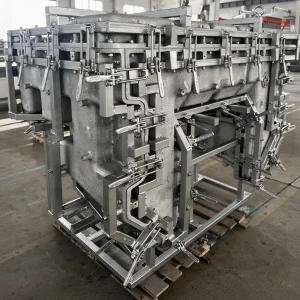
For large volume hollow containers, such as 5,000 to 20,000-liter vertical water tanks widely deployed across Ghana’s rural electrification and water expansion projects, fabricated sheet steel is the gold standard. Using laser cutting, precision rolling, and robotic TIG/MIG welding, our steel molds feature mirror-polished inner surfaces to facilitate easy demolding without excessive release agent application.
Uneven mold wall thickness causes hot spots and cold spots during rotation inside the oven. In a tropical factory in Tema where ambient air temperature is $34^\circ\text{C}$ and relative humidity exceeds 85%, thermal lag can cause variations up to 4mm in final tank wall thickness. By utilizing finite element analysis (FEA) software during mold layout design, our engineers guarantee uniform heat capacity across all mold faces, ensuring equal resin deposition rates.
Quantifiable performance metrics highlighting our commitment to quality, throughput, and technical support.
Exploring practical deployment of China-manufactured moulds in Ghanaian agriculture, municipal sanitation, and maritime sectors.
Agriculture accounts for a significant portion of Ghana's GDP. Farmers in Northern and Central Ghana face seasonal droughts. Our steel molds produce seamless, double-layer or triple-layer LLDPE water tanks from 500 liters up to 25,000 liters. Molds are designed with integrated reinforcement ribs to prevent bulging when holding high-density liquids ($>1.2\text{ g/cm}^3$) like liquid fertilizers.
With ongoing urban development in Greater Accra and Kumasi, sub-surface sanitation infrastructure is vital. Rotomolded polyethylene septic tanks are replacing brittle concrete pits. Our heavy-wall modular molds allow producers to manufacture rib-reinforced underground tanks that resist soil pressure and groundwater buoyancy.
For the offshore oil fields near Sekondi-Takoradi and commercial fishing ports in Elmina, rotomolded marine floats filled with polyurethane foam provide unmatched buoyancy and impact resistance. Our cast aluminum molds deliver smooth external hulls resistant to marine biofouling and saltwater erosion.
Ghana's horticultural exports (mangoes, papayas, seafood) require insulated cold storage during transit to Kotoka International Airport. Molds for double-walled insulated ice boxes ensure uniform wall gap clearance for polyurethane foam injection, keeping temperatures low without active refrigeration.
Ensuring seamless export execution, customs clearance at Port of Tema, and strict alignment with Ghana Standards Authority requirements.
Navigating international supply chains requires more than manufacturing capability. It demands total compliance with regulatory standards, robust packaging, and streamlined logistics. Our export protocols for Ghana include:
Pioneering smart molds, internal wireless temperature monitoring, and low-energy heating systems for West Africa.
Integration of wireless internal air temperature (IAT) telemetry sensors within the mold cavity. Factory operators in Ghana can monitor real-time polymer melting states on smartphone dashboards, eliminating under-curing and over-curing defects.
Mitigating LPG/Diesel fuel cost spikes in West Africa through direct-electric surface heating mold frames. These reduce energy consumption by up to 40% compared to traditional hot-air circulation ovens.
Mould cavities engineered specifically to process Post-Consumer Recycled (PCR) polyethylenes and bio-based resins, supporting circular economy initiatives promoted by the Ministry of Environment, Science, Technology and Innovation (MESTI) in Ghana.
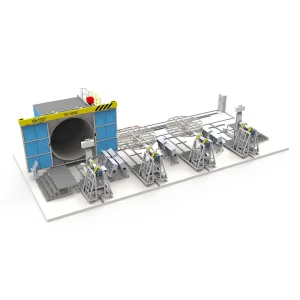
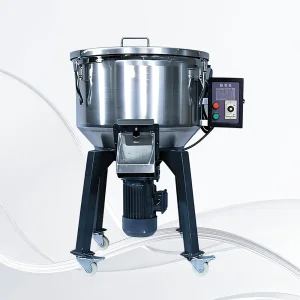
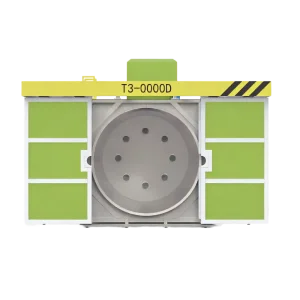
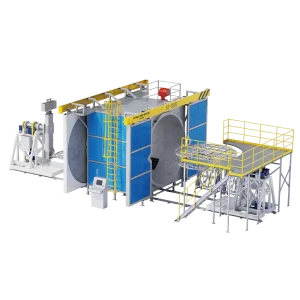
Explore our full range of rotational molding machinery, auxiliary equipment, and specialized industrial tooling.

Expert engineering answers to common procurement, maintenance, design, and logistics questions.
Partner with China's leading rotomolding mold manufacturer. Gain competitive advantage with engineered precision, optimized thermal efficiency, and dedicated technical support.
Send Inquiry Now