
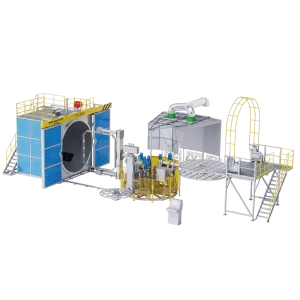
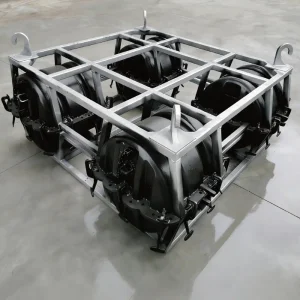
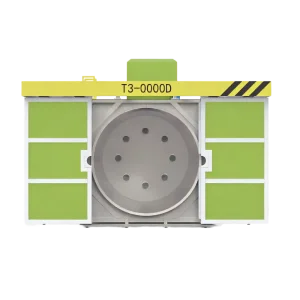
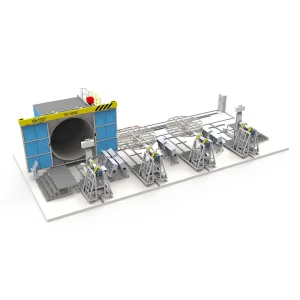
Explore our flagship rotational molding machinery, automated processing lines, and custom tooling designed to maximize volumetric output, thermal uniformity, and surface finish.

A comprehensive technical analysis of metallurgical selection, thermodynamic runner balancing, and multi-cavity tool geometries for high-yield toy manufacturing.
In modern industrial polymer processing, the fabrication of OEM toys plastic moulds represents a demanding intersection of aesthetic surface fidelity, microscopic dimensional tolerances, mechanical impact resistance, and stringent international non-toxicity regulations. Unlike standard consumer goods enclosures, plastic components designed for infant, juvenile, and educational applications are subjected to rigorous drop tests, torque forces, saliva degradation, and dynamic structural loading under global toy safety directives (including ASTM F963-17, EN 71, and ISO 8124).
Achieving defect-free, high-speed reproduction requires an integrated tooling paradigm that addresses thermal shrinkage variance across engineering polymers such as ABS (Acrylonitrile Butadiene Styrene), PP (Polypropylene), POM (Polyoxymethylene), PC (Polycarbonate), and Linear Low-Density Polyethylene (LLDPE). From micro-cavity gear mechanisms inside programmable robotic sets to massive hollow structural shells for children's ride-on electric vehicles, the selection of the correct mould manufacturing technology dictates production unit economics, cycle time efficiency, and operational lifespan.
The longevity and surface integrity of toy moulds depend fundamentally on core and cavity steel metallurgy. High-volume consumer toy components require premium grade pre-hardened and vacuum-degassed corrosion-resistant tool steels:
Hardness: HRC 48–52 (Through-Hardened)
Electro-Slag Remelted (ESR) stainless steel offering exceptional mirror-polishability (SPI A-1 optical finish), critical for crystal-clear toy lenses, light covers, and PVC/TPE molds where corrosive off-gassing occurs.
Hardness: HRC 37–41 (Pre-Hardened)
Ideal for intricate multi-slide actions, side-core lifters, and interlocking structural chassis of action figures. Excellent EDM machinability, uniform cross-sectional hardness, and low residual stress prevent tool warping.
Processing: CNC Billet / Cast Aluminum
The global benchmark for rotational toy molds (rocking horses, playhouse roofs, slide chutes). Features rapid thermal conductivity (3x faster heat dissipation than steel), reducing oven dwell cycles substantially.
| Manufacturing Process | Mould Material | Typical Toy Applications | Cycle Time | Tooling Lifespan (Shots) | Dimensional Tolerance |
|---|---|---|---|---|---|
| High-Precision Injection Tooling | S136 / H13 / NAK80 | Lego-compatible bricks, STEM gears, action figure torsos, RC drones | 12 – 28 sec | 1,000,000 – 3,000,000 | ±0.005 – ±0.015 mm |
| 2K Multi-Shot Overmoulding | S136 Core + Cavity | Soft-grip handles (TPE/ABS), water guns, teether rings, sensory rattles | 22 – 40 sec | 800,000 – 1,500,000 | ±0.010 – ±0.020 mm |
| Rotational Toy Moulding | Cast A356 / Billet 6061-T6 | Large outdoor slides, toddler rocking horses, toy car chassis, playground steps | 12 – 22 min | 50,000 – 100,000 | ±0.50 – ±1.20 mm |
| Extrusion Blow Moulding | P20 Steel / BeCu Inserts | Hollow toy wheels, bowling pins, floating bath toys, blow-molded bottles | 18 – 45 sec | 500,000 – 1,000,000 | ±0.05 – ±0.10 mm |
China's fully consolidated precision tooling ecosystem offers unprecedented speed-to-market, cost rationalization, and vertically integrated engineering capability.
Complete DFM (Design for Manufacturability) rheology feedback within 24 hours. Full multi-cavity injection and rotational moulds delivered to first physical sampling (T1) in 25–35 calendar days.
Substantial cost advantages over European and North American tooling facilities due to domestic steel supply chains, high-density industrial clustering in Ningbo/Taizhou, and automated 24/7 CNC machining cells.
Seamless execution from 3D industrial styling, MoldFlow simulation, rapid CNC prototyping, and trial runs to downstream painting, pad printing, sonic welding, and robotic blister packaging under one roof.
Integrated CMM (Coordinate Measuring Machine) verification, 3D blue-light optical scanning, and in-house drop/torque stress test laboratories ensuring zero failure rates during independent SGS/TUV audits.
How artificial intelligence, conformal thermodynamic cooling, and circular bio-polymers are redefining the economics of toy component fabrication.
Direct Metal Laser Sintering (DMLS) creates complex, curved cooling channels conforming precisely to the organic contour of action figures and doll heads. This eliminates localized hotspots, reducing differential warpage and cutting injection cycle times by up to 35%.
Global consumer demand for sustainable toys (recycled PP, ocean-bound plastics, PLA blends) requires modified mould gating, expanded draft angles, and custom venting geometries to accommodate unpredictable melt flow indices and elevated shear sensitivity without degrading polymer chains.
Embedded piezoelectric pressure and infrared thermal transducers inside the mold tool stream real-time cavity data to AI monitoring systems. The intelligent controller dynamically balances multi-nozzle hot runners, eliminating flash and short shots across 64-cavity high-speed lines.
Customized tooling configurations built to satisfy distinct mechanical and aesthetic criteria across high-growth toy industry verticals.
Micro-module gear moulds fabricated from high-grade beryllium copper and S136 tool steel. Guaranteed concentricity and low tooth backlash for planetary gearboxes inside programmable educational robots and RC servo assemblies.
Heavy-duty, large-tonnage rotational moulds and gas-assisted injection tooling. Seamless hollow body panels with reinforced structural ribs, puncture-resistant EVA/PP wheels, and impact-absorbing bumpers.
Cast aluminum rotational tooling for ultra-durable, UV-stabilized LLDPE spiral slides, crawl tunnels, climbing domes, and playhouse roofs. Designed for severe outdoor weathering resistance (-40°C to +60°C).
Multi-slider, angled-lifter injection moulds engineered for complex undercut release. High-definition texturing for hyper-realistic skin textures, cloth folds, and interchangeable armor components molded in ABS, PVC, and POM.
Precision 2K (Two-Shot) and Liquid Silicone Rubber (LSR) overmolding tools. Creates chemical-free, seamless bonds between rigid polypropylene skeletons and ultra-soft, BPA-free tactile sensory surfaces.
Multi-cavity (up to 64-cavity) ultra-precision tooling with optical surface finishes. Maintains sub-0.005mm clutch power tolerances, ensuring consistent tactile connection and separation force across millions of cycles.
Crucial verification milestones and technical deliverables required when auditing Tier-1 Chinese mould manufacturers for mission-critical toy production.
Prior to steel cutting, audit the complete DFM package:
Verify physical tool fabrication accuracy on the shop floor:
Examine physical trial parts under international standards:
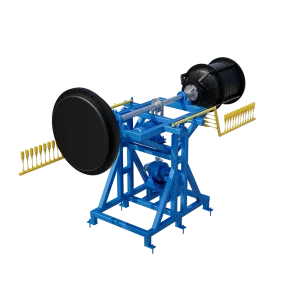
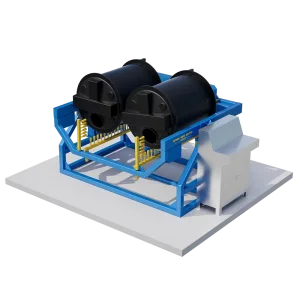
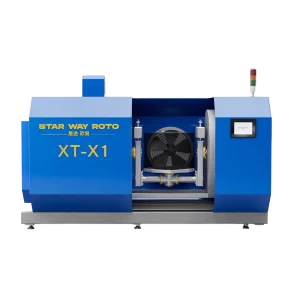
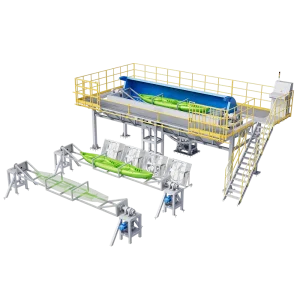
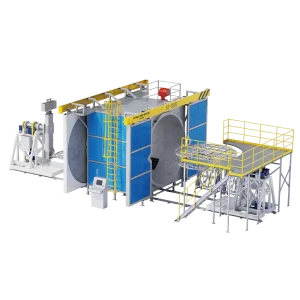
Industrial rock-and-roll systems, lab-scale development machines, and multi-arm carousels engineered for heavy-duty toy and industrial moulding.
Authoritative engineering answers regarding mould longevity, safety standards, multi-material processing, and procurement mechanics.