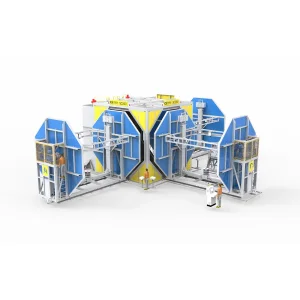
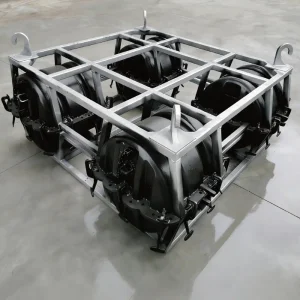
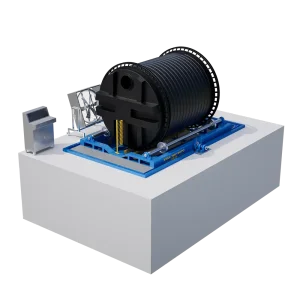
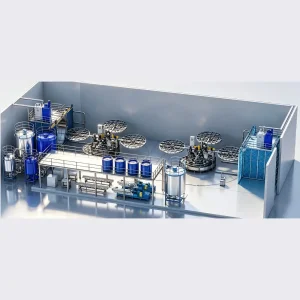
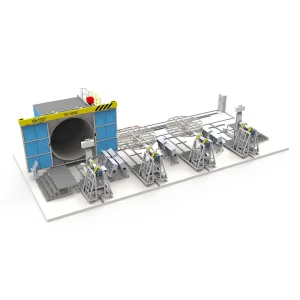
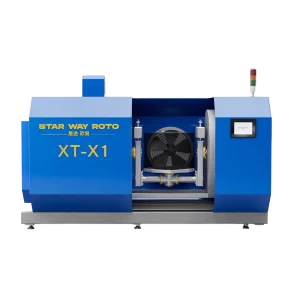
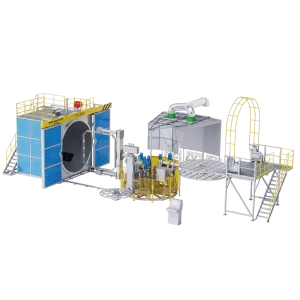
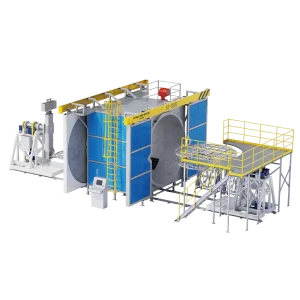
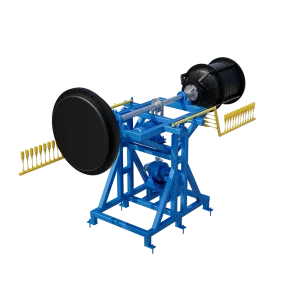
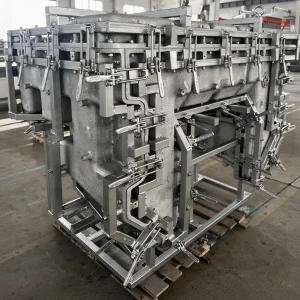
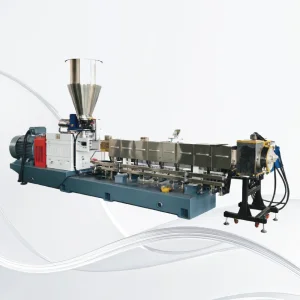
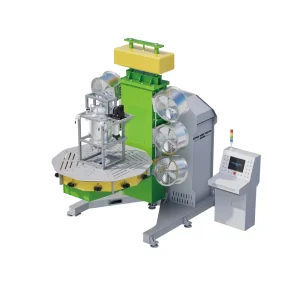
Explore our high-performance shuttle machines, open-flame systems, cast aluminum molds, and automated auxiliary production lines engineered for Polypropylene & Polyethylene processing.
Understanding Melt Flow Index (MFI), Crystallization Kinetics, and Heat Deflection Temperature (HDT) in High-Performance Custom Rotational Molding.
Rotational molding (rotomolding) of Polypropylene (PP) represents one of the most advanced frontiers in polymer processing. While Linear Low-Density Polyethylene (LLDPE) has historically dominated 85% of the global rotomolding market due to its wide processing window and low thermal shrinkage, Rotomolding Polypropylene is rapidly emerging as the material of choice for high-stress, high-temperature, and chemically aggressive industrial environments.
As a leading OEM Rotomolding Polypropylene Manufacturer, our engineering team utilizes advanced micro-pelletizing and cryogenic grinding techniques to produce specialty PP powders with optimized bulk density (>0.38 g/cm³) and narrow particle size distribution (35 mesh / 500 microns). This eliminates internal void formation and pinholes during the biaxial rotation and thermal sintering stages inside the mold cavity.
Selecting the optimal polymer matrix requires precise evaluation of mechanical stiffness, environmental stress crack resistance (ESCR), and thermal stability. Below is our empirical testing benchmark comparing industrial-grade Polypropylene Co-polymer against conventional rotomolding resins:
| Polymer Property (ASTM Standard) | Rotomolding PP (Impact Co-Polymer) | Standard LLDPE (Hexene/Octene) | Cross-Linked PE (XLPE) |
|---|---|---|---|
| Melt Flow Index (MFR @ 230°C/2.16kg) | 3.5 – 8.5 g/10 min | 3.5 – 7.0 g/10 min (at 190°C) | < 2.0 g/10 min (Pre-crosslink) |
| Flexural Modulus (ASTM D790) | 1,250 – 1,550 MPa | 650 – 850 MPa | 800 – 1,000 MPa |
| Heat Deflection Temp @ 0.45 MPa (ASTM D648) | 115°C – 140°C | 60°C – 75°C | 75°C – 90°C |
| Tensile Yield Strength (ASTM D638) | 28 – 35 MPa | 18 – 22 MPa | 20 – 25 MPa |
| Volumetric Shrinkage Rate | 1.8% – 2.5% | 1.5% – 2.0% | 2.0% – 3.0% |
| Chemical Resistance (Concentrated Acids/Alkalis) | Exceptional (pH 1 – 14) | Moderate to High | High (Unusable for oxidizers) |
Polypropylene is intrinsically more susceptible to thermo-oxidative degradation at elevated oven temperatures (260°C to 310°C) compared to polyethylene. To achieve zero internal yellowing and maximize impact toughness (especially under low-temperature conditions down to -20°C), our advanced OEM rotomolding shuttle and carousel machines integrate Internal Nitrogen Purging Systems.
By controlling Peak Internal Air Temperature (PIAT) between 195°C and 215°C under an inert nitrogen blanket (< 0.5% oxygen concentration), we eliminate polymer chain scission, preserving molecular weight and ensuring superior fatigue life in dynamic load-bearing rotomolded components.
Combining complete vertical supply chain integration, precision CNC mold fabrication, and competitive manufacturing economics for global industrial buyers.
Direct partnership with petrochemical giants (Sinopec, PetroChina, Formosa Plastics) guarantees continuous supply of specialized impact co-polymer resins with tailored UV-inhibitor packages (UV-8, UV-944) and anti-static additives.
Our in-house mold facility utilizes high-grade cast aluminum (A356) and CNC-machined forged aluminum blocks. We achieve mirror finishes, complex slide-core geometries, and multi-piece articulated tooling at 40–60% lower cost than European or North American toolmakers.
All OEM products comply strictly with ISO 9001:2015, REACH, RoHS, and FDA 21 CFR 177.1520 (food contact polypropylene standards), backed by complete material test certificates (MTC) and CMM dimensional inspection reports.
Polypropylene’s superior stiffness-to-weight ratio and heat deflection capabilities solve critical engineering challenges across global industrial sectors.
Application: Under-hood DEF (Diesel Exhaust Fluid) urea tanks, engine air intake ducts, hydraulic oil expansion reservoirs, and tractor cab roof assemblies.
Why Polypropylene? PP withstands continuous ambient operating temperatures up to 115°C without structural sagging or creep, outperforming standard PE resins which soften above 70°C. Furthermore, PP resists chemical degradation from automotive fluids, fuels, and hot engine oils.
Application: Acid pickle pickling baths, chrome plating vats, hazardous chemical containment bunds, and steel-lined composite plastic tanks.
Why Polypropylene? PP exhibits unyielding resistance to aggressive inorganic acids (hydrochloric, sulfuric), strong alkalis, and organic solvents. Rotomolded hollow construction provides seamless, stress-free leakproof tanks with zero weld-seam failure risks.
Application: Medical waste containers, steam-sterilizable hospital tote boxes, insulated fish boxes, and pharmaceutical material handling drums.
Why Polypropylene? Polypropylene products can be repeatedly subjected to 121°C autoclave steam sterilization cycles without dimensional distortion. Its high flexural modulus allows for tall vertical stacking under heavy loads without sidewall bulged deformation.
Application: Precision livestock feed hoppers, automatic liquid feeding troughs, pesticide sprayer tanks, and calf hutches.
Why Polypropylene? Excellent abrasion resistance against animal feeds, smooth hygienic non-porous surfaces preventing bacterial growth, and high impact strength against livestock kicks or farm machinery collisions.
Understanding the key parameters that dictate unit pricing, tooling investment, and total cost of ownership (TCO) for custom PP projects.
To provide rapid and highly accurate FOB/CIF quotes for custom OEM Rotomolding Polypropylene components, our estimation engineers evaluate four core technical drivers during the Design for Manufacturability (DFM) review:
CNC machined aluminum molds command higher initial NRE costs than fabricated sheet steel molds, but offer zero porosity, tighter tolerances (±0.5%), and 30% faster cycle cooling times, drastically lowering long-term piece-part costs for medium-to-high volume production runs.
Standard natural PP resin quotes form the baseline. Formulations requiring specialized additives—such as Hindered Amine Light Stabilizers (HALS UV-12), brominated/halogen-free V0 flame retardants, or glass-bead reinforcement—adjust raw material cost per kilogram.
Polypropylene’s lower thermal conductivity requires optimized oven heating and controlled air-mist cooling phases. Increasing nominal wall thickness from 4mm to 8mm increases oven cycle duration by ~45%, impacting machine hourly rates.
Secondary value-added options include robotized 5-axis CNC routing, spin-welding PP threaded couplings, flame surface treating for adhesive bonding, polyurethane foam insulation injection, and custom assembly packaging.
Specialized methodology for achieving zero-warpage geometries in semi-crystalline polypropylene rotational molding.
Polypropylene is a semi-crystalline thermoplastic with a high degree of molecular ordering upon solidification. Consequently, PP exhibits higher volumetric shrinkage (1.8% to 2.5%) compared to amorphous resins or standard polyethylene grades. Uncontrolled differential cooling across complex geometries can lead to internal stress concentrations and part warpage.
Our engineering laboratory mitigates these thermal phenomena through three proprietary process control strategies:
Explore our extended machinery portfolio, including carousel rotomolding units, customizable shuttle arms, pelletizing lines, and electric heating innovations.
In-depth answers to common engineering, procurement, and material questions from international buyers and system integrators.