Explore our specialized heavy-duty industrial machinery, custom mold systems, and high-performance plastic products engineered for rigorous international standards.
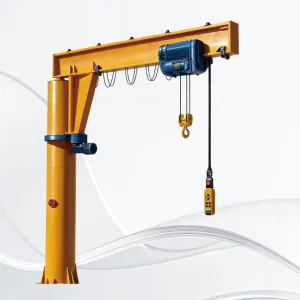
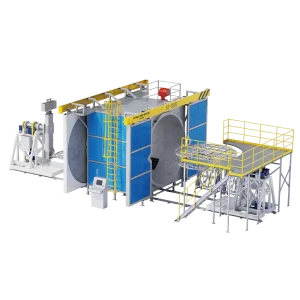
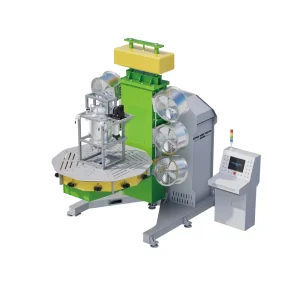
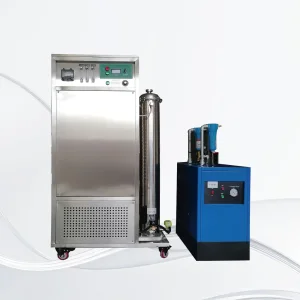
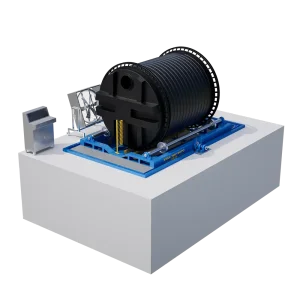
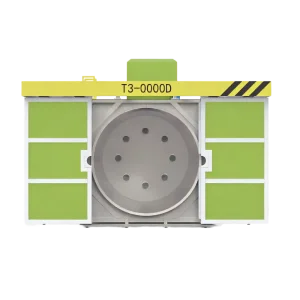
Rotational molding (commonly referred to as rotomolding or rotational casting) is a specialized thermoplastic processing technique designed for producing hollow, seamless, stress-free, and complex geometries. Unlike injection molding or blow molding—which rely on high pressure to force molten polymer into a mold cavity—rotomolding is fundamentally a low-pressure, biaxial thermal consolidation process. Micro-ground polymer powder or liquid resin is placed within a closed mold, heated inside an oven while rotating simultaneously around two perpendicular axes, melted onto the inner surfaces of the mold cavity, and subsequently cooled to form a solid structure.
From a thermodynamics and fluid mechanics perspective, achieving uniform wall thickness and stress-free parts requires precise control over the Internal Air Temperature (IAT) profile. During heating, the polymer passes through distinct physical transitions: powder bed heating, polymer sinter-melting, bubble coalescence, and complete homogeneous densification. The lack of external shear rate or hydraulic compaction stress ensures that rotomolded products exhibit superior environmental stress crack resistance (ESCR), exceptional impact strength at sub-zero temperatures, and virtually zero residual mold-in stress.
Because polymers flow under gravity without high shear forces, molecular chains remain un-oriented, resulting in parts resistant to structural warping and chemical stress cracking.
Eliminates weld lines, joint failures, and structural seams. Ideal for double-walled fuel tanks, chemical vessels, and heavy-duty marine pontoons.
Wall thickness can easily be modified without changing tool dimensions simply by adjusting raw material charge weight or thermal dynamic cycles.
To transition an initial industrial design concept into a mass-producible OEM rotomolded product, design engineers must observe strict geometric principles tailored to low-pressure thermal molding. Ignorance of these parameters often leads to uneven wall thickness, powder bridging, severe sink marks, excessive shrinkage, and thermal warping.
Because rotomolded polymers contract significantly during the cooling phase, internal cores and male features require generous draft angles to release cleanly. For Linear Low-Density Polyethylene (LLDPE), a minimum draft angle of 1.5° to 2.0° is mandatory for female cavities, while internal male components require 3.0° to 5.0°. High-shrinkage materials or textured mold surfaces (such as sandblasted or leatherette finishes) require an additional 1° of draft per 0.025mm of texture depth.
Sharp 90-degree corners are the leading cause of structural failure in rotomolded parts. Sharp external corners act as heat sinks, attracting excessive resin accumulation and causing thick, brittle corners. Conversely, sharp internal corners block heat transfer, resulting in thin, weak zones.
| Geometric Feature | Recommended Engineering Parameter | Impact on Quality & Production |
|---|---|---|
| Outside Corner Radius (Ro) | Min. 1.5 x Wall Thickness (R ≥ 6.0 mm) | Prevents localized overheating, excess corner buildup, and thermal stress points. |
| Inside Corner Radius (Ri) | Min. 1.0 x Wall Thickness (R ≥ 4.0 mm) | Ensures smooth resin powder flow, eliminating voids and bridging. |
| Kissoff Rib Gap | 1.5 x to 1.75 x Nominal Wall Thickness | Fuses double walls together to increase structural rigidity by up to 400%. |
| Wall Parallel Clearance | Min. 3.0 x Nominal Wall Thickness | Allows unhindered rotation of powder between tight channels. |
| Threaded Inserts | Encapsulated Brass/Stainless Steel with Knurling | Provides high pull-out torque without mechanical fasteners. |
When designing large planar surfaces (e.g., pallet decks, industrial container walls, or tractor roofs), solid walls tend to flex. To increase moment of inertia without increasing weight, designers utilize kiss-off (tack-off) structures. A kiss-off is created when opposing mold walls project inward and meet, allowing molten polymer to bridge across the cavity during rotation. This forms a structural pillar that drastically enhances beam stiffness and load-bearing capacity.
Material performance in rotational molding depends heavily on powder mesh particle size (typically 35 mesh / 500 microns) and Melt Flow Index (MFI). A low MFI indicates long polymer chains offering high impact resistance but poorer flowability, whereas high MFI polymers fill intricate mold details rapidly but offer lower toughness.
The rotational molding industry is undergoing a digital and ecological transformation driven by Industry 4.0 automation, real-time closed-loop thermometry, direct heating technologies, and circular economy mandates.
Wireless radio-frequency sensors mounted directly inside the mold transmit real-time internal air temperature (IAT) data to PLC controllers, optimizing cure cycles automatically.
Replacing gas-fired convection ovens with electric jacketed molds or induction heating, reducing carbon footprint by 45% and accelerating heating rates by 30%.
6-axis articulated robots combined with machine vision perform automated part extraction, flash trimming, and CNC routing with sub-millimeter repeatable precision.
Rotomolding serves critical infrastructure, agricultural, environmental, and defense sectors across North America, Europe, Australia, and Asia-Pacific. Key applications showcase the versatility of rotational molding:
Understanding the cost structure of OEM rotational molding requires evaluating two distinct investment components: NRE Non-Recurring Engineering (Tooling Capital Expenditure) and Per-Unit Piece Price (Operational Expenditure).
Rotomolding tooling costs are typically 70% to 80% lower than injection molding tools of equivalent volume. Selecting between cast CNC aluminum tooling and fabricated sheet steel depends on part geometry and aesthetic requirements.
| Tooling Technology | Ideal Application Profile | Relative Cost Range (USD) | Lead Time |
|---|---|---|---|
| Fabricated Sheet Steel Molds | Simple shapes, large cylindrical tanks, septic vessels | $3,500 – $15,000 | 3 – 4 Weeks |
| CNC Machined / Cast Aluminum | Complex 3D curves, fine surface textures, tight tolerances | $8,000 – $35,000 | 4 – 6 Weeks |
| Electroformed Copper Molds | Ultra-fine texture reproduction, small thin-walled items | $12,000 – $40,000 | 6 – 8 Weeks |
The unit production price ($P_{unit}$) for an OEM rotomolded product is modeled by the following variable factors:
Where W_raw is weight in kg, C_mat is raw material cost per kg, T_cycle is total heating/cooling time, and C_machine_rate covers energy consumption, operator labor, and machine depreciation.
As global industrial buyers seek resilient, cost-effective, high-precision OEM partners, China’s rotational molding industrial cluster—centered in Ningbo and the Yangtze River Delta—offers unmatched competitive advantages:
From raw resin compounding and pulverizing to mold CNC pattern casting, machine assembly, and post-molding PU foam insulation—everything is executed within a 30 km radius.
Ningbo’s high-density CNC machining and aluminum foundry infrastructure shorten tool delivery lead times by 40% compared to Western European counterparts.
Proximity to Ningbo-Zhoushan Port—the world's largest port by cargo volume—ensures direct containerized shipping routes, reduced drayage costs, and expedited export customs clearance.
Industrial rotomolded parts demand rigorous quality control protocols to prevent field failures under extreme environmental conditions. Modern factory compliance standards include:
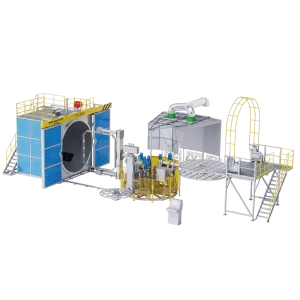
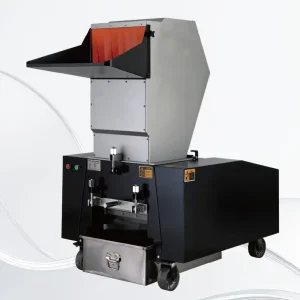
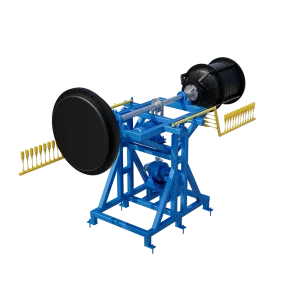
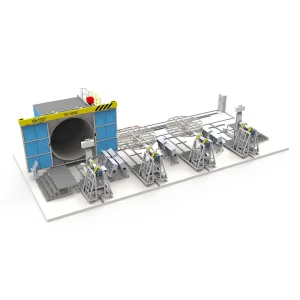
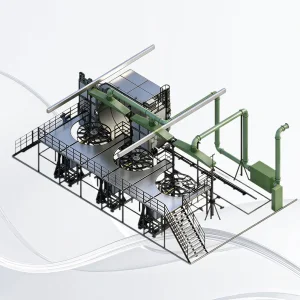
Explore our complete range of high-capacity carousel lines, linear shuttle machinery, rock and roll systems, and automated processing equipment.