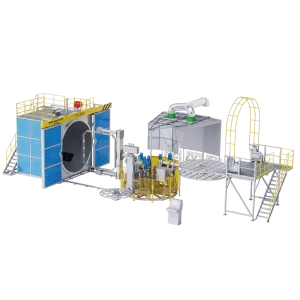
Explore our flagship heavy-duty industrial machinery, custom open-flame/rocking rotomolding systems, and high-precision automation line configurations built for international industrial buyers.
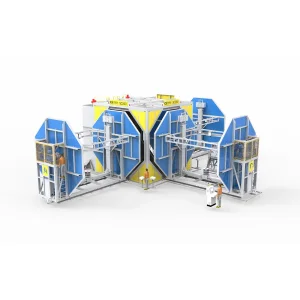
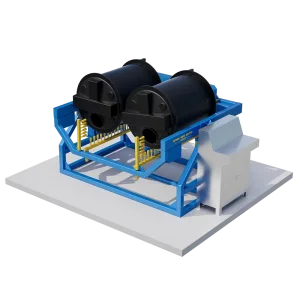
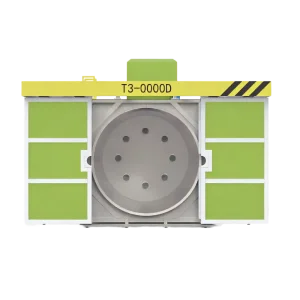
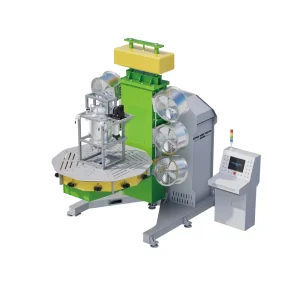
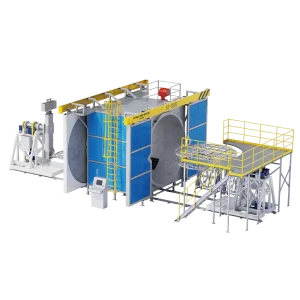
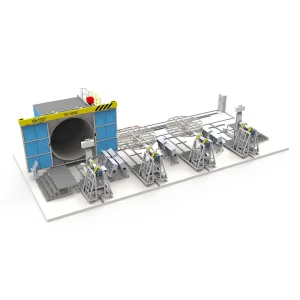
Understanding why specialized Rock N Roll machinery represents the optimal capital investment for long-aspect-ratio, high-capacity plastic vessel manufacturing compared to standard bi-axial carousels.
Conventional rotational molding machines utilize full 360-degree rotation across both major and minor axes simultaneously. While ideal for spherical or cubic geometries, this motion matrix incurs severe thermal inefficiency and mechanical drag when applied to extremely long hollow parts (e.g., 4-meter to 12-meter tanks or kayaks).
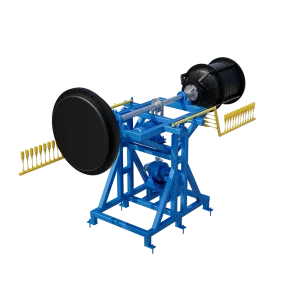
Rock N Roll Rotomolding Machines solve this physical constraint by executing continuous 360° rotation around the longitudinal axis while rocking back and forth along the transverse axis at precise angular limits (typically ±45° to ±60°). This directed gravitational flow forces liquid polymer powder to wash smoothly end-to-end without requiring massive vertical clearance heights in heating ovens.
Because the rocking profile minimizes overall bounding sphere dimensions, heating chambers can be custom-contoured around the mold geometry. Modern ODM designs feature tight-tolerance insulated enclosed ovens or targeted high-velocity gas burners that reduce dead air volume by up to 42%.
Achieving uniform wall distribution in cylindrical products with rib structures requires accurate speed control. ODM Rock N Roll units utilize independent servo-driven or frequency-inverter AC gearmotors for both rolling and rocking axes.
By employing multi-stage speed modulation programmed via PLC human-machine interfaces (HMI), operators can pause or slow rocking cycles at critical stress points, ensuring dense, bubble-free wall thickness across corners and insert points.
The global rotational molding machinery market is experiencing a structural pivot toward localized, specialized production cells. Rock N Roll equipment has transitioned from niche custom machinery to mainstream industrial infrastructure.
In North America and Western Europe, aging municipal water networks and stringent environmental regulations for chemical containment are driving demand for massive polyethylene underground septic tanks, double-walled fuel tanks, and stormwater harvesting systems. Buyers in these regions demand CE-compliant, UL-listed PLC controls with integrated burner safety systems (such as Weishaupt or Riello burners).
Developing agricultural sectors across Latin America, Southeast Asia, and Australia require reliable, low-maintenance machinery to manufacture horizontal liquid fertilizer tanks, livestock troughs, and marine aquaculture pontoons. Open-flame and economic enclosed Rock N Roll machines are heavily favored here due to fast ROI, robust mechanical structures, and ease of field repair.
| Machine Architecture Type | Ideal Target Product Profile | Energy Efficiency Index | Floor Height Requirement | Tooling Setup Complexity |
|---|---|---|---|---|
| Enclosed Rock N Roll Machine | Long tanks, kayaks, culverts, marine floats, septic systems | Highest (92%) - Contoured oven design | Low (3.5m - 4.5m) | Moderate - Quick balance adjustment |
| Open Flame Rock N Roll Machine | Ultra-large cylindrical tanks, low-budget local production | Moderate (60%) - Direct torch heat | Very Low (2.8m - 3.5m) | Simple - Direct pin fixing |
| Carousels (3/4-Arm Fixed) | High-volume small/medium hollow goods (toys, bins) | High (85%) - Continuous thermal loop | High (6.0m - 9.0m) | Complex - Multi-arm synchronization |
| Linear Shuttle Machines | Diverse multi-mold medium to large containers | High (80%) - Separate oven/cooling | Medium (4.5m - 6.0m) | Moderate - Independent arm control |
China's mature industrial ecosystem provides global buyers with rapid prototyping, custom engineering, and superior cost-to-performance metrics for high-capacity rotomolding line procurement.
Chinese leading rotomolding machine manufacturers integrate structural steel fabrication, heavy-duty lathe turning, electrical panel wiring, precision CNC mold casting, and full factory assembly under a single roof. This concentrated supply chain eliminates sub-vendor delays and cuts total machine build lead times from 24 weeks down to 6–10 weeks.
No two plastic manufacturing plants have identical floorplans or energy sources. Chinese ODM suppliers excel at tailoring machine physical footprints, burner types (Natural Gas, LPG, Diesel, or Electric Heating elements), arm payload capacities, and software interfaces to match exact factory specifications.
By leveraging standardized, top-tier global components (Siemens PLCs, Schneider contactors, SKF bearings, Italian Riello burners) combined with cost-efficient Chinese precision structural manufacturing, global procurement managers achieve up to a 40–50% savings on total equipment capital expenditures (CAPEX) without sacrificing component quality or longevity.
Rock N Roll rotomolding equipment is uniquely suited for producing seamless, stress-free, heavy-duty hollow components where structural integrity and high length-to-diameter ratios are paramount.
Producing horizontal transport tanks, liquid fertilizer dispensers, and slimline residential rainwater storage tanks up to 20,000 liters. The rocking action guarantees smooth internal wall surfaces and uniform corner distribution, preventing structural failure during dynamic liquid transportation.
Recreational single/double sit-on-top polyethylene kayaks, SUP boards, marine dock floats, and heavy navigation buoys. Rock N Roll machines allow multi-cavity aluminum molds to be loaded side-by-side on a single swing arm, doubling yield per thermal cycle.
Underground corrugated septic tanks, grease traps, inspection chambers, and drainage pipes. Seamless rotomolded LLDPE/HDPE tanks eliminate weak welded seams, preventing subterranean groundwater contamination and complying with international ISO 14001 standards.
Diesel fuel reservoirs for commercial trucks, agricultural tractor fluid tanks, insulated cold-chain shipping lockers, and hazardous chemical dunnage containers. Moldings accept encapsulated brass threaded inserts during the molding cycle without post-machining stress risks.
The future of rotational molding revolves around digital thermal telemetry, smart automation, and zero-carbon energy transitions.
Traditional rotomolding relied on operator guesswork to determine cure times. Next-generation Rock N Roll machinery incorporates wireless in-mold atmospheric temperature sensors (TPAT). Real-time telemetry feeds back to the master Siemens PLC panel, automatically triggering the cooling cycle precisely when the internal polymer melt point completes, eliminating pinholes and thermal degradation.
To align with global ESG frameworks, machinery suppliers are engineering modular heating chambers capable of seamlessly switching between clean natural gas, electric tubular radiant heating arrays, and hydrogen-blend burners, drastically reducing scope 1 industrial carbon emissions.
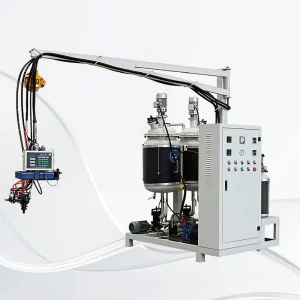
Integrated production lines now combine automatic vacuum powder loaders with synchronized polyurethane (PU) foaming machines. Once the outer PE shell cools inside the Rock N Roll mold, robotic injectors fill the inner cavity with high-density insulating foam for insulated cooler boxes or floating dock cores.
A step-by-step technical audit workflow to guide procurement managers, plant engineers, and OEM buyers in selecting the right ODM Rock N Roll rotomolding equipment manufacturer.
Define maximum length, diameter, and shot weight (powder charge) of your largest mold asset. Ensure the machine's maximum swing clearance diameter and arm load rating incorporate a minimum 20% safety margin for heavy steel molds.
Calculate local utility tariffs (Gas vs Electricity). Select high-efficiency forced-draft burners with modulating flame control to match dynamic thermal loads during heating cycles.
Verify that your ODM manufacturer conducts rigorous dry-run rotation tests, burner safety shut-off validation, thermal imaging insulation leak audits, and full-load noise assessments before export packaging.
Expert answers to critical operational, structural, and procurement questions regarding ODM Rock N Roll rotational molding machinery.
Discover specialized auxiliary units, PU insulation foaming systems, laboratory testing machinery, and high-output carousel equipment engineered to complete your production facility.