High-precision bi-axial rotomolding machines, automated feeding systems, and specialized thermal processing setups engineered for global industrial leadership.
Understanding the core thermodynamic equations, mechanical rotation ratios, and polymer melt behavior in modern Original Design Manufacturing (ODM) systems.
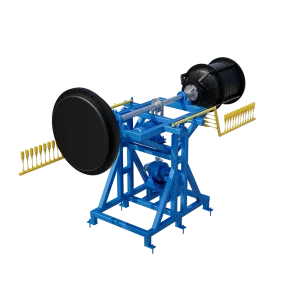
Rotational molding relies on dual-axis rotation (major and minor axes) at low angular velocities. Our ODM systems integrate independent variable frequency drives (VFDs) allowing precise control of speed ratios ranging from 1:1 up to 1:12. This ensures uniform powder coating over intricate mold geometries and eliminates resin pooling in complex radii.
Convective heat transfer inside the insulated heating chamber must raise mold skin temperatures above the polymer melting point (140°C–220°C for LLDPE/HDPE). Our proprietary airflow baffle geometry reduces heat stratification, maintaining a thermal gradient within ±2.5°C across the entire mold envelope to prevent uneven part thickness.
Transitioning from fixed-time cycles to real-time IAT wireless telemetry enables precise tracking of polymer phase changes: powder sintering, full melting, bubble removal, and peak internal air temperature (PIAT). This dynamic feedback loop optimizes furnace residency times and prevents thermal degradation of resins.
Bi-axial rotational molding equipment has evolved from simple low-cost machinery into highly specialized, automated industrial processing assets worldwide.
In developed industrial regions, focus centers on replacing heavy metal fabricated assemblies with lightweight, seamless double-walled rotomolded polymers. Key sectors include regulatory-compliant chemical containment tanks, marine hulls, commercial vehicle DEF/fuel reservoirs, and high-performance insulated logistics coolers.
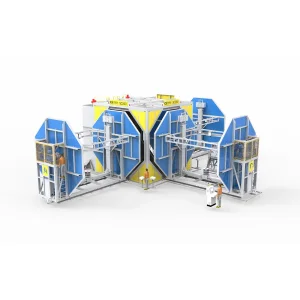
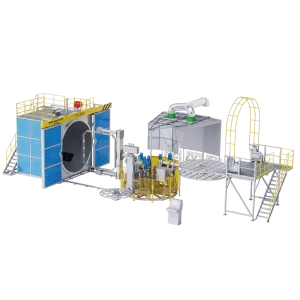
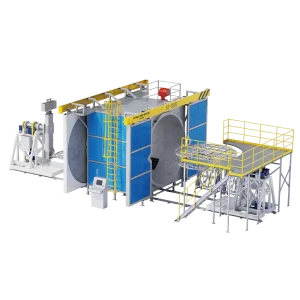
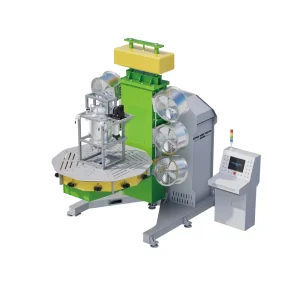
Rapid infrastructure investment drives extensive demand for multi-layer water storage tanks, agricultural septic units, drainage pipe fittings, and livestock management infrastructure. Multi-arm carousel and shuttle rotomolding machines dominate continuous high-volume factory setups.
Exploring next-generation innovations in machine kinematics, eco-friendly thermal energy sources, advanced polymer processing, and smart factory connectivity.
Transitioning from conventional open gas burners to low-emission modulating gas trains, infrared assist modules, and clean electric heating element arrays. Direct thermal conduction systems reduce overall carbon footprint by up to 25% while offering tighter temperature control.
Integration of industrial IoT gateway nodes with Siemens S7-1500 PLC architecture. Algorithms automatically adjust rotation arm speeds, thermal holding times, and fan-assisted cooling profiles based on live humidity, resin MFI batch variance, and IAT telemetry curves.
Modern bi-axial rotomolding machines are optimized to process complex engineering polymers beyond conventional LLDPE, including Cross-linked Polyethylene (XLPE), Polyamide (Nylon 6/12), Polypropylene (PP), and Post-Consumer Recycled (PCR) compound blends.
Tailored ODM configurations engineered to meet stringent mechanical strength, chemical resistance, and surface finish specifications across major global industries.
Large-scale vertical and horizontal storage containers (500L to 50,000L) require precise wall thickness distribution to withstand hydrostatic pressure. Shuttle and Rock & Roll bi-axial machines equipped with heavy-load offset arms ensure consistent material distribution along seam lines and structural ribbing.
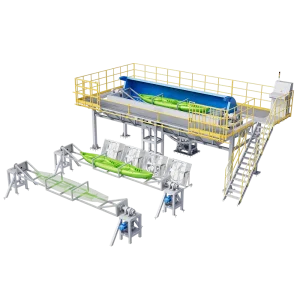
Slender, long-aspect ratio products like kayaks, canoes, and double-hulled boat pontoons require specialized Rock & Roll machines or square shuttle frames. Controlled secondary axis rocking prevents resin accumulation in narrow bow and stern sections.
Under-the-hood components such as air intake snorkels, diesel exhaust fluid (DEF) tanks, fuel cells, and mudguards demand tight dimensional tolerances. Our CNC aluminium moulds combined with IAT-guided cycle management eliminate shrink distortion.
Automated feeding troughs, waterers, calf hutches, and chemical spray tanks require UV-stabilized, seamless construction. Integrating automated powder weighing and feeding systems guarantees batch-to-batch weight precision within ±0.5%.
Selecting the optimal machine layout based on annual production volume, part size complexity, and operational floor space footprint.
| Machine Type | Ideal Product Portfolio | Heating System | Arm Load Capacity | Efficiency Rating |
|---|---|---|---|---|
| Carousel Machine (3/4 Arm) | High-volume water tanks, bins, industrial containers | Enclosed Hot-Air Convection (Gas/Oil) | Up to 5,000 kg / arm | Highest Continuous Output |
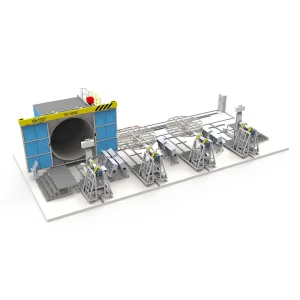
| Linear / Square Shuttle | Medium volumes, large tanks, mixed mold sizes | Enclosed Forced-Air Oven | Up to 12,000 kg / arm | Maximum Recipe Flexibility |
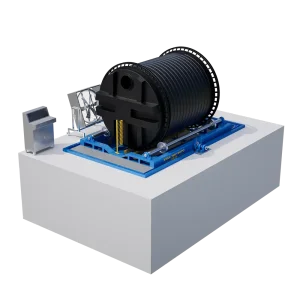
| Oven Rock & Roll | Long slender parts: kayaks, canoes, pipe floats | Enclosed Rocking Oven | Up to 3,500 kg | Optimal aspect-ratio heat delivery |
| Open Flame Rock & Roll | Large-diameter cylindrical steel-lined plastic tanks | Direct Open LPG/Diesel Burner | Up to 15,000 kg | Lowest Initial Capital Cost |
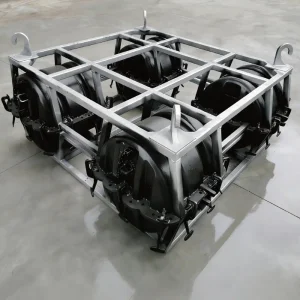
Explore our specialized high-load shuttle rotomolding machines, eco-friendly electric heating configurations, and precision steel tooling options.
Direct expert answers on bi-axial rotation mechanics, furnace efficiency, tool design, and global site commissioning.
The ratio between the major (primary arm) and minor (plate/frame) rotation axes determines the trajectory of free-flowing plastic powder across the inner mold surface. A standard ratio like 4:1 means the main arm completes four revolutions while the mold plate completes one. If the ratio is incorrectly set for asymmetric molds (e.g., deep-draw tanks or narrow ducting), powder will pool at corner fillets, causing excessive wall buildup and thin structural walls elsewhere. Independent VFD-driven arms allow operators to program dynamic ratio shifts mid-cycle during the powder sintering phase.
Traditional rotomolding relies on fixed furnace timers, which fail to account for variations in ambient temperature, burner efficiency, or mold mass changes. Wireless IAT probes measure the air temperature inside the hollow mold cavity in real-time. This pinpoints exact phase transitions: powder melting (sintering plateau), complete bubble dissolution, peak internal air temperature (PIAT), and the start of polymer crystallization during cooling. Switching off the furnace based on target PIAT prevents polymer thermal degradation (which leads to brittleness and odor) and typically reduces gas consumption by 10% to 18% per cycle.
Cast aluminium tooling is economical for complex 3D shapes with detailed textures (such as toys, mannequins, or medium coolers). CNC-machined block aluminium delivers the highest dimensional accuracy (±0.1mm), zero porosity, maximum heat transfer efficiency, and smooth parting lines—making it essential for high-end consumer goods, automotive tanks, and tight-tolerance industrial parts. Fabricated carbon steel or stainless steel is favored for very large, low-complexity geometry containers like 10,000L to 50,000L water tanks, where initial tooling cost outweighs cycle speed gains.
Because bi-axial rotation arms continually travel through high-temperature furnace chambers (up to 300°C ambient oven conditions), lubrication and thermal barrier maintenance are vital. High-temperature synthetic grease (rated for >280°C continuous service) must be injected into main spindle bearings according to rigid operating hour schedules. Furthermore, internal air cooling ducts within the arm spindle prevent thermal conduction back into primary drive gearboxes and VFD motor assemblies, extending bearing service life beyond 8–10 years under continuous 24/7 operation.
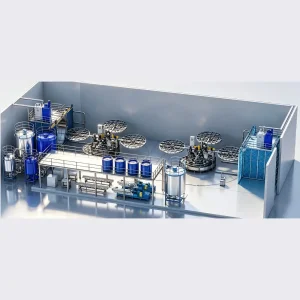
Comprehensive ODM services cover full plant layout engineering (including gas piping, electrical busbar design, compressed air routing, and cooling tower integration). Prior to dispatch, a complete Factory Acceptance Test (FAT) is conducted under load, with live video reporting of temperature curves. Overseas installation includes on-site mechanical erection, PLC commissioning, mold mounting alignment, resin powder trial testing, and multi-day operator training covering maintenance protocols, quality inspection, and cycle time optimization.
A structured step-by-step methodology ensuring precision engineering execution from initial CAD design to full-scale factory commissioning.
Analysis of 3D part geometries, material shrinkage factors (1.5% to 3.0% for PE resins), wall thickness targets, draft angles, venting needs, and parting line locations.
Heavy-duty steel frame welding, stress relief heat treatment, precision spindle machining, burner installation, ceramic fiber insulation lining, and PLC cabinet wiring.
Rigorous trial runs with client moulds under simulated factory conditions, thermal profiling validation, full anti-rust preparation, seaworthy container packing, and global shipping execution.
