
StarWayRoto
Request a Catalog
Industrial Tooling & Thermal Kinematics Whitepaper

High-Quality Rotational Mold Design Manufacturers & Exporters

A technical analysis of zero-pressure thermodynamic simulation, 5-axis CNC billet tooling, structural FEA optimization, and turnkey manufacturing ecosystems for global polymer processors.

Core Product Portfolio

High-Performance Rotomolding Systems & Moulds

Engineered for extreme duty cycles, uniform wall distribution, and seamless thermodynamic integration across industrial manufacturing sectors.
High-Load Shuttle Rotomolding Machine

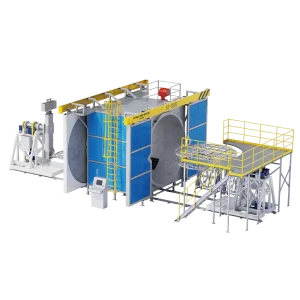
High-Load Shuttle Rotomolding Machine for Large and Extra-Large Products

Explore Details
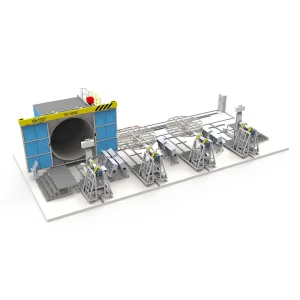
Carousel Rotomolding Machine with Independent Stations

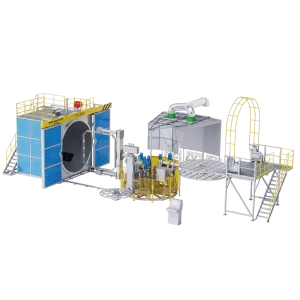
China Carousel Rotomolding Machine - High-Efficiency with Independent Stations

Explore Details
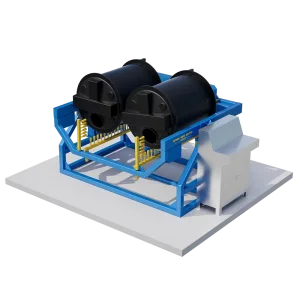
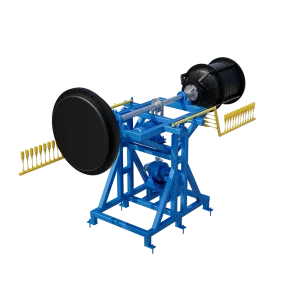
Open Flame Rock and Roll Machine

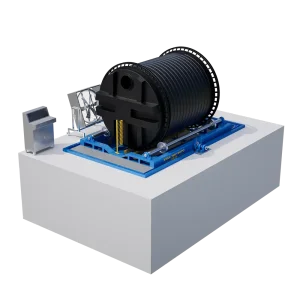
Standard Open Flame Rock and Roll Machine for Steel-Lined Plastic Storage Tanks

Explore Details
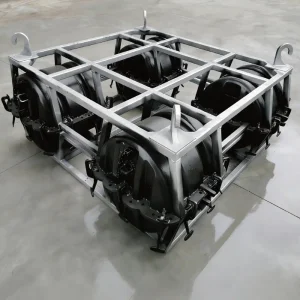
High-Quality Steel Moulds

High-Quality Precision Steel Moulds for Heavy-Duty Industrial Manufacturing

Explore Details
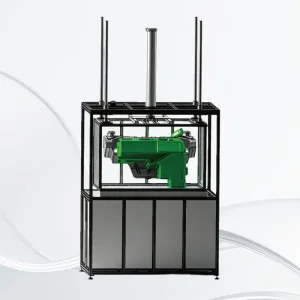
OEM Watertight Tester

OEM Watertight Tester for Quality Assurance and Leakage Integrity Validation

Explore Details
Custom U-arm Open Flame Rock and Roll Machine

Custom China U-Arm Open Flame Rock and Roll Machine for Hollow Products

Explore Details
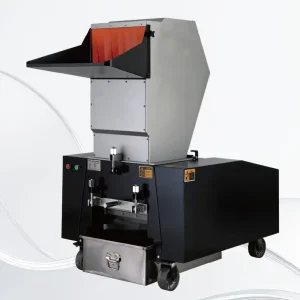
Famous Crusher Equipment

Industrial Polymer Granulation Crusher and Pulverizing Auxiliary System

Explore Details
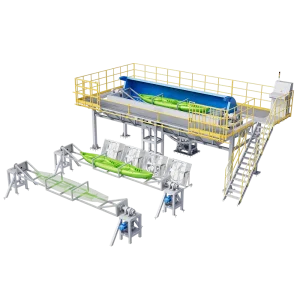
Rock and Roll Oven for Large Vessels

CE Certified Rock and Roll Oven for Large Marine Yachts and Ultra-Long Cases

Explore Details
Global Macro Trends & Physics

The Global Evolution of Rotational Mold Design

As the global plastics converting industry pivots from high-pressure injection toward stress-free, large-scale hollow component fabrication, rotational molding design has transformed into a high-precision, thermodynamics-driven engineering discipline.

Zero-Pressure Polymer Dynamics

Unlike injection or blow molding where melt is forced against cavity walls under hundreds of bars of hydraulic pressure, rotational molding relies strictly on gravity, powder sintering, and biaxial rotation. Tooling must facilitate uniform heat transfer without mechanical clamping stress, making thermal diffusivity the governing metric.

Complex Monolithic Geometries

Original Equipment Manufacturers (OEMs) across agricultural, marine, and construction sectors are replacing multi-piece welded metal assemblies with single-piece rotomolded structures. This migration demands complex undercut engineering, multi-piece mold puller cores, and molded-in structural inserts.

Thermal Sintering Uniformity

The transition of polyethylene (LLDPE/HDPE), cross-linked polymers (XLPE), and polyamides (PA6/PA12) from micronized powder (35 mesh) to a fully consolidated bubble-free melt requires micro-engineered wall thickness gradients across the tool to eliminate warpage and uneven skin thickness.
Executive Engineering Insight: The PIAT Window

Optimal rotational mold tooling must achieve a precise Peak Internal Air Temperature (PIAT) between 195°C and 215°C for standard LLDPE. Defective mold tooling with thermal mass imbalances leads to localized under-curing (brittle impact failure) or over-curing (thermal degradation and pinhole oxidation). StarWayRoto embeds real-time thermodynamic modeling during the mold layout stage to guarantee balanced isothermal exposure.

Metallurgical Deep-Dive

CNC Billet Aluminum vs. Cast A356 vs. Fabricated Steel

Selecting the correct mold manufacturing methodology dictates tooling life cycle, thermal cycle times, dimensional repeatability, and surface aesthetic quality.

CNC Billet Aluminum 6061-T6

Primary Use: Precision complex parts, automotive air ducts, medical housings, and high-tolerance enclosures.

Advantages: Zero interior micro-porosity, exceptional thermal conductivity (167 W/m·K), pristine parting line sealing (±0.05 mm tolerance), and ability to incorporate intricate CNC textured patterns without hand-tooling discrepancies.

Cycle Efficiency: Up to 22% faster heating and cooling phases compared to cast steel equivalents.

Cast Aluminum (A356 Alloy)

Primary Use: Organic curves, recreational kayaks, marine hulls, playground slides, and complex chemical containers.

Advantages: Exceptional economic feasibility for complex 3D contoured shapes. Cast from precision wood or 3D-printed patterns. Excellent thermal transfer with uniform 10–14 mm wall thickness.

Engineering Control: Requires vacuum-degassed casting techniques to eliminate subsurface gas porosity.

Fabricated Sheet Steel

Primary Use: Giant water storage tanks (5,000L to 50,000L+), intermediate bulk containers (IBCs), and cylindrical vessels.

Advantages: Lowest tooling initial capital expenditure (CapEx) for ultra-large volume parts. Formed using high-precision laser-cut steel plates and structural reinforcement ribs.

Durability: Handles massive mechanical torsional loads during bi-axial rotation on Rock & Roll machines.

Comprehensive CAD/CAE Tooling Development Pipeline

01

Parting Line & Draft Modeling

Applying mandatory 1.5° to 5° draft angles based on micro-texture specifications, eliminating post-mold ejection deformation.

02

Shrinkage Compensation (FEA)

Algorithmic volumetric scale adjustment (1.5%–3.5%) mapping differential shrinkage across variable polymer wall sections.

03

Venting & Thermocouple Ports

Calculated PTFE/vent tube integration based on 13 mm per 1 m³ volume rule, preventing cavity over-pressurization.

04

Spider Frame Load Balancing

Finite element stress validation of spider mounting arms to prevent arm deflection under multi-ton dynamic rotation.

Manufacturing Excellence

The Chinese Factory Efficiency & Supply Chain Advantage

Headquartered in the global precision manufacturing cluster of Ningbo, China, StarWayRoto integrates end-to-end tooling engineering with direct machine manufacturing, delivering unparalleled lead time and capital efficiency.

23+
Patents Granted
40+
Dedicated R&D Engineers
230+
Global Turnkey Projects
40-60%
Tooling CapEx Savings

Vertical In-House Integration (Mould + Machine Co-Design)

Traditional procurement forces buyers to purchase rotational molds from specialized toolmakers and machines from equipment builders. When thermal unbalance or fitment issues arise, accountability is fragmented. StarWayRoto unifies both operations under one 20-acre production campus. We test-fit and trial-run every custom mold on our proprietary Carousel, Shuttle, or Rock & Roll machines prior to global sea container dispatch.

Rapid Prototype-to-Production Lead Times

Leveraging Ningbo's massive industrial supply cluster, StarWayRoto maintains dedicated multi-axis CNC gantry milling centers capable of cutting monolithic aluminum billet blocks exceeding 3,000 mm in length. From initial 3D STEP file validation and mold flow simulation to finished, polished, and plumbed mold frames, our typical delivery cycle is compressed to 30–45 days—less than half the standard European or North American tooling lead time.
Engineering Applications

Cross-Industry Application Matrix

High-precision rotomolding tooling serves mission-critical environments where wall thickness integrity, impact resistance, and chemical containment cannot be compromised.

Chemical & Water Logistics

Double-walled containment vessels, conical bottom dosing tanks, and intermediate bulk containers (IBCs). Molds feature precision threaded inserts for flange mountings and reinforced ribbing to counteract hydrostatic hydraulic hoop stress.

Marine & Watercraft Vessels

Seamless one-piece recreational kayaks, unsinkable commercial fishing boat hulls, channel navigation buoys, and floating pontoons. Molds engineered with deep draw ratios, complex split-lines, and polyurethane foaming injection ports.

Heavy Equipment & Automotive

Diesel DEF tanks, hydraulic oil reservoirs, tractor cabins, wheel well liners, and HVAC air ducts. Molds require strict zero-leakage standards, multi-point core inserts, and high thermal resistance materials for XLPE processing.

Cold-Chain & Insulated Logistics

Heavy-duty roto-molded cooler boxes, dry-ice vaccine containers, and thermal insulated food delivery chests. Molds feature dual-wall contouring optimized for high-density polyurethane expansion without structural bulking.

Municipal & Modern Agriculture

Underground multi-chamber septic tanks, cattle drinking troughs, automatic poultry feeders, and playground structures. Focus on extreme UV stabilization compatibility and maximum mechanical wall thickness stability.

Military & Critical Equipment Cases

Aviation transit shipping cases, weapons transport lockers, and drone storage containers. Molds incorporate interlocking tongue-and-groove ribbing, gasket channels, and robotic hardware mounting features.
Next-Gen Industry 4.0

Smart Tooling Trends & Direct Thermal Rotomolding

The rotational molding sector is experiencing a technological leap toward data-driven thermal control, energy decarbonization, and multi-layer polymer barrier structures.

Internal Wireless Telemetry

Integration of internal mold radio-frequency K-type thermocouple probes. Real-time in-mold telemetry transmits internal air temperature curves directly to PLC control cabinets, automatically initiating oven exit precisely at optimum polymer melt consolidation.

Direct Electrically Heated Molds

Eliminating massive convective natural gas ovens entirely. Conductive heating elements and fluid thermal channels are embedded directly inside the aluminum mold tooling, decreasing energy consumption by up to 65% while slashing cycle durations.

Multi-Layer Co-Rotomolding

Advanced drop-box actuation mechanisms built into the mold framework allowing secondary and tertiary polymer charging (e.g., EV hydrogen barrier lining, foamed core layer, and virgin inner skin) in a single uninterrupted thermal sequence.
Procurement Engineering

Global Sourcing Guide & Technical RFQ Verification

Procurement directors and quality engineers must evaluate critical mechanical and dimensional criteria prior to releasing tooling capital expenditure for overseas manufacturing.

1. Parting Line Integrity

Insist on CNC tongue-and-groove interlocking parting lines with high-temperature silicone or mechanical seals to eliminate flash trimming labor and prevent polymer oxidation.

2. Clamp & Spider Framing

Specify heavy-duty spring-loaded toggle clamps and fully balanced tubular steel spider frames designed to withstand continuous 4G rotational torque forces.

3. Surface Texture Grading

Define mold surface finish using standardized VDI 3400 chemical texturing or grit-blast micron scales (Ra 1.6 to 6.3 µm) to balance scratch resistance with effortless demolding.

4. FAT Validation Protocols

Demand Factory Acceptance Testing (FAT) with actual resin sampling, including full CMM dimensional scanning, ultrasonic wall thickness mapping, and watertight pressure testing.

Authoritative Technical FAQ

Frequently Asked Engineering Questions

In-depth technical answers addressing rotational mold tooling physics, material shrinkage, cycle optimization, and international export protocols.

Q: How is volumetric shrinkage compensated in complex rotational mold design?
Rotomolding shrinkage is non-linear and significantly larger than injection molding, typically varying between 1.5% and 3.5% for standard polyethylenes (LLDPE/HDPE). Compensation is applied during 3D CAD modeling via anisotropic scaling factors. Thicker sections, structural ribs, and internal radii cool at differing rates; thus, our engineers apply localized algorithmic shrink multipliers across CAD surfaces, verified through finite element thermal analysis.
Q: What are the minimum draft angle requirements for rotomolded parts?
For smooth-finished surfaces, a minimum draft angle of 1.0° to 1.5° is required. However, for textured finishes (such as sandblast, leather grain, or heavy industrial textures), draft angles must increase by 1.0° for every 0.025 mm (0.001 in) of texture depth, typically resulting in 3.0° to 5.0° of draft to prevent part scuffing and permanent tooling drag damage during demolding.
Q: Why is proper mold venting critical in rotational molding?
As the mold heats, air inside expands, generating internal pressure. Without adequate venting, positive pressure blows molten polymer away from the parting line, causing severe pinholes, blowout voids, or wall thinning. During cooling, contracting air creates a vacuum that can collapse the part inward. StarWayRoto uses temperature-resistant PTFE or stainless steel vent tubes with calculated cross-sections (rule of thumb: 13 mm diameter per 1 m³ of internal volume).
Q: When should an engineer choose CNC billet aluminum over cast aluminum tooling?
CNC billet aluminum (machined from solid 6061-T6 forged blocks) should be selected when high dimensional precision (±0.1 mm), perfect aesthetic surface finishes, zero subsurface porosity, and razor-sharp parting lines are mandatory—such as in automotive fuel tanks, medical enclosures, and high-tolerance electronics housings. Cast aluminum is ideal for complex, organically curved parts like kayaks or playground equipment where tooling cost efficiency is paramount.
Q: How does mold wall thickness affect thermal cycle efficiency?
Tool wall thickness dictates thermal conduction velocity. Cast aluminum molds are typically engineered with a 10–14 mm wall thickness, while CNC molds can achieve 8–12 mm. If the mold wall is too thick, excessive thermal inertia wastes energy and extends cycle times; if too thin, the mold will warp under thermal cycling stress. Uniform wall thickness across the entire mold cavity is crucial to prevent hot spots and localized resin overheating.
Q: What anti-corrosion and export packaging measures are taken for overseas transit?
All precision molds exported by StarWayRoto undergo rigorous multi-stage protection: internal cavity passivation, application of industrial VCI (Vapor Corrosion Inhibitor) protective coatings, vacuum-sealed barrier film wrapping with silica desiccant charges, and securing within custom reinforced fumigated steel-frame shipping crates designed for rough ocean transit.
Specialized Production Systems

Industrial Machinery & Auxiliary Rotomolding Tooling

Comprehensive turnkey hardware designed for seamless synchronization with custom precision molds across high-output manufacturing lines.
Durable Steel Mould Solutions

Famous China Steel Mould Suppliers - Durable Heavy-Duty Industrial Tooling

Explore Details
OEM Electrical Heating Rotomolding Oven

OEM Electrical Heating Rotomolding Machine (Oven) for Eco-Friendly Production

Explore Details
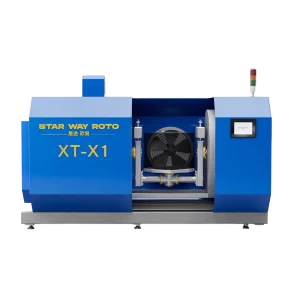
China Lab Testing Rotomolding Machine

China Lab Scale Rotomolding Machine for Material R&D and Thermal Testing

Explore Details
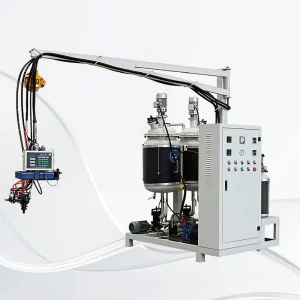
Polyurethane PU Foaming Machine

High-Pressure Polyurethane PU Foaming Machine for Insulated Products

Explore Details
Small Open Flame Rock and Roll Machine

Compact Small Open Flame Rock and Roll Machine for Hollow Cylindrical Parts

Explore Details
High Efficiency Lined Shuttle Machine

High-Efficiency Lined Shuttle Machine for Reduced Floor Space Facilities

Explore Details
Carousel Rotomolding High Capacity

China Carousel Rotomolding Machine: High Capacity Industrial Factory Solution

Explore Details