
Explore our core catalog of compact shuttle machines, custom rock & roll units, precision CNC steel molds, and smart auxiliary automation engineered for agile industrial production.
From macro storage infrastructure to decentralized, on-demand micro-manufacturing: understanding how compact rotational molding units are transforming modern polymer fabrication.
Across the global plastics manufacturing ecosystem, rotational molding (rotomolding) has traditionally been synonymous with massive chemical storage tanks, large agricultural vessels, and municipal utility infrastructure. However, an acute paradigm shift has occurred over the last five years. High-precision industrial sectors—such as medical cryogenic containers, automotive air-intake ducts, military-spec transit cases, insulated cold-chain coolers, and laboratory polymer research—now demand compact, agile, and thermally efficient small rotational molding machines.
Unlike massive carousel frameworks requiring multi-million-dollar facility commitments and enormous ceiling heights, small rotomolding machines (ranging from chamber swing diameters of 800 mm to 2000 mm) provide agile manufacturers with distinct competitive leverage: minimized energy per cycle, ultra-rapid mold changeovers, accessible capital expenditure (CapEx), and localized short-run capability. For emerging enterprises and diversified Tier-1 suppliers alike, integrating a small-footprint rotomolding workcell represents the most risk-mitigated entry point into stress-free, seamless hollow part manufacturing.
Understanding mechanical configurations: How different kinematic axes, thermal delivery methods, and airflow designs dictate manufacturing feasibility.
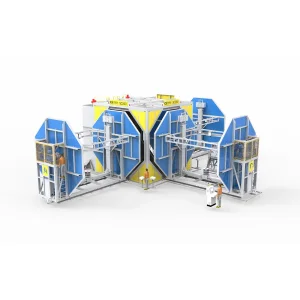
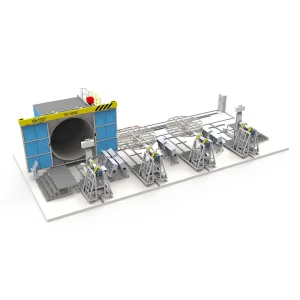
Features a centralized insulated oven with one or two independent shuttle carts moving linearly along precision tracks. Ideal for balanced, complex geometries requiring independent primary and secondary rotation ratios.
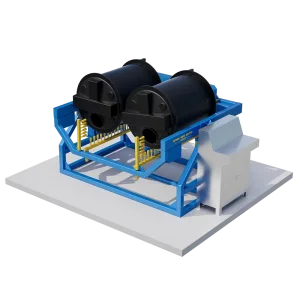
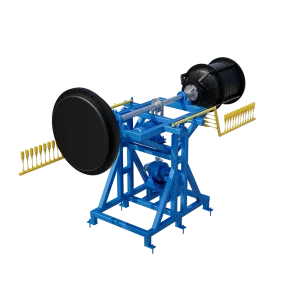
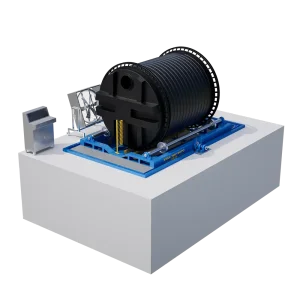
Employs continuous 360-degree axial rolling combined with a 45-degree rocking tilt motion. Highly optimized for elongated hollow products like small boats, kayaks, ducting, and tubular fluid containers.
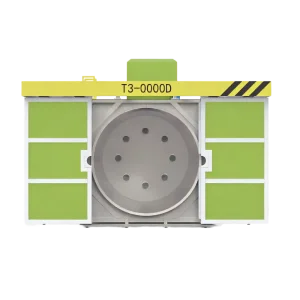
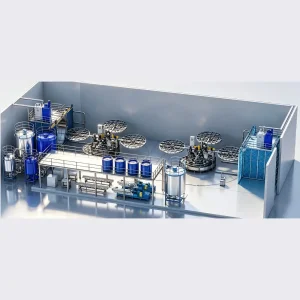
Precision cleanroom-compatible electric heating cells utilized for polymer powder evaluation, color masterbatch blending trials, medical fluid chambers, and university research facilities.
In small bi-axial rotomolding, wall thickness uniformity across sharp corners and deep recesses depends fundamentally on the major (arm) to minor (plate) rotation ratio. StarWay small machines incorporate variable-frequency drives (VFD) allowing continuous dynamic speed ratio adjustments from 1:1 up to 1:12, with programmable automatic reverse intervals to ensure uniform resin sintering without thermal degradation.
Transparent industry cost modeling for machine procurement, tooling development, and operational expenditure across standard specifications.
| Machine Category / Model | Spherical Swing Dia. | Heating Technology | Typical Applications | Est. FOB China Price (USD) |
|---|---|---|---|---|
| Lab / R&D Micro Shuttle | 800 mm – 1,200 mm | Electric Ceramic / IR Oven | Polymer testing, toys, small fittings | $14,500 – $24,000 |
| Compact Open-Flame Rock & Roll | 1,000 mm – 2,500 mm | Direct Gas / Diesel Burner | Kayaks, buoys, drainage pipe floats | $12,000 – $22,500 |
| Enclosed Rock & Roll (Oven Swing) | 1,200 mm – 3,000 mm | Convection Gas Oven (Riello) | Fuel tanks, marine floats, small hulls | $26,000 – $42,000 |
| Single-Arm Lined Shuttle System | 1,400 mm – 2,000 mm | Natural Gas / LPG / Diesel | Cooler boxes, medical cases, ducting | $35,000 – $58,000 |
| Double-Arm Square Shuttle Workcell | 1,600 mm – 2,200 mm | Forced Air Convection Oven | High-yield industrial containers, automotive | $52,000 – $85,000 |
| Compact 3-Arm Carousel (Independent) | 1,500 mm – 2,000 mm | High-Efficiency Gas Burner | Mass production of identical small parts | $88,000 – $135,000 |
Cost Factors Dictating Total Cost of Ownership (TCO): Machine purchase price represents roughly 30%–40% of the first-year setup cost. Industrial buyers must evaluate tooling engineering (Cast Aluminum vs CNC Billet vs Fabricated Steel), burner thermal efficiency, gas vs. electric utility tariffs, and auxiliary automation (granulators, pulverizers, pneumatic resin feeding stations). Purchasing factory-direct from China through established manufacturers like Ningbo StarWay Roto eliminates Western distributor markups of 40%–60% while providing custom engineering adaptations without exorbitant surcharge.
How integrated supply chain ecosystems, vertical in-house mold machining, and 23+ years of rotomolding expertise translate into decisive quality and cost benefits.
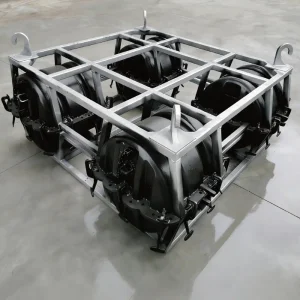
Unlike standard machine assemblers, StarWay operates dedicated high-speed CNC gantry machining centers producing custom cast aluminum, forged steel, and fabricated sheet metal molds under the same roof.
Our small rotomolding machines incorporate globally serviceable components: Italian Riello gas burners, Siemens S7-1200 / Schneider PLC controllers, SEW-Eurodrive gear motors, and Omron temperature sensors.
Leveraging China's world-leading Ningbo port logistics and supply cluster, standard small rotomolding machines are delivered in 30–45 days, complete with pre-shipment mold dry-runs and factory FAT validation.
Founded in 2009, with over 23 years of specialized technical heritage across our engineering founders, StarWay Roto has successfully engineered and deployed 230+ complete rotomolding production lines across 40+ countries.
Where compact rotational molding equipment outperforms blow molding and injection molding in low-to-medium batch manufacturing.
Seamless diesel expansion tanks, engine air intake snorkels, DEF (diesel exhaust fluid) reservoirs, hydraulic fluid chambers, and tractor mudguards requiring chemical resistance and vibration endurance.
Hospital waste disposal containers, anatomical medical mannequins, specialized cryogenic vaccine transfer cases, and chemical eyewash stations produced with zero residual internal molding stress.
Single-person recreational kayaks, marine navigation marker buoys, floating dock pontoons, high-impact roto-molded fishing coolers, and waterproof expedition transport cases.
Academic polymer compounding trials, masterbatch dispersion analysis, eco-friendly PCR polyethylene testing, hollow educational mannequins, and durable indoor playground components.
How Industry 4.0 IoT telemetry, infrared smart heating, and circular polymer recycling are defining next-generation rotational molding machinery.
Moving beyond external oven ambient sensors. StarWay small machines integrate wireless K-type thermocouple probes mounted directly inside mold cavities, monitoring real-time Peak Internal Air Temperature (PIAT) to execute dynamic automatic oven ejection at exact polymer cure points.
To comply with strict European and North American urban clean-air mandates, our latest electric infrared small rotomolding ovens replace fossil gas burners entirely, utilizing ceramic long-wave IR emitters that direct radiant heat specifically at the mold surface, slashing heat dissipation losses.
Every StarWay small rotomolding system features integrated Ethernet / 4G IoT gateway modules. Our engineering team in Ningbo can deliver real-time remote diagnostics, firmware upgrades, cycle time parameter optimizations, and predictive maintenance alerts anywhere in the world.
Key engineering criteria B2B procurement managers and plant engineers must verify prior to issuing a purchase order.
Ensure the oven chamber design incorporates high-volume centrifugal recirculation fans with adjustable directional louvers to eliminate dead cold zones in compact molds.
Demand hardened alloy steel main spindles and precision bevel gearing capable of supporting off-center mold loads without excessive deflection or premature seal failure.
Verify modulating burner controls (minimum 4:1 turndown ratio) to allow smooth temperature maintenance without overshooting target curing thresholds.
Verify emergency mechanical brake stops, oven door safety switches, optical perimeter sensors, and positive pressure exhaust explosion-relief panels.
Select systems offering multi-stage cooling (ambient air blowers followed by high-pressure atomized misting) to control polymer crystalline shrinkage and part warpage.
Opt for spider arm frameworks equipped with standardized clamping plates or pneumatic quick-locks to keep mold changeover intervals strictly under 15 minutes.
From heavy-duty open-flame systems and multi-station carousel configurations to specialized plastic recycling crushers.
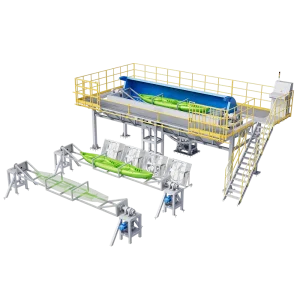
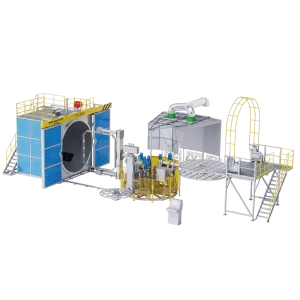
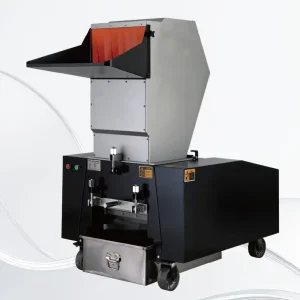
Detailed engineering and procurement answers covering installation footprints, energy consumption, multi-layer molding, and international warranty support.
A standard small single-arm shuttle machine requires a floor space of approximately 6m × 4m (24 m²) and a minimum ceiling height of 3.8 meters. Small rock & roll machines require even less space (roughly 4.5m × 2.5m). This makes them easily installable in standard light-industrial units without specialized civil foundations.
Direct procurement from StarWay delivers a 40% to 55% CapEx savings compared to equivalent Italian or American manufacturers. Because StarWay produces both precision molds and machine frameworks vertically in Ningbo while using identical Tier-1 core electronics (Siemens, Riello, Schneider), buyers receive true tier-one industrial durability at Chinese factory direct cost.
In regions with natural gas pipeline infrastructure, piped natural gas offers the lowest running cost per kilogram of processed plastic. LPG and Diesel are highly efficient alternatives for rural or remote operations. Electric infrared ovens have higher per-hour power costs but are mandatory in cleanroom pharmaceutical facilities and regions with heavy carbon restrictions.
Yes. Using drop-box drop charges or sequential material charging techniques, small rotomolding machines can fabricate 2-layer, 3-layer, and cross-linked polyurethane/PE foam core structures (widely used in high-performance cooler boxes, insulated containers, and anti-static hazardous material drums).
Standard small machines require 30 to 45 days for manufacturing, assembly, and testing. Custom CNC aluminum molds generally take 25 to 35 days from 3D CAD sign-off. We perform complete mold fitting and trial production runs at our Ningbo plant prior to export dispatch.
A fully functioning workcell typically requires: 1) A high-speed polymer pulverizer (30–50 mesh), 2) An automatic resin weighing & feeding dispenser, 3) An air compressor (0.6–0.8 MPa) for mold clamping and pneumatic valves, 4) A de-molding workstation with crane hoist, and 5) A scrap granulator for trimmings recycling.
Wall thickness uniformity is achieved through three integrated methods: optimizing the major/minor biaxial rotation speed ratios via the PLC, adding mold heat-pipes/internal venting needles to conduct thermal energy directly into recessed pockets, and using high-flow LLDPE rotomolding powders (MFI 3.5 to 7.0).
All StarWay machines include a comprehensive 12-month mechanical and electrical warranty. We provide on-site installation, commissioning, and operator training by dispatching senior field engineers globally, backed by 24/7 cloud remote video diagnostics and lifetime spare parts supply at cost.
Connect directly with our senior application engineers in Ningbo. Receive a detailed machine recommendation, 3D mold layout simulation, and complete FOB/CIF cost breakdown within 24 hours.