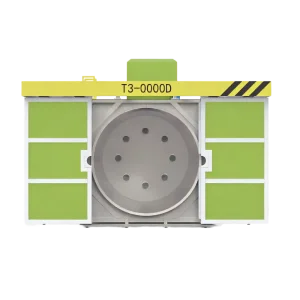
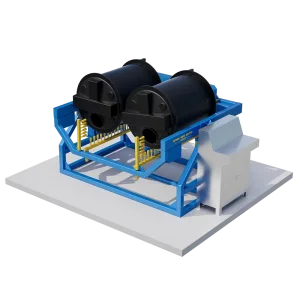
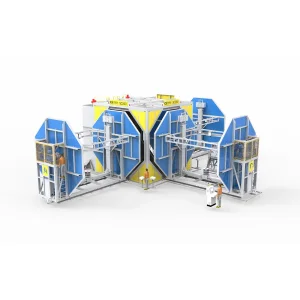
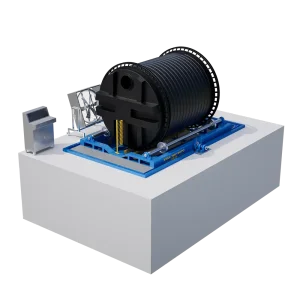
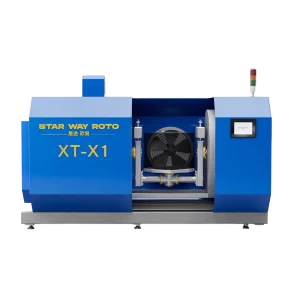
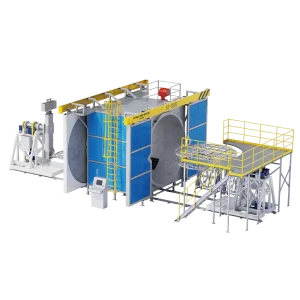
Explore our flagship series of CE-certified electric heating systems, carousel assembly lines, high-load shuttle machines, and precision CNC steel moulds.
An authoritative engineering overview on market growth drivers, material cost structures, and technological shifts defining rotational molding production globally.
Rotational molding (Rotomolding) represents a crucial segment of the global polymer processing industry, particularly optimized for producing seamless, stress-free, double-walled hollow plastic items of complex geometries and massive volumetric dimensions. Unlike injection molding or blow molding, which rely on extreme hydraulic shear pressures and internal core mandrels, rotational molding is a low-pressure thermal fusion technique. The polymer resin—typically ground to a micro-mesh powder between 35 mesh to 50 mesh—is loaded into a hollow mold cavity, heated inside a forced-convection or direct-electric oven, and biaxially rotated along primary and secondary perpendicular axes. Centrifugal force combined with thermal sintering coats the internal surface uniformly, yielding parts characterized by structural integrity, uniform wall thickness, and virtually zero residual mechanical stress.
According to current industrial market intelligence, the global rotomolded plastics market was valued at approximately USD 5.2 Billion in 2023 and is projected to expand at a Compound Annual Growth Rate (CAGR) of 6.4% from 2024 to 2032. This expansion is powered by the rapid displacement of heavy, corrosion-prone metallic fabrications in municipal water infrastructure, chemical transportation, agricultural sprayers, marine vessels, and heavy machinery housings.
The primary procurement challenge for industrial buyers lies in establishing transparent pricing parameters. Rotomolded plastic product pricing is governed by three macro variables: resin polymer selection (Linear Low-Density Polyethylene - LLDPE, High-Density Polyethylene - HDPE, Cross-linked PE - XLPE, or Polyamide PA12), tooling technology (fabricated sheet steel vs CNC-machined cast aluminum A356), and machinery operational energy consumption (electricity vs natural gas thermal efficiency).
Exploring material formulation, micro-pellet pulverization, and real-time internal air temperature (IAT) optimization.
XLPE resin provides extraordinary Environmental Stress Crack Resistance (ESCR) exceeding 1000 hours under ASTM D1693 conditions. Crucial for heavy-duty chemical storage tanks containing corrosive acids and diesel fuel reservoirs.
Engineered for high-temperature fluid containment, oil tanks, and hydraulic fluid reservoirs. Demands inert nitrogen purging during molding to eliminate oxidative thermo-degradation at elevated melt temperatures (280°C - 320°C).
Incorporating wireless thermometric sensors directly inside mold cavities allows automatic detection of crucial phase changes: Powder Sintering (PIAT), Peak Internal Air Temperature (IAT), and Crystallization Phase during air/water cooling cycles.
A frequent defect in rotational molding is microporosities and surface pin-holes caused by trapped air bubbles within the polymer melt. Under non-pressure thermal sintering, air bubbles must diffuse through the molten PE matrix solely driven by surface tension and thermal gradient. Standard 35-mesh (500-micron) pulverization ensures precise bulk density (typically 0.32 - 0.38 g/cm³) and rapid melt coalescing. Advanced additives such as fluoropolymer mold release agents and internal anti-static compounds facilitate uniform resin coating along intricate ribs and internal threads.
From mega water storage infrastructures to specialized marine craft, high-load machinery components, and medical cold-chain systems.
Seamless vertical, horizontal, and septic storage tanks ranging from 500 Liters to 50,000 Liters capacity. Double-layer UV-20 stabilized formulations prevent algae formation and structural embrittlement under extreme sunlight.
Robust kayaks, rescue boats, pontoon floats, and floating dock structures. Hollow hulls filled with closed-cell polyurethane foam guarantee unsinkable buoyancy and impact tolerance against rocky shorelines.
Impact-resistant tractor canopies, diesel tanks, DEF reservoirs, engine covers, and construction equipment shrouds. Replaces heavy sheet metal with lightweight, vibration-damping plastic structures.
Roto-molded ice boxes and vaccine transport boxes engineered for multi-day passive thermal preservation under extreme heat. Double-wall construction featuring PU foam injection guarantees structural stability.
How Ningbo StarWay Roto Co., Ltd. leverages integrated machinery manufacturing, high-precision CNC tool shops, and automated production workflows.
China's rotomolding manufacturing ecosystem has undergone a dramatic transformation from traditional manual fabrications to highly integrated Industry 4.0 smart manufacturing networks. Headquartered in Ningbo, Zhejiang Province, Ningbo StarWay Roto Co., Ltd. operates a 20-acre modern production complex incorporating complete supply chain verticality: from resin grinding and compounding, 5-axis CNC mold machining, to direct-electric rotomolding machine assembly.
Budgetary benchmarks, mold tooling investments, and machine operational expenditure (OpEx) for international purchasing teams.
Evaluating total cost of ownership (TCO) for rotomolded plastics requires distinguishing between initial Tooling Capital Expenditure (CapEx) and per-unit Component Production Expenditure (OpEx). The benchmark reference table below provides detailed economic estimations based on standard global procurement metrics.
| Category / Equipment Type | Typical Specifications | Estimated Tooling CapEx (USD) | Estimated Unit / Machine Price (USD) | Key Advantages & Applications |
|---|---|---|---|---|
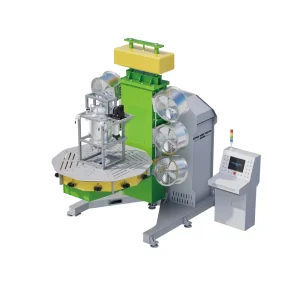
| Carousel Rotomolding Machine | 3 or 4 Independent Arms, Arm Diameter 2000mm - 4500mm | N/A (Equipment) | $85,000 - $260,000 | High-volume continuous output; simultaneous heating, cooling, and loading. |
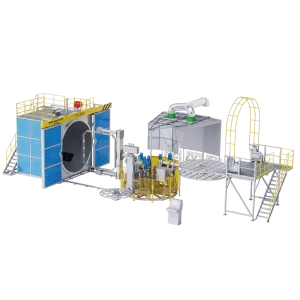
| Shuttle Rotomolding Machine | Dual Shuttle Carts, Oven Size 2.0m - 6.0m | N/A (Equipment) | $45,000 - $150,000 | Flexible production for varied part sizes; low floor-space requirement. |
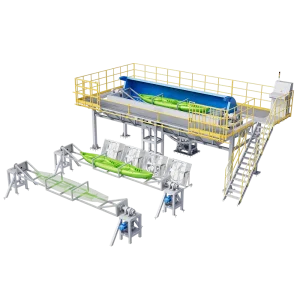
| Rock and Roll Swing Oven | Single Axis / Swing Motion, Length up to 10 Meters | N/A (Equipment) | $30,000 - $95,000 | Ideal for long narrow hollow products: kayaks, boats, and large pipes. |
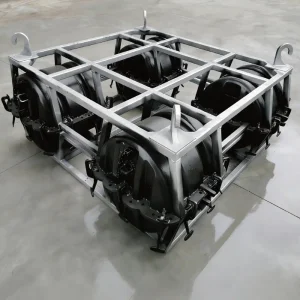
| CNC Machined Aluminum Mold | Cast A356 / CNC 6061 Aluminum, High Surface Mirror Finish | $3,500 - $28,000 | Per Part: $15 - $250 / pc | Rapid heat transfer, zero porosity, sharp structural rib details. |
| Fabricated Steel Sheet Mold | Q235 Steel Sheet 3mm - 5mm Thickness, Welded Construction | $1,800 - $12,000 | Per Part: $10 - $180 / pc | Cost-effective tooling for simple, large water tanks and septic systems. |
*Note: The prices listed above serve as baseline engineering reference guidelines. Final quotations depend on customized PLC features, automated arm payloads, mold structural complexity, and polymer market prices.
Meeting rigorous international engineering protocols, safety standards, and regional electrical requirements.
All machinery conforms strictly to the European Union Machinery Directive 2006/42/EC, complete with dual-channel safety interlocks, emergency stop circuits, and thermal radiation shielding.
Polyethylene raw materials and color masterbatches utilized in our production strictly adhere to US FDA 21 CFR 177.1520 and EU REACH regulations for food-grade water and beverage contact safety.
We provide remote telemetry diagnostics, on-site commissioning, multilingual operator training, and local spare parts dispatch across Europe, North America, Middle East, and Southeast Asia.
Clear, engineering-driven answers to common questions regarding rotational molding equipment, mold fabrication, and unit economics.
Rotomolding requires dramatically lower initial tooling capital investment—typically 30% to 50% cheaper than blow molding tools and up to 80% cheaper than injection molding dies. Because the process is low-pressure, molds do not require thick structural steel to withstand heavy hydraulic clamp forces. This makes rotomolding the most cost-effective manufacturing choice for production volumes ranging from 50 to 5,000 units annually, as well as for very large hollow structures.
Linear Medium-Density Polyethylene (LMDPE) and High-Density Polyethylene (HDPE) with narrow molecular weight distribution (MWD) offer an optimal balance. For extreme chemical resistance or heavy environmental stress conditions, Cross-linked Polyethylene (XLPE) is recommended. XLPE chemically bonds polymer chains during the thermal cycle, resulting in exceptional puncture resistance, cold-temperature impact tolerance (-40°C), and chemical ESCR exceeding 1000 hours.
Electric Heating Rotomolding Machines provide precise, clean thermal transfer without localized hot spots or combustion byproduct contamination. They eliminate gas burner emissions, reduce energy waste through direct infrared or convection elements, and provide temperature accuracy within ±1.5°C. Electric heating is particularly suited for high-temperature engineering plastics like Nylon 6/12 and Polypropylene, and for factories operating in regions with stringent carbon emission compliance standards.
Custom CNC-machined aluminum molds (A356/6061) typically require 25 to 35 business days, including 3D CAD design validation, CNC milling, surface texturing, and sample trial testing. Full machinery production—such as 3-Arm Carousel or Dual-Cart Shuttle machines—takes approximately 45 to 60 days, inclusive of PLC system integration, electrical assembly, and pre-shipment factory acceptance testing (FAT).
Discover our comprehensive range of specialized hollow product machines, open-flame systems, lab testing rigs, and eco-friendly factory lines.